Movie Reviews
Zombie Apocalypse Movie Reviews: Must-Watch Films


Hey guys! Ready to dive headfirst into the world of the undead? If you’re anything like me, you’re probably obsessed with zombie movies. There’s just something about the thrill of the chase, the suspense, and the sheer chaos that keeps us coming back for more. In this article, we’re going to take a deep dive into some of the best zombie apocalypse movies out there, looking at what makes them so awesome and why you absolutely need to watch them. From the classics that started it all to the modern blockbusters that redefined the genre, we’ve got something for everyone. So, grab your popcorn, maybe a baseball bat (just in case), and let’s get started!
The Undead Unleashed: A Look at the Zombie Genre
Before we jump into the reviews, let’s chat about what makes a great zombie movie, shall we? The zombie genre has evolved massively over the years. Initially, zombies were often slow, shambling creatures, easily dispatched. Think of George A. Romero’s iconic films. They were more about social commentary and less about the zombies themselves. Over time, the undead got a serious upgrade! We’re talking about faster, smarter, and way more terrifying zombies. This evolution has led to some incredible variations in storytelling and action.
Now, what makes a zombie movie truly stand out? First, it’s gotta have great characters. We need to care about the people fighting for survival. Are they relatable? Do they have compelling backstories? Their struggles, their relationships, and the difficult choices they make during the zombie apocalypse can make or break a film. Second, the atmosphere is key. The best zombie movies create a sense of dread, claustrophobia, and constant tension. The world needs to feel dangerous and unpredictable. A decaying city, a deserted town, or a heavily guarded compound – the setting is almost a character itself. Third, the zombies themselves need to be done right. Are they scary? Are they threatening? Do they have unique characteristics? The visual design of the zombies, how they move, and the way they are dealt with contribute to the overall experience. A fresh take on the undead can revitalize a genre that, let’s be honest, can sometimes feel a bit repetitive. Finally, and this is super important, a good zombie movie needs a strong story. The plot should keep you hooked, with unexpected twists and turns. It should have a clear goal, high stakes, and a satisfying resolution (or, you know, at least a memorable cliffhanger!). With these elements in mind, let’s see which movies have nailed it!
Top Zombie Apocalypse Movies You Can’t Miss
Alright, let’s get to the good stuff! Here are some of the best zombie apocalypse movies that you absolutely have to watch:
1. 28 Days Later (2002)
Danny Boyle’s 28 Days Later is a game-changer. It didn’t invent the zombie genre, but it sure as hell revolutionized it. Forget slow, lumbering zombies; these infected individuals are fast, furious, and utterly terrifying. The movie follows Cillian Murphy as Jim, who wakes up from a coma to find London deserted and overrun by rage-filled infected humans. The cinematography is stunning, capturing the desolation of a post-apocalyptic London. The pacing is relentless, with the infected providing some of the most heart-stopping chase sequences in movie history. Beyond the action, 28 Days Later offers a powerful commentary on human nature and the breakdown of society. It asks, who are the real monsters? The infected, or the survivors struggling to rebuild?
- Why it’s a must-watch: Fast-paced, intense, and a true visual feast. It redefined zombie speed and intensity.
- Key elements: Fast zombies, desolate environments, and a gripping survival story.
2. Dawn of the Dead (1978)
George A. Romero’s Dawn of the Dead is a zombie classic. A group of survivors takes refuge in a shopping mall during a zombie outbreak. This movie is a brilliant satire of consumerism. While they’re battling the undead, they also have to deal with the temptations of the mall. The practical effects are gruesome and impressive, even by today’s standards. Romero uses the zombie outbreak to comment on societal issues. It’s a great example of how the zombie genre can be used to make broader points about society. Dawn of the Dead is a must-see for any zombie fan.
- Why it’s a must-watch: A genre-defining classic, with fantastic effects and social commentary.
- Key elements: Shopping mall setting, practical effects, and social satire.
3. Train to Busan (2016)
Train to Busan is a South Korean zombie thriller that delivers pure adrenaline. A group of passengers on a train from Seoul to Busan find themselves in the middle of a zombie outbreak. The claustrophobic setting of the train intensifies the suspense. This movie has fantastic action sequences, heartfelt moments, and some genuinely shocking moments. Train to Busan isn’t just about survival; it’s about the bonds of family and the lengths people will go to protect each other. If you’re looking for a zombie movie that will keep you on the edge of your seat, this is it.
- Why it’s a must-watch: Intense, emotional, and a masterclass in suspense.
- Key elements: Claustrophobic setting, emotional depth, and incredible action.
4. World War Z (2013)
World War Z takes a global approach to the zombie apocalypse. Brad Pitt plays a former UN investigator racing against time to find a cure. The movie features huge, sweeping shots of zombie hordes, which is a spectacle to behold. Although it differs significantly from the book, it’s a thrilling action movie with fantastic production values. It offers a fresh perspective, exploring the worldwide impact of the outbreak. It’s fast-paced, action-packed, and full of memorable scenes.
- Why it’s a must-watch: Large-scale action and a global perspective on the outbreak.
- Key elements: Global scope, action sequences, and a race against time.
5. Shaun of the Dead (2004)
Shaun of the Dead is a comedy-horror masterpiece. It follows Shaun, a man who is trying to turn his life around during the zombie apocalypse. The film perfectly blends humor with horror, creating a unique and entertaining experience. The characters are lovable, and the jokes land perfectly. If you want a zombie movie that makes you laugh and scream, Shaun of the Dead is the perfect choice.
- Why it’s a must-watch: A hilarious and heartwarming take on the zombie genre.
- Key elements: Comedy, strong characters, and a unique blend of genres.
Honorable Mentions and Underrated Gems
While the movies above are essential viewing, there are plenty of other zombie films that deserve a shout-out. For example, [REC] (2007) is a found-footage Spanish horror film that is terrifying. Its claustrophobic setting and relentless pacing will keep you on the edge of your seat. Zombieland (2009) is a fun and quirky road trip movie that offers a lighter take on the zombie genre. The Girl with All the Gifts (2016) is a thought-provoking film that explores themes of humanity and survival in a unique way. One Cut of the Dead (2017) is a Japanese zombie comedy that starts as a low-budget zombie film and then cleverly twists into something more. It’s a meta-commentary on filmmaking that is both funny and surprisingly touching. These movies may not be as well-known as the blockbusters, but they each offer something unique to the genre.
The End is Nigh: Final Thoughts
So there you have it, folks! A rundown of some of the best zombie apocalypse movies out there. From the fast-paced thrills of 28 Days Later to the social commentary of Dawn of the Dead, there’s a zombie movie for everyone. The genre continues to evolve, offering new perspectives on human nature, survival, and what it means to be alive. So, next time you’re looking for a thrill, grab some snacks, dim the lights, and settle in for a night of zombie fun. You might just find yourself screaming at the screen, and that’s the whole point, right?
What are your favorite zombie movies? Let me know in the comments below! And don’t forget to stay safe out there… you know, just in case!

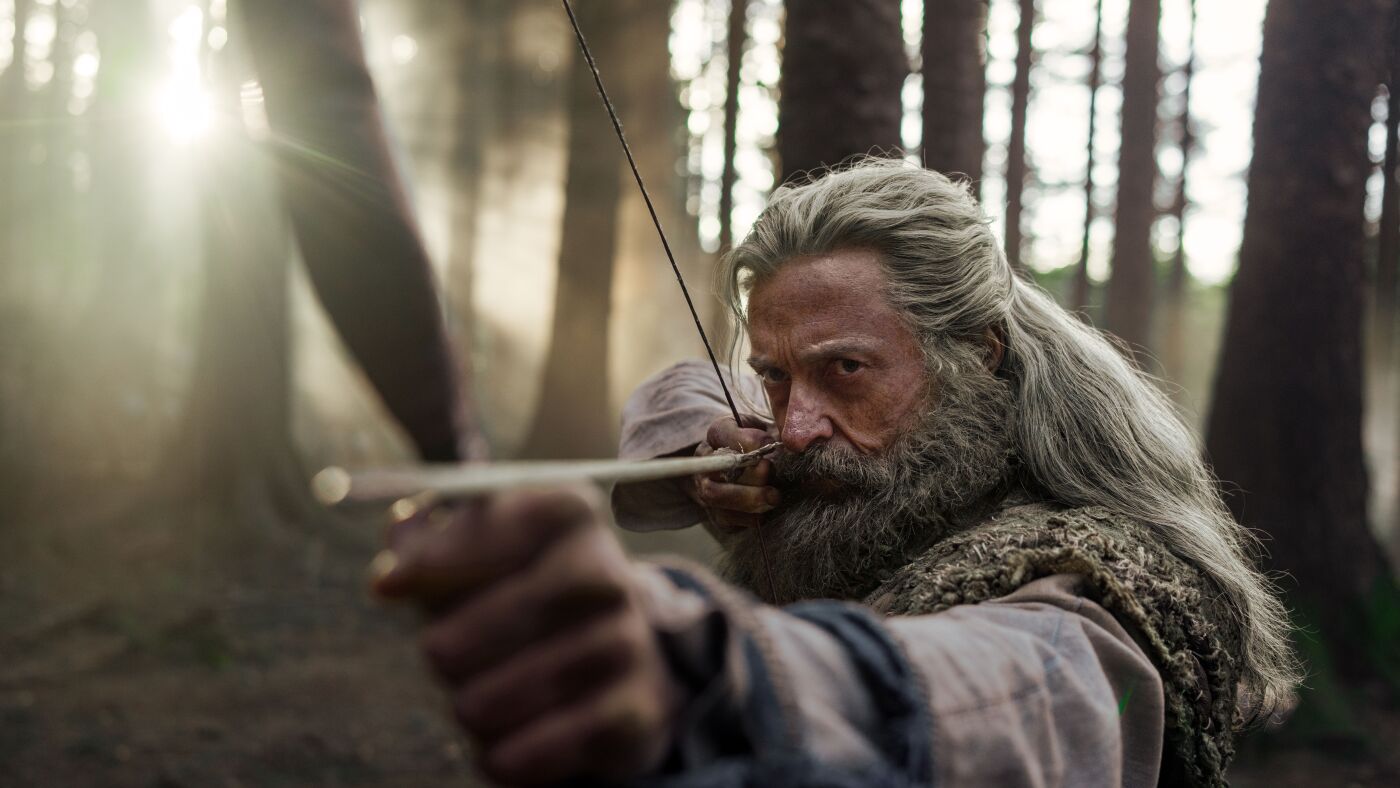
Hugh Jackman as Robin Hood.
A24
hide caption
toggle caption
A24
Gunmetal gray sky, barren muddy terrain, a half-starved child begging a wizened title character for a scrap of food moments before he slashes her throat. It’s hardly the opening you imagine for a film about a folk hero — especially one who robs the rich and gives to the poor. But then, The Death of Robin Hood is the brainchild of Michael Sarnoski (Pig, A Quiet Place: Day One), so maybe leave expectations in the lobby.
Sarnoski gives us Hugh Jackman’s battle-scarred, gray-bearded Robin as a tormented wretch, not the brash strapping outlaw of legend — alone, wracked by regret over the countless lives he’s ended or ruined. When we meet Robin in 1247 A.D., he seems pursued as much by his own guilt as by avenging relatives of the innocents he murdered in younger days (say, that half-starved but surreptitiously knife-clutching little girl).
So he tries to beg off when Little John (Bill Skarsgård, unrecognizable) approaches him with the promise of one more “adventure” — to rescue the wife John’s claimed after killing her husband, from the neighbors who then rescued her from John. Robin notes correctly that she’s not really John’s wife, yet he reluctantly brings his quiver, and an arm that can still shoot an arrow through a skull and out an eye socket at 50 paces.

He proves formidable, but not immortal. This “adventure” leaves him gravely wounded, dragged across forbidding terrain to a remote, cliff-top convent, where a prioress (Jodie Comer) with a curative touch and a marginally gentler way with a knife will attempt to bleed him back to health.
Sarnoski’s indie-realist approach to blood-letting — whether Pitt-ishly clinical, or Game of Thrones-esque in its brutality — is never less than arresting, and Jackman’s certainly up for the gore, extinguishing his torch in one opponent’s mouth and burying a hatchet in another’s back.
But it’s in the film’s later stages, where the character grapples with what his youthful righting of wrongs has cost both him and bystanders, that the actor and this medieval thriller find their emotional footing. Sarnoski is exploring the way we edit and augment the tales we tell about ourselves as we pass through the world, noting that hedges and embellishments will ultimately be laid bare.
If we live long enough, we’ll face a reckoning, a lesson Jackman’s delivered before as Logan, another troubled figure of legend. This film’s latter moments have a similarly eulogistic quality, augmented by Comer’s affecting turn as an accepting if anguished guardian at the hour when life ends, and myth takes flight.
Movie Reviews
‘Dreams of Violets’ Review: What Does a Film Made Entirely with AI Look Like? Ash Koosha’s Iranian Protest Drama Is Dramatically Numbing, but It’s Still a Startling Portent of the Future

“Dreams of Violets,” which premiered last week at the Tribeca Festival, is the first movie generated entirely by AI to be programmed at a major film festival — and it’s also the first movie generated entirely by AI that I’ve seen. As such, those of us at the premiere were really watching — and evaluating — two films at once. The first is a drama, set in Tehran, written and directed by the expatriate Iranian Ash Koosha (who is now a London-based tech entrepreneur), that depicts the days of protest and crackdown and state-sanctioned killing that took place five months ago, in January, as waves of Iranian citizens poured into the streets to register their anger at the country’s theocratic regime. I didn’t find that movie to be particularly effective. In fact, after a while I thought it was stultifying.
But the other movie, which is far more interesting and significant, is the one that demonstrates, simply by virtue of its existence, what some of the possibilities might be for the use of AI within the world of feature filmmaking. This is a delicate and dicey subject to even bring up, since the industry right now is in the grip of multiple perceptions and anxieties about what AI portends for the future of entertainment. And all of this is changing by the week. Just look at how quickly we went from Steven Soderbergh, in April, ruffling feathers for admitting that he used AI to craft fantasy sequences for his documentary “John Lennon: The Last Interview” to Martin Scorsese — as moral and respected a voice as there is in the industry — signing on, at the beginning of June, to partner with the German generative-AI firm Black Forest Labs in order to speed up the storyboarding process. Darren Aronofsky has now crossed the AI barrier as well, using it to make a series of web videos about the Revolutionary War.
These, of course, are all baby steps. But the baby is going to grow up. And what will it look like when it does? “Dreams of Violets” offers indications of at least a few of the places that AI, as its symbiosis with the industry grows and gathers force (which it surely will), might go.
But first, an aesthetic question: Is “Dreams of Violets” a weirdly distant and unsatisfying movie because it was made with AI? The strange answer to that is yes, but not really. It’s actually the form of the movie that’s odd and off-putting: a barely scripted series of anecdotes, or mere moments, with little in the way of dramatic development. Ash Koosha based the film on journalistic reports, photographs, and eyewitness accounts, and it’s clear that he wanted it to feel like we were watching scenes from a documentary, which sounds like a valid impulse. (Plenty of movies, including last year’s combat docudrama “Warfare,” have been staged that way.) But though the characters in “Dreams of Violets” look and talk like real people, and the rubble-strewn urban streets look and feel like real rubble-strewn urban streets, we’re barely given a context for what we’re seeing: soldiers killing civilians with random cruelty, which is the heart of the movie — at least, for the first half, after which it becomes less severe and even less interesting.
If you see a soldier killing a civilian in a documentary, it’s horrifying, but the effect is 100 times less powerful in a film that simply looks like a documentary, since we know, in our gut, that we’re not watching reality. That’s why the quality that draws us into a movie, even if it is a documentary, is the connection we feel to the people we’re watching. But Ash Koosha hasn’t scripted “Dreams of Violets” that way. He has made a movie with an uncanny-valley problem, an “existential” drama that’s all “authentic” but abstract moments: the vérité political-war-movie equivalent of calendar art. It’s like synthetic prize-winning photojournalism that moves.
At the time of the January protests, some observers thought the Iranian regime would topple (the Iran War has now made it clear what a naïve belief that was). But “Dreams of Violets” is not a days-of-rage tale of inspiration. It’s set after the protests have already been contained (the country’s police are doing a clean-up operation), and what it offers, mostly, is raw snapshots of state-sanctioned murder and political oppression. Yes, we “get to know” half a dozen characters — a boy in a wheelchair, his physician older brother, a reminiscing old woman, a music student, and several others. But Koosha doesn’t create fully realized scenes.
When “Dreams of Violets” played at Tribeca, the justification for the film — the reason given by Koosha to make it entirely with AI — is that it couldn’t have existed otherwise, and that the figures we’re seeing onscreen are all based on real people. Maybe that’s true, but effective art needs no justification. If you wanted to be cynical about it, you could say that Ash Koosha is exploiting the tragedy of his homeland to have the best possible excuse to craft an AI showreel. His company builds AI-based characters and has also played with using AI to generate pop music. In “Dreams of Violets,” he’s like the creator of Tilly Norwood pretending to be the director of a movie like “No Other Land.”
But if “Dreams of Violets,” as a movie, is mostly a bust, as an AI showreel it’s something more. Several critics have nitpicked visual flaws in the film’s design, but from moment to moment what I saw in “Dreams of Violence” looked plenty textured and realistic. Does this mean that AI can “make a movie”? No. But it does mean that AI can give you scenes of roiling tumultuous Civil War set in the hurly-burly of Tehran at sunset, with soldiers roaming the streets and forcing citizens into vans as others scurry out of the way, and it can make you believe your eyes. And here’s the buried lead: The film’s entire budget was $2,000. I don’t want to be the bearer of bad news, but the most powerful message to emerge from
“Dreams of Violets” isn’t that the Iranian regime is a ruthless pack of totalitarian oppressors. It’s that $2,000 can now buy a hell of a lot of motion picture.
Movie Reviews
Movie Review: ‘Leviticus’ makes a demon out of desire in an auspicious debut for Adrian Chiarella

What if the object of your desire was also the thing that’s trying to kill you? Not slowly irritating you to death for leaving the toilet seat up again. We mean actively trying to strangle you.
That’s the intriguing premise behind the horror-satire “Leviticus,” an auspicious feature film debut for writer-director Adrian Chiarella that’s both deeply scary and a queer revolt.
Named for the book of the Old Testament often used to justify homophobia, the movie explores the burgeoning relationship between two young men that is shattered when so-called “conversion therapy” — a scientifically discredited practice — unleashes a demon that stalks them. Some have called the movie “It Follows” meets “Heated Rivalry,” but that’s a disservice to Chiarella’s ambition.
The film centers on Naim (Joe Bird, the breakout star of A24’s “Talk to Me” )and Ryan (newcomer Stacy Clausen), who we watch fitfully, awkwardly fall for each other, slowly exploring their sexuality and stutter-stepping into their true selves. Wrestling turns to flirtation, which becomes longing and tenderness.
That doesn’t go over well in the small Australian town where the movie is set, a blue-collar community with belching smoke stacks, low-slung houses, barking dogs and a Christian pastor — with a “deliverance healer” — who prefers his flock much more heterosexual.
Chiarella is leaning not only into the notion that sexual desire makes you vulnerable, but also the harm that repressing who you are can do. In this case, the demon takes the form of your crush. It has weaponized lust.
“You shouldn’t be near me. I shouldn’t be near you, either,” one of the would-be lovers says to the other.
This image released by Neon shows Stacy Clausen, left, and Joe Bird in a scene from “Leviticus.” Credit: AP/Uncredited
Chiarella starts his movie with a nod to Alfred Hitchcock — a shower scene worthy of “Psycho” — and nods to others in the genre, like “A Nightmare on Elm Street.” He can be a bit clunky with his images — a frog being eaten by a snake — but his pacing is flawless and his ramping up of terror is sure. “Leviticus” might be an indie film, but it’s got the blessing of Frank Ocean, who gave the filmmakers the right to use his song “Self Control.”
The monsters — in addition to the nasty one only the boys can see, of course — are the adults: the parents and caregivers and friends who turn on vulnerable, scared young men and make them scared of each other. Mom might kindly take some disliked olives off her son’s pizza, but she won’t accept him kissing another boy.
Chiarella’s pro-queer filmmaking extends to his ability to perfectly capture the fumbling ecstasy of new love, the fierce longing of stolen kisses and how scary it is to submit to a new partner. Kudos to Bird and Clausen for capturing that universal feeling.
With his film, Chiarella forms a triumvirate of young filmmakers making horror brilliant in summer 2026, alongside Curry Barker with “Obsession” and Kane Parsons’ “Backrooms.” The future of movies is in good hands.
This image released by Neon shows Joe Bird in a scene from “Leviticus.” Credit: AP/Uncredited

“Leviticus,” a Neon release that’s in theaters Friday, is rated R by the Motion Picture Association for “bloody violent content, language, some sexual content and teen drug use.” Running time: 88 minutes. Three and a half stars out of four.
-

 Nebraska6 minutes ago
Disaster declaration sought for May storm damage in Nebraska
-

 Nevada8 minutes ago
Will a new Nevada law to prevent heat deaths work? Planning is underway
-

 New Hampshire14 minutes ago
Maine woman indicted in killing of her 88‑year‑old mother‑in‑law in Exeter, NH
-
New Jersey21 minutes ago
NJ rabbi faces lawsuit for sexual assault after giving financial aid | The Jerusalem Post
-

 New Mexico29 minutes ago
New Mexico Wants Almost $1B From ‘Public Nuisance’ Meta
-
North Dakota39 minutes ago
Crowing Counts Up Statewide | North Dakota Game and Fish
-

 Ohio44 minutes ago
Storm’s path of power outages and road closures
-

 Oklahoma51 minutes ago
Oklahoma City police investigating early morning shooting


