Montana
PSC can’t keep data center information secret, says group


A coalition of groups with concerns about data centers is challenging the Montana Public Service Commission’s decision to keep information about them under wraps at the request of NorthWestern Energy.
In a motion filed with the Public Service Commission this week, Earthjustice said NorthWestern hasn’t shown information in a series of letters qualifies as trade secrets, and keeping them hidden will hurt the public, especially those forced to buy electricity from the monopoly utility.
“Reflexively issuing a protective order based on unsubstantiated trade secret claims, as the Commission did here, creates barriers to participation, hides the costs of the deals with data centers, and allows decisions that will impact ratepayers to be made behind closed doors,” said the motion.
The motion argues the decision to “shield” the letters from public view is unlawful.
Earthjustice filed the motion on behalf of Butte Watchdogs for Social and Environmental Justice; Climate Smart Missoula; Helena Interfaith Climate Advocates; Honor the Earth; Montana Environmental Information Center; Montana Public Interest Research Group; and NW Energy Coalition.
In an email, PSC spokesperson Jamey Petersen said the Commission may issue protective orders when necessary to preserve trade secrets or other information that needs to be guarded under the law.
“The Commission is not in the business of ‘shielding’ any utility from scrutiny; our role is to apply Montana’s strong right‑to‑know provisions in Article II, Section 9 of the Montana Constitution alongside laws that protect genuinely confidential information, such as trade secrets, and we do so consistently regardless of which company is before us,” Petersen said in an email.
Proposed data centers are controversial in Montana.
NorthWestern Energy, data center developers and some business leaders argue they represent economic opportunity, such as more jobs and an expanded tax base.
But opponents argue they are going to mean increased rates for existing customers, who already are seeing rising utility costs, and bring detrimental impacts to water for many sectors of the state, including agriculture.
Data centers use a significant amount of water to remain cool.
NorthWestern Energy has been working with data center developers in Montana. It’s in conversation with at least 11 data center developers, including about projects in Montana.
In December 2025, the PSC issued a protective order allowing NorthWestern to keep the information in the letters out of public view, but the groups argue it did so without sufficient evidence and in violation of its own rules.
The documents at issue are NorthWestern’s letters of intent to three data center developers in Montana, Atlas Power Group, Sabey Data Center Properties, and Quantica Infrastructure; Atlas and Sabey have announced projects in Butte, and Quantica is working on one outside of Billings.
NorthWestern argued the information needed to be private because it has “independent economic value” and affects the utility’s “competitive advantage,” but the groups argue it didn’t explain itself.
“NorthWestern did not identify — in any manner — the information that it sought to shield from the public,” the motion said. “NorthWestern did not describe the contents of the Letters of Intent, nor provide any other explanation of the information that it was asking the Commission to determine qualified as trade secret.”
The motion also said NorthWestern promised to make a public filing concerning future service to data centers before the end of the year, which it didn’t do, and argued the letters should be kept secret because they’re part of “ongoing negotiations” and “not uniform.”
A spokesperson for NorthWestern Energy could not be reached Friday.
In August 2025, the PSC had planned to set a hearing on data centers, but Petersen said a date has not been set.
The Public Service Commission granted the protective order, but it didn’t describe the protected information, and it allowed the contents to remain secret because NorthWestern argued it wanted them secret, the groups said.
“The Commission concluded that the information in NorthWestern’s Letters of Intent was ‘secret’ because NorthWestern had protective measures in place to maintain secrecy and had not provided the Letters of Intent to any third parties,” the motion said.
On behalf of the PSC, however, Petersen said the Commission found NorthWestern met its burden to show that certain information “qualifies for trade secret protection, so that material must be handled confidentially while redacted versions and all other non‑confidential information remain available to the public.”
The letters NorthWestern filed are heavily redacted, but the motion said the redactions are not uniform, and some of the protected information hurts the public’s ability to advocate against rising costs for existing ratepayers.
The groups say the commission exceeded its legal authority in classifying the confidential information as a trade secret, and it “unconstitutionally shifted the initial burden of proof to the public to challenge a public utility’s claims of confidentiality.”
It said the standard the Public Service Commission adopted violates the Right to Know in the Montana Constitution, it’s contrary to the agency’s own regulations, and the Montana Supreme Court already rejected a similar approach in an earlier case.
The groups are asking the PSC to find NorthWestern has not met its burden to prove the information qualifies as a trade secret; determine the information should not be protected from public disclosure; and order NorthWestern to file unredacted copies of the letters.
Petersen said typically, affected parties such as NorthWestern are given a chance to respond before the Commission takes action on a motion.
“Because the motion is pending in an open docket, the Commission will not comment on its merits outside of the formal proceeding, consistent with its quasi‑judicial role,” Petersen said.



I’m going to be honest, I’ve lived in Bozeman for years, and I have yet to spot anyone famous.
I bring this up because it seems that celebrity spotting’s are a big deal here in Montana, especially around the Bozeman area. Just in the last couple of weeks there have been Shaq and Justin Timberlake sightings, although it should be noted the two weren’t together.
Shaq decided to stop into McKenzie River Pizza in Belgrade and took a photo with the staff, while Justin Timberlake actually lives outside of Bozeman and so I’m not sure you get as many points seeing him out and about.
There are others, Glen Close has a place here, Sam Elliot has been spotted in town, as well as Michael Keaton, and Kurt Russell, and I had a co-worker swear we were in line with Cameron Diaz one time at an event over at The Armory.
So, yes, famous people hang out around Bozeman. However, when you encounter one, there are certain rules you should be aware of.
What do do when encountering famous people in Montana
First, are they with their family or are they eating? If so, maybe a head nod and you move on. Don’t be that person that goes up and interrupts them or worse, just stands there until they acknowledge you. While they may be famous, they still have a right to enjoy a meal or time with their family out in public.
Second, if they are alone, be cool. Don’t rush up to them and ask for 50 billion things. Approach them, calmly, say hello, let them know you’re a big fan. See how they respond, if they are gracious, then maybe ask for a picture. But don’t blow it by acting a fool.
Finally, if they come across as rude, don’t take it personal. Some of these folks work several hours a day, and maybe you caught them in a moment. Yes, it’s super cool for you to meet a celebrity, but for them, you’re the 500th person they’ve had to meet that day. You have to know when to walk away.
Have you ever ran into a celebrity? Who was it? Did you have a chance to talk with them? How was their reaction? Let us know by sending us a message on our app.
13 Famous Celebrities You Could Run Into in Montana
Whether they’re fly fishing, performing at local venues, or just grabbing a coffee downtown, these stars are blending into Montana life
Gallery Credit: jessejames
10 Celebrities Who’ve Lived In Missoula
Sure, tons of celebrities like to visit Montana but here are 10 who actually lived in Missoula.
Gallery Credit: Mike Smith
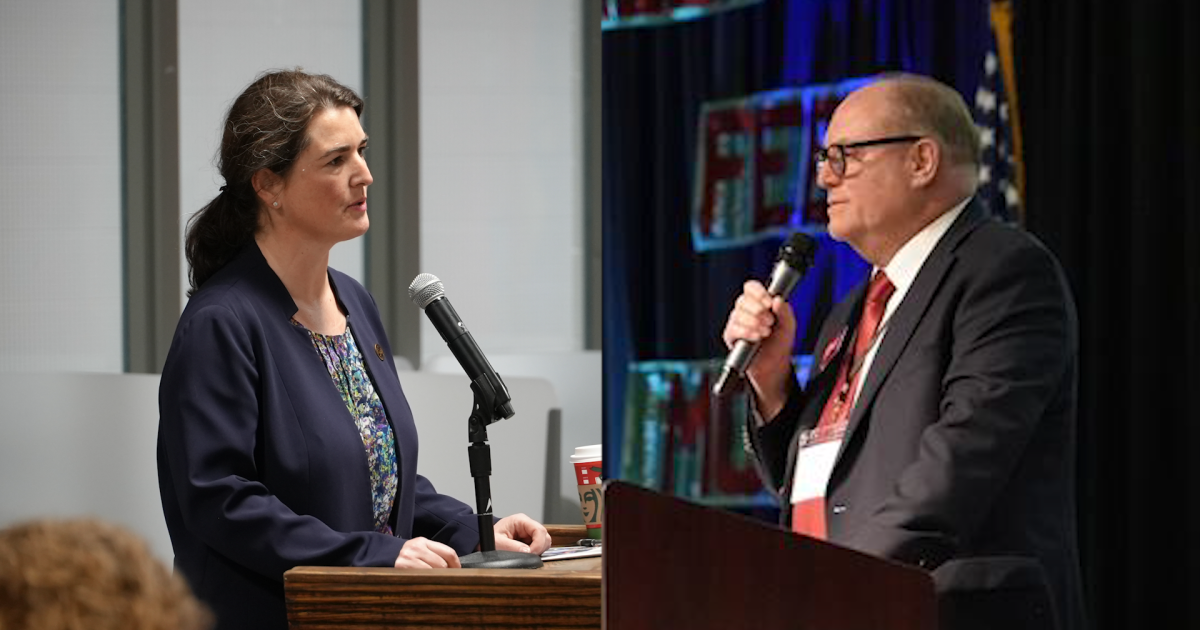
KALISPELL — There’s one open seat on the Montana Supreme Court in this year’s elections, and only two candidates filed to run for it. That means both Dan Wilson and Amy Eddy will be moving on to the general election in November, regardless of what happens in the June primary.
Wilson and Eddy are running for an associate justice position, currently held by the retiring Justice Beth Baker. They have several key things in common – most notably, both are state district judges, holding court at the Flathead County Justice Center in Kalispell.
(Watch the video to hear from the two candidates.)
Finalists already set for Montana Supreme Court Race
For many Montana voters, Wilson will be more familiar, after he ran for associate justice unsuccessfully in 2024.
“What’s different for me this time is that people are really wanting to know and have their questions answered about my judicial philosophy and my judicial approach,” he told MTN. “I would say the last time I ran, they were more curious just to get to know me as a person, meet me face to face and shake my hand and that sort of thing.”
Wilson, elected as a district judge in 2016, describes himself as a “constitutional conservative” and says Montana courts have leaned too far toward “judicial activism.”
“A judicial activist, in my view, is one whose judicial decision-making is dominated in those questionable cases by perhaps their own personal agenda or the agenda of special interests who advance their career,” he said. “A constitutional conservative does not look to the end result first, but looks to the law.”
Jonathon Ambarian
Eddy was first appointed to the bench in 2015. As she hasn’t run statewide before, she says she’s been working hard to introduce herself to voters.
“We’re approaching the campaign the same way we have been since May, when we announced,” she said. “We’re out talking to everybody in as many counties as we can.”
Eddy says her campaign is emphasizing the nonpartisan nature of judicial elections and the court’s role in upholding the state constitution and protecting individual liberties.
“People want nonpartisan, independent courts, and they want a government that functions, which is something we can certainly all get behind,” she said. “Then, of course, with the focus on the Montana Constitution right now and the different constitutional initiatives, we have lots of conversations about the unique rights we have under the Montana Constitution that are not enjoyed under the U.S. Constitution.”
Both candidates have said they want to maintain judicial impartiality. For Eddy, she says that means not participating in campaign events sponsored by political parties.
“We should not be checking in with a political party leadership, and before a judge makes a decision, they should not be saying, ‘How do I earn a standing ovation at a political party convention?’” she said. “They should be asking themselves, ‘What does the Constitution demand?’”
Wilson was a featured speaker at the Montana Republican Party’s winter kickoff in Great Falls earlier this year. In addition, he received $20,000 in two contributions from the state GOP – in the first election cycle since the Legislature repealed a law banning political parties from contributing to judicial candidates.
Jonathon Ambarian
Wilson says judges in nonpartisan races aren’t supposed to seek endorsements from parties, but the First Amendment allows them to support whoever they want. He believes judicial ethics rules don’t disallow judicial candidates from attending party-sponsored events.
“I think it’s a little bit naive to think that you can run a statewide campaign as a nonpartisan candidate without getting out and trying to meet as many people as you can, and to attract as much support as you can,” he said.
Wilson says people supporting him don’t expect him to rule a specific way, but to be consistent and evenhanded in how he applies the law.
“The impartiality comes with giving each side a fair hearing and taking their arguments to their logical endpoint and deciding which one is more persuasive under the law, so it’s more about having and keeping an open mind as to what the outcome should be,” he said.
While Eddy is staying away from party meetings, she has addressed some interest groups like the Montana Conservation Voters. MTN asked how she would respond to people who said those events could be seen as having political leanings, and she said groups like MCV do include members from more than one party.
“People can put a partisan view on it, but in fact, that organization is made up of lots of different people – and those are principles specifically protected in the Montana Constitution, which, of course, I’ve taken an oath to uphold,” she said.
The state constitution’s provision guaranteeing “the right to a clean and healthful environment” is at the center of one of Wilson’s major criticisms of the current Montana Supreme Court. In speeches and in interviews, he has said the majority overstepped in the Held v. Montana climate change case, when they struck down a law on the basis that state policies on greenhouse gas emissions were harming that right.
“The drafters of our constitution were adamant that this is a right that the Legislature – and therefore the people – needed to control, and that they were most concerned that the Supreme Court would take it over, issue a ruling that would bind the government and the citizens of Montana, possibly forever, and the citizens could never overturn,” Wilson told MTN.
Wilson has also criticized Eddy for having been part of a 2011 lawsuit making similar arguments to argue the state had a duty to manage the atmosphere as a public trust, and therefore to address emissions. Eddy told MTN she was one of the original attorneys on the case when plaintiffs asked the Montana Supreme Court to take jurisdiction, but that she wasn’t involved further after the court sent it back to district court for a trial. She said it hasn’t been an issue she’s heard concerns about from voters yet.
“We spent three weeks living out of our car in eastern Montana and it never came up,” she said.

Got story updates? Submit your updates here. ›
Christina Koch, a former resident of Livingston, Montana, has become the first woman to orbit the moon as part of the Artemis 2 crew, the first lunar mission for the United States in 50 years. Koch previously set the record for the longest single female spaceflight when she lived aboard the International Space Station for nearly a year in 2019.
Why it matters
Koch’s historic achievement as the first woman to orbit the moon is a significant milestone for space exploration and a source of inspiration, especially for young people who may now dream of following in her footsteps. Her journey also highlights the progress made in the space program and the growing opportunities for women in STEM fields.
The details
As part of the Artemis 2 crew, Christina Koch will become the first woman to orbit the moon. This mission marks the first time the United States has sent astronauts to the moon since the Apollo program ended in the 1970s. Koch, who previously spent nearly a year aboard the International Space Station, is the first woman to hold the record for the longest single spaceflight.
- In 2019, Christina Koch set the record for the longest single female spaceflight when she lived aboard the International Space Station for almost a year.
- The Artemis 2 mission, which will include Christina Koch as the first woman to orbit the moon, is scheduled to launch in 2026.
The players
Christina Koch
A former resident of Livingston, Montana, who has become the first woman to orbit the moon as part of the Artemis 2 crew. She previously set the record for the longest single female spaceflight when she lived aboard the International Space Station for nearly a year in 2019.
Artemis 2
The first lunar mission for the United States in 50 years, which will include Christina Koch as the first woman to orbit the moon.
Got photos? Submit your photos here. ›
What they’re saying
“Christina Koch’s journey from Livingston to the moon is a reminder of how far we’ve come—and how far we still want to go.”
— Derek Wolf, Author
What’s next
The Artemis 2 mission, which will include Christina Koch as the first woman to orbit the moon, is scheduled to launch in 2026.
The takeaway
Christina Koch’s historic achievement as the first woman to orbit the moon is a significant milestone for space exploration and a source of inspiration, especially for young people who may now dream of following in her footsteps. Her journey highlights the progress made in the space program and the growing opportunities for women in STEM fields.

Former lieutenant at eastern Kentucky penitentiary sentenced to prison in assault case

Cold Stone Creamery Brings Franchise Opportunities to Southern Louisiana

Educators across Maine congregate to discuss biggest issues

Maryland Ban on Mandatory Anti-Union Meetings Goes to Governor

Counterfeit cash investigation near Traverse City expands to 14 other states

Florida High School Football Rankings: Top 25 teams – Oct. 21

How old is Bo Nix? What to know about Oregon quarterback ahead of 2024 NFL Draft

Cleary's 21 help Le Moyne down Central Connecticut State 69-64 in OT

99th annual Pony Swim held in Virginia

Indiana Members Credit Union announced as new anchor tenant at Bottleworks District

Video: The Fragile Cease-Fire in Iran

Spanberger ripped after taking credit for billions in investments secured under GOP predecessor: ‘Pathetic’

Newsletter: NATO holds amid fragile Iran ceasefire

Jim Whittaker, the first American to summit Mount Everest, dies at 97

Video: Military Families Bear the Burden of War, Again
-

 Atlanta, GA4 days ago
1 teenage girl killed, another injured in shooting at Piedmont Park, police say
-

 Culture1 week ago
Do You Know Where These Famous Authors Are Buried?
-

 Movie Reviews1 week ago
Vaazha 2 first half review: Hashir anchors a lively, chaos-filled teen tale
-

 Georgia2 days ago
Georgia House Special Runoff Election 2026 Live Results
-

 Education1 week ago
Video: We Put Dyson’s $600 Vacuum to the Test
-

 Pennsylvania3 days ago
Parents charged after toddler injured by wolf at Pennsylvania zoo
-
 Milwaukee, WI3 days ago
Potawatomi Casino Hotel evacuated after fire breaks out in rooftop HVAC system
-
 Entertainment1 week ago
Inside Ye’s first comeback show at SoFi Stadium