West
Idaho man arrested after allegedly flying stolen plane to California and fleeing into desert


Fox News Flash top headlines for January 4
Fox News Flash top headlines are here. Check out what’s clicking on Foxnews.com.
An Idaho man was arrested after stealing a plane from a North Las Vegas hangar.
He allegedly flew it over 100 miles into a southern California airport and eventually ran into a desert area after officers inquired about the aircraft.
The man, who is currently in custody in San Bernardino County, faces charges of possession of a stolen airplane and taking stolen property across state lines.
OFFICIALS CHARGE AIRLINE PASSENGER AFTER HE ALLEGEDLY STOLE OVER $23K FROM OTHERS ON PLANE
The incident occurred on Saturday, according to the county sheriff’s department. There could be additional charges in Nevada, according to KSNV-TV.
The man was apprehended in San Bernardino County and faces charges of possession of a stolen airplane and taking stolen property across state lines. (Fox News)
North Las Vegas officials said the man could also be behind attempted airplane burglaries in the three previous days before his arrest, according to the station.
CALIFORNIA GIRL SEEN CRASHING STOLEN EMPTY PLANE INTO BUILDING, FENCE AT AIRPORT
The aircraft was valued at about $80,000, according to the San Bernardino County Sheriff’s Department.
Read the full article from Here

San Francisco, CA
This Week: Bike Ambassador, Lake Merritt Loop, Cayuga Street – Streetsblog San Francisco

Here is a list of events this week.
- Tuesday Bicycle Ambassador Training. This online training will get you up to date on what’s going on with the San Francisco Bicycle Coalition and teach you how to sign up new members. Tuesday, March 31, 5-7 p.m. Sign up here for Zoom link.
- Tuesday Lake Merritt Loop Group Ride. Join Bike East Bay for this monthly after-work, slow-paced bike ride. Tuesday, March 31, roll out at 5:30 p.m. from Lake Merritt BART, east side of Oak Street between 8th and 9th Streets, Oakland. Ends at 19th Street BART, 20th Street at Broadway. RSVP here.
- Wednesday Cayuga Slow Street Upgrade Open House. SFMTA and the San Francisco Public Utilities Commission invite neighbors to share feedback on proposed traffic calming and stormwater infrastructure. Wednesday, April 1, 5:30-7:30 p.m. Excelsior Branch Library, 4400 Mission Street, S.F.
- Wednesday Save Bay Area Transit Info Session & Signature Gathering Training. Join SFBike, Connect Bay Area, and Stronger Muni for All to learn about the two transit funding measures that can close the deficit and how you can get involved to support them. Wednesday, April 1, 5:30-6:30 p.m. Rikki’s, 2223 Market Street, S.F. RSVP required.
- Friday Woman and Non-Binary Bike S.F. Coffee Club. The San Francisco Bicycle Coalition Coffee Club is a place to meet new people, talk bikes, share tips, and caffeinate. Friday, April 3, 8-9 a.m. Cinderella Bakery, 436 Balboa Street, S.F.
Got an event we should know about? Drop us a line.

This week, Denver City Council will make a decision that goes to the heart of a basic responsibility we all share: keeping our communities safe.
The proposal is a one-year contract with Axon Enterprise to install 50 license plate reader cameras in high-traffic areas. These cameras help law enforcement identify vehicles connected to crimes. Some in our community have raised concerns about privacy–and we should take those concerns seriously.
As Denver council faces vote on new license plate cameras contract, distaste lingers for ‘this whole Flock era’
But we should also look at the facts.
This contract includes some of the strongest privacy protections we’ve seen. The data belongs only to the City of Denver. It cannot be shared with outside agencies like DHS or ICE. And it is automatically deleted after just 21 days. These safeguards didn’t happen by accident–they are the result of months of careful work by city leaders, law enforcement, and independent experts.
At the same time, we know this technology works. License plate readers were used in more than 40% of homicide investigations in Denver last year. They have helped recover stolen cars, take illegal firearms off our streets, locate missing children, and both confirm and eliminate suspects. Cities across the country–from New York City to San Diego—rely on them every day.
We also know what happens when safeguards fall short. Denver’s previous vendor, Flock Safety, misused data, and that contract was terminated. We learned from that experience. After a thorough review, the city selected Axon, a company widely trusted for its strong security and accountability.
Let’s also be clear about what these cameras do–and don’t do. They are aimed at public roads, capturing license plates that are already visible to anyone. Courts have consistently ruled there is no violation of privacy in those settings.
Since taking office, Mayor Mike Johnston has overseen meaningful progress in reducing crime, with homicides and auto thefts both declining. License plate readers are not the only reason, but they are part of a broader strategy that is making a difference.
At a time when fear and distrust can easily take hold, we have to stay grounded in reality. We cannot have police officers everywhere at all hours. But we can give them tools that act as extra “eyes”–helping them identify reckless drivers, track fleeing suspects, and respond more effectively to serious crimes.
The choice before us is not between safety and privacy. With this contract, we can–and must—have both.
If we expect safer streets, we have to give our law enforcement the tools to deliver them. Denver City Council should vote yes.
Michael B.Hancock, Federico Peña and Wellington E. Webb are former mayors of Denver.
Sign up for Sound Off to get a weekly roundup of our columns, editorials and more.
To send a letter to the editor about this article, submit online or check out our guidelines for how to submit by email or mail.

Yasuaki Saito often hides in plain sight at his restaurants.
Yasuaki Saito’s restaurants are more famous than he is. Saint Bread, his University District waterfront bakery, was called one of the country’s best bakeries by The New York Times and got longlisted for the James Beard Awards last year. This year the Wayland Mill, his Japanese-inspired all-day café and restaurant in Wallingford, is up for the James Beard Award for Best New Restaurant. If you’ve eaten at Saito’s restaurants, you may have unknowingly met the shaggy-headed fortysomething when he greeted you at his Fremont pizzeria, Tivoli, or made your coffee at Saint Bread.
Saito has a way of fading into the background. He resembles a kind-eyed roadie who’s happy to lend you his dog-eared copy of Zen and the Art of Motorcycle Maintenance. The kind of guy who, in a notoriously potty-mouthed profession, will respond to accidentally breaking a plate by exclaiming, “Biscuits and gravy!”
He doesn’t curse in anger, Saito says, because he doesn’t want to demonstrate to his team that that’s how you deal with challenges and mistakes. “He is so intentional and really believes in everything that he does,” says chef Sam Smith, who worked with Saito in Portland and consulted on Saint Bread.
When the Wayland Mill opened, Saito spent a lot of time working the register to set the standard for how he wanted guests to be greeted. He often hires people based not on skill level, but on how much they care about hospitality. It’s all part of a formula that has made him one of the most successful Seattle restaurateurs of the past decade.
Saito’s low-key version of leadership shapes his restaurants.

Saito grew up hanging out in the St. Louis teppanyaki restaurant his Japanese immigrant father owned. From age 7, Saito loved the communal, bustling vibe and always wanted to work in restaurants.
It didn’t actually happen until he burned out after a decade working at Borders, quit his job, and wound up helping some friends open the era-defining, now-classic Nopa in San Francisco. In 2014, Saito and his wife moved to Seattle, where he took a job managing the London Plane. Then still relatively new, the ambitious café, bakery, and flower shop in Pioneer Square owned by restaurateur Matt Dillon and florist Katherine Anderson was the ideal landing spot for someone with Saito’s wide-ranging interests.
“He has so much energy and also expertise in so many different things,” says Cassie Woolhiser, who has worked for Saito off and on in various roles for more than a decade. “Like calibrating an espresso machine, but also writing poetry and talking about humanism and how it affects his day-to-day work.”
In 2018, Anderson and Dillon brought Saito on as a partner in London Plane. The following year, he bought Post Alley Pizza, near Pike Place Market, with his longtime coworker Andrew Gregory. They didn’t announce the ownership change publicly, but stealthily reinvented the hole-in-the-wall slice shop, making pies with 24-hour leavened dough and orienting specials around seasonal produce. That transformation would set the tone for Saito’s future ventures: understated but quietly innovative.
Tivoli serves the same pizza as Post Alley, with a few extras.
The London Plane closed in late 2022 when Saito and Anderson declined to renew the lease. By then, Saito had opened Saint Bread, which retains some of that maximalist spirit. It’s a bakery but also a brunch restaurant where the food gleefully borrows from Japan and Scandinavia; an omelet comes topped with pickled ginger and fishy bonito flakes, an egg sandwich on sweet melonpan instead of a roll. In the warmer months, Saint Bread hosts a cocktail stand (Heave Ho) and a wood-fired food cart (Hinoki) in the unassuming space—a repurposed boathouse and a gravel lot—that manages to be so many things at once.
Saito followed up Saint Bread with Tivoli in 2023, which anchors its menu on the same style of pizza as Post Alley, but adds dishes like a Caesar salad livened up with chicories and chilled pistachio noodles. Then, with last year’s the Wayland Mill, he leaned further into the mash-up concept: a coffee shop where you can work while sampling a pastry or a date-night spot where you can get sake and Buffalo chicken karaage. Saito dubbed the food “yoshoku Americana,” borrowing the term for Japanese versions of Western dishes and injecting it with homegrown nostalgia. It’s a cuisine that has been back and forth across the Pacific a few times but is instantly recognizable. “The yoshoku idea is something I grew up really enjoying,” says Saito. “[It] allowed me to be that hafu, that liminal space of being a Japanese American kid, it helped me maybe come to terms more with my upbringing and my heritage.”
Saito and chef Jim McGurk infused their shared Midwestern backgrounds into Tivoli.
Nostalgia is something of a North Star for Saito’s operations, says Woolhiser. Customers likely didn’t grow up eating the gochujang snickerdoodle at Saint Bread, but they probably recall being warmed by a cookie on a chilly fall day. People haven’t had anything like the delicate biscuits slathered in umami-rich miso-chashu gravy at the Wayland Mill, but all the elements of that dish are familiar—diner fare filtered through Saito’s experience, interpreted by baker Ellary Collins and chef Jim McGurk.
Unlike many star restaurateurs, Saito didn’t start out as a chef. He describes his role as an “operator,” someone who has done practically every job in the restaurant but also handles payroll and balances the books. A chef puts together ingredients to make dishes; Saito puts together people to make restaurants.
Making pizza at Saito’s restaurants is just one part of making a guest feel welcome.
“He’s very good at finding great talent, bringing that talent together, and letting people’s talents speak,” says Nicole Sakai, an art director whose agency, Factory North, built the stained-glass window at Saint Bread, among other projects for Saito. He looks for people who have “hospitality in their hearts,” or the Japanese idea of omotenashi, which he roughly defines as “hospitality for the sake of it.” He wants people who understand that baking bread or grilling hamburgers or pulling espresso shots is all in service of making a guest feel welcome. Even people who are exceptional cooks or bakers may not care about that second layer of the work, but Saito needs them to.
It means saying “welcome in” and meaning it, a bit of sincerity you can’t quite describe but feel when you walk in. It means that when a construction worker wanders into the Wayland Mill when it’s closed, Saito will (politely) pause the interview with the journalist he’s conducting to make a coffee. It means that if you say how much you love a cup at the Wayland Mill, as a friend of mine recently did, you may find yourself being given one when you leave.
That hospitality extends beyond paying customers. At the London Plane, people from the neighborhood would wander in from the street in varying degrees of distress. “Sometimes people were destructive, and Yasu had to ask them to leave,” Woolhiser says. “But most of the time, people would just come in and sit down and be like, on their own mental journey, and Yasu would offer them a cup of coffee or ask if they wanted anything.”
The sainted glass window at Saint Bread.
Saito’s philosophy around those interactions is to show up for the world the way that he thinks the world should show up for him. With a glass of water, directions, simply a place to sit for a while. “There’s a version of that help that could actually put that person on a different path,” he says. “And I’m not going to say that I’ve done anything to save anybody’s life or any of those things, but oftentimes it’s small things like that that can help somebody understand that they’re not alone in the world.”
Some guests might notice this spirit of hospitality, all these layers of meaning. Some of them probably don’t, just as some glaze over the custom stained-glass window at Saint Bread. They don’t need to see any individual action, any tangible evidence of Saito’s hard work. His kindness, his attention to detail, the way he cares about so many things, it all seeps into his restaurants. A vibe, something in the air, the way customers feel after a visit. They might not notice it, but it leaves a mark anyway.

‘What’s going on?’: US judge calls aspects of new Pentagon press policy ‘weird’

How a Database Manager Lives on $118,000 in Inwood

Detroit Lions ‘Ready’ for All-Pro Moving to Left Tackle

This Week: Bike Ambassador, Lake Merritt Loop, Cayuga Street – Streetsblog San Francisco

How FC Dallas Can Unlock Santiago Moreno Alongside Musa, Valiente, and Farrington

Florida High School Football Rankings: Top 25 teams – Oct. 21

How old is Bo Nix? What to know about Oregon quarterback ahead of 2024 NFL Draft

Cleary's 21 help Le Moyne down Central Connecticut State 69-64 in OT

99th annual Pony Swim held in Virginia

Indiana Members Credit Union announced as new anchor tenant at Bottleworks District
‘What’s going on?’: US judge calls aspects of new Pentagon press policy ‘weird’

Video: Iran to Allow More Oil Ships Through Strait of Hormuz, Trump Says

Dem senator warns deportation could let Virginia woman’s illegal immigrant killer ‘escape accountability’

Newsletter: G7 ministers to hold talks on war’s economic fallout
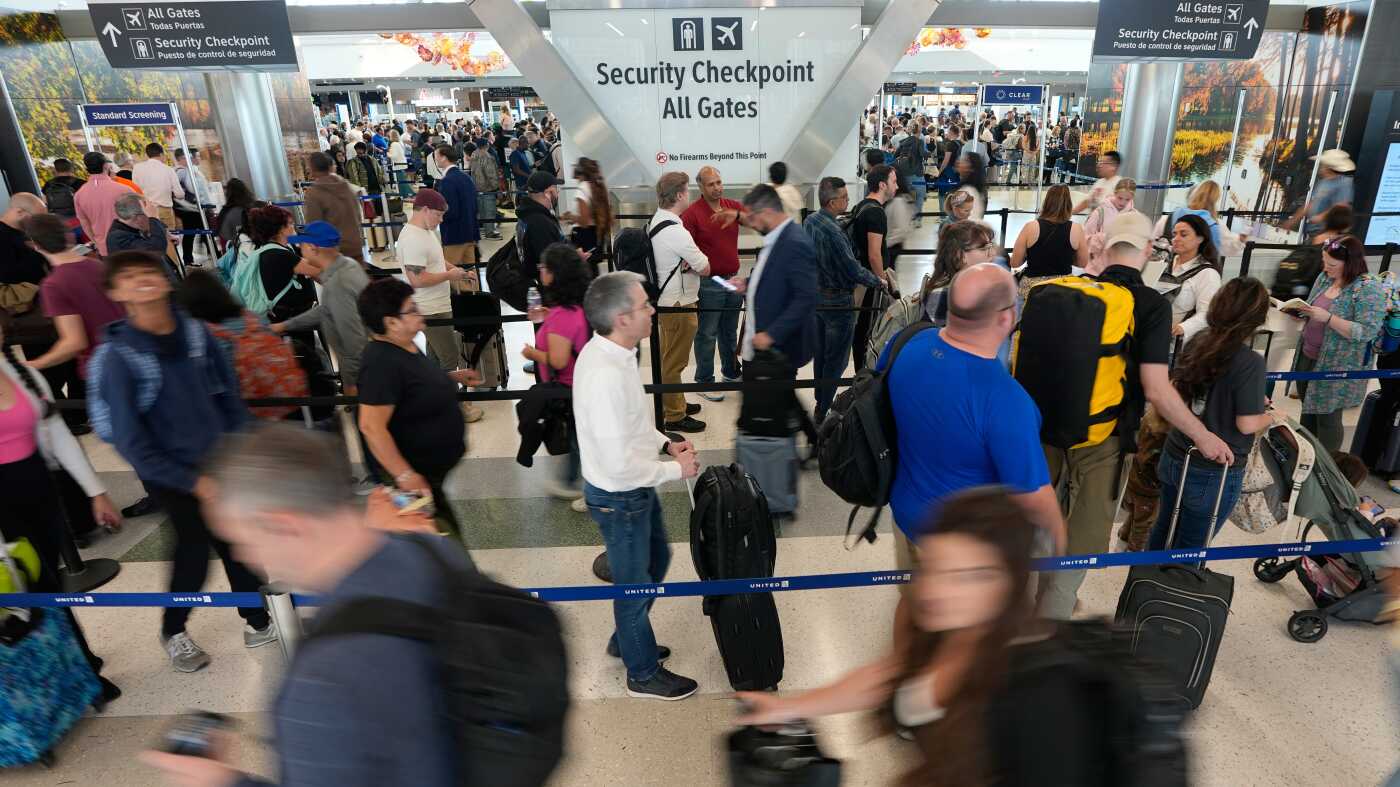
ICE officers could remain at airports after TSA workers are paid
-

 Sports1 week ago
IOC addresses execution of 19-year-old Iranian wrestler Saleh Mohammadi
-

 Miami, FL4 days ago
Jannik Sinner’s Girlfriend Laila Hasanovic Stuns in Ab-Revealing Post Amid Miami Open
-

 New Mexico1 week ago
Clovis shooting leaves one dead, four injured
-

 Politics1 week ago
Schumer gambit fails as DHS shutdown hits 36 days and airport lines grow
-

 Tennessee7 days ago
Tennessee Police Investigating Alleged Assault Involving ‘Reacher’ Star Alan Ritchson
-

 Minneapolis, MN4 days ago
Boy who shielded classmate during school shooting receives Medal of Honor
-

 Science1 week ago
Record Heat Meets a Major Snow Drought Across the West
-

 South-Carolina1 day ago
South Carolina vs TCU predictions for Elite Eight game in March Madness