Seattle, WA
The Man Behind Saint Bread, the Wayland Mill, and Tivoli


Yasuaki Saito often hides in plain sight at his restaurants.
Yasuaki Saito’s restaurants are more famous than he is. Saint Bread, his University District waterfront bakery, was called one of the country’s best bakeries by The New York Times and got longlisted for the James Beard Awards last year. This year the Wayland Mill, his Japanese-inspired all-day café and restaurant in Wallingford, is up for the James Beard Award for Best New Restaurant. If you’ve eaten at Saito’s restaurants, you may have unknowingly met the shaggy-headed fortysomething when he greeted you at his Fremont pizzeria, Tivoli, or made your coffee at Saint Bread.
Saito has a way of fading into the background. He resembles a kind-eyed roadie who’s happy to lend you his dog-eared copy of Zen and the Art of Motorcycle Maintenance. The kind of guy who, in a notoriously potty-mouthed profession, will respond to accidentally breaking a plate by exclaiming, “Biscuits and gravy!”
He doesn’t curse in anger, Saito says, because he doesn’t want to demonstrate to his team that that’s how you deal with challenges and mistakes. “He is so intentional and really believes in everything that he does,” says chef Sam Smith, who worked with Saito in Portland and consulted on Saint Bread.
When the Wayland Mill opened, Saito spent a lot of time working the register to set the standard for how he wanted guests to be greeted. He often hires people based not on skill level, but on how much they care about hospitality. It’s all part of a formula that has made him one of the most successful Seattle restaurateurs of the past decade.
Saito’s low-key version of leadership shapes his restaurants.

Saito grew up hanging out in the St. Louis teppanyaki restaurant his Japanese immigrant father owned. From age 7, Saito loved the communal, bustling vibe and always wanted to work in restaurants.
It didn’t actually happen until he burned out after a decade working at Borders, quit his job, and wound up helping some friends open the era-defining, now-classic Nopa in San Francisco. In 2014, Saito and his wife moved to Seattle, where he took a job managing the London Plane. Then still relatively new, the ambitious café, bakery, and flower shop in Pioneer Square owned by restaurateur Matt Dillon and florist Katherine Anderson was the ideal landing spot for someone with Saito’s wide-ranging interests.
“He has so much energy and also expertise in so many different things,” says Cassie Woolhiser, who has worked for Saito off and on in various roles for more than a decade. “Like calibrating an espresso machine, but also writing poetry and talking about humanism and how it affects his day-to-day work.”
In 2018, Anderson and Dillon brought Saito on as a partner in London Plane. The following year, he bought Post Alley Pizza, near Pike Place Market, with his longtime coworker Andrew Gregory. They didn’t announce the ownership change publicly, but stealthily reinvented the hole-in-the-wall slice shop, making pies with 24-hour leavened dough and orienting specials around seasonal produce. That transformation would set the tone for Saito’s future ventures: understated but quietly innovative.
Tivoli serves the same pizza as Post Alley, with a few extras.
The London Plane closed in late 2022 when Saito and Anderson declined to renew the lease. By then, Saito had opened Saint Bread, which retains some of that maximalist spirit. It’s a bakery but also a brunch restaurant where the food gleefully borrows from Japan and Scandinavia; an omelet comes topped with pickled ginger and fishy bonito flakes, an egg sandwich on sweet melonpan instead of a roll. In the warmer months, Saint Bread hosts a cocktail stand (Heave Ho) and a wood-fired food cart (Hinoki) in the unassuming space—a repurposed boathouse and a gravel lot—that manages to be so many things at once.
Saito followed up Saint Bread with Tivoli in 2023, which anchors its menu on the same style of pizza as Post Alley, but adds dishes like a Caesar salad livened up with chicories and chilled pistachio noodles. Then, with last year’s the Wayland Mill, he leaned further into the mash-up concept: a coffee shop where you can work while sampling a pastry or a date-night spot where you can get sake and Buffalo chicken karaage. Saito dubbed the food “yoshoku Americana,” borrowing the term for Japanese versions of Western dishes and injecting it with homegrown nostalgia. It’s a cuisine that has been back and forth across the Pacific a few times but is instantly recognizable. “The yoshoku idea is something I grew up really enjoying,” says Saito. “[It] allowed me to be that hafu, that liminal space of being a Japanese American kid, it helped me maybe come to terms more with my upbringing and my heritage.”
Saito and chef Jim McGurk infused their shared Midwestern backgrounds into Tivoli.
Nostalgia is something of a North Star for Saito’s operations, says Woolhiser. Customers likely didn’t grow up eating the gochujang snickerdoodle at Saint Bread, but they probably recall being warmed by a cookie on a chilly fall day. People haven’t had anything like the delicate biscuits slathered in umami-rich miso-chashu gravy at the Wayland Mill, but all the elements of that dish are familiar—diner fare filtered through Saito’s experience, interpreted by baker Ellary Collins and chef Jim McGurk.
Unlike many star restaurateurs, Saito didn’t start out as a chef. He describes his role as an “operator,” someone who has done practically every job in the restaurant but also handles payroll and balances the books. A chef puts together ingredients to make dishes; Saito puts together people to make restaurants.
Making pizza at Saito’s restaurants is just one part of making a guest feel welcome.
“He’s very good at finding great talent, bringing that talent together, and letting people’s talents speak,” says Nicole Sakai, an art director whose agency, Factory North, built the stained-glass window at Saint Bread, among other projects for Saito. He looks for people who have “hospitality in their hearts,” or the Japanese idea of omotenashi, which he roughly defines as “hospitality for the sake of it.” He wants people who understand that baking bread or grilling hamburgers or pulling espresso shots is all in service of making a guest feel welcome. Even people who are exceptional cooks or bakers may not care about that second layer of the work, but Saito needs them to.
It means saying “welcome in” and meaning it, a bit of sincerity you can’t quite describe but feel when you walk in. It means that when a construction worker wanders into the Wayland Mill when it’s closed, Saito will (politely) pause the interview with the journalist he’s conducting to make a coffee. It means that if you say how much you love a cup at the Wayland Mill, as a friend of mine recently did, you may find yourself being given one when you leave.
That hospitality extends beyond paying customers. At the London Plane, people from the neighborhood would wander in from the street in varying degrees of distress. “Sometimes people were destructive, and Yasu had to ask them to leave,” Woolhiser says. “But most of the time, people would just come in and sit down and be like, on their own mental journey, and Yasu would offer them a cup of coffee or ask if they wanted anything.”
The sainted glass window at Saint Bread.
Saito’s philosophy around those interactions is to show up for the world the way that he thinks the world should show up for him. With a glass of water, directions, simply a place to sit for a while. “There’s a version of that help that could actually put that person on a different path,” he says. “And I’m not going to say that I’ve done anything to save anybody’s life or any of those things, but oftentimes it’s small things like that that can help somebody understand that they’re not alone in the world.”
Some guests might notice this spirit of hospitality, all these layers of meaning. Some of them probably don’t, just as some glaze over the custom stained-glass window at Saint Bread. They don’t need to see any individual action, any tangible evidence of Saito’s hard work. His kindness, his attention to detail, the way he cares about so many things, it all seeps into his restaurants. A vibe, something in the air, the way customers feel after a visit. They might not notice it, but it leaves a mark anyway.



The Mariners have made the first move in what’s sure to be a rip-roaring Trade Deadline season, acquiring INF Buddy Kennedy from the Giants in exchange for cash considerations.
Kennedy was designated for assignment by San Francisco earlier this morning as outfielder Heliot Ramos returned from the Injured List.
Advertisement
The 5’10” infielder has spent most of the season with Triple-A Sacramento, hitting well, even for the PCL. He’s in the 78th percentile for xWOBA, has a nearly identical K% and BB% (12.6%/12.1%) and rarely whiffs. This all has come out to a .322 batting average and a 152 wRC+. He’s made just a minimal impression in the bigs this season, with 8 plate appearances in 7 games, and zero hits.
Kennedy is likely to head to Tacoma. He can play 3B and 2B in a pinch, and will likely backfill Patrick Wisdom’s role if Wisdom is called up to take over right-handed pinch hitting duties from the currently-employed Rob Refsnyder.
The 27-year-old has not found much traction in the five years since his debut with Arizona in 2022. He’s amassed less than 200 plate appearances across 74 games, with a career 50 wRC+. On the mound, Kennedy has made one appearance this season, pitching one inning and giving up four runs, all earned.

Despite some overcast skies, thousands of Seattleites showed up in rainbow colors and bright smiles to celebrate the Seattle Pride Parade on Sunday.The march kicked off at 11 a.m. along Fourth Avenue in downtown, and wrapped up around 3:00 p.m. near Seattle Center.Seattle Pride traces its roots to 1974 and has grown into one of the nation’s largest LGBTQ+ celebrations, drawing hundreds of thousands of people each year. (KOMO)

Here are three more coyote sightings reported to us in the past few days:
SATURDAY MORNING: Dwight emailed us this report:
At 9:53 this morning I saw a coyote walking down Brace Point Drive towards the Josslin building. He saw me and quickly changed direction and headed up California Drive. He looked healthy and happy, not starved and miserable .
THURSDAY EVENING: These next two came in almost simultaneously just after 8:30 pm Thursday via texts – this one, from 38th SW and SW Raymond:
This one, from 37th SW and SW Juneau:
You can browse our past sighting reports here.
-
Finance7 minutes ago
Palestinian Authority pushes electronic payments to combat financial crisis, Israeli restrictions | The Jerusalem Post
-

 Fitness9 minutes ago
Business News: Stock and Share Market News, Economy and Finance News, Sensex, Nifty, Global Market, NSE, BSE Live IPO News – Moneycontrol.com
-

 Movie Reviews22 minutes ago
Movie Review: ‘Supergirl’ – Catholic Review
-

 World29 minutes ago
Clockenflap’s Justin Sweeting and Woozi Studio’s Mia Min Yen on Asia’s Live Music Boom at Golden Melody Festival: ‘No Longer Is a Fan Just Buying a Ticket, But Investing in a Memory’
-
 Lifestyle1 hour ago
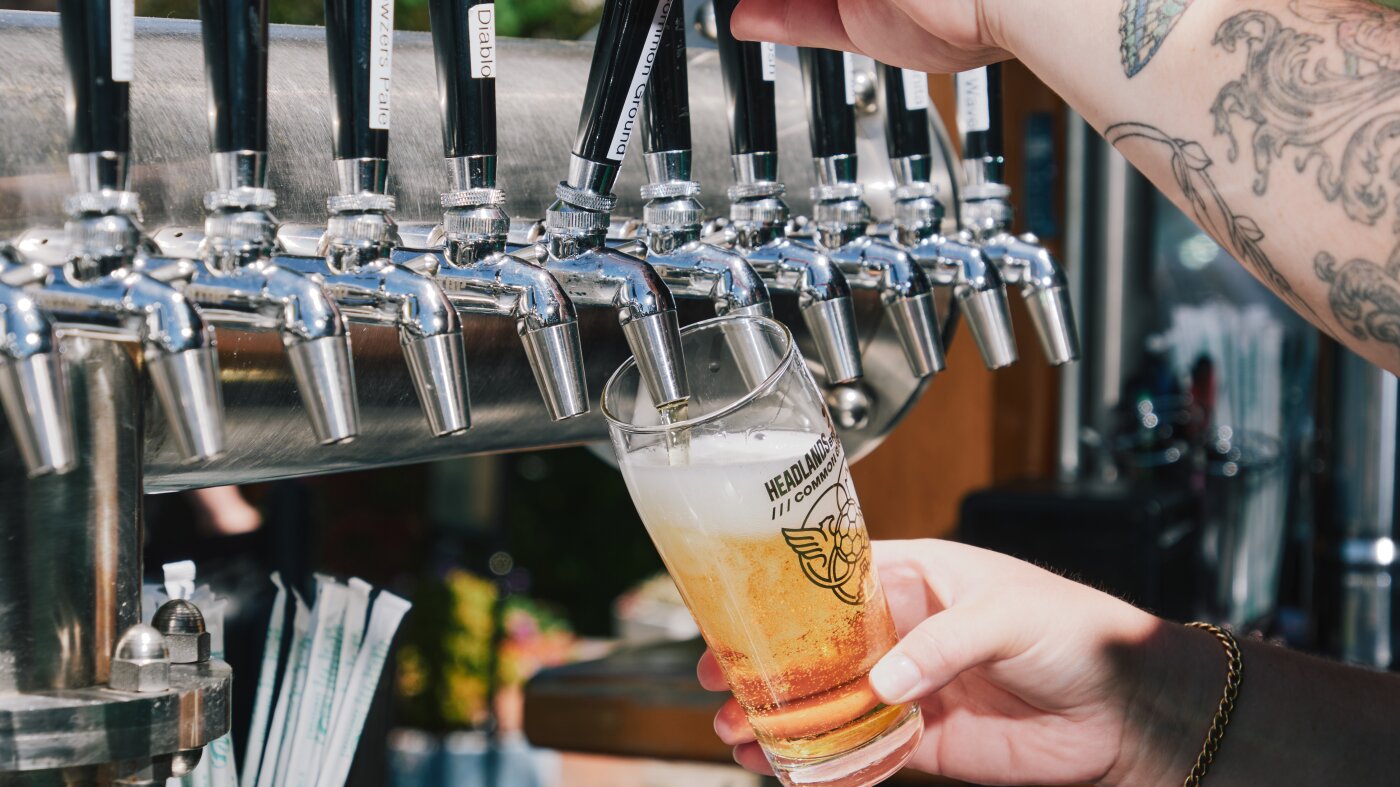
3 World Cup rivals find ‘Common Ground’ in a cross-border beer
-

 Technology1 hour ago
The Flipper Zero creators’ Busy Bar productivity display will go on sale next month
-

 World1 hour ago
Families watch in horror as skydiving plane crashes in France, killing all 11 aboard
-

 Politics1 hour ago
DOJ launches grand jury probe into Marxist mogul Neville Roy Singham’s funding of leftist groups

