News
Photos: ‘No Kings’ protests across the country


In large cities and small towns across the country, millions took to the streets today in protest against the policies of President Trump and his administration.
Organized by “No Kings,” a network of progressive groups opposed to the administration’s agenda, the protests are the third wave of demonstrations since the President took office for a second term. Last year, millions attended protests in June and again in October.
Crowds assemble at the Embarcadero in San Francisco prior to the start of the protest.
Martin do Nascimento/KQED
hide caption
toggle caption
Martin do Nascimento/KQED

Thousands of community members marched in the flagship “No Kings” protest in St. Paul.
Jaida Grey Eagle/MPR News
hide caption
toggle caption
Jaida Grey Eagle/MPR News

Thousands sign a banner in Hartford at the Capitol that says “We the People.”
Tyler Russell/Connecticut Public
hide caption
toggle caption
Tyler Russell/Connecticut Public
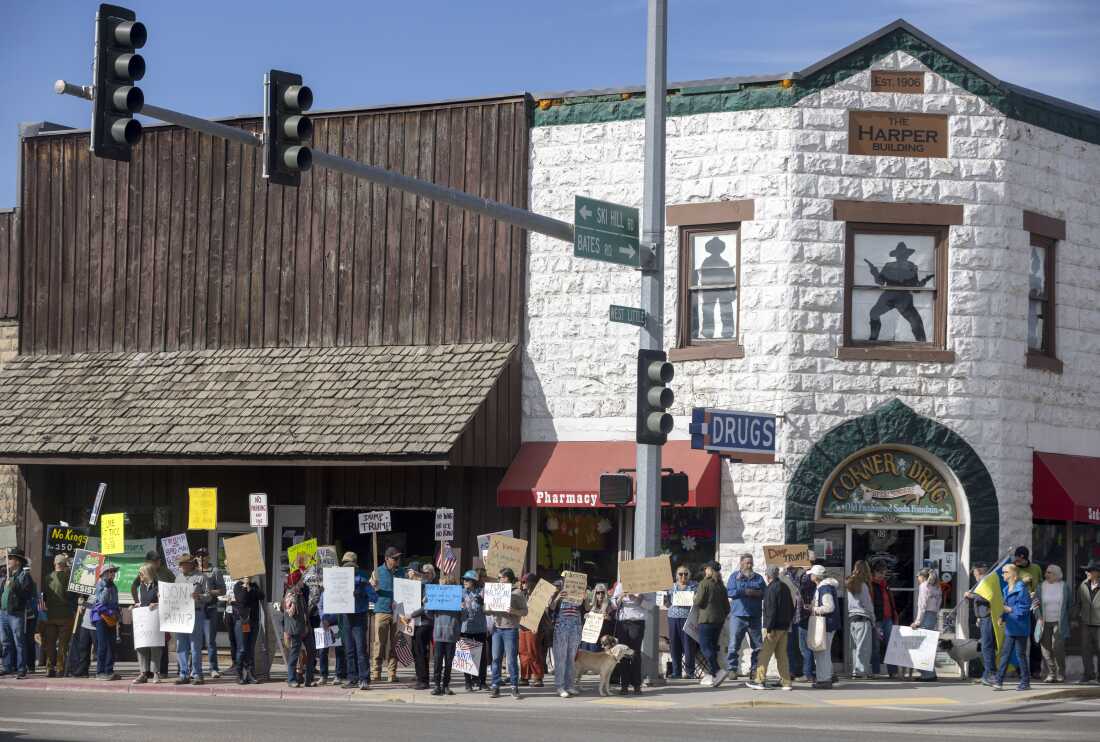
Protesters hold signs and chant slogans in Driggs, Idaho.
Natalie Behring/Getty Images
hide caption
toggle caption
Natalie Behring/Getty Images
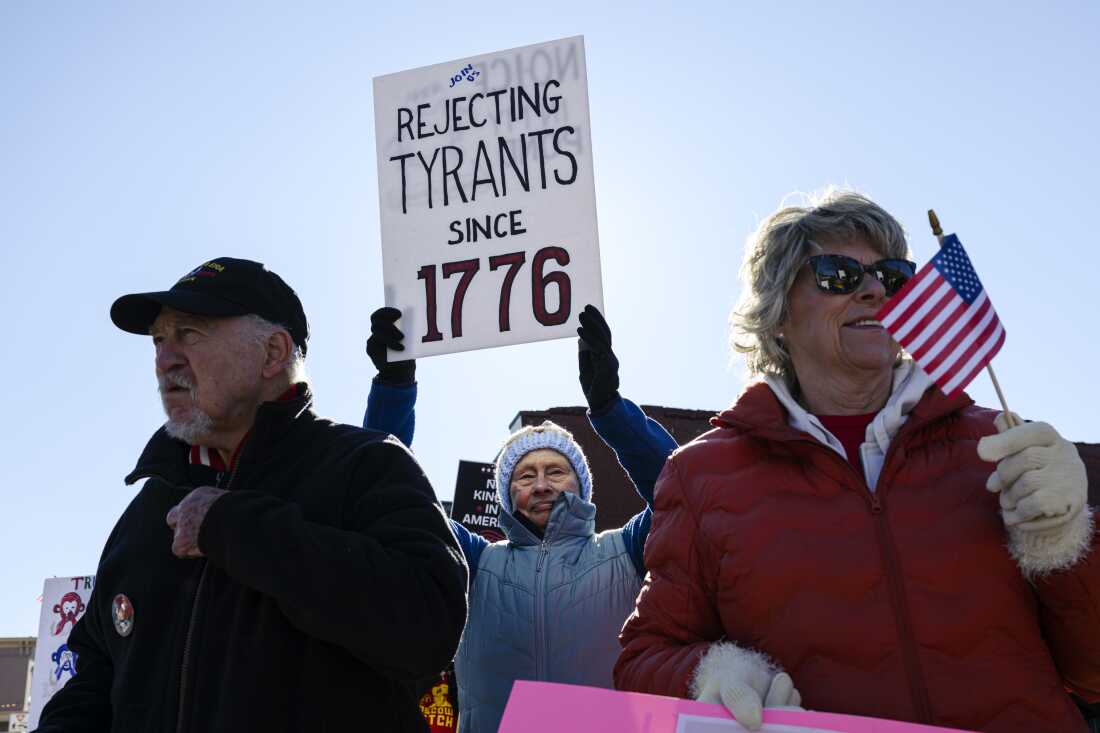
Demonstrators gather while holding signs near a roadside in Shelbyville, Kentucky.
Jon Cherry/Getty Images
hide caption
toggle caption
Jon Cherry/Getty Images

Demonstrators walk across the Memorial Bridge from Arlington, Virginia into Washington, DC.
Ken Cedeno/AFP
hide caption
toggle caption
Ken Cedeno/AFP
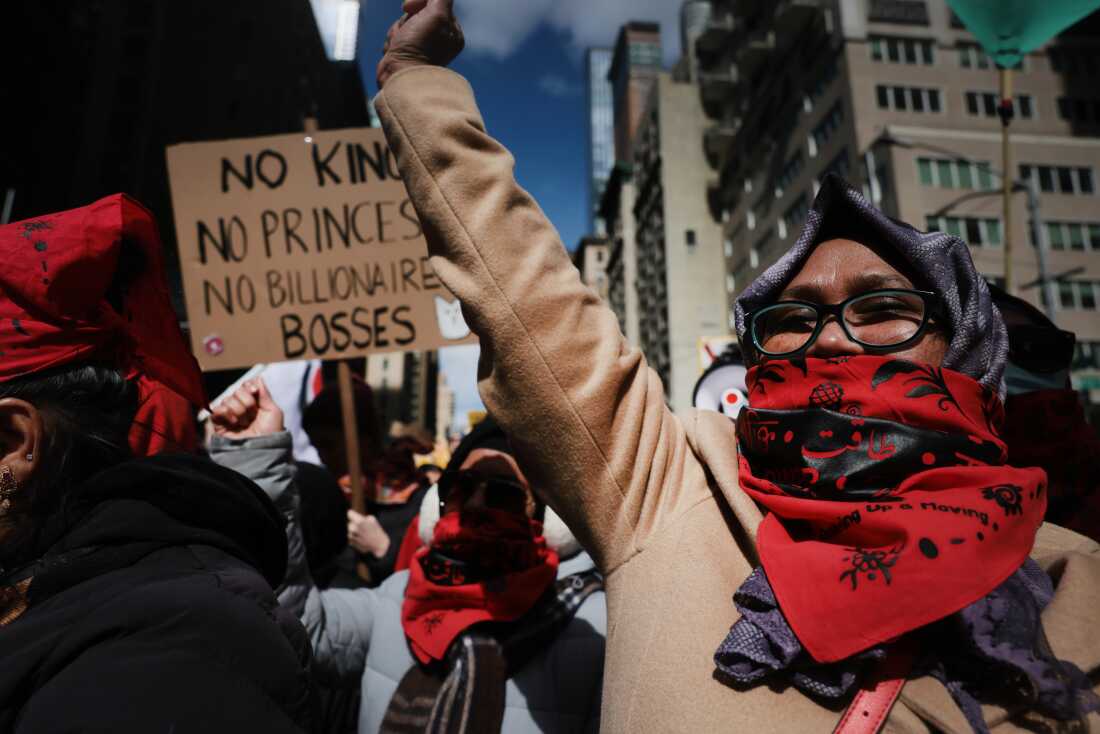
Demonstrators march down 7th Avenue and Broadway in Manhattan.
Spencer Platt/Getty Images
hide caption
toggle caption
Spencer Platt/Getty Images
![HARTFORD, CONNECTICUT, MARCH 28, 2026: Ken MacDonald tears up as he listens to a speech about the plight of his fellow veterans. “[Trump]’s playing with the lives of military people,” he said. Thousands rally at the “No Kings” protest at the capitol in Hartford on March 28, 2026. (Tyler Russell/Connecticut Public)](https://npr.brightspotcdn.com/dims3/default/strip/false/crop/6981x4654+0+0/resize/1100/quality/50/format/jpeg/?url=http%3A%2F%2Fnpr-brightspot.s3.amazonaws.com%2Feb%2F8b%2Fba7a9cb744baa343c85d45caf5ed%2F260328-nokingshartford-trb4371.jpg)
Ken MacDonald tears up in Hartford as he listens to a speech about the plight of his fellow veterans.
Tyler Russell/Connecticut Public
hide caption
toggle caption
Tyler Russell/Connecticut Public

A large crowd marches across the South First bridge toward a gathering at Auditorium Shores in Austin, Texas.
Patricia Lim/KUT News
hide caption
toggle caption
Patricia Lim/KUT News

Lindsay Holliday waves an American flag in Rosa Parks Square in Macon, Georgia.
Grant Blankenship/GPB News
hide caption
toggle caption
Grant Blankenship/GPB News

Demonstrators in downtown St. Louis walk by large banners decrying the U.S. conflict in Iran and U.S. Immigration and Customs Enforcement.
Brian Munoz/St. Louis Public Radio
hide caption
toggle caption
Brian Munoz/St. Louis Public Radio

Kat Carves works on a ice sculpture that says ‘End Ice’ ahead of the rally on the Boston Common in Boston.
Arthur Mansavage/GBH News
hide caption
toggle caption
Arthur Mansavage/GBH News

Protestors march across an overpass near the Georgia state Capitol building in Atlanta.
Elijah Nouvelage/AFP
hide caption
toggle caption
Elijah Nouvelage/AFP

Protesters hold a banner reading “End the wars, stop ICE, general strike” at Embarcadero Plaza in San Francisco.
Gustavo Hernandez/KQED
hide caption
toggle caption
Gustavo Hernandez/KQED

Maria Perry, left, and John Stock, right, joined protesters gathering in Mill Creek Park in Kansas City, Missouri.
Julie Denesha/KCUR
hide caption
toggle caption
Julie Denesha/KCUR

Duane Inge, a 63-year-old demonstrator, protests in front of Busch Stadium in downtown St. Louis.
Brian Munoz/St. Louis Public Radio
hide caption
toggle caption
Brian Munoz/St. Louis Public Radio

A protestor wears a “Let’s be brave” pin at a rally in Richmond, Virginia.
Shaban Athuman/VPM
hide caption
toggle caption
Shaban Athuman/VPM
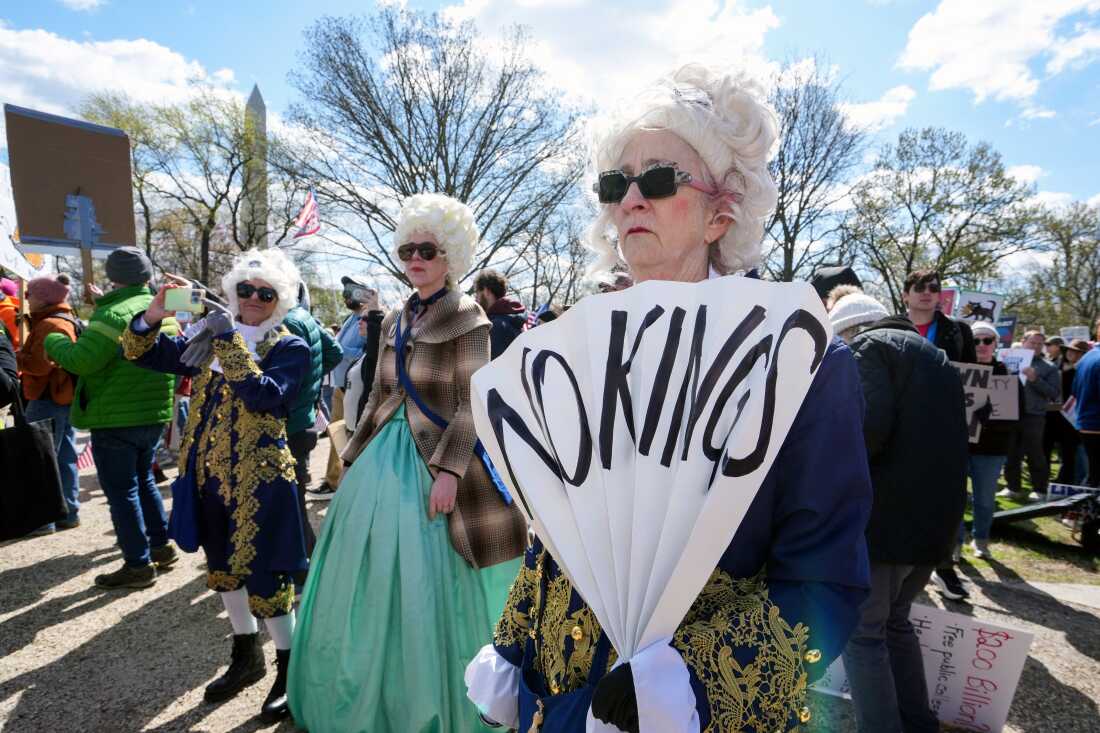
Demonstrators in costumes stand along the National Mall in Washington, DC.
Ken Cedeno/AFP
hide caption
toggle caption
Ken Cedeno/AFP
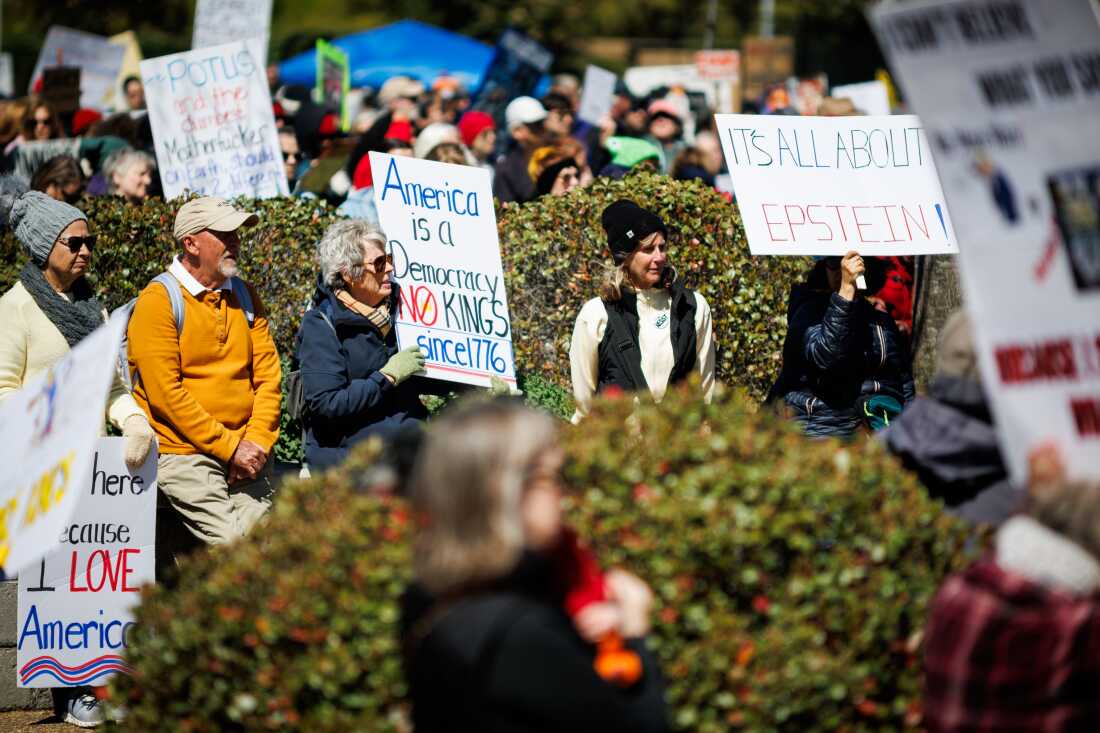
Protestors listens as speakers address the crowd gathered in Richmond, Virginia.
Shaban Athuman/VPM News
hide caption
toggle caption
Shaban Athuman/VPM News

Protesters descend on Times Square in New York City.
Charly Triballeau/AFP
hide caption
toggle caption
Charly Triballeau/AFP
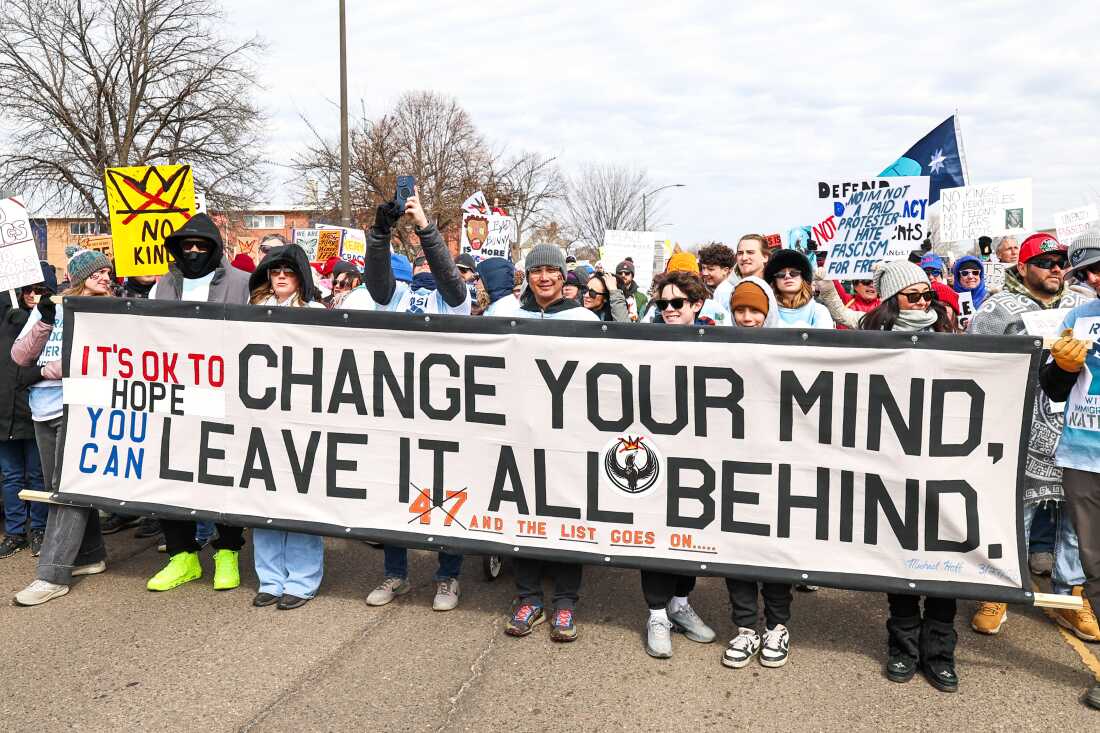
Demonstrators begin to march from the Western Sculpture Garden at the Minnesota State Capitol in St. Paul.
Steven Garcia/Minnesota Public Radio
hide caption
toggle caption
Steven Garcia/Minnesota Public Radio

Thousands march towards the Steel Bridge from the waterfront in Portland, Oregon.
Saskia Hatvany/OPB
hide caption
toggle caption
Saskia Hatvany/OPB


A national physician staffing firm tried to take over the contract held by Eugene Emergency Physicians to work in local hospitals. The local physicians used a new state law to oppose the move.
sorbetto/Digital Vision Vectors/Getty Images
hide caption
toggle caption
sorbetto/Digital Vision Vectors/Getty Images
For the latest stories on the science of healthy living, subscribe to NPR’s Health newsletter.
In between shifts in the emergency room, Dr. Dan McGee was in an Oregon courtroom. He was fighting for his practice — Eugene Emergency Physicians (EEP). The group of more than 40 doctors and physician assistants work at multiple emergency departments; it was being replaced by a national company.
“This was big time, David and Goliath stuff,” McGee said. “You see 14 of their lawyers sitting there and you see three of ours.”
Those lawyers argued that ApolloMD, the national company, violated Oregon’s corporate practice of medicine law. The 2025 law bans corporations from taking control of a medical practice’s operations and finances.
The case garnered national interest because Oregon’s new law targets the loopholes large staffing firms have been employing to circumvent state corporate medicine laws.

Money for control
Most states have laws requiring that doctors own medical practices, not corporations. These rules aim to put patient interests ahead of profit motives. Over the last several years, companies have used a model where a doctor technically owns the local practice, but as Erin Fuse Brown, a professor at Brown University, explains, those physician owners are often not involved in care and cede hiring, firing and other operational functions to the corporation.
Fuse Brown said these arrangements are attractive to hospitals because these companies often promise more revenue and take over the responsibilities that come with running an ER.
“There’s worry that these investors or these corporate management companies should not be totally controlling the operations and the clinical decisions of those who are trained to deliver patient care,” Fuse Brown said.
The connection to patient care concerned Dr. Jonas Pologe, who works for Eugene Emergency Physicians, in the Eugene, Ore., area. ApolloMD offered local doctors jobs, but Pologe worried that if he pushed back on decisions ApolloMD made, he could lose work hours.
“There’s certainly a chance that if you make enough of a stink, you think that something needs to change, they can just stop giving you shifts,” said Pologe.

ApolloMD’s CEO, Dr. Yogin Patel, said the group doesn’t infringe on the way its doctors practice. He says the company is being unfairly lumped in with broader concerns over physicians’ feelings of disempowerment at the hands of corporate medical takeovers.
A closely watched experiment
Fuse Brown, policy experts and independent physicians theorized that updating state corporate medicine laws could be a fix to limit the control management companies can exert over medical doctors.
Oregon’s the first state to try this, and the case brought by the Eugene doctors group is the first test of that law. McGee, who leads the Eugene physicians group, says colleagues at other hospitals around the state were literally tuning in to their case.
“You could hear it almost like background music on an elevator,” McGee says he was told. “At key moments, all of a sudden the nurses would break out in a cheer.”
Before any ruling, the hospital system dropped its plan to work with ApolloMD and struck a deal to stick with McGee’s local group of doctors.
“This is a big victory for independent physician groups over corporate medicine,” McGee said. “This is a game changer.”
The American Academy of Emergency Medicine (AAEM) supported the Eugene doctors as part of the organization’s strategy to protect independent practices. The AAEM president, Dr. Vicki Norton, said Oregon has the strongest law in the country.
“This signals that that law works and we need it replicated in other states to really strengthen their corporate practice laws,” said Norton.
California and Vermont have passed similar legislation to Oregon, and lawmakers in other states, including Rhode Island and New Mexico, are considering related bills.
In Virginia, an independent group of ER doctors who were replaced by a large staffing firm is meeting with state legislators to try to change their laws.
Impact on Oregon physicians
Back in Oregon, the open question is about how the law may impact the physician practice market.
A few of the largest companies, Envision Healthcare, TeamHealth and USACS, declined to answer NPR’s questions about whether this case or the new law changed their outlook on investing in Oregon practices.
Opponents of the legislation warned lawmakers that many physician groups depend on outside investment to survive.

In an exclusive interview with CBS News on Thursday, Treasury Secretary Scott Bessent said he doesn’t believe the recent disclosure of President Trump’s billions in crypto earnings is problematic for the president.
“I don’t think there’s an appearance problem,” Bessent told CBS News anchor and MoneyWatch correspondent Kelly O’Grady regarding Mr. Trump’s earnings.
According to a financial disclosure released earlier this week, Mr. Trump has earned approximately $1.4 billion from his crypto ventures since beginning his second term. Those include his “meme coin” $TRUMP and earnings from World Liberty Financial, a cryptocurrency company backed by the president and his family.
Congressional Democrats have criticized Mr. Trump’s crypto windfall, arguing it presents a conflict of interest since his administration has sought to loosen regulations on cryptocurrency.
“This is an innovation presidency,” Bessent told CBS News. “So whether it’s digital access, whether it’s AI, whether it’s everything that is going on in the tech ecosystem that, you know, all Americans are benefiting from that.”
White House spokesperson Anna Kelly told CBS News on Tuesday that “there are no conflicts of interest” in the disclosure.
In his interview with CBS News, Bessent also touched on the latest developments with the tax-deferred Trump Accounts and his outlook for the U.S. economy as it grapples with the impacts of the Iran war.
Economic relief is coming for American families, Bessent believes
The Treasury secretary said his message to Americans who are experiencing strain at the grocery store and at the pump wrought by the Iran war is that “we’re going to get to the other side of this.”
Since the war began in late February, halts to shipping traffic in the critical Strait of Hormuz, which handles roughly 20% of the world’s global oil supply, have led to rising gas prices, which have in turn accelerated inflation and raised costs more broadly. In May, the annual inflation rate rose to 4.2%, according to the Labor Department, its highest level since April 2023.
The average price of a gallon of regular gasoline on Thursday was $3.83, according to AAA. At the height of the war, gas prices topped $4.50 a gallon, but have steadily declined in recent weeks as oil prices return to near prewar levels and the U.S. and Iran negotiate over a more permanent end to the war.
Bessent said he is hopeful that the average drops to $3 a gallon by Labor Day.
“Gasoline prices are a little stickier on the way down,” Bessent said. “We’re trying to give the gasoline retailers a little bit of a nudge. We’re telling them we’re watching them. We’ve had some good uptake from some of the bigger retailers from some of the bigger retailers in terms of what they want to do for consumers.”
Thursday’s jobs report from the Bureau of Labor Statistics showed that U.S. employers added 57,000 jobs in June, far below what economists had predicted, but the unemployment rate held steady, dipping slightly to 4.2% from 4.3% the month before. However, the report found that annual wage growth was 3.5%, below the rate of inflation.
Bessent described the discrepancy between wage gains and inflation as a “short-term spike,” and said he expects to see oil and energy prices continue to drop.
“I would expect, perhaps, as soon as this month, we’re going to see real wage gains,” Bessent said.
Asked whether the stock market’s strong performance in recent months, or the real-world pressure facing many Americans, is a more realistic view of the state of the U.S. economy, Bessent said he believes the market’s strong performance will be predictive of the direction the economy takes.
“The stock market lives in the future. So what the stock market is telling us is, presumably, what I am saying today, that we’ll get to the other side of this,” Bessent said. “Rates will come down and then we will be back up to real wage gain. So both can be true.”
Trump Accounts a tool to create “financial literacy,” Bessent says
The White House announced this week that beginning on July 4, Americans can begin contributing to Trump Accounts, a federal program launched earlier this year designed to help children under 18 invest money in the stock market and build savings before they reach adulthood, similar to how adults save for retirement.
“Thirty-eight percent of American households have no investment in our great equity markets, and we want everyone to share, you know, in the bounty that is the U.S.,” Bessent said. “In our innovation and our capital markets, and, you know, the economic engine, greatest in the history of the world. So, you know, over time, I would think that that 38% number would move toward zero. And then the other thing too is financial literacy.”
According to Bessent, more than 6 million Trump Accounts have been opened so far, and there are approximately 70 million children in the U.S. eligible for them.
On July 4, the federal government will begin contributing $1,000 to accounts for eligible children who are born between Jan. 1, 2025, and Dec. 31, 2028. The Trump Accounts were part of the White House’s “big, beautiful bill” legislation passed last year.
Bessent noted how wealthy philanthropists, organizations and states can also donate to the accounts, even by contributing public stock. Last year, Michael Dell, who founded Dell Technologies, and his wife Susan Dell announced they would donate $6.25 billion to the accounts, or $250 per person.
“I would expect that we are going to see, again from these philanthropic families and institutions and companies, I would expect that we would see the lower-income profile families, actually the accounts will be topped up more,” Bessent said.
Bessent said the accounts could also build throughout adulthood and be rolled into an individual retirement account.
“We want them to really understand the power of long-term compounding,” Bessent said of the families who take part in the program. “That you’ll own a share of a company, that many people have – bank deposits. They’re used to getting interest, they’re used to paying interest. So what we want them to understand is, what does a piece of the action feel like?”
News
Ukraine latest / Limits of military might / Can major powers regain dominance? : Sources & Methods

A view taken on June 24 shows a heavily damaged multi-story apartment building following a recent attack, which local Russian-installed officials called a Ukrainian drone strike, in the town of Gorlivka in the Donetsk region, Russian-controlled Ukraine, amid the ongoing Russian-Ukrainian conflict.
AFP via Getty Images
hide caption
toggle caption
AFP via Getty Images
Four years in and Ukraine is still giving Russia a run for its money. Four months in and Iran shows no sign of bowing to U.S. demands.
What do Russia’s fight with Ukraine and the U.S. war with Iran tell us about the limits of military might?
Host Mary Louise Kelly speaks with NPR’s Ukraine Correspondent Joanna Kakissis about the overnight attack in Kyiv, which comes on the heels of Ukraine’s drone assaults in Moscow. NPR National Security Correspondent Greg Myre joins them to talk about what the conflicts in Ukraine
and Iran say about military might and whether major powers can regain dominance.
Email the show at sourcesandmethods@npr.org
NPR+ supporters hear every episode without sponsor messages and unlock access to our complete archive. Sign up at plus.npr.org.
-

 Los Angeles, Ca1 hour ago
Wildfire burning on hillside near Cal State San Bernardino
-

 Detroit, MI2 hours ago
Pistons sign premier shot-blocker to two-way contract
-

 San Francisco, CA2 hours ago
1 dead, 1 injured in Bay Point shooting; suspect sought
-

 Dallas, TX2 hours ago
Viral video shows Egypt coach, team director in Dallas police confrontation
-

 Miami, FL2 hours ago
Fourth of July celebrations planned across South Florida for America’s 250th birthday
-

 Boston, MA2 hours ago
‘Forever grateful for all we accomplished together’: Jayson Tatum speaks out about Jaylen Brown trade – Boston News, Weather, Sports | WHDH 7News
-

 Denver, CO2 hours ago
Nations Cup in Colorado another showcase for Denver’s bid to host the 2031 Rugby World Cup
-

 Seattle, WA2 hours ago
USA Coach Mauricio Pochettino To Throw Out First Pitch At Seattle Mariners Game

