Denver, CO
Broncos returning to AFC title game not so far-fetched


Good morning, Broncos Country!
The Denver Broncos have played in 10 AFC Championship Games.
That sits fourth in NFL history behind the Pittsburgh Steelers (16), New England Patriots (15) and Las Vegas Raiders (11). Of those teams, only the Patriots have a better record in AFC title games than Denver. New England is 11-4, and the Broncos are 8-2.
The Broncos haven’t been to an AFC title game since the 2015 season but seem to have the path back. As the AFC Championship Game kicks off today from Arrowhead Stadium, these two teams give us a glimpse of the competition the Broncos have and what it’ll take for Denver to return to their 11th AFC title game.
Based on the results against the Bills and Baltimore Ravens this season, the Broncos aren’t close. But moves this offseason to give Bo Nix offensive weapons and shoring up the defense that dropped off the last month or so of the season will be huge. The first step was made getting into the AFC Playoffs. Now the franchise needs to take the next steps to reach the level of the Bills and the Chiefs.
For the last nine years, when the AFC title game has been played, Denver has seemed so far away from returning that you start to wonder if it ever will. For the first time since winning Super Bowl 50 and Peyton Manning retired, there’s hope. There’s a plan. There’s a quarterback, head coach, general manager, and ownership all aligned to get the Broncos back to competing for and winning the AFC Championship.
If all goes well this offseason, playing in Denver’s 11th AFC title game isn’t so far off after all.
And FUKC. Go Bills!
Broncos news
Denver Broncos offseason positional outlook: Outside linebackers | 9news.com
Bonitto has made this a position of strength. He’s also in position to strike it rich.
NFL news
How Dan Snyder views Commanders’ title run: ‘He … hates it’ – ESPN
Sources close to the ex-Commanders owner say he remains in denial over what led to his ouster from the NFL.
NFL playoffs conference championships: Picks, schedule, odds, injuries – ESPN
Commanders-Eagles and Bills-Chiefs are on deck Sunday. We preview both matchups, including game picks.
Source: Titans, Browns, Giants asked Shedeur Sanders to not practice at Shrine Bowl – Yahoo Sports
Sanders is widely viewed as one of the top two quarterback prospects in this upcoming draft.
NFL conference title game predictions: Who decides Super Bowl matchup?
The Super Bowl 59 matchup is almost set. Who will be the key figures who help determine the winners of the AFC and NFC title games?



Denver, CO
Where to watch Minnesota Timberwolves vs Denver Nuggets Playoffs: TV channel, start time, streaming for April 18

The 2026 NBA postseason is finally here after a thrilling Play-In Tournament saw the Phoenix Suns, Orlando Magic, Philadelphia 76ers and Portland Trail Blazers officially earn their spot in the playoffs
The postseason action continues on Saturday as the Minnesota Timberwolves visit the Denver Nuggets in Game 1 of the first round. We’ve got you covered on everything you need to know to tune in for tip off.
Want to see the full National Basketball Association schedule for April 18 and how to watch all the games? Check out our sortable NBA schedule to filter by team or division.
What time is Minnesota Timberwolves vs Denver Nuggets Game 1?
Tip off between the Denver Nuggets and Minnesota Timberwolves is scheduled for 3:30 p.m. (ET) on Saturday, April 18.
How to watch Minnesota Timberwolves vs Denver Nuggets on Saturday
All times Eastern and accurate as of Saturday, April 18, 2026, at 11:45 a.m.
Watch the NBA Playoffs on Fubo
NBA scores and results
See scores, results for all of today’s games. .
See NBA scores, results from April 17
Odds for NBA games today
The latest NBA odds can be found below from the best sports betting apps . Some odds may include games scheduled on future dates.

Timothy Weil
OBITUARY
Timothy Robert Weil 1952-2026 Tim Weil was born in Los Angeles, California.
In his early life he held many jobs, but he often commented that among his most memorable and rewarding roles was using his Spanish fluency to teach elementary school students in East LA. It instilled in him the importance of social justice which he in turn emphasized to his children.
On April Fool’s Day, 1981, he and “NC” (Nancy) married, a partnership that launched a unique and fulfilling life. Theirs was a union of sly, poetic witticism; they collaborated in writing jokes, songs, stories, and mythologies for over four decades. They maintained a high level commitment to wordplay and the celebration of silliness for most of their marriage. Tim and Nancy lived together in Boulder, CO, Chico, CA, Alexandria, VA, and Takoma Park, MD, before finally landing back in Denver as empty-nesters.
Tim found community in many places: Taking on a role as Assistant Scoutmaster with Page and Louis’ Boy Scout troop in Takoma Park; crafting an award-winning beer with his homebrewing group; staying in the game of baseball in the Ponce de Leon (over 50) league; playing bluegrass and folk music with other enthusiasts; performing stories with creatives at Denver venues; and joining Jewish congregations Temple Shalom in Maryland, and Temple Micah in Denver.
Tim’s creativity and playfulness were among his most defining features. Nothing was brighter than the gleam in his eye when he prepared to tell a joke, with a setup spanning about ten minutes of vivid details, often ending in a personalized, spectacularly delivered pun of his own design. To label those jokes mere “groaners” would be a disservice to his masterful storytelling. A piece he submitted to Rolling Stone about his jocular parasocial relationship with actor Lou Ferrigno received a personal rejection letter, noted as “very interesting” by the editor.
His professional work in the field of network security computing provided an outlet for his intellect as well as many professional and personal relationships throughout a career that spanned over 30 years. His writing was published in IEEE magazine and other tech journals.
Throughout his life he engaged deeply with visual art, literature, film, and music. He traveled far and wide, including to Jerusalem, Rio de Janeiro, Beijing, Kuala Lumpur, Manila, Vancouver, Seoul, Paris, Ipswich, London, and Edinburgh.
His recent struggle with severe depression was devastating for him and those close to him. It robbed him of his light and kept him in isolation from which sadly he was unable to escape. He will be remembered as the person who, despite the pain he carried, led an incredibly full life and touched the hearts of countless people with his witty humor and warmth.
He is survived by Nancy, his wife of 45 years, sons Page and Louis, daughter-in-law Jessica, grandsons Felix and Calvin, and cats Shackleton and Whiskey, along with many family and friends coast to coast.
A celebration of his life will be held in Denver at 1pm on Sunday, May 17th at Temple Micah, 1980 Dahlia Street. Bring your fondest memories of Tim. Please, no gifts or flowers. If you would like to make a donation in his memory, please consider American Foundation for Suicide Prevention https://afsp.org/.

So far, the Denver Broncos have signaled a willingness — nay, an eagerness — to run it back at tight end this offseason. It’s a curious strategy, considering how weak the tight end group was for Denver in 2025.
Evan Engram was signed last year to be the “Joker” tight end — a big slot receiving weapon to help open things up for Bo Nix in the middle of the field and down the seam. That didn’t happen.
Engram still finished third on the team in receiving behind wideouts Courtland Sutton and Troy Franklin, but it was a far cry from what fans expected to see from the two-time Pro Bowl tight end. Then there’s Adam Trautman — Denver’s in-line Y tight end — who was woefully inadequate as a blocker and offered little to Nix in the passing game.
Trautman was re-signed to a three-year deal with a raise that’ll pay him just short of $6 million per year, while both Nate Adkins and Lucas Krull were also brought back. Denver is running it back, but the draft could bring another set of hands into the mix.
Meanwhile, for those Broncos fans wondering whether Engram still fits into the Broncos’ offensive picture entering a contract year, head coach Sean Payton sure made it sound like it during his pre-draft press conference alongside GM George Paton.
“We definitely view him as a key piece,” Payton said of Engram. “Relative to Evan, he’s someone that gave us a lot of big plays a year ago, and we will continue to find ways to keep him and add to his workload.”
The Broncos didn’t have much incentive to move on from Engram after one year, considering the salary-cap ramifications of such a decision. He remains on the roster for a reason, and while Payton made Engram’s contributions sound much grander than they perhaps were, it sounds like Denver’s head coach has some unfinished business with his tight end weapon.
Payton’s Read On the 2026 Draft Class
As for what the draft could hold, Payton extolled the virtues of the tight end class. It sounds like tight end is front-of-brain for Denver, but Payton’s words could be a smoke screen.
“I would say this about this class in my opinion, if you are looking for a blocking ‘Y’, there are a handful available that would be targeted,” Payton said. “If you are looking for a ‘move,’ maybe a little bit undersized ‘F’, they are out there. To each his own, the different type of tight ends are available. It’s always a challenge with that position because sometimes you are projecting maybe in an offense that is playing them differently.”
The Broncos have one of the better ‘F’ tight ends in Engram, even if he’s well on the wrong side of 30. Payton and Nix can still make a lot of hay with Engram, especially with new offensive coordinator Davis Webb now calling the plays.
However, the Broncos could really (and I mean really) use an upgrade at the Y. Trautman gives them a plausible option if they had to go to war tomorrow, but he’s not a true asset, and some would argue that he’s, in fact, a blocking liability, no matter how much the Broncos try to gaslight everyone on the subject.
Potential Y TE Candidates
This draft class features some very intriguing Y candidates, including Georgia’s Oscar Delp — who could be so, so much more — Texas A&M’s Nate Boerkircher, and Ohio State’s Will Kacmarek, to name a few. After the foot injury that was discovered at the Combine back in February, Delp’s draft stock took a hit, but he resurrected it during the Georgia pro day with how he performed.
I could see Delp going in Round 2. He could be in play for Denver at No. 62 overall. The Broncos say they have “six players” they’re targeting in Round 2, but there’s no way to know if Delp is one of them.
Another guy who could grow into a Y tight end but is, for now, an F is Ohio State’s Max Klare, who’s widely viewed as the third-best player at the position in this class behind Oregon’s Kenyon Sadiq and Vanderbilt’s Eli Stowers. I would rank Delp as the No. 2 behind Sadiq, but because he didn’t test at the Combine, he won’t be viewed that way until perhaps a few years down the road.
Delp could be one of the biggest steals in the 2026 NFL draft. If the Broncos were to target him, he could not only offer them long-term viability to replace Trautman inside, but he’s also one heck of a receiver, which would make him a great ‘move’ tight end, like Engram.
The Takeaway
The possibilities are endless, which is part of what makes the run-up to the draft so fascinating, but also maddening. Time will tell whether the Broncos prioritize tight end in this draft, but we can all say for sure now that Engram is part of the 2026 offensive vision.
Sign up for our free Denver Broncos On SI newsletter, and get breaking Broncos news delivered to your inbox daily!
 Add us as a preferred source on Google
Follow

Troopers arrest Detroit woman after drive-by shooting on I-94

Trio of Bay Area High School baseball games at San Francisco Giants’ Oracle Park

Akheem Mesidor selected by Cowboys by Blogging The Boys in SB Nation’s community mock draft

Former Titans GM mock Miami right tackle to the Cleveland Browns at 6

Practice Report: Bruins Have Last Skate in Boston Before Leaving for Buffalo | Boston Bruins

Florida High School Football Rankings: Top 25 teams – Oct. 21

How old is Bo Nix? What to know about Oregon quarterback ahead of 2024 NFL Draft

Cleary's 21 help Le Moyne down Central Connecticut State 69-64 in OT

99th annual Pony Swim held in Virginia

Indiana Members Credit Union announced as new anchor tenant at Bottleworks District

BBQ lovers beware: Middle East conflict might disrupt your summer plans this year

White House vs the pope: What is behind the Catholic just war doctrine

What’s it like to negotiate with Iran? We asked people who have done it

Grieving mothers scorch Dem lawmaker after he pivots during hearing to attack ‘MAGA Republicans’

Pressure mounts on Peru’s election authorities amid presidential race delay
-

 Ohio4 days ago
‘Little Rascals’ star Bug Hall arrested in Ohio
-

 Arkansas1 week ago
Arkansas TV meteorologist Melinda Mayo retires after nearly four decades on air
-
 Science4 days ago
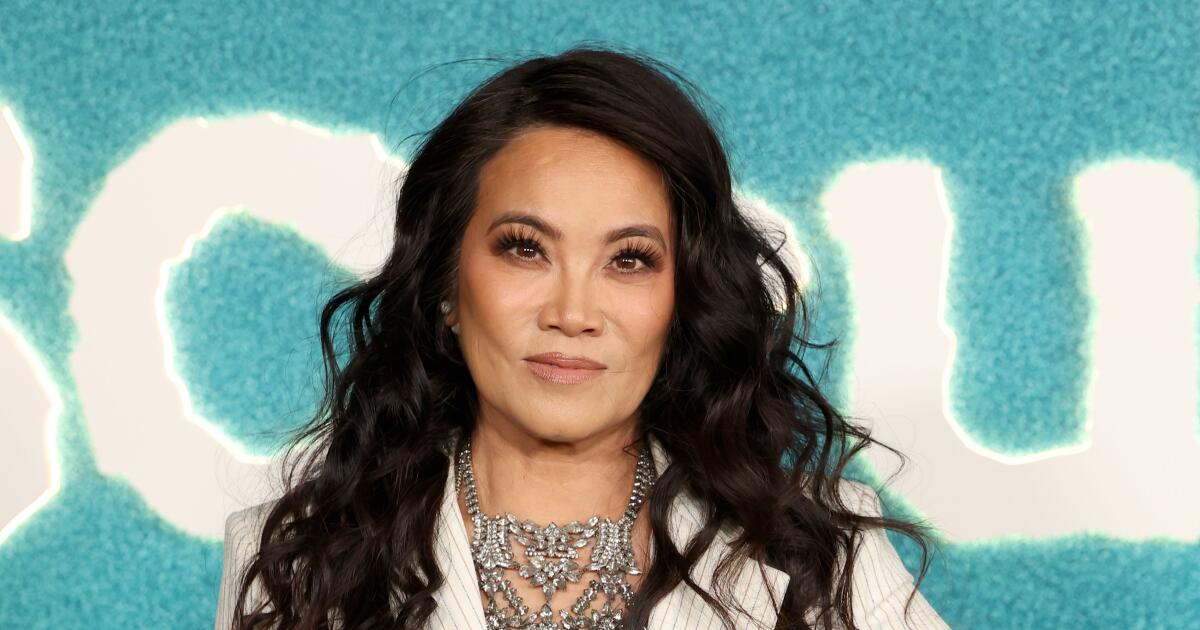
‘Dr. Pimple Popper’ Sandra Lee had a stroke last fall. Here’s how the TV doc is bouncing back
-

 Politics4 days ago
Dem fundraising giant in the hot seat as GOP lawmakers demand answers over dodged subpoena
-

 Health1 week ago
Woman discovers missing nose ring traveled to her lungs, causing month-long cough
-

 Politics7 days ago
Trump blasts Spanberger ahead of Virginia meetings, says state faces tax base exodus like New York, California
-

 San Francisco, CA6 days ago
President Trump terminates Presidio Trust
-

 Technology1 week ago
Is the ‘Holy Grail of batteries’ finally ready to bless us with its presence?