Denver, CO
Timothy Weil Obituary | The Denver Post


Timothy Weil
OBITUARY
Timothy Robert Weil 1952-2026 Tim Weil was born in Los Angeles, California.
In his early life he held many jobs, but he often commented that among his most memorable and rewarding roles was using his Spanish fluency to teach elementary school students in East LA. It instilled in him the importance of social justice which he in turn emphasized to his children.
On April Fool’s Day, 1981, he and “NC” (Nancy) married, a partnership that launched a unique and fulfilling life. Theirs was a union of sly, poetic witticism; they collaborated in writing jokes, songs, stories, and mythologies for over four decades. They maintained a high level commitment to wordplay and the celebration of silliness for most of their marriage. Tim and Nancy lived together in Boulder, CO, Chico, CA, Alexandria, VA, and Takoma Park, MD, before finally landing back in Denver as empty-nesters.
Tim found community in many places: Taking on a role as Assistant Scoutmaster with Page and Louis’ Boy Scout troop in Takoma Park; crafting an award-winning beer with his homebrewing group; staying in the game of baseball in the Ponce de Leon (over 50) league; playing bluegrass and folk music with other enthusiasts; performing stories with creatives at Denver venues; and joining Jewish congregations Temple Shalom in Maryland, and Temple Micah in Denver.
Tim’s creativity and playfulness were among his most defining features. Nothing was brighter than the gleam in his eye when he prepared to tell a joke, with a setup spanning about ten minutes of vivid details, often ending in a personalized, spectacularly delivered pun of his own design. To label those jokes mere “groaners” would be a disservice to his masterful storytelling. A piece he submitted to Rolling Stone about his jocular parasocial relationship with actor Lou Ferrigno received a personal rejection letter, noted as “very interesting” by the editor.
His professional work in the field of network security computing provided an outlet for his intellect as well as many professional and personal relationships throughout a career that spanned over 30 years. His writing was published in IEEE magazine and other tech journals.
Throughout his life he engaged deeply with visual art, literature, film, and music. He traveled far and wide, including to Jerusalem, Rio de Janeiro, Beijing, Kuala Lumpur, Manila, Vancouver, Seoul, Paris, Ipswich, London, and Edinburgh.
His recent struggle with severe depression was devastating for him and those close to him. It robbed him of his light and kept him in isolation from which sadly he was unable to escape. He will be remembered as the person who, despite the pain he carried, led an incredibly full life and touched the hearts of countless people with his witty humor and warmth.
He is survived by Nancy, his wife of 45 years, sons Page and Louis, daughter-in-law Jessica, grandsons Felix and Calvin, and cats Shackleton and Whiskey, along with many family and friends coast to coast.
A celebration of his life will be held in Denver at 1pm on Sunday, May 17th at Temple Micah, 1980 Dahlia Street. Bring your fondest memories of Tim. Please, no gifts or flowers. If you would like to make a donation in his memory, please consider American Foundation for Suicide Prevention https://afsp.org/.


Denver, CO
Denver Transplant Games sets Guinness World Record for mos living donors, recipients in one place at one time

DENVER (KMGH) — The biennial Transplant Games wrapped up in Denver this week, bringing hundreds of organ donors and recipients together to compete in everything from cycling and swimming to darts and trivia at venues all over the city.
In fact, the games set a Guinness World Record for most living donors and recipients in one place at one time, with 966 gathering at the Colorado Convention Center.
Angela Laino, who used to live in Boulder, came back to Colorado to compete in the games. She donated a kidney to a stranger in January before running in the 5K event.
“I’m what they call a non-directed living kidney donor, which means that I don’t know who my recipient was,” she explained. “So I just said, ‘Whoever needs my kidney, I’m sure they’ll find the best match for it.’”
Laino said she was inspired by her job, working “on and off” as a dialysis social worker for 17 years.
“I really saw the challenges that my patients faced,” she said. “I saw what they had to go through to get on the [transplant] wait list… I know what transplant means for people. I’ve seen it firsthand. And to be able to see them come out here, compete, they’re doing basketball, they’re doing badminton, they’re swimming, they’re cycling, they’re running. They are living their full lives, and that’s really what transplant can do for people.”
Laino said the games unite the community and show off its resilience.
“When you go through the transplant process, sometimes you feel alone, you feel like you’re the only one going through this,” Laino said. “And then you come to an event like this and you literally see thousands of people. You see recipients, living donors, donor families coming together for the same cause. It’s really inspiring, because it really helps to get the word out, spread awareness about the organ shortage, and it shows people what recipients and donors can do after they have the surgery.”
Dr. Michael O’Shea — a nephrologist, a doctor who cares for kidney disease patients and the kidneys in general — agrees. But he said more needs to be down to support patients and spread the word about the need for organ donations.
The National Kidney Foundation estimates 37 million Americans have Chronic Kidney Disease, which occurs when kidneys cannot filter the blood properly, leading to serious health issues. Because symptoms can be minimal in early stages of the disease, many patients don’t realize they have it.
“I think education about kidney transplant, both on the patient side as well as on the potential donor side, could be markedly ramped up and improved,” Dr. O’Shea said. “It’s struggles with communication between transplant centers, patients, and community nephrologists. No one’s fault. It’s just a very complicated delivery system.”
In the case of kidneys, people can become diseased donors — who register to donate in the case of their sudden death — or living donors, who donate one kidney will relying on the other. Dr. O’Shea said both are critical to meet nationwide demand for life-saving transplants, though the living donations tend to have a longer lifespan — around roughly 20 years — for recipients.
“A number of folks get transplanted every year off this list,” O’Shea explained. “It is also true that a greater number of folks get added to the list every year.”
To register to become a deceased donor, Coloradans can visit their local Department of Motor Vehicles office or visit registerme.org.
O’Shea said those considering living donations face an “exceedingly small” medical risk for end-stage kidney disease, but should consult with their doctor about the decision.
Even as the games leave Denver, a reminder will stick around through the summer. Denver Parks and Recreation, the Downtown Denver Partnership and DaVita have partnered to set up a basketball court in Skyline Park near Arapahoe and 17th Streets, in order to keep the spirit of the games alive and honor the resilience of organ donors, recipients and their families.

Getty
Denver Broncos star Pat Surtain II is navigating uncertainty on and off the field.
Pat Surtain II and the Denver Broncos could already have to overcome not having outside linebacker Jonathon Cooper for an indeterminate length of time amid his ongoing legal matters, and the 2024 Defensive Player of the Year is now facing another hurdle.
This one affects Surtain off the field, and personally.
It will be but a footnote on his 2026 season, but the standout defender’s recent experiences are reminders about how quickly things can change in the NFL.
Broncos’ Pat Surtain II Gets More Bad News

GettyPat Surtain II could have forced to make a difficult decision about one of his ventures off the field.
In addition to his award-winning play on the field for the Broncos, Surtain has also taken on podcasting during his spare time. He co-hosts the “Closed on Sundays” podcast with fellow Alabama alum and current Detroit Lions cornerback Terrion Arnold.
The duo’s joint venture is in imminent danger.
“#Broncos star Pat Surtain II has a successful podcast with Arnold,” The Denver Post’s Troy Renck posted on X on June 24. “Now, Arnold is facing some serious charges.”
According to NFL.com’s Grant Gordon on June 24, “Detroit Lions cornerback Terrion Arnold has been arrested in connection with a February robbery and kidnapping in Tampa, Florida, the Hillsborough County State Attorney announced late Wednesday night.
“Arnold, 23, turned himself in at Orient Road Jail (Florida) on Wednesday and is facing eight total felony charges — four for robbery with a firearm or deadly weapon and four for kidnapping, the Hillsborough County Sherriff’s Office told NFL.com. Arnold is being held with no bond and is due in court Thursday at 1:30 p.m. ET, per the Sherriff’s office.”
Arnold’s charges “carry a potential life sentence in prison,” per Gordon.
Gordon also noted that prosecutors will request he remain in custody until his trial. That is in addition to his current no-bond status.
The matter all stems from an alleged retaliation attempt after Arnold and several friends had their property stolen from an AirBNB they were staying in. Arnold is the alleged mastermind of the plot, which targeted individuals police say were not involved with the initial theft.
Broncos Navigating Distractions
GettyPat Surtain II and the Denver Broncos are navigating legal issues with a player on their roster.
Surtain and Arnold last put out an episode of the podcast in February. Moreover, the Lions corner’s status and their podcast must come after Surtain’s commitment to the Broncos, who are once again expected to be one of the top teams in the NFL.
They face an internal threat to that, with Cooper.
Broncos head coach Sean Payton said they are following the NFL’s lead on handling the matter, while Surtain expressed support for his teammate.
“He’s our brother at the end of the day, and we all rally behind Coop,” Surtain told reporters on June 16 when asked directly. “We just wish him the best with everything, but just keeping him in good spirits.”
Cooper’s situation, obviously, affects the Broncos–and, by default, Surtain–directly.
Still, the star corner could need a new podcast partner, lest he prefer to sunset the endeavor entirely, as well as hope Denver can replace a key piece in Cooper if necessary.
Josh Buckhalter covers the NBA and NFL for Heavy.com. He has covered both leagues since 2016, including bylines at FanSided, Last Word on Sports and Clocker Sports. He’s based in Villa Park, Illinois. Follow Josh on Twitter and Instagram: @JoshGBuck More about Josh Buckhalter

The Regional Transportation District’s BroncosRide buses, running from Park-n-Ride lots around metro Denver to Broncos football games, will be back this fall after a five-year suspension.
RTD directors this week voted 10-5 to reinstate the service.
The agency suspended the service before the Broncos’ 2020-21 season due to bus driver shortages and agency concerns about public transit equity.
Despite RTD’s current budget crisis, the directors decided that the BroncosRide — which will cost $1.6 million, according to information that agency staff provided to directors — will help boost RTD’s lagging overall ridership and increase the appeal of public transit.
If the buses are full, Director Chris Nicholson said, fare revenues estimated at $497,855 will offset the cost.
“At RTD, we make lives better through connections, and there’s nothing better than seeing (Broncos quarterback) Bo Nix connect for a touchdown,” Nicholson said. “Previous boards didn’t see it as a fundamental part of service. We do.”
Before the Broncos’ Aug. 21 preseason home game against the Green Bay Packers, RTD officials plan to announce detailed plans to run about 92 buses from about 18 locations around metro Denver, including stations near Denver International Airport, East High School, the Highlands Ranch Town Center, Interstate 25/Broadway, Broomfield, Longmont, Littleton and Parker.
Get more Colorado news by signing up for our Mile High Roundup email newsletter.
-
Business3 minutes ago
Cisco to lay off more than 400 workers in California
-
 Entertainment6 minutes ago
Tom Sandoval’s girlfriend Victoria Robinson arrested after patio fire pit altercation
-

 Lifestyle11 minutes ago
Swatch Seeks Damages From Samsung Over Trademark Infringement, Ft Reports
-
 Politics18 minutes ago
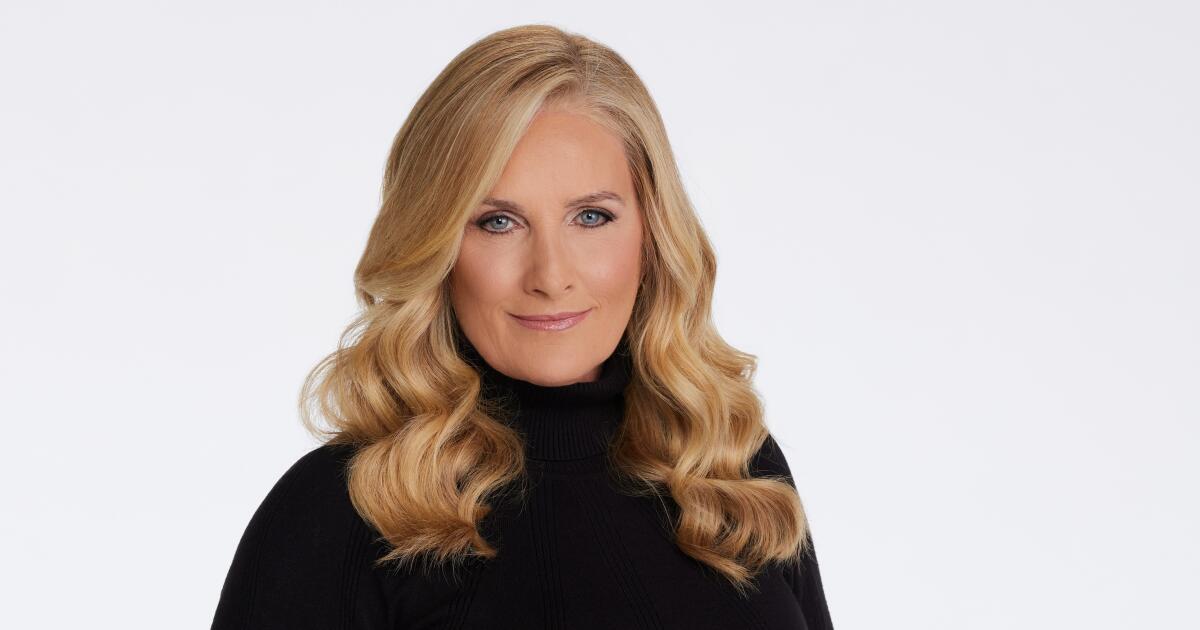
MS NOW anchor Alex Witt to exit as network reduces live weekend programming
-
 Sports26 minutes ago
Parents of ex-NFL player Doug Martin allege excessive force by Oakland police in wrongful death suit
-

 World36 minutes ago
Burkina Faso cuts diplomatic ties with former colonial ruler France
-
 News1 hour ago
A day after Alito’s testy response to Sotomayor’s dissent, court says it was a ‘misunderstanding’
-

 Los Angeles, Ca2 hours ago
Watch Project Angel Food's 'Lead with Love' telethon on KTLA

