Denver, CO
100-year-old Denver7 Everyday Hero still delivering Meals on Wheels after over 40 years of service

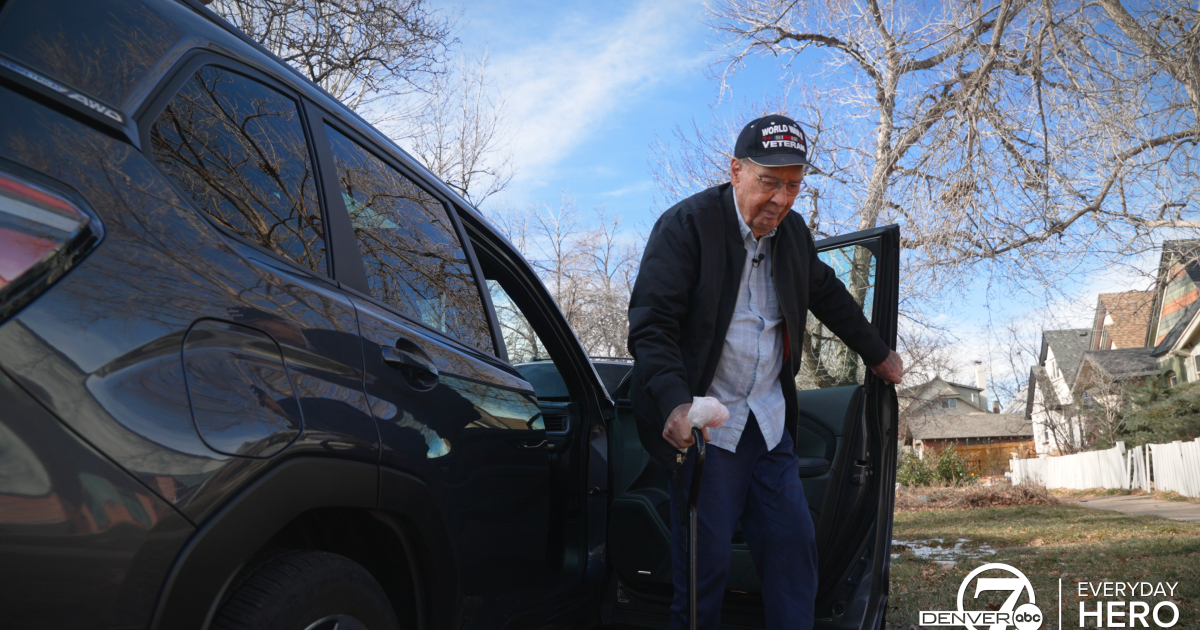
DENVER – Every Monday morning, one Meals on Wheels volunteer and his sons do much needed work in their community. For some homebound seniors, it’s not just a hot meal, it’s a familiar face, a conversation, and a reminder that someone cares. Mel Faes is a 100-year-old World War II veteran who has volunteered with Meals on Wheels for more than four decades.
Richard Butler
“To have these services and to have people who care about you lets you live your life out in dignity,” said Cathy Law, a project manager with Volunteers of America Colorado’s retired and senior volunteer program.
Faes was born in 1925 and raised in north Denver. He joined the Army Air Force at 19 and served during World War II before returning home to work for the U.S. Postal Service for 34 years. But for the last 40 years, Mondays have been reserved for delivering meals to neighbors who need them.
“You can donate money here and there, but donating your time is more valuable,” Faes said.
On his route, Faes is now joined by his sons, John and Jim, who began helping with deliveries about five years ago when their father stopped driving.
“My dad, he’s a wonderful man,” John Faes said. “We can see how unselfish he’s always been his whole life, always wanting to do for the other.”
Richard Butler

While his sons handle the driving, Mel still insists on taking meals to the door whenever he can.
“Doing the meals, sometimes you’re the only person they see all day,” Mel Faes said.
That personal connection is what makes the program so important, according to Volunteers of America.
“It’s nourishment for the body, but it’s also nourishment for their soul,” Law said. “Without volunteers, we couldn’t run our program.”
Volunteers of America Colorado produces and serves nearly 3,000 meals a day across seven counties, relying on hundreds of volunteers to deliver meals to seniors who might otherwise go without.
Richard Butler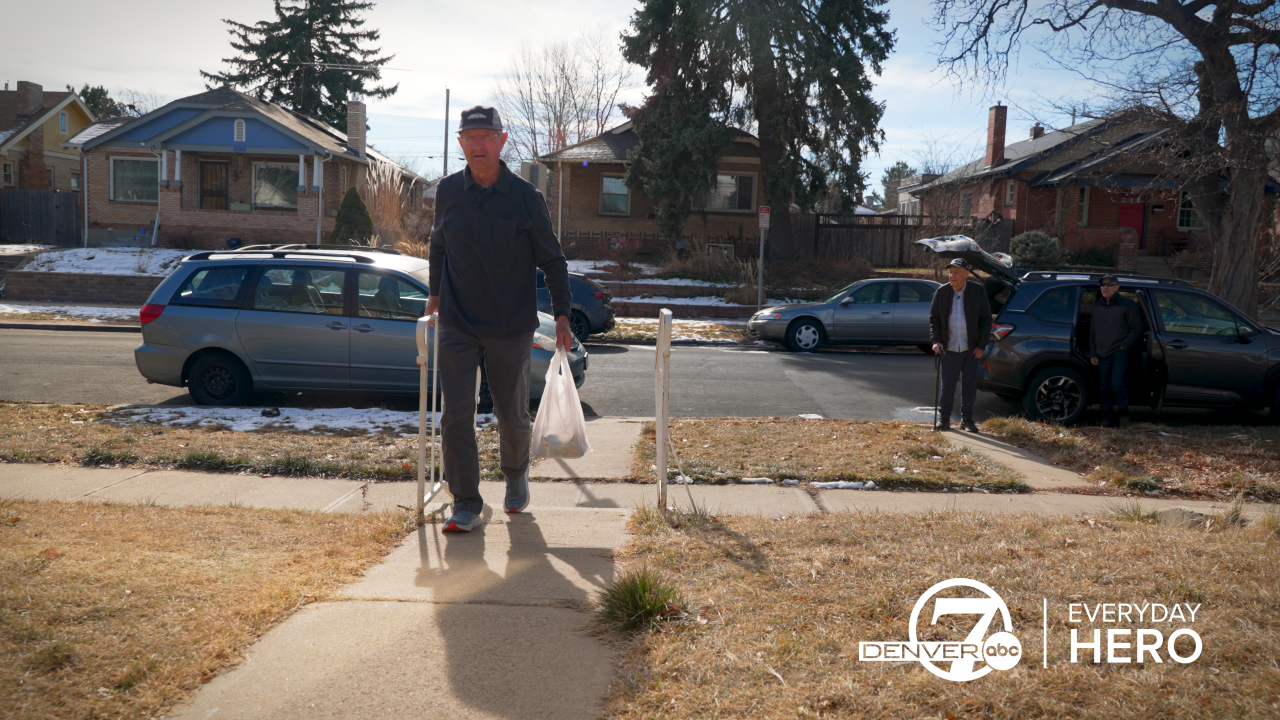
For the Faes family, volunteering has become a shared experience.
“It means a lot to them, and it means a lot to us,” John Faes said. “It’s a humbling experience. It’s good for both parties.”
At 100 years old, Mel Faes shows no signs of slowing down.
“If people ask him what his secret to a long life is, he says, ‘Keep moving,’” his son John said.
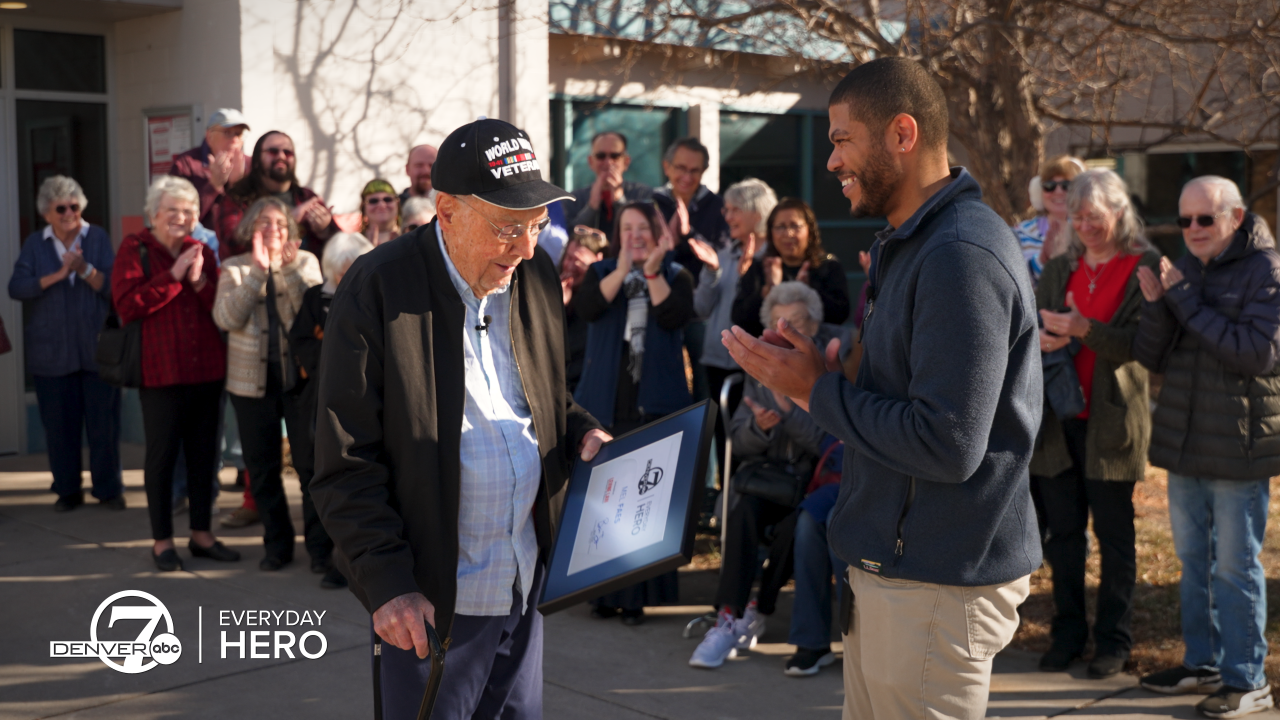
That lifetime of service is celebrated with Denver7 and Levine Law recognizing Mel as a Denver7 Everyday Hero.
“We nominated Mel because of his giving, humble, amazing spirit,” Law said. “Not just for his military service, but for the way he continues to give back to the community over and over again.”
For Faes, the recognition is appreciated but it’s never been the reason he shows up.
Richard Butler
“It’s not really work,” he said. “It’s something you love to do.”
Volunteers of America Colorado says there is always a need for more Meals on Wheels volunteers. Those interested in delivering meals or supporting other programs can learn more and sign up on their website, where information about volunteer opportunities across the state are available.
Denver7 features a different Everyday Hero each week. To nominate a hero in your life, click here.




See social media react to LeBron James leaving the Lakers
After eight seasons in Los Angeles, LeBron James will return for his 24th season, but not with the Lakers.
The King and the Joker together?
Is it possible that LeBron James could join the Denver Nuggets?
The 41-year-old James plans to play in 2026-27 for his 24th NBA season, but he’s informed the Lakers it will be with another team.
It seems like the Nuggets may be at least somewhat interested in pairing James with star Nikola Jokic. The Nuggets have reached out to James, the Denver Post reported on July 1.
Brian Windhorst of ESPN said he has “long believed” the Nuggets could be an “outlier” team in part because of James’ admiration for Jokic.
The Nuggets recruited James when he was a free agent in 2018 before he signed with the Lakers.
LeBron James next team betting odds
Where do the sports books think James is going? Sports betting company DraftKings Sports does not have the Nuggets high on the list.
There are 10 teams that DraftKings believes are most likely to land James in free agency after he turned down the Lakers.
DraftKings believes James will choose to sign with one of the following teams at some point this summer: Golden State Warriors, Miami Heat, Detroit Pistons, Cleveland Cavaliers, San Antonio Spurs, Dallas Mavericks, Milwaukee Bucks, Brooklyn Nets, Washington Wizards and Philadelphia 76ers.
DraftKings Sports odds: LeBron James landing spots
Here are the full odds for the top 10 landing spots this free agency period for James, a four-time champion, Finals MVP and league MVP:
- Golden State Warriors: -250
- Cleveland Cavaliers: +170
- Miami Heat: +800
- San Antonio Spurs: +3000
- Detroit Pistons: +3000
- Dallas Mavericks: +3000
- Milwaukee Bucks: +4000
- Brooklyn Nets: +4000
- Washington Wizards: +5000
- Philadelphia 76ers: +5000
Sports reporter Kevin Lytle can be found on social media on X, Instagram and Threads @Kevin_Lytle and on Bluesky.

July 4th Food Deals
This July 4th marks America’s 250th birthday! And there are lots of $2.50 deals across the Mile High City. On July 4, Good Times offers a menu of sweet treats for $2.50 each, including frozen custard, fried ice cream and more. Through July 12, Sonic is serving its America $2.50 Menu with cheeseburgers, hot dogs, onion rings and more. Dairy Queen has its Stars & Stripes Misty Slush Float for $2.50 – through July 5. And, from July 3 to 5, Carl’s Jr. is cooking up a double cheeseburger for $2.50. Not to be left out, Krispy Kreme is giving any customer who comes into a store on the 4th wearing red, white and blue a totally free Original Glazed Doughnut. For more information and additional deals, check out milehighonthecheap.com/ free-cheap-things-4th-july-denver.
Colorado Renaissance Festival – Children’s Weekend / Military Appreciation Weekend
Hear ye! Hear ye! Merriment (on a budget) awaits. The 49th annual Colorado Renaissance Festival (650 W. Perry Park Ave.) in Larkspur is back for adventure and family fun on weekends this summer. There’s plenty for families to do and see, including entertainment, an Artisan’s Marketplace and themed weekends. And, on July 4 and 5, kids (12 and under) get in for free with the purchase of an adult ticket. It’s also Military Appreciation Weekend, with all active military and veterans getting a buy-one-get-one-free ticket. The offers are only available at the box office on-site. If you’re going without children for the holiday weekend, find discounted tickets at King Soopers. The festival runs on weekends through Aug. 2. coloradorenaissance.com
Gabriel Scarlett, The Denver Post
Alayia Fabre, 7, has her face painted by Susan Oxman of Fabulous Face Painting on July 8, 2017 at the 31st annual Blacks Arts Festival in Denver.
Colorado Black Arts Festival
It’s the 40th year for the Colorado Black Arts Festival at the West End of Denver’s City Park – from July 10 to 12. Multiple stages will showcase local and regional talent performing jazz, blues, soul, hip-hop, dance and gospel. In addition, festival-goers will find a wide variety of artwork for sale, as well as food, games and services. The Watu Sakoni (People’s Marketplace) is the place for unique gifts, crafts, woodcarvings, clothing, jewelry, oils, incense, music and books. Plus, a Children’s Pavilion will offer the younger set lots of hands-on fun with various activities and games. And the Food Court serves up affordable fare from the American South, the African continent and the Caribbean. The festival is open 11 a.m. to 8 p.m. on Friday, 10 a.m. to 8 p.m. on Saturday and 11 p.m. to 7 p.m. on Sunday. Admission is free. colbaf.org
Erie Hot Air Balloon Festival
Look up! It’s worth getting up early for the colorful hot air balloon launch that highlights the annual Erie Hot Air Balloon Festival — from July 10 to 12. The balloons take off at 6 a.m. each morning (weather permitting) in the open field across from Erie High School, on the northwest corner of County Road 5 and Colliers Pkwy. Arrival is recommended around 5:30 a.m. New for 2026, there will be a fleet of special-shape balloons floating in the sky, including characters, creatures and colossal creations. If you’re not an early bird, there is also a Night Glow on July 11 at 8 p.m. in the same field – an opportunity to see the balloons lit up after sunset. Attendees will also enjoy food trucks, music and more. If you’re feeling adventurous, tethered balloon rides will also be available for $20 per person. erieballoonfestival.com
Cow Appreciation Day
Admittedly, some people will do anything to score free food! And, to celebrate its 80th anniversary, Chick-fil-A is bringing back one of its most popular giveaways — Cow Appreciation Day. On July 14, “moo” into any Chick-fil-A dressed as a cow (Longhorn, Dairy, Hereford…your choice!) and enjoy a free breakfast, lunch or dinner entrée from a select menu – from 7 a.m. to 7 p.m. Even better, children (12 and under) get a free original or grilled nuggets (5-ct.) kids’ meal with a drink, side and premium. The giveaway is only valid for customers who are physically present in the restaurant. Claim the freebie via dine-in, carry-out or drive-thru. Limit one entrée per person. chick-fil-a.com
Lavender Festival
Lavender is in the air! Back in 2015, a Lavender Garden was planted at the Denver Botanic Gardens at Chatfield Farms (8500 W. Deer Creek Canyon Rd.) in Littleton. Now that the more than 2,000 plants have come into bloom, the Denver Botanic Gardens is hosting a Lavender Festival on July 18 and 19 — from 9 a.m. to 4 p.m. both days. The beautiful purple blooms create the perfect backdrop for a day devoted to “all-things lavender”. Admission includes guided garden tours, a scavenger hunt, entertainment by local Colorado bands, barrel train rides, lawn games, kids craft area and more. Also, a variety of food and drink vendors will be available for sale, as well as lavender products made by local growers and artisans. Entry also includes exploration of Chatfield Farms and the gardens. Admission is $17 for adults, $15 for seniors and $9 for children ages 3 to 15. Tickets must be purchased in advance for a specific entry time. No on-site ticket sales. botanicgardens.org/events/public-events/lavender-festival
Summerfest Arts + Music Festival
It’s a festival of arts, crafts, music and more in Evergreen at Summerfest Arts + Music Festival with more than 100 artists from across the country on hand at Buchanan Park (32003 Ellingwood Trail) on July 18 and 19. Enjoy live music and entertainment, kids’ craft activities and shopping the multitude of artists’ booths. Festival hours are 10 a.m. to 6 p.m. on Saturday and 10 a.m. to 5 p.m. on Sunday. Admission is $5 for adults at the gate, with children 10 and under getting in for free. No pets, please. Shuttle parking is free at Evergreen Middle School and U.S. Bank. Plus, the RTD and Castle Court lots are within easy walking distance to the park. evergreenarts.org/summerfest

Tennyson Street Fair
Block off the weekend for summer fun! The Tennyson Street Fair is a two-day affair, set for July 17 and 18. The fair runs from 4 p.m. to 9 p.m. on Friday and 11 a.m. to 8 p.m. on Saturday. The neighborhood block party extends multiple blocks on Tennyson from West 41st Ave. to West 43rd Ave. and brings local businesses out into the street for a festive atmosphere. Shop from more than 200 artisans and local shops at the fair’s marketplace, selling handcrafted jewelry, rugs, spices, art, candles, skincare and more. And enjoy eats and treats from more than 15 local food trucks and pop-ups. Plus, imbibe on Tennyson-brewed craft beers and libations – while listening to Denver’s Wax Trax spinning records all day, as well as live music. Kids enjoy a free bounce house. tennysonstreetfair.com
Arapahoe County Fair
It’s time for the 2026 Arapahoe County Fair, with four days of family fun from July 23 to 26. The fair takes place at the Arapahoe County Fairgrounds (25690 Quincy Ave.) in Aurora. Fairgoers will find their entertainment dollar goes a long way because gate admission includes unlimited carnival rides and all main stage performances, rodeos, 4-H livestock shows, public competitions, mutton bustin’ and more. (Only midway arcade games and food cost extra.) See critters of all types in the livestock pavilion. And be sure to check out the Comedy Wild West Show, BMX Showcase, silent disco, Globe of Death circus act, axe throwing, Top Hogs and much more. Plus, weather permitting, a drone show is planned for Friday and Saturday night at 9:30 p.m. Single-day general admission tickets are $30 for adults. Kids under 36 inches get in for free. arapahoecountyfair.com
Buffalo Wild Days
The annual Buffalo Bill Days festival brings rootin’ tootin’ Wild West fun to Golden – from July 24 to 26. The weekend includes western-style entertainment, Best of the West Parade, arts and crafts festival, children’s activities and live concerts by local bands filling Golden’s downtown streets. Admission is free. The festival officially opens at 5 p.m. on Friday in Parfet Park (710 Tenth St.) with a performance by Jeff Goodwin and Band, followed by Hillbilly Demons at 7 p.m. Red Rock Vixens headlines Saturday night at 7 p.m. The Long Run wraps things up on Sunday starting at 2 p.m. This year’s Best of the West Parade steps off on Saturday at 10 a.m. at 9th & Washington. The hour-long parade boasts more than 70 horses, plus collectible cars, floats, fire and emergency vehicles and several local performing groups. Park for free at the Jefferson County Human Services building, (900 Jefferson County Pkwy.) and hop on the complimentary shuttle right to the entrance of the event. goldenbuffalobilldays.com
Cheesman Park Arts Fest
Cheesman Park turns into an outdoor arts festival on July 25 and 26. More than 150 artists from across the country have been invited to showcase their work at the Cheesman Park Art Fest. Patrons can browse top-quality works of potters, painters, jewelers, sculptors, glass artists, and more – in a wide range of friendly prices. This lively outdoor event will also feature live music, local food trucks, creative demonstrations and activities for kids. This event is free of any commercial booths or sales, it’s all about authentic, handcrafted artwork. Hours are 9 a.m. to 5 p.m. both days. Please carpool or consider biking or walking to the colorful event. Parking is available along the north lane of 8th Ave. The show is on the south side of the park. dashevents.com/productions/cheesman-park-art-fest
Send tips to info@milehighonthecheap.com 14 to 21 days in advance.
Subscribe to our weekly newsletter, In The Know, to get entertainment news sent straight to your inbox.

Fire crews gained some containment on one of five wildfires burning across Colorado on Tuesday, while others forced more people to evacuate their homes. The fires charred roughly 148 square miles and destroyed at least 100 buildings.
The Snyder, Gold Mountain, Ferris, Willow and Aspen Acres fires have consumed 94,189 acres as of Tuesday evening.
While fire officials said crews made good progress, firefighters are also facing terrain that’s often extremely steep or inaccessible as well as high temperatures, low humidity and gusty winds.
Aspen Acres fire in Custer and Pueblo counties
Driven by 100 mph winds, the Aspen Acres fire has consumed 28,362 acres — roughly 44 square miles — since it sparked Monday, destroyed at least 100 structures and forced evacuations, according to the Pueblo County Sheriff’s Office.
Damage assessment teams are still working on getting to the structures destroyed by the wildfire and will contact property owners directly whenever possible, Pueblo County Sheriff David Lucero said during an update Tuesday afternoon.
Fire activity picked up Tuesday night, leading Pueblo County officials to issue new evacuation orders for people living in the North Creek area, including Central Road to the Custer County Line.
“DO NOT WAIT. PLEASE EVACUATE NOW,” the Pueblo County Sheriff’s Office said in a post on X.
Mandatory evacuations in the Beulah, Rye, San Isabel Lake, Aspen Acres, Lazy Acres and Bishops Castle areas and surrounding roads are still in place.
Snyder fire in Mesa County and Utah
Colorado’s largest wildfire saw a small amount of growth overnight Monday and into Tuesday as firefighters worked on building lines along eastern and southern edges to prevent more spread.
The Snyder fire, which killed three firefighters and injured two others Saturday, scorched 30,209 acres, or 47 square miles, with 10% containment as of Tuesday evening.
The wildfire’s footprint grew about 200 acres between Monday night and Tuesday afternoon, mostly by smoldering and creeping along the eastern edge, Operations Section Chief Nick Ostrom said in an update posted on social media.
Lighter winds have helped firefighters in the past few days, Ostrom said, but National Weather Service forecasters on Tuesday issued a red flag warning for critical fire weather conditions that are expected until at least Thursday.
Colorado Parks and Wildlife officials on Tuesday closed the boat ramp to the Colorado River in the James M Robb State Park for firefighter safety.
Gold Mountain fire near Ouray
A complex incident management team took over the Gold Mountain fire near Ouray on Monday night as the wildfire continued to burn across “very steep, inaccessible country.”
Fire officials mapped the wildfire at 12,376 acres, or almost 20 square miles, as of Tuesday night, up from 7,103 acres on Monday.
Ouray County officials ordered more mandatory evacuations on Tuesday afternoon, including Lower Cow Creek east of county roads 12 and 12A to the Owl Creek U.S. Forest Service Boundary. Previous mandatory evacuation orders for other areas of Ouray County are still in place, sheriff’s officials said, and part of U.S. 550 is closed.
Ferris fire in San Juan National Forest, near Dolores
The lightning-sparked Ferris fire continued burning on 21,495 acres, or 33 square miles, with no containment northwest of Dolores, but firefighters managed to stop it from spreading into a nearby subdivision despite strong winds and low humidity.
Mandatory evacuations are still in place for people living north and east of the wildfires, including the Glade Ranch subdivision, according to the Dolores County Office of Emergency Management.
Firefighters are focused on protecting homes and the historic Benchmark Lookout, operations section chief Pat Seekins said in an update.
Federal and state wildlife officials have closed public access to lands near the fire for safety, including the Bradfield Bridge Campground, Lone Dome State Wildlife Area and surrounding roads.
Willow fire near Leadville
People living near Turquoise Lake west of Leadville remained under mandatory evacuation on Tuesday as crews continued fighting the Willow fire.
The wildfire is burning on 2,011, or 3 square miles, with no containment in the San Isabel National Forest near the Leadville National Fish Hatchery.
Firefighters are focused on building lines to stop the fire from moving west, toward homes near the Halfmoon Diversion Dam, and east toward Leadville, Operations Chief William Dudley said Tuesday night.
Campgrounds around Turquoise Lake, the Colorado Trail and Hagerman Pass into Pitkin County are also under evacuation orders, Lake County officials said.
The cause of the fire is under investigation.
Get more Colorado news by signing up for our Mile High Roundup email newsletter.
-
 Arizona2 minutes ago
Records: Toddler found alive in hospital morgue after being pronounced dead by Arizona doctor
-

 Arkansas9 minutes ago
Get to know: Arkansas QB commitment Cason Myers | Arkansas Democrat Gazette
-

 California11 minutes ago
California gets Bruce Lee Day in a first for US state’s Chinese Americans
-

 Colorado17 minutes ago
Colorado governor fires two clemency board members who spoke out about Tina Peters’ commutation | CNN Politics
-

 Connecticut24 minutes ago
Police investigating double homicide in Hartford
-

 Delaware27 minutes ago
65-year-old Delaware man killed after camel falls on him, police say
-

 Florida32 minutes ago
New Florida domestic violence laws take effect, adding tougher penalties and new victim protections
-

 Georgia39 minutes ago
Georgia launches address protection program for violence, trafficking survivors

