California
Nature tour highlights historic importance of California oak trees during the fall


The Shumway Oak Grove Regional Park in Stockton launched an autumn nature walk for the community to get an inside look at how important California’s historic oak trees are, especially during the fall.
Carolyn Dougherty is a volunteer naturalist at Oak Grove Nature Center and led a group of people on Sunday morning for a new nature walk, which kicked off this fall: “Autumn Among the Oaks”.
“During the autumn, we talk about what’s happening here in the autumn, like our oak galls and our acorns,” Dougherty said. “And what animals are doing and what our Yokuts tribes were doing at this time of year, which was gathering acorns to store for the winter.”
Dougherty is a retired educator and a big advocate for lifelong learning, not just for herself but to share knowledge with others — especially at this Oak Grove preserve.
“We are a preserve,” Dougherty said. “And I’d like people to understand why the importance of preserving the oak groves isn’t just because of the trees but all of the species that each tree supports.”
Dougherty said these oaks are keystone species, supporting up to 4,000 different species like California scrub-jays, acorn woodpeckers, California ground squirrels, and Western lizards.
“This is my second time taking this tour because I find it fascinating,” Dr. Julie Bates-Livesay, a Stockton resident, said. “And so I got to learn more about galls that grow on oak trees that we make ink out of them, that historic documents were written in the ink produced by them.”
Dougherty said the Yokuts Trail and Miwok Trail were named to pay homage to the ancestors of the area. And as these leaves fall this season, one of the goals of the tour is to have an appreciation for California’s rich history.
“To know where we came from and just to have a deeper appreciation of native California history…the importance of our landscape and what our native landscape contributed to our indigenous people, and how it transformed with our agriculture and industry,” Dougherty said.
Dougherty says 80% of these groves in California are unprotected and can be affected by development and agriculture.
“So, each time that we can protect a little pocket of it is important to us,” Dougherty said.
“Come out and be in nature,” Dr. Bates-Livesay said. “We’re very fortunate to live where we live, to have access to this kind of a nature environment. Whether it be here, at Oak Park, or in Lodi, at Lodi Lake, or a little further up the hill at one of our California or National Parks. We’re blessed here in California to have that kind of access.”
With each step the local community members took with the tour, they learned to appreciate the oaks, their history, and the steps it takes to preserve the land amidst this season.
“To see the park being utilized, from everything from frisbee golf to these kinds of educational tours is a big thing,” Dr. Bates-Livesay said.
“I think it’s really important to understand where we came from, and that our part in this life is to be a good steward,” Dr. Bates-Livesay said. “And the only way you can be a good steward is if you even know that nature exists and that you’re a part of that.”
There will also be a Sandhill Crane Festival in Lodi next week. Dougherty told us these habitats were once threatened, but with the help of conservationists and local farmers working together, she says the cranes are coming back.
There are tours for different seasons with different topics related to the season, along with a nature center with different programs. Some of those include walks, school tours, an “Astronomy in the Park” monthly event to see stars, and hands-on learning for people of all ages.
For Dr. Bates-Livesay and her friends, they capped off the tour with a picnic among the oaks.



A fisherman was pulled from the ocean and rushed to a hospital in critical condition after a powerful “sneaker wave” swept him off the shoreline at Baker Beach in San Francisco.
The dramatic May 29 rescue unfolded around 1 p.m. in the Presidio, where emergency crews responded to reports of a person sucked out to sea.
According to the San Francisco Fire Department, witnesses said the fisherman was standing along the shoreline when a sneaker wave suddenly surged ashore, knocking him to the ground and into the ocean, leaving him incapacitated.
Bystanders quickly called 911, helping launch a large-scale rescue effort that included San Francisco firefighters, an SFPD police boat, drone units and a helicopter.
Within minutes of being dispatched, three rescue swimmers from SFFD entered the water and reached the victim, officials said in a post on X. The crew conducted an open-water rescue and brought the fisherman safely back to shore.
Paramedic rescue swimmers and additional emergency medical personnel immediately began advanced life support measures and rushed the victim to a nearby hospital in critical condition, fire officials said.
Officials said the harrowing ordeal serves as a reminder of the dangers posed by sneaker waves, which can strike with little or no warning.
Unlike typical waves, sneaker waves can surge much farther up the beach than expected, even on days when ocean conditions appear calm. The powerful waves can easily knock people off their feet and drag them into the water before they have time to react.
Fire officials urged beachgoers to stay off wet sand and rocks, keep a constant watch on the ocean and never turn their backs to the water. Anyone who sees a person swept into the surf is asked not to enter the water, but instead to call 911 immediately and throw the victim a flotation device if one is available.
“Early calls to 911 save lives,” fire officials said.

California reported one of the largest decreases in homelessness over the past year, according to a new report from the US Department of Housing and Urban Development (Hud).
The Golden state recorded a total unhoused population of 181,934 in 2025 – an almost 3% decrease since the year prior, placing it among the five states with the largest decreases from 2024. However, more significant drops were recorded in Illinois (44%), Hawaii (41%), Florida (11%) and New York (8%).
The new data signals at least some success on the part of Gavin Newsom, the California governor who has intensified his crackdown on homelessness over the past year. In May 2025 he announced a new model ordinance for cities and counties to address “persistent” homeless encampments, as well as $3.3bn in voter-approved funding to increase housing and drug treatment programs.
California, along with New York, had the largest population of unsheltered people recorded in 2025. Homelessness has been a key issue in this year’s gubernatorial race, as well as in the Los Angeles mayoral race.
The data also showed that the national homeless population decreased for the first time since 2016, coming down 3% from 2024. The Trump administration attempted to downplay the small one-year decrease, instead highlighting the fact that homelessness has increased 27% since 2013.
“The data is clear that the status quo of ‘housing first’ has failed to meaningfully reduce homelessness, resulting in crisis levels of people living on the streets,” Scott Turner, the Hud secretary, said in a press release. “HUD is restoring its programs to advance recovery and self-sufficiency and to ensure that taxpayer-funded benefits serve American families.”
As the administration attempted to downplay the drop in homelessness, it also sought to connect the success to its immigration policies, stating that the 2025 decrease was “attributable to decreases in Sanctuary Cities”.
The data comes from the federally mandated homeless point-in-time count, which tallies people sleeping in shelters and outside on a given day. On a single night in January 2025, there were 745,652 homeless persons in the United States.
While anti-homelessness advocates cited the decrease in homelessness as a “relief”, they also pointed out that the Trump administration’s policies may erode the progress that has been made.
“So much of the progress reflected in the 2025 PIT Count is due to targeted housing and service resources that were available in 2024 to rehouse people, including the highly successful Emergency Housing Voucher program, and new funds to address rural and unsheltered homelessness,” Ann Oliva, the CEO of the National Alliance to End Homelessness, said in a statement.
“Unfortunately, the Trump Administration has largely deprioritized these tools and worked to dismantle the very systems that drove these reductions.” Oliva pointed to the administration’s proposed cuts to permanent housing programs, which the organization found would “force at least 170,000 formerly homeless people back on the streets”.
The government has also mandated treatment for recipients of federal housing vouchers, and penalized jurisdictions that employed harm-reduction strategies such as safe consumption sites. In April 2026, Hud introduced a proposed rule that would require federally funded shelters to house prospective tenants based on their birth sex alone.
California
I moved from Germany to the US for my career. The high cost of living in California shocked me, but it’s worth it to live here.
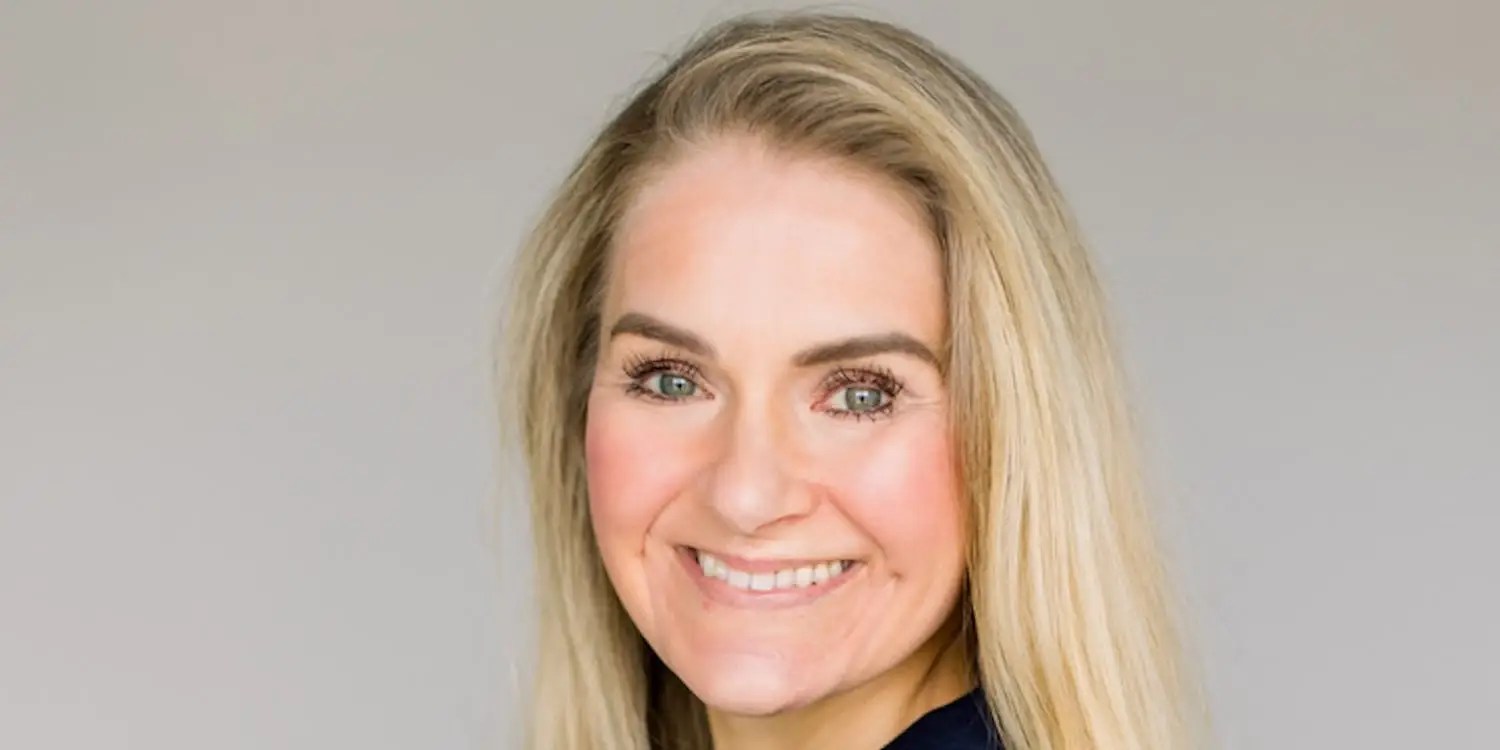
This as-told-to essay is based on a conversation with Christiane Schroeter, a 49-year-old professor of innovation and entrepreneurship and leadership strategist in San Luis Obispo, California. The following has been edited for length and clarity.
I moved from Limburg, Germany, to the US in 1999 as an exchange student for my M.S. degree before returning to Germany to complete additional graduate work. I returned to the US in 2001 as a Fulbright Scholar to pursue my Ph.D. at Purdue University.
After I earned my Ph.D. in 2005, I decided to build my career and my life in the US rather than return to Germany. I had met my husband during my graduate school years, and together we chose to put down roots on the West Coast.
I joined the faculty at Cal Poly in September 2007 and gave birth to my daughter in December of that year. I started a new job, pregnant, while moving across the country. Building a career and a family at the same time, far from my home country, shaped everything I came to understand about the real cost of relocating.
Today, I’m a leadership strategist, professor of innovation and entrepreneurship at Cal Poly, San Luis Obispo, author of several books about leadership, and a podcaster.
The new country feels last longer than you expect
I was 23 years old when I first moved to the US. I expected the obvious expenses, such as flights, paperwork, and the starter purchases you don’t think about until you need them.
What surprised me was how long the newness stayed expensive. Even when your income is objectively higher, fixed costs rise so quickly that it takes very little to feel financially stretched.
I spent hours learning basics I had taken for granted in Germany, like opening bank accounts, building credit from zero, and figuring out what to do when you’re asked for a Social Security number before you have one.
I also had to learn how rental contracts, deposits, phone plans, and transportation work in places where you need a car, including registration, insurance, and DMV requirements. Time becomes money fast when you’re studying, working, and trying to build a future at the same time.
In Germany, I knew how life worked. In the US, I had to rebuild that knowledge piece by piece.
Housing in California made me realize how quickly additional money gets absorbed
Many people underestimate how dramatically living in California can affect their budget.
For me, one of the highest unexpected monthly costs was the mortgage. Housing was not slightly more expensive. It became the financial anchor that shaped everything else. My husband and I had to make monthly decisions around that number.
Living in California was a genuine upgrade with bigger houses and bigger yards. California’s abundance of fresh produce, gorgeous weather, and proximity to the ocean fit my lifestyle better than Germany ever did. The cold, rainy days and a culture I never fully connected with were not the life I wanted.
I would honestly say I live in a “Goldilocks place.”
The cost of childcare changed how I thought about security
The hardest trade-off was realizing how expensive support can be when you live far from friends and family. After I delivered my first child, I faced the childcare scramble almost immediately. I remember touring childcare centers and wondering how families afford monthly costs for multiple children. I spoke with mothers who realized that their earnings would nearly match what they were paying for childcare.
At the same time, I was adjusting physically and emotionally to becoming a mother, and when you’re far from family, there’s no built-in safety net for the unpredictable moment, such as a sick day, a last-minute meeting, or an emergency.
I learned that many US families create a fragile patchwork of childcare and babysitting. If you have children, distance from family is not only emotional but also logistical. It can become one of your highest monthly costs, and one of your biggest mental loads.
On a lesser note, one bill shocked me: our cellphone bill. Our family plan with four phones, two watches, and two iPads is about $300. That may sound routine, but over a year, it feels like a luxury purchase hiding in plain sight.
Healthcare and benefits reshaped my definition of stability
Healthcare in the US introduced another layer of financial awareness. Even with insurance, you still have to pay premiums, deductibles, co-pays, navigate provider networks, and prepare for potential surprise costs.
I remember debating whether to schedule a specialist appointment because I wasn’t sure how much it would count toward our deductible. In Germany, that decision would have been straightforward. In the US, it required reviewing the provider network, estimating out-of-pocket costs, and preparing for an unexpected bill.
The upside is real, but so is the pressure
I built the life for which I came here. I built a stable academic career. I built a business. California became home.
In Germany, Sundays were true rest days. Life paused by design. In California, Sundays easily became catch-up days. I realized I had to intentionally create what I now call “Serenity Sunday.” It is my way of honoring the German philosophy of working to live while living in an American culture that often feels like living to work.
I don’t think I’d move back to Germany now. When I visit, I enjoy it more like a tourist looking in than a native who feels at home. For me, the cost of living in California is worth it, because what I’ve gained is hard to put on a spreadsheet: independence, a career I couldn’t have built anywhere else, and a family rooted in a place I chose.
The price is real, but so is the payoff.
-

 California2 minutes ago
‘Sneaker wave’ sucks California fisherman out to sea
-
Colorado9 minutes ago
Colorado elections clerk set to be released from prison Monday based on her sentence commutation
-

 Connecticut12 minutes ago
Man shot while riding a moped in North Haven
-

 Delaware17 minutes ago
Was Taylor Swift in Dewey Beach, Delaware, this weekend? What we know
-

 Florida24 minutes ago
Florida tax proposal seeks to eliminate homestead property taxes by 2028
-

 Georgia27 minutes ago
Who Mississippi State baseball will play next in NCAA Tournament super regional
-

 Hawaii32 minutes ago
Man charged with murder in killings of 3 on Hawaii’s Big Island
-
 Idaho39 minutes ago
America 250: Famous Idaho Ice Cream Potato helps put Boise landmark on the map


