California
Cal Fire to probe Ventura County response to tractor blaze that reignited into Mountain fire

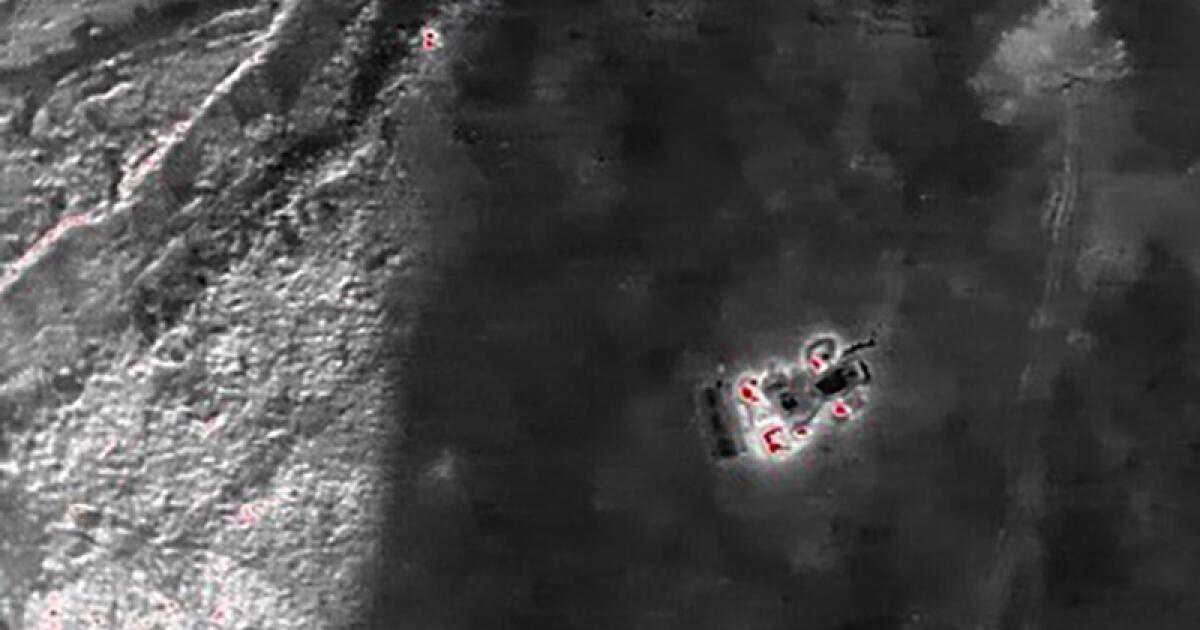
Cal Fire will examine the Ventura County Fire Department’s response to a small wildfire that subsequently rekindled from the charred skeleton of a tractor — eventually growing into the destructive Mountain fire.
Ventura County Fire Chief Dustin Gardner announced Friday that his department has reached an agreement with the California Department of Forestry and Fire Protection for an independent review of operations during the initial wildfire, which ignited and was contained in October 2024.
“Cal Fire is the nation’s leading expert on wildfire operations,” Gardner said. “No agency is better prepared to conduct this type of review and provide recommendations to enhance our future work.”
The initial blaze, dubbed the Balcom fire, was started on Oct. 30, 2024, by a tractor clearing brush in the Balcom Canyon area near the community of Somis, northeast of Camarillo.
Firefighters responded with a C-130 air tanker, dropped retardant and created containment lines around the fire. They declared the 1.8-acre fire out after about three hours.
A week later, powerful Santa Ana winds arrived, picked up some bits of rubber from one of the tractor’s scorched tires and carried them over the containment area into dry vegetation, bringing the fire back to life, according to investigators.
The subsequent blaze, the Mountain fire, burned nearly 20,000 acres and destroyed roughly 250 homes and structures in Camarillo Hills and nearby communities in western Ventura County.
Ventura County fire officials said they followed protocol when they left the Balcom fire — clearing containment lines, dropping retardant, and using a drone with an infrared camera to identify lingering heat.
Gardner previously said that more than 100 firefighters used hoses to put a “wet line” around the Balcom fire perimeter, while bulldozers cut away vegetation in its path and aircraft caked the ground with retardant. Then, firefighters with hand tools and infrared technology checked the area for heat.
The next day, officials said, crews flew a drone over the area and detected heat near the fire’s edge and the wheels of the tractor. Firefighters went to those areas and dug out smoldering material so it could cool, officials said.
Although the temperature around the tractor’s wheels registered at 300 degrees, Gardner said that’s not unusual for equipment caught in a fire.
Gardner said the department has since developed a post-fire policy and mop-up procedures after the Mountain fire. Ventura County fire officials implemented those changes for similar blazes later last year.
After a 2.3-acre brush fire ignited near Janss Road in Thousand Oaks last October, a drone team flew over the blaze’s footprint and identified hot spots to help firefighters mop up that same day. Crews continued to patrol overnight and again early the next day.
They returned two days later, with fire weather conditions forecast to increase, and scanned the fire footprint to ensure no residual heat remained.
The approach echoed one that firefighters took during the Kenneth fire near Calabasas in January 2025. Officials used a drone to scan the fire’s 1,000-acre footprint to locate hot spots daily for roughly a week amid increased fire weather risks.


Bruce Lee Day aims to honour the San Francisco-born martial arts legend as a cultural bridge and Asian-American icon.
Published On 2 Jul 2026
Martial arts icon Bruce Lee will become the first Chinese American in California history to be honoured with an annual namesake day.
California Governor Gavin Newsom signed a law on Tuesday afternoon, officially designating May 17 as Bruce Lee Day.
Recommended Stories
list of 4 itemsend of list
Lee was born in San Francisco in 1940 and returned to the city on May 17, 1959, aged 18, after spending his childhood in Hong Kong.
His daughter, Shannon Lee, CEO of the Bruce Lee Foundation, said the honour reflects her father’s enduring legacy as a bridge between cultures.
“From young people who found confidence and possibility in his philosophy, to families who finally saw themselves represented on screen, to athletes who still draw on his teachings of discipline and inner strength, his reach is profound,” she said in a statement.
State Assembly member Matt Haney, who represents San Francisco, called Lee the “epitome of the best of California”.
“At a time when Asian Americans were too often absent from or stereotyped on screen, Bruce Lee helped generations see themselves represented with strength and dignity,” he said.
The Bruce Lee Foundation and Asian-American groups hope Bruce Lee will be celebrated each year with voluntary activities, including cultural exhibits, public events and classroom lessons.
Born to Chinese parents touring the US with an opera, Lee held birthright citizenship. He moved to Hong Kong as an infant, became a child actor, and studied Chinese kung fu before returning to the US in 1959.
He enrolled at the University of Washington in Seattle in 1961, but dropped out to teach martial arts.
In the 1960s, Lee appeared in Hollywood, most notably as Kato in the TV series The Green Hornet, but said studios typecast him in racist roles and paid him less than white actors.
He returned to Hong Kong and starred in martial arts films, including The Big Boss and Fist of Fury.
Lee died tragically in 1973 at the age of 32 after an allergic reaction to pain medication.
His name and likeness remain widely popular.
Fans gather on his birthday, and a treatment he wrote for a television series inspired the HBO Max show “Warrior”.


See the best High Desert fireworks through the years
Fireworks have long lit up the California High Desert, from community shows in Victorville and Apple Valley to backyard celebrations that filled the night sky. Revisit Fourth of July moments through the years.
Each year, fireworks light up the sky across the United States for the nation’s Independence Day. With 2026 marking the nation’s 250th birthday, fireworks shows may be a bigger draw.
With California being so fire-prone, the state has strict fireworks laws, but does that mean that people won’t enjoy fireworks without risking jail time on July 4?
Are fireworks illegal in California?
The California Department of Forestry and Fire Protection, or CalFire, is the agency in charge of managing fireworks and classifying which ones are safe to light.
The California Fireworks Law was passed in 1938 and designated the Office of the State Fire Marshal as the only fireworks classification authority in the state, according to CalFire.
The fire marshal’s office classifies fireworks through lab analysis and field testing. It also requires that all parties dealing in fireworks, such as pyrotechnic operators, manufacturers, and retailers, have licensing.
Along with the aforementioned law, the State’s Explosive Law authorizes the fire marshal to “adopt regulations for the safe use, handling, storage and transportation of explosives,” CalFire says.
“Safe and Sane” fireworks are less likely to cause injury and generally mean that the fireworks do not explode or fly, according to the City of Fontana.
There are almost 300 communities in the state that allow “Safe and Sane” fireworks.
It is illegal in the state to sell, transport, or use fireworks that don’t carry the “Safe and Sane” seal or use any in a nonpermitted community. If convicted, you can face a fine up to $50,000, a year in jail or both, according to CalFire.
All other fireworks are considered illegal in the state and are prohibited from being operated by unauthorized parties in most jurisdictions.
Some illegal fireworks include:
- Wire Core Sparklers
- Sky rockets
- Bottle rockets
- Roman candles
- Aerial shells
- Firecrackers
- Other fireworks that explode, go into the air, or move on the ground in an “uncontrollable manner.”
How to safely use fireworks
CalFire has put out a list of safety tips to avoid injury when handling fireworks.
CalFire recommends:
- Use only State Fire Marshal-approved fireworks
- Verify local ordinances before purchasing or using fireworks.
- Always read the directions on labels.
- Children should always have an adult present.
- Only use fireworks outdoors.
- Avoid using fireworks near dry grass or other flammable materials.
- Only light one firework at a time.
- Have a bucket of water and a hose nearby in case of fire.
- During a drought, it is recommended that you use a bucket of reused water to submerge your firework after use to ensure it’s completely extinguished.
- Never place any part of your body directly over a fireworks device when lighting the fuse.
- Back up several feet immediately after lighting a firework.
- Never point or throw fireworks at another person.
- Never attempt to relight or fix fireworks.
- Never experiment with fireworks.
- Do not wear loose-fitting clothing while lighting fireworks.
- Never carry fireworks in your pockets.
Ernesto Centeno Araujo covers breaking news for the Ventura County Star. He can be reached at ecentenoaraujo@vcstar.com, 805-437-0224 or @ecentenoaraujo on Instagram and X.
California
California bill to block registered sex offenders from local office rejected by Senate committee

FRESNO, Calif. (KFSN) — California bill aimed at preventing registered sex offenders from holding local elected office was halted Tuesday after a Senate committee declined to advance the measure without changes opposed by its author.
Assembly Bill 2753, introduced by Assemblywoman Esmeralda Soria in February, would have prohibited anyone who is or has been required to register as a sex offender from running for local elective office.
“This issue is critical. We have heard loud and clear from the community that we must do something,” Soria said.
The proposal came to a stop in the Senate Elections Committee, where lawmakers argued the bill’s restrictions were too broad.
California’s sex offender registration system is divided into three tiers. Tier 1 offenders are generally required to register for 10 years, Tier 2 offenders for 20 years and Tier 3 offenders for life.
According to Soria, committee members proposed limiting the bill to Tier 3 offenders. She rejected those amendments, arguing that the legislation should apply more broadly.
“For this not to be the law today, where we’re banning people that have committed some of the most horrific crimes against children, against other people, you know, and we have survivors out there, I think it’s a disservice,” Soria said.
The bill had attracted significant support before reaching the Senate. It was backed by the Fresno City Council and passed the Assembly floor in April.
Fresno City Council President Nelson Esparza traveled to Sacramento to testify in favor of the measure and said he was disappointed by the outcome.
“I call it really a gut punch for our community, and what we had experienced here, and sort of the upheaval… I don’t think we want that to happen again here at Fresno,” Esparza said.
Esparza referenced controversy earlier this year involving registered sex offender Rene Campos, who sought a seat on the Fresno City Council but ultimately did not qualify for the ballot.
Opponents of the bill argued that candidacies should be decided by voters rather than restricted by law.
“It should be a decision made by the voters, so a person should not be barred from running for office and let the voters make the decision that makes the most sense for them,” said civil rights attorney Janice Bellucci.
With the committee declining to move the bill forward under its current language, efforts to enact the proposed restrictions have stalled for now.
Copyright © 2026 KFSN-TV. All Rights Reserved.
-

 Los Angeles, Ca59 minutes ago
Family of boy, 8, killed by falling tree branch at Calabasas park to get $14.6M
-

 Detroit, MI1 hour ago
The worst Detroit sports uniform from every pro team
-

 San Francisco, CA1 hour ago
Discovery Bay driver arrested for San Francisco fatal vehicle collision | Contra Costa Herald
-

 Dallas, TX2 hours ago
Erling Haaland’s Dallas Western wear purchase goes viral
-

 Miami, FL2 hours ago
Miami’s FIFA Fan Fest draws thousands to Bayfront Park to watch Team USA win World Cup match against Bosnia
-

 Boston, MA2 hours ago
2026 Yukon Denali Ultimate gets pricey, but tops the charts
-

 Denver, CO2 hours ago
Nuggets Sign Marvin Bagley to 1-Year Deal: What It Means
-

 Seattle, WA2 hours ago
FOURTH OF JULY 2026: Here’s where Seattle Parks will leave the lights on longer

