West
California 'lawfare' case against pro-lifers first brought by Kamala Harris ends after nine years

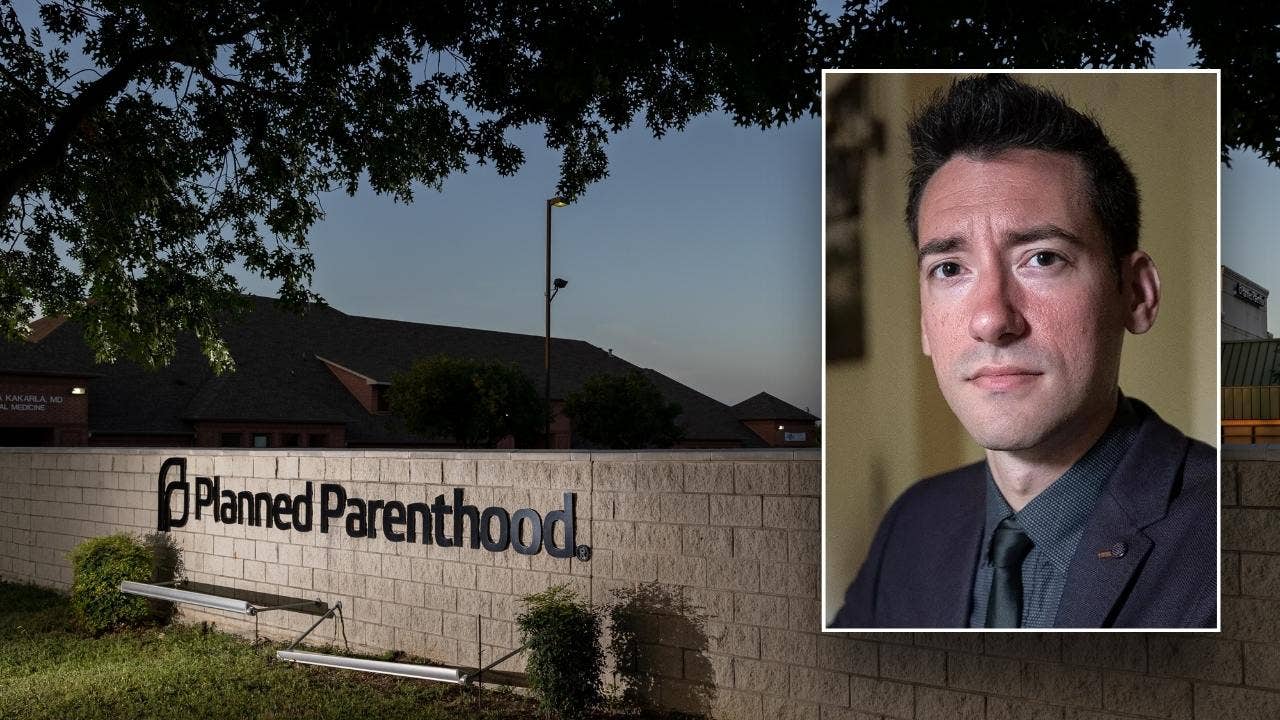
California authorities on Tuesday announced an end to their nearly decade-long criminal prosecution of an independent journalist and an anti-abortion activist who secretly recorded videos showing Planned Parenthood allegedly selling aborted fetal tissue.
The pair at the center of the legal fight, founder of the Center for Medical Progress David Daleiden and journalist Sandra Merritt, agreed to a “no-contest” plea deal on a single charge, resulting in no fines or prison sentences. California prosecutors had at one point pursued up to 15 felony counts in a case Daleiden said was politically motivated “lawfare.”
“My case is the first and only one that was ever criminally charged by the state attorney general’s office, and it was because of Planned Parenthood’s demand to cover up the information that was on those video recordings about how they’re using partial birth abortions to sell late-term aborted baby body parts at their taxpayer funded mega clinics across the state of California and across the country,” Daleiden told Fox News Digital in an interview on Tuesday.
“I’m no expert, but I definitely think that the election has something to do with it,” Daleiden said when asked why he thinks prosecutors dropped the charges all these years later. Daleiden dubbed the litigation “lawfare,” in a post on X.
TRANS INMATE’S LAWSUIT CHALLENGES TRUMP ‘TWO-SEXES’ ORDER CUTTING OFF TAX MONEY FOR GENDER THERAPY
Founder of Center for Medical Progress, David Daleiden, and pro-life journalist Sandra Merritt had their California case dropped with no prison time or fines on Monday. The pair secretly recorded videos showing Planned Parenthood allegedly selling aborted fetal tissue. (Getty Images)
In a statement provided to Fox News Digital, California State Attorney General Rob Bonta said, “While the Trump Administration is issuing pardons to individuals convicted of harming reproductive health clinics and providers, my office is securing criminal convictions to ensure that Californians can exercise their constitutional rights to reproductive healthcare.”
“We will not hesitate to continue taking action against those who threaten access to abortion care — whether by recording confidential conversations or other means,” he said.
Daleiden and Merritt’s plea agreement requires no contact with victims, no public identification of them, and compliance with all laws, including restrictions on recording, according to Bonta’s office.
“[T]his entire case was an exercise in grotesquely political weaponization of government.” – pro-life activist David Daleiden
As the then-California Attorney General, Kamala Harris initiated an investigation into Daleiden’s Center for Medical Progress, focusing on the legality of their undercover methods and a narrow application of the state’s eavesdropping law following the release of undercover footage. In 2016, a Texas grand jury indicted Daleiden and Merritt on felony charges related to the creation of fake IDs and offering to purchase fetal tissue. These charges, however, were later dismissed.
In April 2016, under then-AG Harris, California authorities raided Daleiden’s home for evidence, prompting questions about her relationship with Planned Parenthood, which has donated to her campaigns and many other Democrats.
Harris was elected to the U.S. Senate months later and resigned as state attorney general in January 2017.
In 2017, California prosecutors under Harris’ successor Xavier Becerra charged Daleiden and Merritt with 15 felony counts, including criminal conspiracy and invasion of privacy, for recording individuals without consent.
“They pursued this case viciously for nine years, because it was such a priority for national Planned Parenthood,” Daleiden said. “But ultimately, it’s a totally weaponized political prosecution. They’re totally wrong on the facts and the law of undercover video reporting in California, all the conversations that me and my team recorded were in public areas where other people could overhear.”
“For the Attorney General’s Office of California to come this far after nine years, and essentially walk away with nothing… just shows this entire case was an exercise in grotesquely political weaponization of government.”
STATE AGS WARN RETAIL GIANT COSTCO FOR DOUBLING DOWN ON ‘DISCRIMINATORY’ DEI
Planned Parenthood is sending a bus to the DNC. (Getty Images)
When the recordings were released, Planned Parenthood maintained it strictly donates the specimens, charging only for transportation and storage costs.
Some of the videos were recorded in 2015 during meetings between Daleiden’s operatives, posing as representatives of a fetal tissue procurement company, and various Planned Parenthood staff members. The hours-long footage published online showed conversations in which Planned Parenthood providers and executives appeared to negotiate prices for fetal tissue and discuss under-the-table procedures for obtaining it.
Merritt was involved in the undercover operation as one of the key figures behind the release of the footage alongside Daleiden.
“Sandra Merritt did nothing wrong,” Merritt’s attorneys at the Christian law firm Liberty Counsel said in a statement Monday. “She did the right thing by exposing the depravity of the abortion industry.”
According to a 2015 Guardian report, Planned Parenthood stopped accepting reimbursements for its fetal tissue donation program following state and federal probes after Daleiden’s undercover videos.
TRUMP’S ‘TWO SEXES’ EXECUTIVE ORDER COMES ON HEELS OF SCOTUS ACCEPTING ANOTHER CHALLENGE TO LGBT AGENDA
North Dakota’s previous restrictions on abortion were challenged in court by what was formerly state’s only abortion clinic. Pictured is an abortion clinic in Idaho. (Darin Oswald/Idaho Statesman/Tribune News Service via Getty Images)
President Donald Trump signed an executive order Friday, “to end the use of federal taxpayer dollars to fund or promote elective abortion,” reinforcing the Hyde Amendment. As a result, organizations like Planned Parenthood, which provide abortion services, may face funding challenges depending on how the organization receives its funds for elective abortions.
According to a blog post by the organization’s political action fund, “60% of Planned Parenthood patients rely on public health programs like Medicaid and Title X.”
Fox News Digital has reached out to Harris and Planned Parenthood for comment.
Read the full article from Here


June 27, 1776, was a momentous day for the Bay Area, California, and the world as 240 men, women, and children arrived mostly by foot from Mexico to what is now called San Francisco to set up camp and lay the groundwork for the future.
The “traveling village” is known as the Anza Expedition.
On Saturday, the 250th anniversary of the event was commemorated on Pershing Square at the Presidio of San Francisco in a two-hour ceremony.
The celebration opened with piercing fifes and thundering drums from the Young Patriots Fife & Drum Corps from Pleasanton, as a nod to America’s quincentennial.
But it was then followed up by a Spanish hymn, sung by musicians, dressed in 18th-century Spanish Colonial attire, including the garb of soldado, vaquero, pioneers, military, and indigenous peoples. The song is known as “Alabado” and it was sung by the ancestors as they made their long journey to the Bay.
A proclamation on a scroll was then read with gusto by local actor Dane Andrew, who was portraying the Spanish trailblazer Lt. Colonel Juan Bautista de Anza.
The message was loud and clear: When it comes to history in the Bay Area, Spain swings a big sword.
“People don’t realize in California our early Spanish history. While on the East Coast was becoming a brand-new U.S.A. was a small part. Actually, Spain owned a large part of the West Coast,” remarked Andrew.
The Anza Expedition established the first reliable overland route from Mexico to what was then known as Alta California, claiming San Francisco Bay for the Spanish Crown.
In 1776, the expedition’s leaders established both the Presidio as well as Mission San Francisco de Asis, which is known today as Mission Dolores.
In the crowd, the direct descendants of those who traveled the long, arduous route, including 98-year-old Eddie Grijalva of Vallejo. He was accompanied by his wife Lydia and her son Jeff.
“What an honor to be here and to remember my ancestor,” exclaimed Grijalva.
The event was coordinated by the nonprofit Los Californianos. The nonprofit represents the direct descendants of those who were part of the Anza Expedition. Its documented purpose includes efforts “to preserve the heritage of early Hispanic Californians in Alta California, to conduct research on genealogy, and to provide an accurate and authentic interpretation of Alta California’s history”
Carol Eber represents the group and is the co-chair of the event. She told us the group is thrilled to celebrate its heritage along with the quincentennial of the United States.
“We have a celebration on the East Coast. We wanted to have the 250th celebration on the West Coast as well as recognizing history was made on both coasts,” noted Eber.
During the ceremony, the crowd recited the Pledge of Allegiance and heard from Superintendent David A. Smith, who is with the Golden Gate National Recreation Area.
There were also presentations from the Daughters of the American Revolution and a group called “Our American Patriots”. The keynote speech was delivered by Professor Damian Bacich. He focused on San Francisco’s Spanish-American Legacy.
Also on hand for the festivities, the Consul General of Mexico Marco Mena. Mena told CBS News Bay Area that this was his first visit to Presidio and found it beautiful. He was pleased to be invited.
“The Anza expedition is very related to Mexico, especially to the states of Sonora and Sinaloa,” Mena explained.
As the Presidio ceremony was underway, a mass was said at Mission Dolores. The event concluded with a Roll Call, which was the reading of the names who those who walked on the route in 1776.
Descendants, including Grijalva, placed a flower in a memorial wreath as children were asked to blow bubbles for expedition members named without descendants.
Afterwards, participants went on docent-led tours of the Presidio’s Heritage Gallery and also were invited to tour the site of the Spanish Presidio Chapel.

The Denver Broncos have undergone a uniform overhaul, beginning in 2024. The Broncos rolled out the Mile High Collection ahead of the 2024 season, which included three different uniform combinations, plus the ’77 Throwbacks.
In 2024, Broncos fans were also treated to a Midnight Navy jersey/pants combination with the white ‘D’ helmet on Monday Night Football against the Cleveland Browns. On top of that, the Broncos rocked their White Out look, which included the Summit White jersey/pants combination and their standard Bronco logo on a white helmet, against the Kansas City Chiefs on Christmas Day last season.
The Broncos are keeping things fresh, and it’s going to be fun to see the different jersey combinations the team rolls out each week this coming season. Fans are obviously partial to the designs, but where do the Broncos’ uniform combinations rank among their NFL peers?
Sports Illustrated‘s Mike Kadlick ranked all 32 NFL teams’ uniform combinations, with the Broncos checking in at No. 10.
“Known as the ‘Mile High’ collection, the Broncos’ new uniforms debuted ahead of the 2024 season, and they remain awesome. Jam-packed with nods to Denver and the surrounding area, their jerseys feature a sleeve cap with a mountain peak and subtle triangles along the sides to represent Colorado’s summit markers. Their helmets, meanwhile, don a bumper that reads “5280”—a reference to Denver’s elevation above sea level. Rounded out with an all-blue alternate kit and a classic throwback look that incorporates the team’s D helmet logo, the Broncos nailed their recent redesign,” Kadlick wrote.
Attention to Detail
It’s not No. 1, but at least the Broncos are in the top 10. As Kadlick noted, Denver’s attention to detail in the new uniform designs is second to none.
Kadlick had the Los Angeles Chargers ranked No. 1, which, I’ve got to admit, kind of surprised me. I’ve never been that impressed by the Chargers’ designs, but to each their own, I suppose.
The Chiefs ranked No. 11, with the Las Vegas Raiders at No. 14, for whatever it’s worth. Beauty is always in the eye of the beholder, but Kadlick had a few questionable uniform designs ranked ahead of the Broncos, I must say.
Besides the Chargers at the top, Kadlick had the Cincinnati Bengals (No. 5), Tampa Bay Buccaneers (No. 6), Washington Commanders (No. 8), and Miami Dolphins (No. 9) ranked above the Broncos. I’ll hear you out on the classic look of the Dallas Cowboys and San Francisco 49ers (with slight modern twists), as well as the cool options the Baltimore Ravens and Houston Texans are rolling out nowadays, but the Chargers are meh, the Bengals and Bucs are downright ugly, and the Commanders are just plain.
No big deal, though. Posts like this make for timely offseason fodder as we await the return of football. The Broncos just finished up their offseason training program, and we’re now firmly in the NFL summer.
The cleats will hit the grass again at Broncos Park Powered by CommonSpirit on July 28, when the veterans report for training camp. From there, the whirlwind of the 2026 season will begin in earnest.
Let’s hope the product on the field looks as good as the Broncos’ Mile High Collection uniforms. The Broncos have produced two double-digit-win seasons since the Walton-Penner ownership group rolled out the new uniform designs, so there is a precedent in place.
Sign up for our free Denver Broncos On SI newsletter, and get breaking Broncos news delivered to your inbox daily!
 Add us as a preferred source on Google
Follow

PHOTOS BY OLIVER HAMLIN FOR WEST SEATTLE BLOG
Hundreds of people spent Sunday admiring and photographing the 12 gardens spotlighted on this year’s West Seattle Garden Tour. Among them was WSB contributing photojournalist Oliver Hamlin, who presents a scene from each garden (including some of the gardeners. First, at Garden A, “A Show of Northwest Natives“:
Charles Anthony, who created Garden B, “Salish Sea Sanctuary,” posed with his Japanese Maple:

Garden C, “Heron Cove,” has its namesake standing sentinel:
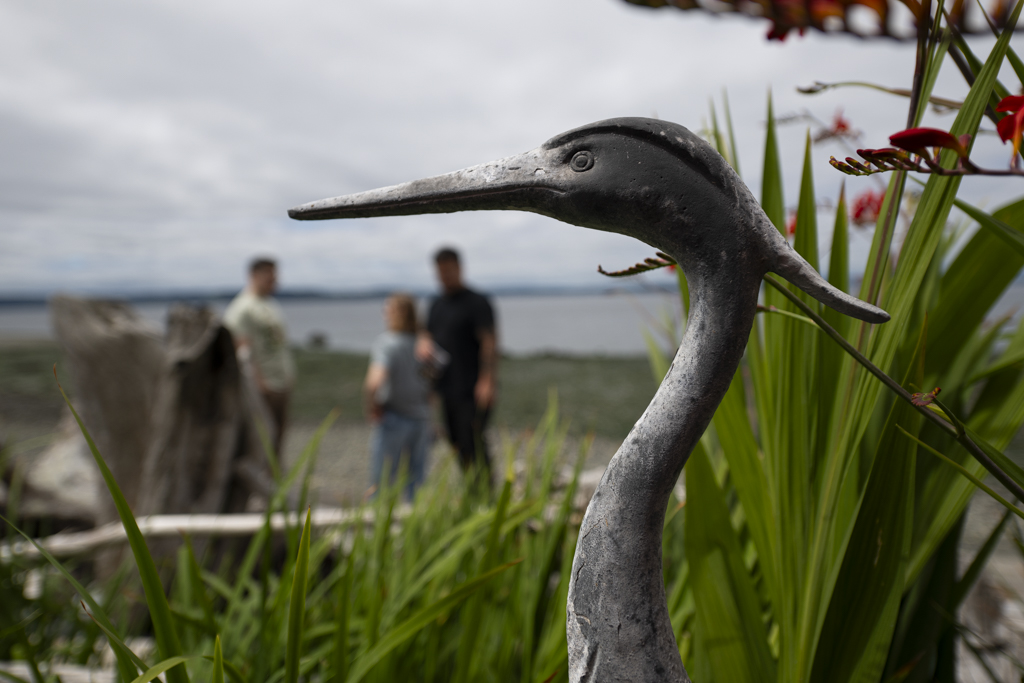
Below are Debra Montgomery and Lee Kelly; she bought the “Heron Cove” house 7 years ago and inherited Lee, who has been the gardener for 40 years. She said the previous homeowners sought out a buyer who wouldn’t tear down the house and would keep caring for the garden, which she and Lee both now do.

Garden D was described as “Small Spaces, Big Moments”:

Below (L-R) are the gardeners behind Garden D, Laird Applegate and Brian Pelzel:

Garden E was “From a Sprawling Lawn and One Tree to …”

Blackberries are often the bane of a gardener’s existence, but in Garden F, “Transformation,” they were beautiful:

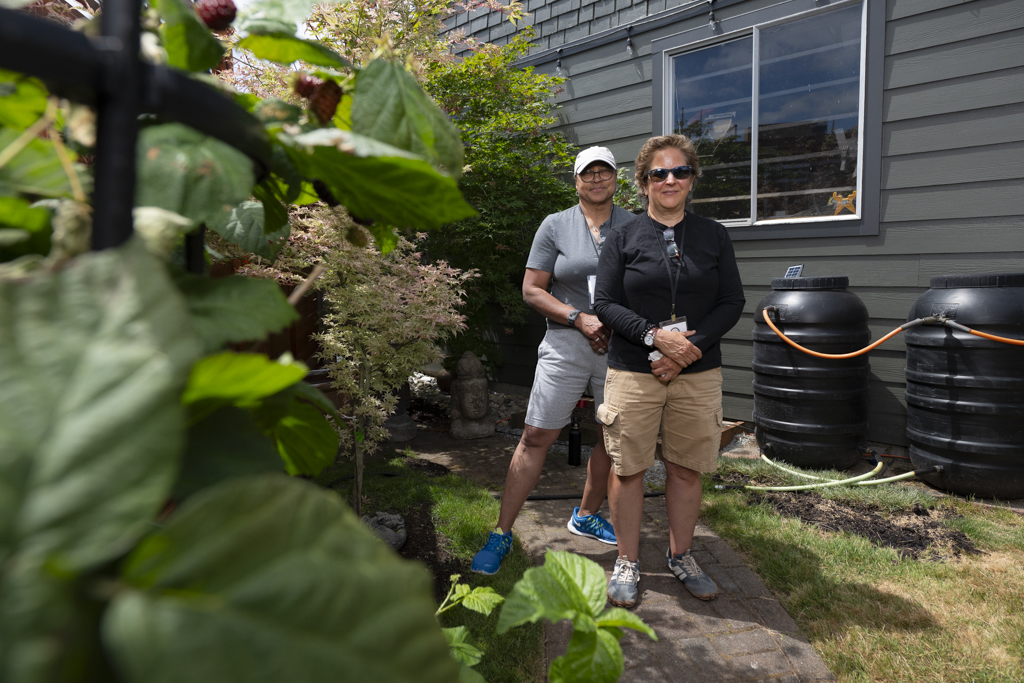
Garden F’s (L-R) Diane Elie and Raquel Gonzalez store water in 60-gallon rainbarrels and told Oliver that it fills most of their irrigation needs:
At Garden G, “Hidden Gem,” Julie Robinson-Jasper and Maple the dog are seen through a mirror surrounded by star jasmine at Garden G, “Hidden Gem”:

Another scene from Garden G:

Garden H, “Behind the Fences,” sported an arch of bittersweet nightshade:

A clawfoot bathtub graced Garden I, “A Fresh Look for A Once-Beloved Garden“:

Garden J, “Garden of Many Rooms,” was conducive to wandering:

Garden K offered onlookers “Plants from Around the World“:
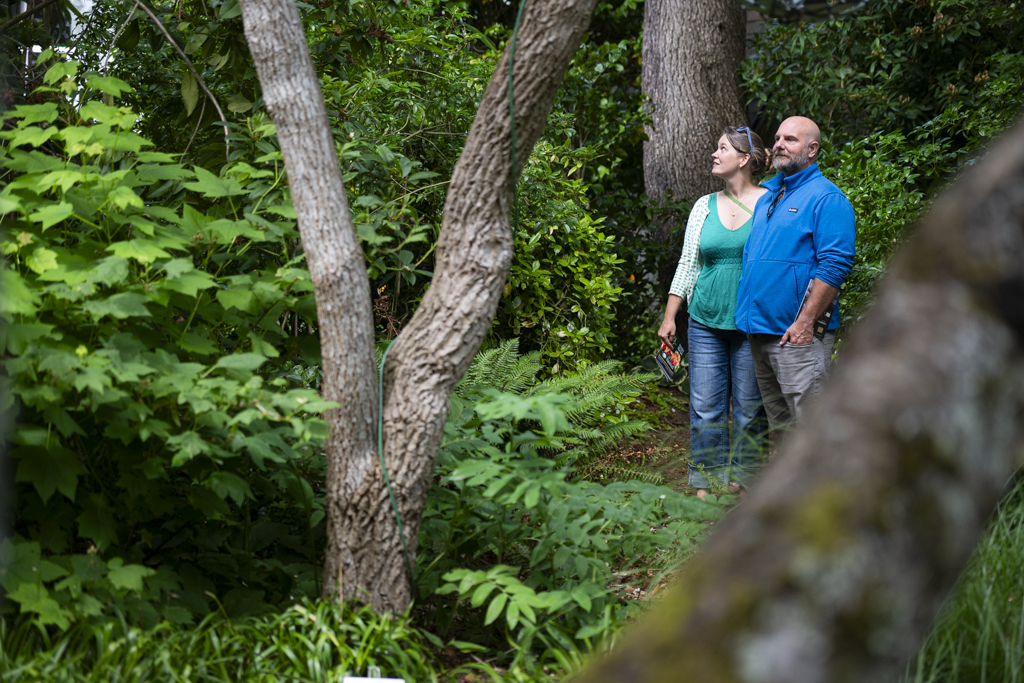
And Garden L, “Conifer Corner,” featured a 75-year-old wisteria:
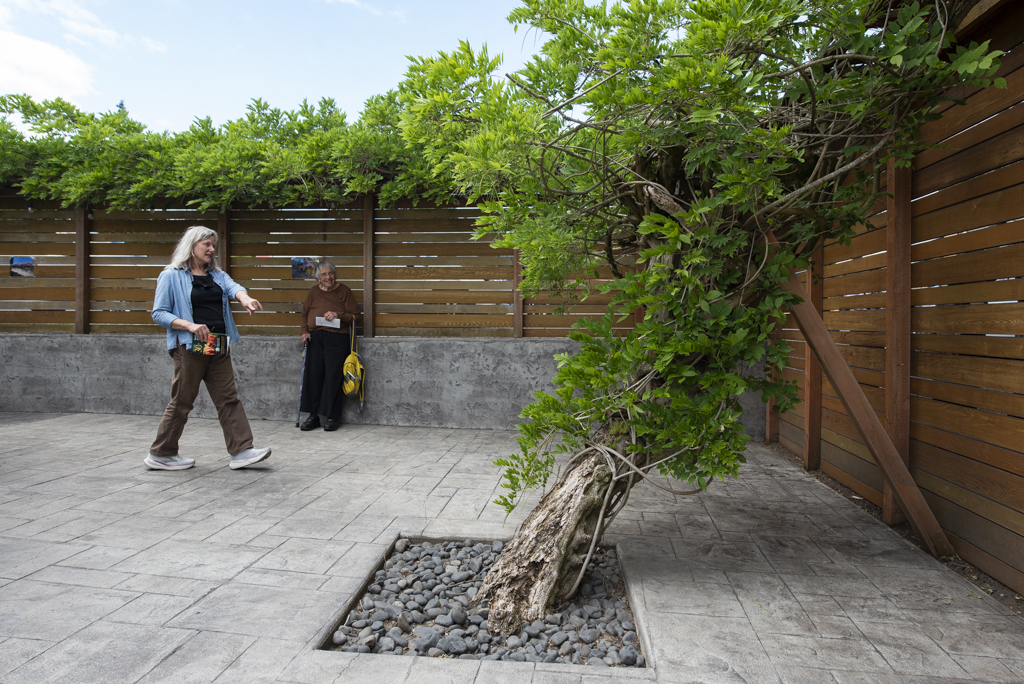
(Read details of each garden here.) The West Seattle Garden Tour is organized by a nonprofit that uses the proceeds to support other nonprofits – here are this year’s grant recipients; see how to apply for one of next year’s grants by going here (July 15 is the deadline).
-

 Lifestyle6 minutes ago
Chanel’s Bruno Pavlovsky on Reengineering an Iconic Brand
-
 Politics9 minutes ago
Supreme Court limits police use of cellphone data to find crime suspects
-
 Sports21 minutes ago
Teoscar Hernández returns, and Dodgers unleash 17-hit barrage in win over Athletics
-

 World29 minutes ago
DR Congo says 1,307 Ebola cases confirmed, including 377 deaths
-
 News54 minutes ago
Michigan governor threatens to pull troops from D.C. if used for Trump task force
-

 New York2 hours ago
Metropolitan Diary Challenge Day 2: How to Write Your N.Y. Story
-

 Los Angeles, Ca2 hours ago
Company has weeks to complete cleanup of Boyle Heights warehouse fire, officials announce
-

 Detroit, MI3 hours ago
18 New Kid-Friendly Places That Opened in Metro Detroit in 2026 (So Far!)

