West
California city's massive $130M deficit threatens dangerous cuts to its firefighting capacity

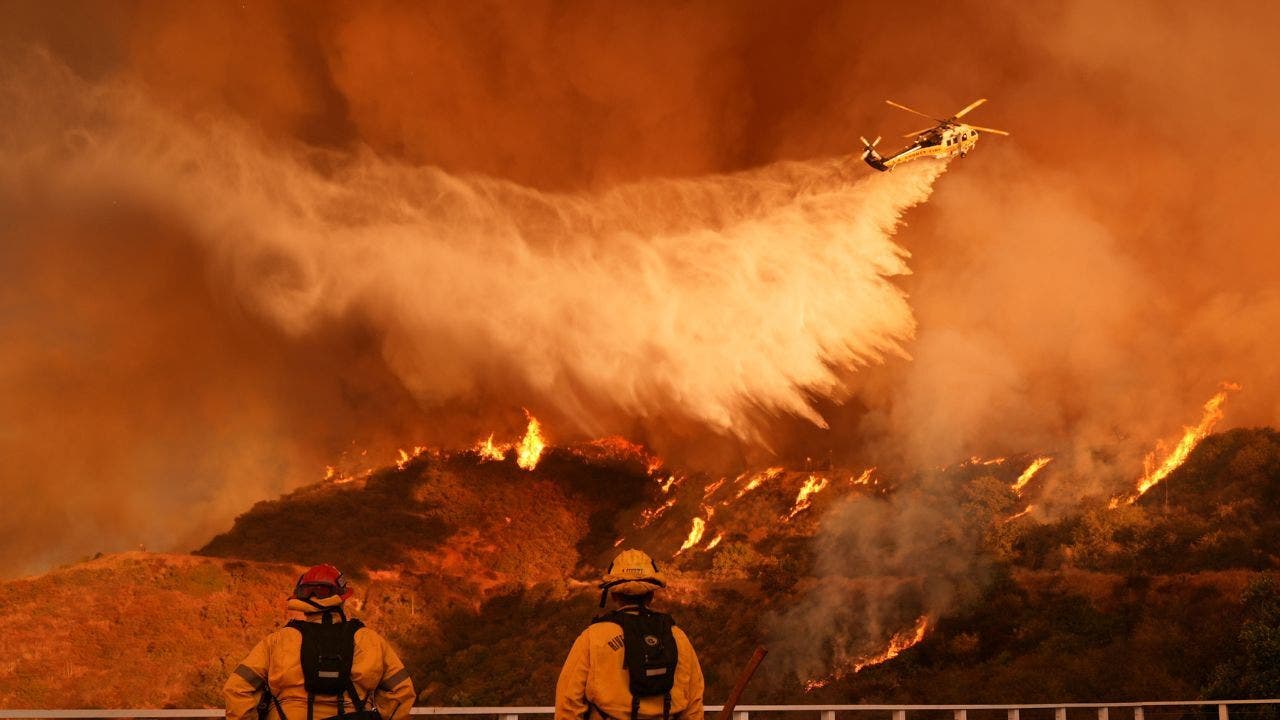
Oakland’s $129.8 million budget deficit could eradicate up to 30% of its firefighting capacity, depleting a strapped department already stretched thin by station closures, according to sources on the ground.
Fire response times in the Democrat-controlled California city are already three times the national average after budget cuts that recently closed two fire stations and kept a newly renovated station from reopening.
City Councilmember Zac Unger, who was an Oakland firefighter for 27 years, told Fox Digital that four more stations could face closures because of deficits.
“We have three firehouses currently closed and another four slated to close … which would represent about 30% of our firefighting capacity here in Oakland, an absolutely catastrophic potential for the city of Oakland,” Unger said. “We simply cannot afford to lose 30% of our fire and emergency medical response.”
LA RELIED ON TEEN VOLUNTEERS FOR YEARS DESPITE FIRE CHIEF’S WARNING, BUT LEADERS CAN’T BE SUED: LAWYER
Firefighters and city officials have been working overtime in “an all-hands-on-deck moment,” Unger said, to identify available funds in the city’s budget and keep Oakland’s firehouses open. Fire Chief Damon Covington told Fox Digital inroads have been made to prevent the additional four fire stations from closing, but that’s not to say closures won’t come down the road.
Firefighters watch water drops on the Palisades Fire in Mandeville Canyon, Jan. 11, 2025, in Los Angeles. (AP Photo/Eric Thayer)
“Seven firehouses would represent about 30% of our fire department,” Covington said. “It’s a tremendous threat because, ultimately, we need more fire service to cover our city adequately, and to lose two firehouses and a third that was under renovation, it taxes our workforce.”
The fire department’s limited capacity has slowed response time, creating the potential for a disaster like the Palisades and Eaton wildfires, President of Oakland Firefighters Local 55 Seth Olyer said.
“We had a house fire in the end of east Oakland in Engine 28’s area,” he said. “Normally, that engine would have been able to get to the fire within four minutes. The closest fire engine took nearly 11 minutes to get there. With a fire doubling in size every minute, you can do the math. This went from a small fire inside the house to a total loss and nearly threatening the surrounding area and potentially starting a wildland fire, much like in L.A.”
“Our firefighters do incredible work, and they will make do with whatever difficult circumstances you give them, but yes, we have seen slowed response times,” Unger told Fox Digital. “There’s simply no way to close firehouses and expect to receive the same level of service.”
The interim mayor’s office did not respond to a request for comment. But in its current budget proposal, the city cites one-time COVID-19 pandemic costs and retirement benefits, including OPEB liability and CalPERs benefits costs, as the “fiscal challenges leading to [a] projected deficit” of $129.8 million. Oakland’s 2024-2025 fiscal budget proposed fire station “brownouts” for six months beginning January 2025 to save the city $5.5 million.
But local firefighters say brownouts could come at a much higher cost.
A wall mural depicting Altadena, Calif., is seen next to the destroyed Altadena Hardware store after the Eaton Fire on Jan. 14, 2025. (AP Photo/Chris Pizzello)
“When you close firehouses, it creates a domino effect,” Covington said in an interview with Fox Digital. “It’s not just the firehouse that you’re closing, it’s the surrounding jurisdictions, the other firehouses that are close to that firehouse that have to cover the ground of that station.”
Oakland firefighters say they face the same cuts that the Los Angeles Fire Department warned about ahead of the devastating Palisades and Eaton wildfires in January. Oakland is no stranger to fire devastation itself. The Oakland firestorm of 1991 killed 25 people, injured 150 and destroyed more than 3,000 homes. Olyer said the 1991 fire fundamentally changed fire department response tactics and how fire crews cooperate with surrounding agencies.
“That fire was so massive it took a herculean effort by the Bay Area and basically fire departments from all over the western U.S. to control,” Olyer told Fox Digital. “You’re seeing the same thing with Los Angeles. It’s not realistic to think that any fire department would be able to stop any sort of huge fast-moving wildfire with hurricane force winds in conditions like that.”
KELSEY GRAMMER SAYS CALIFORNIA LAWMAKERS ‘TOOK THEIR EYE OFF THE BALL’ IN WILDFIRES CATASTROPHE
A quick, efficient and collaborative firefighting operation is possible with ample resources. In October, Olyer described how proper staffing and cooperation with CAL FIRE prevented the Keller Fire from becoming another California catastrophe.
“The Keller fire, which happened last October, was a perfect example of what a properly staffed fire department and early intensive action can do to really stop a fire before it gets out of control,” Olyer said. The event, he said, showed what “cooperation among agencies looks like, with CAL FIRE doing water drops on top, helicopter drops on it and massive amounts of resources very early on.”
(CAL Fire San Diego County)
“The department has been running bare bones in Oakland for decades,” Olyer said. “We have fire engines driving around with nearly 300,000 miles, and they’re literally falling apart. It’s just a matter of time until Oaklanders’ luck runs out.”
“We’re all pushing in the same direction. Everybody wants those firehouses open. It really does come down to dollars and cents,” Covington said.
Read the full article from Here



2020 Labor Day wildfire survivor talks blaze’s five-year anniversary
Hear from 2020 wildfire victim Christine Grom as she talks about the results of a class action lawsuit against PacifiCorp.
The Oregon Supreme Court has agreed to hear arguments in the billion dollar class action lawsuit between survivors of four 2020 Labor Day Fires and PacifiCorp.
The state’s high court will hear arguments at 1:30 p.m. on Nov. 3 in Salem, in a case with billions on the line for thousands of victims impacted by one of the worst disasters in state history.
The review represents a win for wildfire survivors, many of whom live in the Santiam Canyon and lost everything in the fires, and who stood to lose billions in jury awards following an April decision by the Oregon Court of Appeals.
How did we get here?
In June 2023, a Multnomah County jury found PacifiCorp at fault for causing the Santiam, Echo Mountain, 242 and South Obenchain fires and liable to a class of roughly 2,000 victims.
In the years since the verdict, juries have awarded more than $1.2 billion to 189 wildfire survivors, over the course of 18 “mini trials” designed to determine awards to fire victims.
On April 8, the Oregon Court of Appeals ruled the 2023 verdict was flawed, writing that instructions to the jury were “prejudicial to PacifiCorp.”
The appeals court reversed and remanded the case, which would have wiped out all awards and previous legal decisions.
Lawyers for the wildfire victims filed an appeal to the Oregon Supreme Court, also in April, and the high court granted certiorari on June 25.
The timeline for Oregon’s high court hearing the case appears swifter than normal, perhaps representing the need to bring some resolution for a case that’s been ongoing for five years.
“The thousands of Oregonians whose homes PacifiCorp burned are grateful that the Oregon Supreme Court will hear their case quickly,” lead council for the wildfire victims said in a statement.
PacifiCorp issued a statement saying they expected the court of appeals decision to be upheld.
“We respect the Oregon Supreme Court’s decision to review the case and will continue to participate fully in the process, presenting our position through the Court’s established briefing schedule,” a statement from PacifiCorp said. “We look forward to the Court’s consideration of the key issues and to the Court affirming the unanimous Oregon Court of Appeals decision.”
What will the court decide?
In reversing the original verdict, the Court of Appeals ruled that a set of instructions given to the jury, in the 2023 case, was in error and prejudicial to PacifiCorp.
The offending instruction, the ruling said, centered on the trial court telling the jury that it could “assume that the evidence at the trial applies to all class members.”
“We conclude … that instruction was legally erroneous, because certain evidence at trial, particularly related to causation, did not necessarily apply to every class member,” the appeals court wrote.
Lawyers for the plaintiffs argued that “the challenged instruction was appropriate” and that the Court of Appeals ruling “rests on a misinterpretation that no party held at trial and no juror adopted,” they wrote in their appeal to the Supreme Court.
In a news release announcing it would take up the case, the Supreme Court said it would examine the jury instructions and ruling by the appeals court.
Zach Urness has been an outdoors reporter in Oregon for 18 years and is host of the Explore Oregon Podcast. He can be reached at zurness@StatesmanJournal.com or 503-399-6801. Find him on X at @ZachsORoutdoors and BlueSky at oregonoutdoors.bsky.social

SALT LAKE CITY (KUTV) — A part-time wildland firefighter is asking Utah leaders for more job protections after he said he was told he would lose his full-time job for accepting a call to respond to the Iron and Cherry fires.
Israel Justice has worked as a part-time wildland firefighter for 22 years. For the past seven years, he has also worked full time for an Ogden-based mechanical company.
Justice said his employer had previously accommodated the emergency nature of wildfire deployments, but that recently changed.
“This job requires, you know, last-minute, kind-of show-up-and-go,” Justice said. “They call you, and you have to leave immediately and respond to these incidents.”
MORE | Wildfire
Justice is currently assigned to the fire line. He said he does not know whether he will have a job to return to when his assignment ends.
“They were recently bought out by a larger corporation, and they’re not willing to work under the same terms we had before, where I would be free to leave and come back,” Justice said.
2News reached out to the company to ask about its unpaid leave policy, what has changed and whether Justice will have a job to return to. The company did not respond.
Justice said the uncertainty has forced him to choose between job security and answering a critical call for help.
“I don’t believe it’s asking much that these companies make a small sacrifice so we can come out here and serve,” he said.
Justice said he wants wildland firefighters to receive employment protections similar to those provided to National Guard members and certain volunteers.
“We’re out here doing the same job, putting our lives on the line to help others,” Justice said. “We’re out here serving and doing our part for the country, and all I ask is that we get a little protection so that when we get back home, we know we’ll still have a job and can continue to care for our families.”
Justice said the pressure of fighting a wildfire while not knowing whether he will be able to support his family when he returns makes an already dangerous job even more difficult.
He has written to Gov. Spencer Cox and Rep. Blake Moore asking for stronger employment protections for wildland firefighters and informing them of his situation. He said he has not heard back.
Rep. Moore provided the following statement:
“Our office hasn’t heard from this constituent about his situation, but we would encourage employers where they can to allow their employees to go fight the fires. I’m grateful to the many firefighters and first responders working to keep our communities safe, and I’m praying for their safety during this time.”
____

Bagel shop manager Fernando Mejia was arrested by federal agents just over a year ago in the Port Washington store’s parking lot. Since then, including Monday evening, members of the Port Washington community have kept a weekly vigil to honor Mejia, who they consider one of their own, and bring attention to how his abrupt arrest, and ultimate deportation, left a void in his family, at his workplace and among anyone in town who knew him.
For 52 consecutive Mondays, they have flocked to the Main Street side of the Port Washington Long Island Rail Road station as a tribute to Mejia and their other immigrant neighbors who have been arrested by U.S. Immigration and Customs Enforcement agents and never returned home. The weekly 7 p.m. effort, dubbed the “Port Shines a Light in a Sea of Darkness” vigil by organizers, began a few weeks after Mejia’s June 12 arrest and has continued, even after he agreed to self deport and return to family in his native El Salvador.
Vigil co-organizer Jeff Seigel, 68, told the crowd of about 75 people — many toting handwritten protest signs — that Mejia was “doing well, although well is a relative term.”
Mejia is unable come back to Port Washington to see his teenage daughter, who stood in the crowd Monday evening and who Seigel said flies to El Salvador for visits.
Fernando Mejia was arrested by federal agents on June 12, 2025 outside the Port Washington bagel shop he managed. Credit: Courtesy: Lauren Wax
“He came here when he was about 20 years old, and here in the United States is where he became a man,” Seigel, 68, said. “He worked very hard, always. And it is here in the United States where he became a father. … After five months in detention, he could no longer wait to see if the immigration court would rule in his favor.”
Mejia, the former manager of Schmear Bagel & Cafe on Main Street, one block west of where each vigil is held, was one of about 3,000 Long Islanders arrested by federal immigration agents through March 10 as part of President Donald Trump’s ramped-up deportation push since his return to power, Newsday previously reported.
Mejia had just started his car in the bagel shop’s parking lot about 6:30 a.m. on June 12 to make a delivery when federal agents converged and placed him under arrest. Over the months that followed, Mejia bounced from facility-to-facility — first in Manhattan, then in Newark, Louisiana and Miami. He does not have a criminal record, his attorney, Bryan Richard Pu-Folkes, previously told Newsday. Pu-Folkes said at the time Mejia was likely detained due to a January 2006 deportation order from the Executive Office for Immigration Review for unlawful presence in the country.
Pu-Folkes did not immediately return a phone message Monday seeking comment. Mejia could not be immediately reached for comment.
The weekly efforts help community organizers raise awareness and funds for legal fees and even food for immigrants in the community. Another goal, said Stan Lacy, also a vigil organizer, is distributing whistles throughout the community. As Lacy and other members of Port Washington’s Rapid Response Network drive around Port Washington and encounter ICE agents, they blow whistles to alert immigrants of their presence.
After a trio of arrests “a little over a month ago,” ICE’s presence has been “relatively quiet,” he said.
Fellow organizer Stacey Mellus told Newsday the weekly vigils sometimes draw immigrants thankful for the community support, but not so much “when more ICE activity is in the area, when the climate gets a little more hot.”
“I witnessed one of those abductions here, you’re never going to get over something like that,” Mellus, 50, of Port Washington, said. “I’m never going to get over seeing people separated from their families, people yelling ‘don’t take my husband.’ “
-

 Oregon4 minutes ago
Oregon Supreme Court to hear $1B PacificCorp wildfire case
-

 Pennsylvania7 minutes ago
Pennsylvania Roundup: State takes action to contain spread of measles, bolstering public health
-

 Rhode Island12 minutes ago
Car carrying family of 3 pulled from Seekonk River in Rhode Island
-

 South-Carolina19 minutes ago
SC moves to revive death-penalty in double murder after federally commuted sentence
-

 South Dakota22 minutes ago
Traffic slowing down ahead of yearslong viaduct makeover in downtown Sioux Falls
-
 Tennessee27 minutes ago
Poet laureate of Tennessee Margaret Britton Vaughn dies at 87
-

 Texas34 minutes ago
Texas Lands Major Commitment From In-State DL
-

 Utah37 minutes ago
Utah firefighter fears job loss after answering wildfire call

