West
California city experiencing 'perfect storm' of crime and scandal: 'Vacuum of leadership'

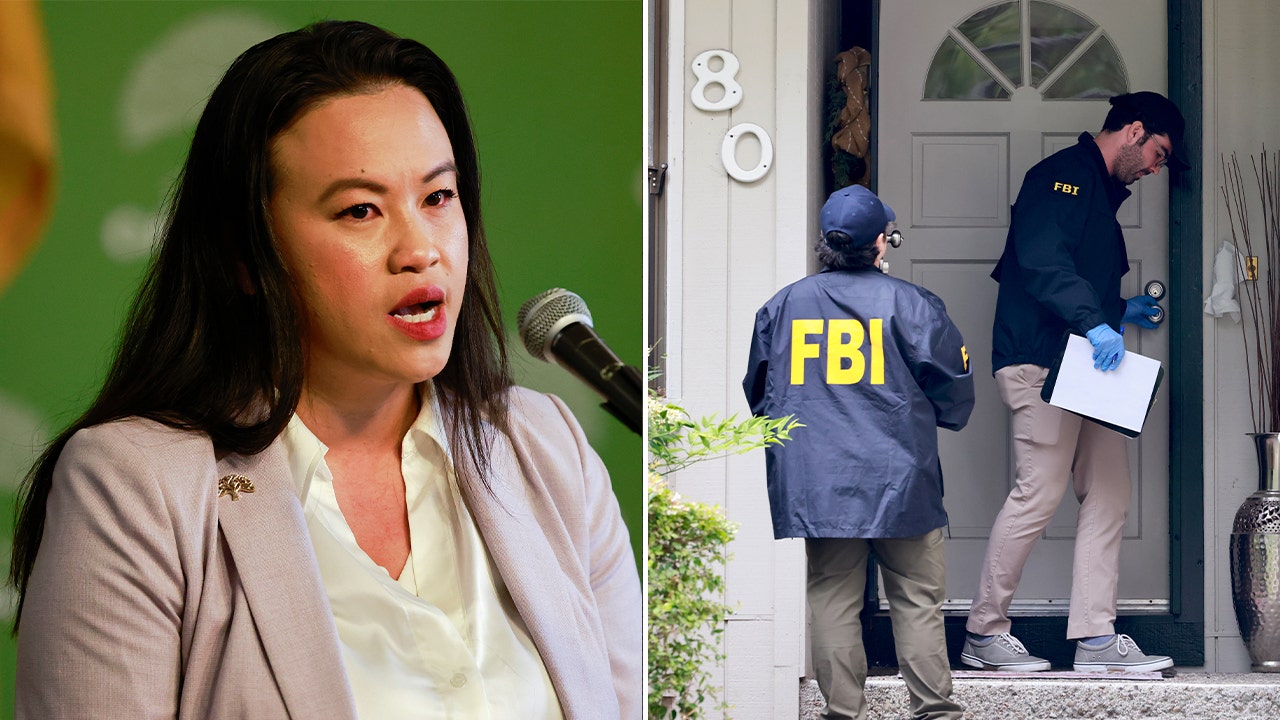
Residents of Oakland, California have been grappling with the “perfect storm” of crime and scandal, as Oakland Mayor Sheng Thao, who is facing a recall effort, just had her home raided by the FBI.
“In the movie ‘The Perfect Storm,’ two storms were colliding. This would be the perfect storm times three — it’s multiple crises all happening at one time,” Jim Ross, a Democratic political consultant based in Oakland, told the Washington Post. “For the city, I can’t think of a tougher time.”
While the homicide rate has come down in the city, robberies and car thefts have doubled and tripled respectively, compared to before what they were before the COVID-19 pandemic, the outlet reported. Oakland’s murder rate is higher than the U.S. average rate.
Bishop Bob Jackson told the Post that there’s been more “lawlessness” in Oakland than he’s ever seen and added, “We need divine intervention at this point.”
FBI RAIDS HOME CONNECTED TO OAKLAND MAYOR SHENG THAO DAY AFTER RECALL EFFORT QUALIFIES FOR BALLOT
FBI agents get in their unmarked vehicles after a raid at a home associated with Oakland Mayor Sheng Thao in Oakland, Calif., on Thursday, June 20, 2024. (Ray Chavez/MediaNews Group/The Mercury News via Getty Images)
“I think we need, from top to bottom, a brand-new slate of leaders for the city,” Jackson said. “We need a brand-new city council, a brand-new mayor, brand-new, brand-new, brand-new.”
Oakland has also experienced widespread homelessness and high housing costs, as the effort to recall Thao has garnered enough signatures to qualify for the November ballot.
Soon after the recall campaign to oust her from office qualified for the November ballot, the FBI raided her home. Thao’s attorney also abruptly quit, and her chief spokesperson resigned.
“The reality is there is a vacuum of leadership right now,” Justin Berton, former Oakland Mayor Libby Schaaf’s director of communications, told the Washington Post. “As residents, we’re not hearing from anyone. It’s leaving this unsettling feeling across the city that no one is driving the car.”
Fox News Digital reached out to Mayor Thao’s office for comment but did not immediately receive a response.
CLICK HERE FOR MORE COVERAGE OF MEDIA AND CULTURE
Oakland, California residents are seeing a “perfect storm” of scandal and crime, as Oakland Mayor Sheng Thao, who faces a recall effort, had her home raided by the FBI. (Left: (Photo by Jessica Christian/San Francisco Chronicle via Getty Images), Right: (Photo by Jessica Christian/San Francisco Chronicle via Getty Images))
Retired Judge Brenda Harbin-Forte, who spearheaded the recall effort against Thao, told local media that she had “blood on her hands” amid rising crime, grand theft auto and instances of people being robbed on the street.
“Businesses were not leaving Oakland at this pace before she came into office,” Harbin-Forte told a local ABC affiliate in January.
After the FBI raided one of her homes, Thao forcefully denied any wrongdoing.
“Mayor Thao is ready, willing and able to cooperate fully with federal investigators. She has nothing to hide,” her attorney, Tony Brass, said.
Fox News’ Joshua Nelson contributed to this report.
Read the full article from Here

San Francisco, CA
San Francisco rolls out heightened security measures ahead of World Cup knockout match, 4th of July

The city of San Francisco is taking heightened police and security measures in advance of two major events in the Bay Area this week – the 4th of July and the first knockout round of the FIFA World Cup.
Mayor Daniel Lurie hosted a press conference Monday to address the public on how the city plans to manage the overlapping swarms of soccer fans and 4th of July revelers.
“No matter the occasion, our top priority, and my top priority, remains the same: keeping San Francisco residents and visitors alike safe,” said Lurie.
The two events would be major draws for crowds independently, but combined, and with special occasions marking both, the city wants to ensure that security is a top priority.
The World Cup has already brought hundreds of thousands of people from across the country and the world to the Bay Area, but this week’s game at Levi’s Stadium in Santa Clara is especially notable for the San Francisco as the host city and the United States as a host nation. The stadium, renamed San Francisco Bay Area Stadium for the duration of the World Cup, will host the knockout round match between the U.S. and Bosnia and Herzegovina on Wednesday.
Official fan zones and watch parties for the U.S. match, as well as for Mexico’s match against Ecuador on Tuesday, will be held at multiple locations in San Francisco, including at Thrive City at the Chase Center and at the Pier 39 Fan Zone.
This year’s 4th of July in San Francisco, which already boasts large crowds across the city each year, will have another draw as the city prepares to celebrate the nation’s 250th birthday. The city will be hosting a fireworks show on the Golden Gate Bridge on Saturday night – only the third time that pyrotechnics have ever been set off from the iconic San Francisco landmark. Fireworks will be launched off the two towers of the bridge and from barges in the water.
The Golden Gate Bridge show will be the only official one in the city – fireworks are illegal in San Francisco.
Authorities advised attendees to use public transportation and to leave plenty of time on both ends of their travel for traffic and delays. Caltrans has announced road closures and detours on U.S. Highway 101 and the entire Golden Gate Bridge for the fireworks show.
San Francisco Police Chief Derrick Lew said the department is collaborating with multiple state and local agencies to keep people safe, and that police officers have had their days off cancelled to meet the staffing needs that July 4 will require.
“This week will be safe because that’s what we’ve been doing every day,” Lurie said. “It is a glorious time to be here in San Francisco.”
Lurie cited past heavily attended events like Sunday’s San Francisco Pride Parade and Super Bowl 60 in February as examples of the city’s successful management of major crowds.

The Nuggets are declining Jalen Pickett’s fourth-year team option for the 2026-27 season, releasing him from his contract, league sources told The Denver Post.
Former Nuggets general manager Calvin Booth drafted Pickett with the 32nd overall pick in 2023. The 6-foot-2 reserve combo guard has struggled to break into Denver’s everyday rotation throughout his first three years in the league.
His $2.41 million salary next season would’ve offered the Nuggets a sliver of cap relief, but they chose instead to move on from the former Penn State star. Monday was the deadline to make a decision on his option.
Pickett, 26, averaged 5.2 points, 2.3 rebounds and 2.3 assists in 16.1 minutes per game last season. He appeared in 50 games, highlighted by a career-high 29-point, seven-assist performance in January to lead the Nuggets in an upset over Philadelphia without their entire starting lineup.
Pickett is shooting 38.7% from the 3-point line on two attempts per game in his first three years. He also boasts a sturdy 3.63 career assist-to-turnover ratio.
But he’s remained a deep bench option under two different head coaches in Denver, from Michael Malone to David Adelman. Booth was fired in April 2025. Then, new co-general managers Jon Wallace and Ben Tenzer signed veteran point guard Tyus Jones off the buyout market late last season when the Nuggets wanted ball-handling depth. Jones received playoff minutes over Pickett during their first-round series against the Timberwolves.
Want more Nuggets news? Sign up for the Nuggets Insider to get all our NBA analysis.

Skip to content
-
 News12 minutes ago
Senate Ethics Committee dismisses complaint against Sen. Ruben Gallego
-

 New York1 hour ago
Read the Indictment of Malik Beasley
-

 Los Angeles, Ca2 hours ago
Stolen Sea Scouts boat found in Marina del Rey, suspect arrested
-

 Detroit, MI2 hours ago
Michigan House passes bill to restrict big investors from amassing single-family homes
-

 San Francisco, CA2 hours ago
San Francisco rolls out heightened security measures ahead of World Cup knockout match, 4th of July
-

 Dallas, TX2 hours ago
Klyde Warren Park reveals expansion plans, construction timeline
-

 Miami, FL2 hours ago
Person hospitalized after fire breaks out at North Miami Beach apartment building
-

 Boston, MA2 hours ago
Scottish soccer fan who died in Boston was ‘Tartan Army to his core,’ fundraising page says – The Boston Globe

