West
Boise State Public Radio chief fears service cuts if Trump funding ban succeeds

NEWYou can now listen to Fox News articles!
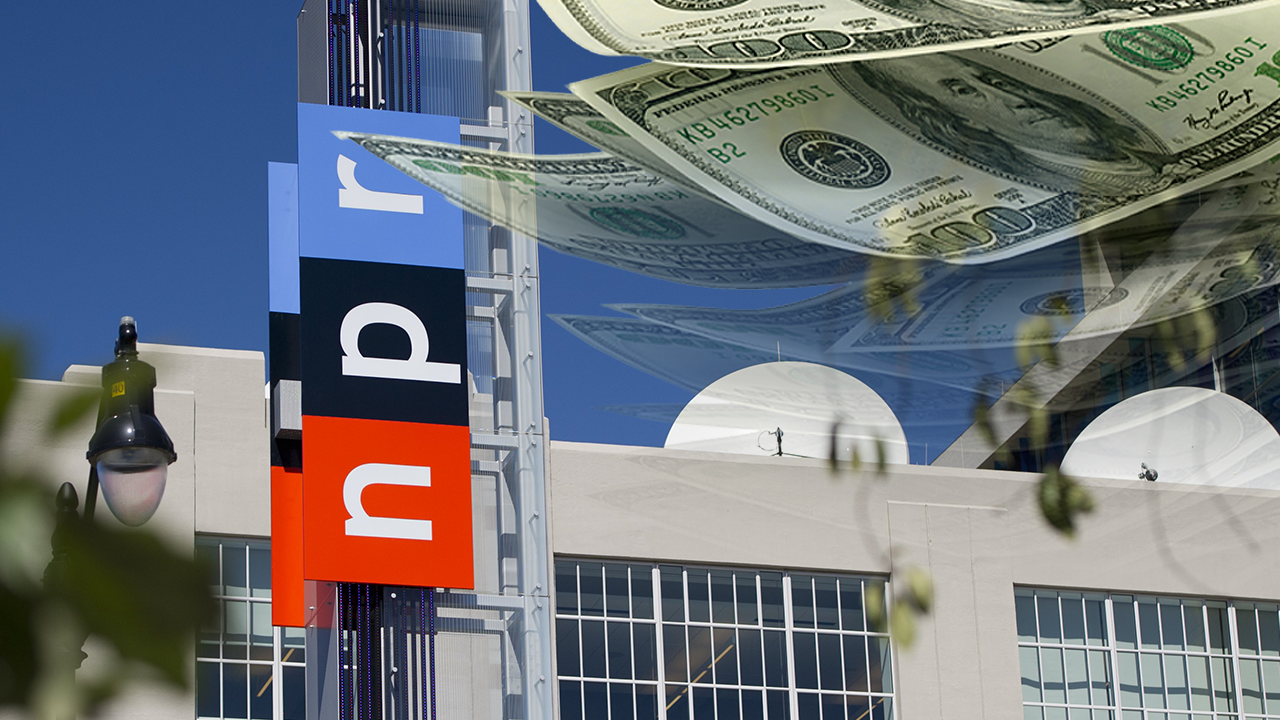
Boise State Public Radio, which has been serving Idaho for nearly five decades, is an NPR-member station that could be severely affected if the Trump administration successfully halts federal funding of public media.
President Donald Trump signed an executive order earlier this month instructing the Corporation for Public Broadcasting and other federal agencies “to cease Federal funding for NPR” and other public media outlets. NPR has vowed to challenge the order “by all means available,” but local station leaders are preparing for the federal spigot to be shut off.
Boise State Public Radio receives about 15-20% of its $4.8 million budget from CPB funding. The station receives about 12% of its budget from a Community Service Grant, with additional government resources coming from programming grants designed to help regional journalism.
“To lose that funding would also likely mean loss of services locally,” Boise State Public Radio general manager Tom Michael told Fox News Digital.
THIS LOCAL NPR CEO IS SPEAKING OUT AS TRUMP ORDER THREATENS FUNDING FOR PUBLIC STATIONS
Boise State Public Radio could be severely impacted if the Trump administration successfully halt federal funding of public media.
“Idaho is a very rural state,” he continued. “We have transmitters in locations with a couple thousand people, and the reason we’re able to do that is because of funding from the Corporation for Public Broadcasting.”
Trump contends NPR is a far-left outlet that doesn’t merit public funding, while NPR has fired back that the president’s order is an affront to the First Amendment that jeopardizes stations like Michael’s.
Michael believes “anything in the public realm is up for debate,” and is eager to explain to critics why Boise State Public Radio can’t simply make up the lost cash through additional advertising or other ways a for-profit station would attempt to generate additional revenue.
“We have a non-profit mission; we’re on the non-commercial band and the Federal Communications Commission classifies us as a Noncommercial Educational. We have a mission of service,” Michael said.
“We can’t do political ads, for example. That’s just not allowed on FCC broadcast rules,” he said. “We have restrictions on us that we can’t do commercial messaging.”
Boise State Public Radio serves a variety of small Idaho towns such as Salmon, Stanley and Challis, with tiny populations, some with fewer than 1,000 residents.
“A commercial broadcast probably wouldn’t find a return on investment in some of those places, but we do it because of the public-private partnership we have, and because it’s our duty based on the 1967 Broadcasting Act to serve as many Americans as we can,” he said.
“When people ask, ‘Why should taxpayers fund this?’ Well, part of this is because of our mission of universal service,” Michael continued. “Trying to serve as many people as we can, no matter where they’re from. It’s not just a bottom-line business interest; we need to be in those areas.”
PBS CHIEF WARNS CUTTING FEDERAL MONEY WILL ‘DEVASTATE’ LOCAL STATIONS AS WHITE HOUSE SEEKS TO PULL FUNDING
NPR host Ashley Ahearn conducts an interview on horseback in rural Idaho.
Michael said that the emergency alert system is another reason why public radio stations are vital in rural areas. Boise State Public Radio is essentially the primary service for a “huge part” of Idaho, feeding smaller stations with emergency messaging.
“No matter if they’re commercial stations or religious broadcasters or whomever, we help originate that signal. And so that’s really important,” Michael said.
“In the heart of New York City, you’re always going to get a signal. That’s not the case in Idaho. You know, broadband connectivity isn’t strong in a lot of places. And, you know, we have wildfires,” he continued.
Michael also recalled the 2022 Four Corners Fire, which forced about 600 people to flee their homes. Afternoon host Troy Oppie provided residents with evacuation orders.
“Radio, which is an old technology, is still very relevant for people who might not have great cell service, might have lost electricity… there is no paywall. They can access it [for] free, and we feel it’s our duty to share that information,” he said.
PBS, NPR BLAST ‘BLATANTLY UNLAWFUL’ TRUMP EXECUTIVE ORDER HALTING PUBLIC FUNDING, VOW CHALLENGES
Boise State Public Radio News program “Idaho Matters” focuses on local issues. (Boise State Public Radio)
Boise State Public Radio has a staff of roughly 30 people with half of them on the content side of the business. The station is funded through September, when the fiscal year ends, and Michael has been telling concerned staffers it’s “full steam ahead” at the moment, but employees are anxious.
Michael explained that the CPB typically provides about $600,000 in grants to Boise State Public Radio, and he believes it would have an “outpouring of local support” if Trump succeeds in withholding that cash. But it might not be enough.
“I don’t necessarily believe in our low-population state that we’d have, you know, 600 new major donors suddenly appear,” he said, noting that a “major donor” gives $1,000 or more.
“It’s not just one year of funding, it’s year after year, and it allows us to do all of these things,” he said.
Michael said Boise State Public Radio also helps fill a “hole” in local news coverage, as regional newspapers such as the Idaho Press and Idaho Statesman have seen their staff dwindle in recent years.
TRUMP SIGNS EXECUTIVE ORDER TO SLASH TAXPAYER FUNDS TO PBS, NPR: ‘RADICAL, WOKE PROPAGANDA’
President Donald Trump signed an executive order earlier this month instructing the Corporation for Public Broadcasting and other federal agencies “to cease Federal funding for NPR.” (NPR logo by SAUL LOEB/AFP via Getty Images. Trump photo by Alex Wong/Getty Images)
The debate over NPR’s funding comes amid the taxpayer-backed outlet grappling with accusations of liberal bias that critics say betrays the public trust. Former editor Uri Berliner resigned last year after calling out how NPR covered such major topics as Russiagate, the COVID lab leak theory, and Hunter Biden’s scandalous laptop.
Michael, who previously worked in public radio in Texas and has interviewed figures like Sen. Ted Cruz, R-Texas, and former First Lady Laura Bush, said it’s important for public media to touch a wide range of topics.
“I don’t agree with everything I hear on the radio, but I appreciate the public radio service because it’s pluralistic, right? It covers a lot of issues,” Michael said.
“I think every public radio station should reflect the issues of the community,” he added. “We lean into that here.”
The White House didn’t immediately respond to a request for comment from Fox News Digital.
Fox News Digital’s David Rutz contributed to this report.
Read the full article from Here


PORTLAND, Ore. (KATU) — The Oregon Zoo has welcomed a second red panda to their ranks this month, as 6-year-old Liu gets settled in to the habitat.
Liu comes to Portland from the Toledo Zoo as part of the Association of Zoos and Aquariums’ Species Survival Plan for red pandas.
He arrived just weeks after Enoki, a female red panda, and caregivers will soon introduce the duo in the hopes that they may eventually help add to the population of the endangered species.
PAST COVERAGE | Enoki the red panda joins Oregon Zoo, ‘exploring, snacking & napping’ in new habitat
For those coming to see the pandas, they should be easy to tell apart. Liu has a blonde tail, and Enoki is much smaller with a darker coat.
“He’s very handsome,” said Dr. Carlos Sanchez, the zoo’s director of animal health, who stopped by Liu’s habitat to observe, a red panda plushy tucked under one arm. “His tail is so blond — surfer blond.”
Liu was born on June 28, 2019 at Prospect Park Zoo in Brooklyn. His name means “willow” in Mandarin Chinese, a nod to his mother, whose name is also Willow.
Enoki is nearly three years old, and is of the refulgens subspecies of red panda, known for having darker faces and more prominent tail rings.
“These two represent a species in trouble,” said Kelly Gomez, who oversees the zoo’s red panda area. “In the past 25 years, habitat loss, poaching and the illegal wildlife trade have wiped out nearly half the world’s red panda population. Hopefully, we can help inspire a new chapter in the conservation of this incredible species.”
The duo joins the Oregon Zoo family more than a year after the death of Moshu, the zoo’s previous resident red panda who was dubbed “Sir Snacks-a-Lot.” Moshu was 14 years old.
More info from the Oregon Zoo.

After landing Darryn Peterson at the top of Tuesday night’s first round, the Utah Jazz are heading into day two of the 2026 NBA Draft without a second round at their disposal.
However, with a front office like the one that’s in Utah, it’d be hard to truly count out the Jazz from making a trade throughout the night to jump into the second round, in the event there was a prospect the Ainges had a certain appeal for.
While most of the big names of this class have already been scooped up in the first 30 picks, there’s certainly a few both interesting and potentially valuable names to keep an eye on through the next 30.
And for the Jazz, a few of them could fit their current lineup or some specific needs well enough that would make sense to get back on the clock once again.
Let’s take a look at four prospects still left up for grabs on day two of the draft that could be a worthwhile pickup for the Jazz to consider trading up for.
Dillon Mitchell | F, St. Johns
An athletic forward fresh off of a season under Rick Pitino at St. John’s, trading up to add another D-Mitchell to Utah’s draft history might not be the worst idea here.
Offensively, he won’t bring a ton to the table, as he only averaged 8.3 points a night during his senior season and shot a rough 6.7% from three. What he does do is check a ton of boxes in terms of size at 6-foot-8, 210 pounds, as well as his abilities as a defender, rebounder, and energy guy enough to warrant a look at the top half of the second round.
For the Jazz, perhaps they’d like to land on a more dynamic fit on both ends than Mitchell. But he sure would bring a nice spark on the defensive end that Utah could utilize after multiple lackluster years of production on that end of the floor.
Richie Saunders | G, BYU
A local product who spent four years with Brigham Young, Saunders might not fit exactly the type of mold on the defensive end that Utah could really covet here in the second round.
However, he does project to be a pretty seamless connecting wing with solid NBA size standing at 6-foot-5, has a strong outside shooting ability with a 38.7% clip from deep from his career, and should be able to at least hold his own on the other end.
He’d be a nice fit in Will Hardy’s system, and have a solid pro career as role player in the wing.
Trevon Brazile | F, Arkansas
If you’re looking for a lengthy, two-way impact player that could fit with the current standout size in this Jazz frontcourt, Brazile would be a perfect fit to bring in that would do just that.
He’s got great length standing at 6-foot-10, can be an ample shot blocker, is a threat at the rim who can finish well, stretches the floor, and on paper, looks like the type of piece in the frontcourt that many front offices around the league would love to get their hands on.
However, he has seen several questions regarding his lighter frame at 225 pounds, and has shown a lack of physicality and a real motor from his time at Arkansas. That same reason is why many GMs might turn away from taking a flier on him.
Jaden Bradley | G, Arizona
For the guards that are up for grabs in this range, Bradley has some of the best traits in terms of size at 6-foot-3, 200 pounds, and has the chance to be an impactful player on both ends of the floor as a solid playmaker and perimeter defender.
He wasn’t a high-volume scorer during his three years at Arizona, but he was efficient in his opportunities, shooting over 46% from the field and 39% from three on over nine shots a game. He could be a worthwhile dart throw to bring in for the back-end of the roster.
Another note that could make him a fun target for the Jazz: Bradley and Keyonte George are tight-knit from their days as teammates back at IMG Academy. So he’d be a pretty awesome fit into the locker room on top of the impact he offers on the floor.
Be sure to follow Utah Jazz On SI on X to stay up to date for daily Utah Jazz news, rumors and analysis!
 Add us as a preferred source on Google
Follow

The iron gate to Woodlawn Cemetery is almost always locked shut, but Toni White-Richardson was more than happy to let News4 inside.
As president of the Woodlawn Cemetery Perpetual Care Association, she was excited to talk about what makes this resting place so special.
“It is major D.C. history, first. Then it’s also major Black history, second,” White-Richardson said.
More than 30,000 people, mostly African Americans, are buried among the 22 acres of Woodlawn Cemetery, which opened in Southeast D.C. in 1895. And like so many cemeteries that date back to the 1800s, particularly African American cemeteries, this one has fallen into disrepair, is overgrown and has headstones tumbled over, like those of Wilhelmina and her husband James, and Eliza Spencer, a mother who died in 1887.
“Let me do a very upfront disclaimer,” White-Richardson said. “We have no idea where these stones go. And when we looked at the grid, it became even clear as mud, it became less clear as to where these stones should really go. Unfortunately, when we look back, we can tell there was a plan, but we could see we never got totally completed. Even back then, there are no markers saying this is Section H or this is Section G or this is 102 and this is, none of that.”
One of the most notable Washingtonians laid to rest here is John Mercer Langston, Virginia’s first Black congressman.

“Langston University came one year because they had a grand reunion in D.C., and we arranged for them to come to see […] John Mercer Langston, the university that was named after this man,” White-Richardson said.
And Blance Bruce, the first Black U.S. senator to serve a full term and register of the treasury, is also buried in the cemetery.

“He’s the signature on our dollar bill, you know, back in the late 1800s,” White-Richardson said. “So, oh, it’s history. It’s capital letters. No getting around it.”
Woodlawn is also the resting place of several of the original founders of two of the country’s most prominent Black sororities, Alpha Kappa Alpha and Delta Sigma Theta. Both organizations volunteer to help with clean ups.
The Perpetual Care Association recently received a grant from the D.C. Office of Planning to help with upkeep of the grounds and preserving the history here.
“These are important individuals who’ve made contributions to the District a century ago, but today still their history and their stories reverberate and really influence the trajectory of our city,” said Anita Cozart, director of the D.C. Office of Planning.
The cemetery tucked away off Benning Road is only open to the public five days a year, but groups can request tours anytime. The next chance to visit Woodlawn when it will be open to the public is Labor Day.
They’re always looking for volunteers and donors to help with the upkeep of this sacred ground.
-

 North Carolina11 minutes ago
Great horned owl kills 1 of NC Wildlife’s famous barn owlets: officials
-

 North Dakota14 minutes ago
NCAA Set to Change Unpopular Football Rule Just in Time for North Dakota State’s FBS Jump
-

 Ohio19 minutes ago
Ohio lawsuit alleges new NCAA rule unfairly denies high school Class of ’22 athletes a 5th season
-

 Oklahoma26 minutes ago
Fire Crews respond to commercial fire in SW Oklahoma City Wednesday afternoon
-

 Oregon28 minutes ago
Liu makes two! 2nd red panda joins Oregon Zoo family
-

 Pennsylvania34 minutes ago
Pa. measles cases jump, spread to Northumberland County
-

 South-Carolina39 minutes ago
South Carolina governor’s race set as Wilson, Johnson turn to general election
-

 Rhode Island41 minutes ago
More complaints against former RI private school coach accused of exploiting underage girl – The Boston Globe

