Alaska
Alaska 737 MAX incident: impact on Airbus, Bombardier?


On January 6, 2024, an Alaska Airlines 737 Max 9 aircraft experienced a mid-flight emergency landing after a section of the fuselage, approximately the size of a refrigerator, blew off shortly after takeoff from Portland, Oregon. The incident, which occurred at an altitude of around 16,000 feet is again raising concerns about the safety of the 737 Max family of aircraft.
Background and Investigation
The incident on board Alaska Airlines Flight 1282, carrying 177 passengers and crew, is the latest in a series of problems that have plagued the 737 Max since its return to service in 2020 following a two-year grounding due to two fatal crashes. The cause of the fuselage rupture remains under investigation by the National Transportation Safety Board (NTSB). However, early indications suggest that the issue may be related to the manufacturing process or the installation of the fuselage plug.
Preliminary reports indicate that in weeks leading up to the incident, Alaska Airlines’ pilots had reported pressurization warnings on three separate flights. While these warnings were initially categorized as “benign,” the connection to the door plug failure remains unclear.
“The Alaska Airlines incident has reignited concerns about the quality control measures implemented by Boeing and its suppliers.” – says Toma Matutyte, the CEO of online aviation marketplace Locatory.com. ‘It also raises questions about the durability of the 737 Max’s fuselage, particularly in areas where there are gaps or openings. These concerns are particularly worrying given the 737 Max’s history of safety issues, which have eroded public confidence in the aircraft.”
In the case of the Alaska Airlines 737 Max 9 incident, the fuselage plug that blew off was manufactured by Spirit AeroSystems. The plug is a relatively small part, but it is critical to the integrity of the fuselage.
Potential Problems and Concerns
Wichita, Kansas-located Spirit AeroSystems manufactures a wide variety of fuselage parts for Boeing aircraft, including doors, windows, bulkheads, and floor panels. Boeing and Spirit AeroSystems have a long-standing relationship, and the two companies work closely together to ensure the quality and reliability of the fuselage parts that Spirit AeroSystems supplies.
Yet, last April, Boeing issued a warning about potential delays in the production and delivery of a substantial quantity of its 737 Max aircraft. The concerns stemmed from uncertainties surrounding Spirit AeroSystems’ efforts in constructing the fuselages. It was related to the setback in Boeing’s plan to deliver 400 to 450 Max jets last year, which, in turn, was attributed to a flaw involving elongated fastener holes discovered in some components.
Historically, Spirit was a part of Boeing, responsible for manufacturing and assembling a significant fraction of its aircraft fuselages. In 2005, Spirit AeroSystems was spun off from Boeing as a standalone company and since then American planemaker is manufacturer’s biggest customer, accounting for approximately two-thirds of Spirit’s sales. Today, Spirit also produces fuselage sections and front wing spars for the Airbus A350, as well as parts for fuselage of Bombardier planes. As of latest financial disclosure, roughly 20% of Spirit’s sales come from Airbus.
The recent production delays and quality issues with the 737 MAX fuselage parts could potentially affect even the relationship between Spirit AeroSystems and Airbus as well as other major aircraft manufacturers. This is because the issue could lead to further production delays, quality, and concerns, which could make planemakers reconsider its reliance on Spirit for fuselage components.
Outlook and What to Expect Next
If Airbus or Boeing itself decides to diversify its supply chain and seek other suppliers for fuselage components, it could reduce Spirit’s overall revenue and profit margins. On the other hand, if planemakers would be still satisfied with Spirit’s ability to address the current issues and maintain a high level of quality, then the relationship between the two companies could remain strong.
“Of course, in the nearest future, the manufacturers will have to continue to rely on Spirit for a significant portion of its fuselage needs, and Spirit could secure a steady source of revenue from Boeing, Airbus, and smaller producers. The outcome of this situation will depend on how effectively Spirit resolves the existing issues and demonstrates its responsibility when it comes to the quality of its assembly.” – Matutyte explains.
The NTSB’s investigation is ongoing, and it could even take up to several months to determine the root cause of the fuselage rupture. In the meantime, airlines are grounding their Boeing 737 Max 9 aircraft until further inspections are completed. The grounding is likely to cause significant disruption to airlines that operate the 737 Max 9, particularly Alaska Airlines and United Airlines, which are the two largest operators of the aircraft in the United States.
Being the main and largest operator of the 737 Max 9 with the configuration in question, where such door is plugged, or permanently shut, as opposed to actively used in more densely arranged seating, United currently has 79 such planes, which is significantly more than 65 operated by Alaska Airlines, or the combined total of 52 of Aeroméxico, Copa Airlines, and Icelandair.
Initially, the FAA indicated that the necessary inspections would require four to eight hours, fostering industry expectations of a swift return to service for the planes. However, specific criteria for the checks are still pending agreement between the FAA and Boeing, resulting in a possible delay in providing airlines with detailed instructions.
Implications for Boeing and the Aviation Industry
The Alaska Airlines incident is a major setback for Boeing, which is still struggling to regain its credibility following the 737 Max crisis. The incident could further damage the company’s reputation and erode customer confidence in its products. It could also lead to regulatory scrutiny, also getting to the light and bringing closer the possible implementation of long-demanded extension for cockpit voice recorder’s capacity.
The US-operated 737 MAX has a two-hour CVR capacity, while the current International Civil Aviation Organization (ICAO) and European Union Aviation Safety Agency’s (EASA) regulations already demand for the capacity of 25 hours, so airlines, operating under the authority of FAA, face serious issues when it comes to investigations of the incidents such as this.
Namely, the circuit breaker for the CVR was not deactivated following the incident to safeguard the recording. Consequently, when accessed later, the recording had already been entirely overwritten. Yet, this time again, NTSB Chair Jennifer Homendy advocated for increasing the mandated capacity from the current 2 hours to 25 hours on both new and existing aircraft.
For the aviation industry as a whole, the incident serves as a reminder of the importance of rigorous safety standards and thorough inspections. It also highlights the need for open communication, quality control, and more transparency between manufacturers, airlines, and regulators.
The Alaska Airlines 737 Max 9 incident is a serious reminder of the potential risks associated with aviation safety. The investigation into the cause of the fuselage rupture is crucial to understanding the underlying issues and preventing similar incidents from happening in the future. As the investigation progresses, it is important to remain alert and ensure that all necessary steps are taken to ensure the safety of all aircraft operations.



Alaska
How Sanctioned Russian Arctic LNG Hardware Could Find a Second Life in Alaska’s ‘Polar LNG’ Project
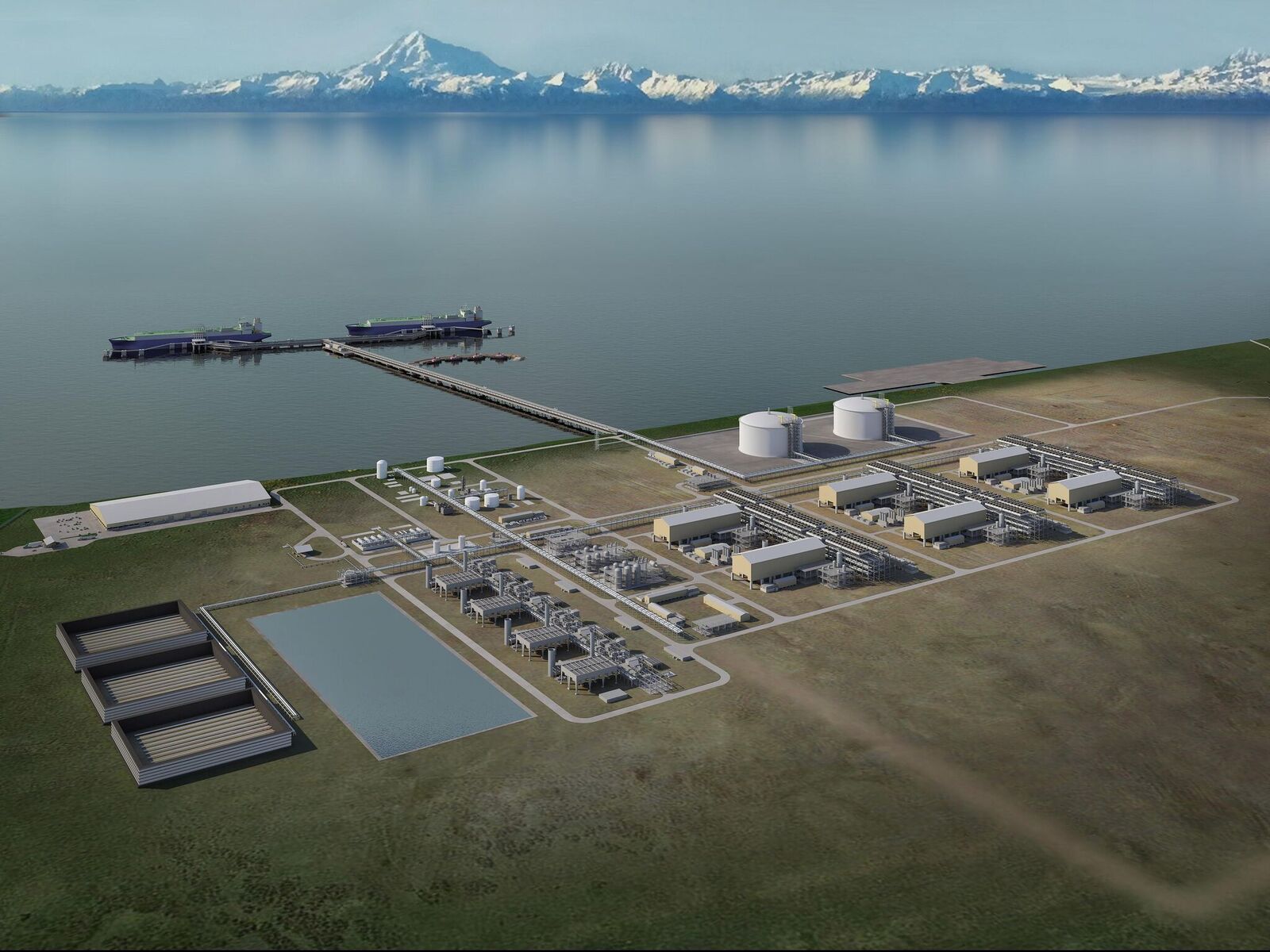
A newly proposed liquefied natural gas project on Alaska’s North Slope is exploring whether sanctioned equipment originally built for Russia’s Arctic LNG 2 development could be repurposed – highlighting both the opportunities and geopolitical hurdles shaping the next phase of Arctic energy.
The Polar LNG project, backed by U.S. investors including Joel Riddle, is seeking permission from U.S. authorities to acquire hardware stranded by sanctions on Russia’s Novatek-led Arctic LNG 2 project, Semafor first reported.
Riddle said the venture has strong political momentum as a result of the increase in natural gas prices following the Hormuz crisis, describing “hurricane-force winds behind us to accelerate this project,” according to Semafor.
Polar LNG aims to develop a nearshore liquefaction facility on Alaska’s North Slope, offering a modular and potentially faster alternative to the Glenfarne-AGDC Alaska LNG pipeline project. One of the investors in Polar LNG is Gentry Beach, friend of Trump’s son Donald Jr., who, according to the NY Times, has been pursuing energy deals with Russia’s largest energy firms.
Russian LNG firm Novatek as recently as last month confirmed that it was “indeed having negotiations on the potential use” of its Arctic liquefaction technology in remote northern Alaska.
The idea of reusing Arctic LNG 2 equipment stems from the availability of partially completed modules and hardware left undeliverable across multiple Chinese yards after sanctions halted construction.
However, only a limited portion of Train 3 modules – identified as 3-TMR-001 through 3-TMR-004 – have been built, and their compatibility with a different project design remains uncertain.
Arctic LNG 2 relies on a gravity-based structure (GBS), a novel platform engineered for harsh ice conditions assembled at Novatek’s massive Belokamenka yard. Polar LNG, by contrast, is proposing a nearshore configuration. Industry specialists say it is unclear whether the Russian-built modules could be adapted without significant redesign, raising questions about cost and feasibility. Polar LNG’s proposed capacity of 7mtpa, however, aligns with Arctic LNG 2’s T3 design of 6.6mtpa.
Shipping constraints present an additional challenge. Arctic LNG developments depend on Arc7 ice-class carriers capable of navigating year-round ice conditions. Several such vessels constructed by South Korea’s Hanwha remain undeliverable due to sanctions tied to Russian projects. While Polar LNG would require similar ships, it is uncertain whether the completed vessels could be reassigned or whether new capacity would need to be built in Korean or Chinese shipyards.
The broader concept also faces substantial legal and political barriers.
Any transfer of equipment linked to Arctic LNG 2 would likely require U.S. sanctions waivers or policy changes, given restrictions on transactions involving Russian energy companies. The feasibility of such approvals remains unclear amid ongoing geopolitical tensions.
The involvement of investors connected to previous U.S.-Russia energy discussions adds another layer of scrutiny. The New York Times reported that some Trump-linked figures had explored cooperation with Russian LNG projects.
At the same time, Alaska officials and developers are pushing to reassert the state’s role in global LNG markets as a potential supplier to Asia, particularly as demand for non-Russian gas grows. Shipping distances from Alaska to Japan can be as short as 3,600 nautical miles compared to more than 10,000 from the US Gulf.
Proponents argue that stranded Arctic equipment, if made available, could shorten development timelines and reduce costs for new projects. But with possible technical mismatches, uncertain vessel availability, and the need for sanctions relief, the path forward remains highly uncertain.
Subscribe for Daily Maritime Insights
Sign up for gCaptain’s newsletter and never miss an update
— trusted by our 107,461 members

Alaska covers over 665,000 square miles and holds more national parkland and wildlife refuge acreage than the rest of the country combined. All of which matters when you’re planning a wildlife trip to this beautiful North American destination. Unlike other parts of the country, animals here have plenty of space to roam, so knowing where to find them takes a little more effort. But whether you’re looking to view bears gorging on salmon in Denali National Park or whales cruising the Kenai Fjords, Alaska is a wildlife viewer’s paradise.
Denali National Park And Preserve
Covering more than six million acres of Interior Alaska, Denali National Park and Preserve is home to 39 mammal species and 169 bird species. But most visitors come with a single goal in mind: the chance to spot the park’s so-called “Big Five” of grizzly bears, wolves, moose, caribou, and Dall sheep.
The park’s popularity stems from its consistently high wildlife-sighting rates, which are attributed to the fact that private vehicles aren’t permitted beyond Mile 15 on the 92-mile-long Denali Park Road. From here, only park buses and transit vehicles travel the road, resulting in low traffic… and lots of animal activity.

Grizzlies feed throughout the summer here, with Thorofare Pass near Mile 37 being particularly rich in sightings. The Denali Caribou Herd uses the park year-round, providing some of the more dependable wildlife sightings. Dall sheep tend to cling to the steep ridgelines visible from Polychrome Pass, roughly 45 miles in. Wolves are also present in the park but are rarely seen, preferring to avoid human traffic as much as possible.
Bus tours depart from the Denali Visitor Center at the park entrance and range from half-day Tundra Wilderness Tours to full-day trips reaching Kantishna at the road’s end. For the best chance of seeing all of the “Big Five” species, the longer routes reaching beyond Eielson Visitor Center at Mile 66 are recommended.
Kenai Fjords National Park
Kenai Fjords National Park, located on the Kenai Peninsula near the town of Seward, protects a spectacular stretch of coastline where glaciers descend to the water’s edge, creating ideal conditions for marine life to use as feeding and breeding grounds.
This meeting point of the Gulf of Alaska and the inland fjord system of Resurrection Bay supports five species of whale, large colonies of sea lions and seals, as well as sea otters. Other wildlife you might spot include Dall’s porpoises, tufted and horned puffins, and bald eagles. Mountain goats and black bears also inhabit the park’s coastal slopes and can sometimes be spotted from the water.
Day cruises out of Seward offer the most practical way to access the park’s marine wildlife. One of the best, Major Marine Tours, offers half-day cruises through Resurrection Bay as well as full-day trips into Aialik Bay, where the park’s tidewater glaciers are located. Kenai Fjords Tours travels similar routes with stops at the Chiswell Islands, part of the Alaska Maritime National Wildlife Refuge, where puffins nest on sea cliffs from May through August.
Humpback whales are present in the fjords from mid-April through November, feeding on krill and small fish, and orca pods frequent Resurrection Bay from mid-May through mid-June
Katmai National Park and Preserve
Located on the Alaska Peninsula, 290 miles southwest of Anchorage, Katmai National Park and Preserve is where you’ll find one of the most dramatic wildlife encounters in North America. The action takes place in summer as sockeye salmon head up the Brooks River in enormous numbers, attracting brown bears to feast. It’s a remarkable site, especially around Brooks Falls, a six-foot waterfall that forces the salmon to leap out of the water to continue their upstream journey. Bears literally line the lip of the falls to intercept the leaping salmon.
Three elevated viewing platforms have been erected along the river: one at the falls itself, one downstream, and one at the river’s mouth where it meets Naknek Lake. Up to 43 bears have been recorded at the falls in a single day, with peak viewing taking place in July when sockeye is most active. A second bear surge happens in September, when spawned-out salmon weaken and die, making them easier catches.
Getting to Brooks Camp, the region’s ranger station, requires either a floatplane or a boat from King Salmon, about 30 miles away. But it’s well worth the effort and expense. Regular scheduled service connects Anchorage to King Salmon, from which charter floatplanes complete the final leg. Tour operators, including Rust’s Flying Service, run day trips from Anchorage that include the floatplane transfer, safety orientation at Brooks Camp Visitor Center, and several hours on the viewing platforms.
If you want more time here, Brooks Lodge on the shore of Naknek Lake offers multi-day packages. Reservations are hard to get, though, and are handled through a lottery system.
Arctic National Wildlife Refuge
The Arctic National Wildlife Refuge (ANWR) covers a vast 19 million acres of northeastern Alaska, stretching from the Brooks Range south through the boreal forest all the way to the Beaufort Sea coast to the north. And for dedicated wildlife spotters, it’s a must-visit as it’s the only place in the United States where all three North American bear species (black, brown, and polar) share a single protected landscape.
It’s also home to the Porcupine caribou herd, one of the world’s largest at around 200,000 animals (calving season is in June). Other wildlife you’ll want to look out for include Dall sheep, muskoxen, wolves, and wolverines, which all inhabit the mountain ranges and river corridors inland. The refuge is also home to more than 200 bird species from four continents that come to breed, feed, and rest during the brief Arctic summer.
While access to the ANWR requires serious planning (there are no roads, trails, or facilities within the refuge), it’s doable via charter plane from Fairbanks. River rafting trips are a great way to travel through the interior refuge, with adventures typically taking six to ten days. Polar bear viewing is also popular, with groups like the Northern Alaska Tour Company running day trips from Fairbanks to Kaktovik, combining a floatplane flight over the refuge with a boat tour to the bear viewing areas.
Your Alaska Wildlife Experience
Getting to the best wildlife hotspots in Alaska does require plenty of planning, but it’s worth the effort. The practical window for most of these experiences runs from late May through September, with those wanting to visit multiple sites in a single trip typically basing themselves in Anchorage, which is within easy reach of the Kenai Peninsula and is the main hub for flights to Katmai and other remote parks. The ANWR is the most challenging (and expensive) destination, requiring advance planning, guide arrangements, and flexibility for weather delays, but it’s the most rewarding if you can swing it.

There’s been a lot of chatter this week about the possible targets from JetBlue for a merger, and among them Alaska makes the most sense, but are they interested?
JetBlue Explores Merger Targets
As Matthew recently reported in JetBlue Merger Talks Analysis, JetBlue has been actively exploring potential merger scenarios with a range of partners, including United, Alaska, and Southwest. The reporting makes clear this is not idle speculation but a structured evaluation, with advisers engaged and regulatory feasibility playing a central role in how each option is being considered. At its core, the move reflects mounting pressure on JetBlue to find a sustainable path forward after years of inconsistent profitability and a failed attempt to acquire Spirit Airlines.
What stands out in his analysis is how differently each potential partner would reshape JetBlue’s future. A tie-up with United offers the most obvious network and slot advantages but would face intense regulatory scrutiny, while Alaska presents a more palatable antitrust profile with less obvious synergy. Southwest, meanwhile, represents the most unconventional path, with significant cultural and operational hurdles. Taken together, the report underscores that JetBlue is not just exploring growth, it is confronting a pivotal moment that could redefine its place in the US airline industry.
I want to dive deeper into the Alaska angle for a number of reasons.
Alaska-JetBlue Is The Most Logical
As Matthew points out, the route network is perfect for an Alaska-JetBlue merger (though this would undoubtedly be an acquisition of JetBlue by Alaska Airlines.) Alaska has an excellent position on the west coast, and out to Hawaii. It’s spreading its wings from Seattle and already has international long haul from Hawaii to Asia as well. But the northeast is extremely limited both in terms of airports served and connectivity. No one in Boston wants to fly to Seattle or Portland to connect to west coast options. The same was true for JetBlue’s experiment with operations in Long Beach trying to setup a west coast hub.
However, pairing those two lucrative coastal markets would provide incredible coverage. In a few years together, it could make sense to add a midwest hub to carry some of the load.
Alaska has also had an exceptional run as of late, has cash, highly valued stock, and a management structure the industry can trust.
Reasons Alaska Could Be Interested
If Alaska is truly interested in becoming a global carrier, it would be hard to ignore the northeast US market. Expanding into that market would be incredibly expensive and deeply embedded flag carriers would fight tooth and nail, including JetBlue assuming there was no merger. Buying into it could be a different matter. The table is already set, the customers have similar ethos: happy to fly a regional carrier with international aspirations that provides better service and has a personality.
As a defensive measure, Alaska has an opportunity to block other mergers. JetBlue is in the market and will find a suitor (if it can gain DOJ approval.) Its market is desirable, so is its fleet even if it could be run more profitably than it has been in the last few years. United has indicated that it’s open to an agreement but it’s incumbent on JetBlue to come to terms. American wanted a tie-up, had one, then years after it was disallowed by the Biden DOJ is now suing its former partner. While Matthew suggests American might want JetBlue – and it might – the carrier is probably not on the best terms with JetBlue management to construct a favorable deal and it can’t afford to run itself let alone take on more debt. Alaska can swing in and ensure that no one else gets them and expands their footprint and that alone could be worthwhile.
Buying JetBlue also helps grow its ambitions internationally. There’s little doubt that the future of trans-Atlantic international travel, especially for premium markets, is going to be on a narrowbody aircraft. Alaska, itself, is adding flights this summer to Iceland from Seattle on a 737. A base on the east coast with routes that can go to both alliance partner cities like London, Madrid, and Helsinki, and underserved premium markets in Scotland, Ireland, the Netherlands, Germany, anywhere in western Europe, helps a great deal.
It’s not just the European routes, though. JetBlue also has excellent coverage throughout the northeast and via its Fort Lauderdale hub to destinations in the Caribbean. Alaska knows leisure markets well and was the largest operator to Hawaii for many years prior to its purchase of Hawaiian. But it has zero coverage in the Caribbean outside of Cancun and Belize City. Alaska with JetBlue could become a serious bi-coastal force.
Alaska could also cement its place as a serious contender domestically while it grows its international presence.
The credit card base could be an exciting component too, and would likely end Barclays involvement in the US airline affinity space entirely. TrueBlue is valued at $5.5bn (though $2.75bn was leveraged during COVID), and Bank of America only contributed $310MM last year, for which the airline still posted a substantial loss. The carrier also sells miles to American Express, Chase, Citi, and Capital One though each specific value is murkier. The airline expected $50MM in EBIT generated from its United partnership but this would almost certainly fall away in a an acquisition.
Reasons Alaska Will Pass
Jetblue is not in good financial shape. In 2024, the carrier posted a loss of nearly $800MM and while efforts in 2025 cut these losses by almost 25%, it still lost $600MM in 2025 too. At this pace the carrier will be breakeven at the turn of the decade. The value of the airline is not what it’s currently turning over but what it could be. That said, other mergers and acquisitions typically find significant cost savings when combining. Not just by reducing common route frequencies but also by shared resources in outstations (ex. instead of JetBlue and Alaska maintaining two check-in counters and gate allotments, it can reduce its overhead costs.) But these overlaps are limited ad thus so too would be cost savings.
Alaska is primarily a Boeing carrier with JetBlue an all-Airbus airline. This changes everything about the way a combined carrier would operate. It’s not just replacement parts and maintenance contracts but training facilities and range commonality. The Mint product from JetBlue is also something that the combined airline would want to keep especially for long haul flying internationally and trans-continental routes, but would be unlikely to equip across its own fleet even on its long haul narrowbody routes. That makes it tough to integrate.
The carrier is still busy with Hawaiian and its own expansion plans without inviting a regulatory challenge, and the mess of a far greater integration with more moving parts.
Would this type of acquisition face more scrutiny from oneworld than Hawaiian? Maybe, it’s a possible factor and as the airline grows globally, it’s something it will have to consider. American Airlines likely benefits from Alaska’s network participation in the Pacific Northwest and doesn’t really put up a fight in Los Angeles. But in the Northeast it could be a different story.
Conclusion
JetBlue should absolutely consider all viable options for a merger or an acquiring partner. Alaska could be a great fit for JetBlue, and frankly, US consumers. But Alaska doesn’t need another project and that’s exactly what JetBlue would be. It requires its own turn around, there’s no fleet commonality, and no significant operational cost savings. JetBlue might be a great fit for Alaska, but probably not right now. That said, I’d love to see it and it would make the combined carrier a juggernaut and offer serious competition on the coasts and against the majors.
What do you think?


Video: Artemis II Crew Prepares for Moon Launch

Do You Know Where These Famous Authors Are Buried?

Figure skating season ends with redemption and heartbreak. What do fans watch next?

RIP Microsoft Publisher. Switch to These Alternatives Before It Disappears This Fall

Father loses legal fight to halt euthanasia of 25-year-old daughter in Spain

Florida High School Football Rankings: Top 25 teams – Oct. 21

How old is Bo Nix? What to know about Oregon quarterback ahead of 2024 NFL Draft

Cleary's 21 help Le Moyne down Central Connecticut State 69-64 in OT

99th annual Pony Swim held in Virginia

Indiana Members Credit Union announced as new anchor tenant at Bottleworks District

Emanuel pushes back on ‘straight White man’ question, says ideas matter most in 2028

French police make two more arrests over foiled attack on Bank of America

‘What’s going on?’: US judge calls aspects of new Pentagon press policy ‘weird’

Video: Iran to Allow More Oil Ships Through Strait of Hormuz, Trump Says

Dem senator warns deportation could let Virginia woman’s illegal immigrant killer ‘escape accountability’
-

 Sports1 week ago
IOC addresses execution of 19-year-old Iranian wrestler Saleh Mohammadi
-

 Miami, FL4 days ago
Jannik Sinner’s Girlfriend Laila Hasanovic Stuns in Ab-Revealing Post Amid Miami Open
-

 New Mexico1 week ago
Clovis shooting leaves one dead, four injured
-

 South-Carolina1 day ago
South Carolina vs TCU predictions for Elite Eight game in March Madness
-

 Politics1 week ago
Schumer gambit fails as DHS shutdown hits 36 days and airport lines grow
-

 Tennessee7 days ago
Tennessee Police Investigating Alleged Assault Involving ‘Reacher’ Star Alan Ritchson
-

 Minneapolis, MN4 days ago
Boy who shielded classmate during school shooting receives Medal of Honor
-

 Science1 week ago
Record Heat Meets a Major Snow Drought Across the West