The United States of America recently turned 250 years old. What a spectacle! The fireworks were amazing, and millions of proud people celebrated across the nation — even around the world. France lit up the Eiffel Tower; Japan had fireworks. French fighter jets flew above New York City with trails of red, white, and blue — our first major ally streaking our shared colors through the sky. Meanwhile, shameful white nationalists paraded through our nation’s capital. This has always been a country of paradoxes.
Technology
Is someone (or something) snooping on your computer?


By now, you know that online privacy is a thing of the past. Sure, there are things you can do to remove your info from the web or stop companies from tracking you.
But what if the culprit is someone you know? I hear from folks all the time who suspect someone knows a little too much for a very sinister reason. Here’s a check to see if a copy of everything you do on your PC or Mac is being gathered and sent to who knows who.
We’re giving away a $1,000 computer — Mac or Windows, your choice! Enter to win here. Good luck!
CHARGING AND TRAVEL: 5 MALWARE MISTAKES MOST PEOPLE MAKE
1. Check the Task Manager or Activity Monitor
I don’t mean some creep is logging into your computer daily, though that’s certainly possible. More likely, the person planted malware that does all the work behind the scenes. That could be a hacker, a jealous ex, a relative or even your boss.
Malware comes in various forms that all behave a bit differently. Some are impossible to miss — like ransomware —and others keep a low profile.
A participant uses a laptop computer as he takes part in the SECCON 2017 final competition on February 18, 2018 in Tokyo, Japan. (Photo by Tomohiro Ohsumi/Getty Images)
Spyware is subtle. It hides in your system, keeping track of every password you type, every video call you make and every email you send. The good news is even sneaky software can leave behind breadcrumbs.
Your first stop is the spot that gives you an overview of everything happening on your machine.
On a Windows PC:
- Open the Task Manager by hitting Ctrl + Shift + Esc. Under the Processes tab, you’ll see the apps and background processes running on your PC.
- Look through the list. If you see a name you don’t recognize, do a search online to see what turns up. Sometimes, these programs and background processes are legitimate and of no concern, even if you don’t know the name at first glance.
- To close out an app or process, right-click and hit End task.
On a Mac:
- To open the Activity Monitor, hit Command + Spacebar to open Spotlight Search.
- Type Activity Monitor and press Enter. Check over the list for anything you don’t recognize.
- To close out a program or process, double-click, then hit Quit.
2. Spot the red flags that something is up
One telltale sign of a malware infection? Processes start on their own. Don’t write it off if an app launches itself out of the blue.
FIVE SMART, SIMPLE TECH CHANGES TO MAKE 2024 BETTER
Say you only have a couple of apps that open when you start up your computer. If a different window briefly appears before flicking out of existence, it could be a spyware program loading. They’re designed to disappear.
Keep tabs on what should happen when you start your computer so you know if anything strange is happening.
A hand on the keyboard is seen with binary code displayed on a laptop screen in this illustration photo taken in Krakow, Poland on August 17, 2021. (Photo by Jakub Porzycki/NurPhoto via Getty Images)
How to check or change startup apps on a PC:
- Click the Start menu.
- Select Settings (cog icon) and click Apps.
- In the left menu, click Startup at the bottom.
The Startup panel displays the apps installed on your machine. If Windows has measured the impact of that app on your PC, you will see a rating next to it. Options include No impact, Low impact, Medium impact, and High impact.
An app with a high impact can slow down your startup time. Go through the list and determine which apps you don’t need immediately after startup. Toggle each slider next to the app to turn it on or off.
How to change startup apps on a Mac:
- Click on the Apple menu, then System Preferences.
- Click Users & Groups.
- Select your User Account, then click Login Items on the top right.
Here you’ll see a list of the applications that open automatically when you log in.
To prevent an app from running automatically, click Remove a login item. Then select the app’s name you want to block and click the Remove button below the list.
HAVE ANY NEW TECH? TAKE STEPS NOW TO SECURE YOUR PRIVACY
You can use the checkbox to hide items you would like to launch. Hit the plus symbol under the list and find it on your computer to add a new item.
A person dressed as an internet hacker is seen with binary code displayed on a laptop screen in this illustration photo taken in Krakow, Poland on August 17, 2021. (Photo by Jakub Porzycki/NurPhoto via Getty Images)
3. Stay up to date
Updates pop up when you’re busy, and you don’t want to deal with bugs and other issues the latest version of Windows or macOS introduces. Still, keeping your system up to date is one of the best ways to keep up with the constant flood of junk looking to root its way into your computer. Just do it.
To update your PC:
- Click the Start Menu and open Settings.
- Click Update & Security > Windows Update.
You’ll see if updates are available for download. If an update is available, click Download and Install. If you don’t see an available update, click Check for Updates to force the process.
To update your Mac:
- Click the Apple icon from the menu bar at the top of the screen.
- Hit System Preferences > Software Update.
From here, you can also enable automatic updates by checking the box at the bottom of the window. For more options, click Advanced.
PODCAST PICK: Budget Ozempic, avoid return fees & online piracy amps up
Plus, we’re TikTok tips that pros warn are your plants’ worst nightmare. Andrew has a wild story about getting scammed on a dating app. It’s cold outside, so here are some top tricks for staying warm with your tech. And, as always, listener letters. You won’t believe what one guy called me.
Check out my podcast “Kim Komando Today” on Apple, Google Podcasts, Spotify, or your favorite podcast player.
Listen to the podcast here or wherever you get your podcasts. Just search for my last name, “Komando.”
CLICK HERE TO GET FOX NEWS APP
Sound like a tech pro, even if you’re not! Award-winning popular host Kim Komando is your secret weapon. Listen on 425+ radio stations or get the podcast. And join over 400,000 people who get her free 5-minute daily email newsletter.
Copyright 2024, WestStar Multimedia Entertainment. All rights reserved.


If your Prime Day purchases included a new desk, TV stand, bookshelf, or other furniture you still haven’t assembled, Hoto’s PixelDrive cordless screwdriver can help speed up the process. It’s currently on sale for $59.99 ($20 off) at Amazon, matching its best price to date.
From tightening loose screws on furniture to repairing electronics, the PixelDrive is designed to handle a wide range of household projects. Hoto includes 30 screwdriver bits that cover many of the most common screw types, all neatly organized in a small cylindrical case. It also offers six adjustable torque settings, allowing you to use less power when working with fragile electronics or increase it when putting together a desk, bookshelf, TV stand, or other furniture. You can also switch between a slower 80RPM mode for more precise work and a faster 200RPM mode with the press of a button.
Hoto also added several features that make assembling projects a little easier. A built-in display lets you quickly check your current torque setting and remaining battery life, while an integrated LED light helps illuminate dim spaces, whether you’re working under a desk or inside a cabinet. The rechargeable 2,000mAh battery also charges over USB-C, so you won’t need to keep buying disposable batteries.

NEWYou can now listen to Fox News articles!
Those little white robots that once rolled across college sidewalks with lattes, fries and late-night snacks are getting a new assignment. Starship Technologies recently announced that it will wind down its U.S. university campus operations and redeploy more than 1,200 robots toward grocery chains and hot food delivery in cities across the United States and Europe.
If you have ever watched one of these robots patiently wait at a crosswalk like a polite cooler on wheels, you know why students got attached. They became part campus convenience, part mascot. Now, the company is moving from a controlled campus setting into a much tougher public test.
CHINA‘S ROBOT-RUN HOTEL OPENS TO PUBLIC IN 2027
That raises the bigger question: will these cute campus robots be just as welcome when they start sharing crowded city sidewalks with you?
Sign up for my FREE CyberGuy Report
- Get my best tech tips, urgent security alerts and exclusive deals delivered straight to your inbox.
- For simple, real-world ways to spot scams early and stay protected, visit CyberGuy.com – trusted by millions who watch CyberGuy on TV daily.
- Plus, you’ll get instant access to my Ultimate Scam Survival Guide free when you join.
Starship is winding down U.S. campus robot operations as it expands grocery delivery in the U.S. and Europe. (Starship)
Why Starship is pulling robots from college campuses
Starship says the decision comes down to focus. The company says its grocery delivery operations are on a 10x growth trajectory over the next two years, driven by demand from major retailers in the United States and Europe.
In Finland, Starship says its robots already complete roughly one in five grocery deliveries. That gives the company a real-world model it wants to repeat elsewhere. To support that expansion, more than 1,200 robots from U.S. campus fleets will be moved into grocery delivery. For Starship, that is a major pivot. Campuses helped the company build its brand in the U.S. They also gave the robots a place to learn.
Why college campuses were the perfect robot testing ground
Starship made a big U.S. splash at George Mason University in 2019, when the school became the first U.S. university to offer autonomous robot deliveries from Starship. From there, the robots spread to dozens of campuses. That made sense. College students are often hungry at odd hours. Many live without a full kitchen. They also tend to be open to new tech, especially when it brings food to the dorm without small talk.
During the pandemic, contactless delivery became even more appealing. A robot that could roll up with lunch while limiting person-to-person contact suddenly felt useful in a very different way.
The campus pullback will not happen overnight
Starship says it has worked with its university campuses and industry partners to keep service running through the 2026–2027 back-to-school season, with transition plans in place to reduce disruption. So, this does not appear to be an instant shutdown where every campus robot disappears at once. Instead, the company is moving away from the university model while preparing its fleet for a bigger push into grocery and restaurant delivery.
For students who loved the bots, it may still feel like the end of an era. For Starship, though, it is a move toward the market where the company believes the economics are stronger. Starship CEO and co-founder Ahti Heinla says the company’s robots can deliver groceries at a cost $3-$4 lower per delivery than traditional courier fulfillment. That is the kind of claim that gets the attention of retailers trying to make last-mile delivery less expensive.
ZOOX ROBOTAXI REDESIGN BRINGS BIG RIDER UPGRADES
Why city sidewalks could be a tougher test
The next phase could get messy. Delivery robots have to share sidewalks with people who are walking, pushing strollers, using wheelchairs, carrying groceries or trying to catch a bus. That means every design choice matters. A robot that blocks a curb ramp can create a real problem. A robot that pauses in the wrong spot can turn from cute to irritating fast. If one reverses unexpectedly or gets stuck near a crosswalk, the novelty wears off even faster.
There have already been warning signs. Reports have described delivery robots bumping into people, getting stuck in odd places and raising accessibility concerns. Chicago has also seen local pushback and safety concerns around sidewalk delivery robots, which shows Starship still has work to do if it wants city residents to embrace them. That is the challenge Starship now faces. The same robot that felt charming on a campus may feel like clutter on a narrow sidewalk.
Starship Technologies is shifting more than 1,200 campus delivery robots to grocery and restaurant deliveries in cities. (Starship)
What grocery delivery changes
Grocery delivery is a different business from campus food delivery. A college order might be a sandwich, a soda or a late-night snack. A grocery run can involve heavier items, more frequent routes and customers who expect reliability every time. If Starship can make that work, the payoff could be huge. Grocery stores want cheaper local delivery. Customers want speed without sky-high fees. Cities want fewer cars clogging short delivery routes.
Starship says the global food delivery market is now worth $650 billion and needs delivery systems with higher autonomy levels. The company also says it has completed more than 10 million deliveries, which gives it a sizable head start in the sidewalk robot category.
However, the public will need convincing. People may welcome a robot bringing milk and eggs on a rainy night. They may also get annoyed if that same robot blocks a sidewalk during the morning rush. That will all decide whether sidewalk robots become normal or face more local limits.
Why Estonia still matters to Starship
Starship was founded in Tallinn, Estonia, in 2014 by Ahti Heinla and Janus Friis. Estonia remains home to the company’s core engineering and AI development team. That is important because this shift is not only about where the robots operate.
The big question for robot delivery
Starship’s move shows where the delivery robot business is headed. College campuses helped make the robots likable. Grocery delivery may determine whether they become profitable. Still, the sidewalks belong to the public. That means companies need more than clever machines. They need trust, clear rules and designs that respect people who move through cities in different ways.
A delivery robot should never make a sidewalk harder to use for someone with a cane, stroller or wheelchair. It should not turn public space into an obstacle course. If companies want these robots to feel normal, they need to prove they can operate without making daily life more frustrating.
ARE HUMANOID ROBOTS NOW COMING FOR RETAIL JOBS?
Starship says grocery delivery demand is pushing its robot fleet from college campuses into urban neighborhoods. (Starship)
What this means to you
You may start seeing more delivery robots near grocery stores, restaurants and apartment-heavy neighborhoods. If that happens, pay attention to how they behave in your area. Look for whether they yield to pedestrians, avoid curb ramps and handle crowded sidewalks well. Also, check whether your city has rules for personal delivery devices. Some places allow pilot programs, while others limit where these robots can operate.
If a robot causes a problem, document it safely. Take a photo or video, note the location and report it to your city or the delivery company. That is important because local officials need real examples, not vague frustration, when they decide what rules should apply. There is also a privacy angle. These robots use sensors and cameras to navigate. Companies may say the data supports safe operation, but you still deserve clear answers about what gets collected, how long it is kept and whether law enforcement can request it.
Watch the CyberGuy Live replay: Lock Down Your Phone in 30 Minutes
Your phone holds your email, passwords, photos, banking apps and personal data. In this free CyberGuy Live replay, Kurt the CyberGuy walks you step by step through simple phone security fixes you can do at your own pace. You’ll learn how to improve your privacy settings, spot the latest phone scams, use trusted security tools and walk away with a simple checklist to stay protected. Watch the replay and get our checklist here: CyberGuyLive.com
Kurt’s key takeaways
Starship’s campus exit feels like the end of a quirky era, especially for students who got used to seeing the little robots rolling around campus. But this shift also tells us something bigger about where autonomous delivery is going. The next battle will happen on city sidewalks, not college campuses. If these robots save money and reduce short car trips, they could become very useful. But if they crowd walkways or create safety headaches, people will push back hard. To me, the real test is pretty clear. Robot delivery needs to work for everyone on the sidewalk, including people who never ordered anything.
CLICK HERE TO DOWNLOAD THE FOX NEWS APP
Would you be ok with a delivery robot on your block, or would you rather keep your sidewalks robot-free? Let us know by writing to us at CyberGuy.com.
Sign up for my FREE CyberGuy Report
- Get my best tech tips, urgent security alerts and exclusive deals delivered straight to your inbox.
- For simple, real-world ways to spot scams early and stay protected, visit CyberGuy.com – trusted by millions who watch CyberGuy on TV daily.
- Plus, you’ll get instant access to my Ultimate Scam Survival Guide free when you join.
Copyright 2026 CyberGuy.com. All rights reserved.

Our 250th birthday counts back to the Declaration of Independence in 1776. The declaration was a radical and astonishing document that still serves as America’s soul. But the beating heart of the nation wouldn’t come until more than a decade later, when the Constitution was ratified. That document is why I’m able to write this to you today. And we need you to help protect it.
The First Amendment to the Constitution is so potent that people across the world who live in places untouched by US law often seem to think they have the same rights it establishes. The First Amendment is our day-one theory of what makes a free society. It’s literally the first cure by the framers for a project they knew would be forever imperfect and incomplete — fixable only by way of the right to free expression.
The Verge exists today because of this great project. We believe in it deeply. The First Amendment affords us the knowledge that we’re likely free from imprisonment from expressing our freedom to speak. But journalism and speech are always under assault. It’s one of the reasons why we’ll always need lawyers despite likely having the strongest editorial ethics policy in the industry.
Here’s what the First Amendment says:
Congress shall make no law respecting an establishment of religion, or prohibiting the free exercise thereof; or abridging the freedom of speech, or of the press; or the right of the people peaceably to assemble, and to petition the Government for a redress of grievances.
This is a compelling and beautiful idea. But we’ve had to fight to keep it alive from the beginning..
John Adams, one of the fiercest revolutionaries who railed against British tyrrany and helped secure independence, completely fucked up the First Amendement when he became the second US president. Adams’ series of Alien and Sedition Acts of 1798 look positively Trumpian in retrospect, railing against foreigners, expanding presidential power to arrest, imprison, or deport people, and perhaps most insidiously, making it a crime for American citizens to print “scandalous and malicious” writings against the government. Adams surely loved the country he created, but nonetheless shrunk before the magnitude of its liberties.
Fast-forward to World War I, when the First Amendment was again under attack, this time by the Supreme Court. The court’s awful decision under Oliver Wendell Holmes was later overturned, but its fearful message about free speech still sticks with us. You’ve probably heard the phrase “you can’t shout ‘fire’ in a crowded theater” — not actually true. The misquoting and misinterpretation here is darkly funny: Trevor Timm, in The Atlantic, notes the court decision the phrase refers to was actually about whether an American socialist “could be convicted under the Espionage Act for writing and distributing a pamphlet that expressed his opposition to the draft.” It almost sounds ripped from contemporary headlines. (Nearly a century later, the Espionage Act would be used again to target, this time, a New York Times journalist.)
Misunderstandings about the First Amendment still abound. On the front lines we most readily see it in police confrontations where armed agents of the state bungle their constitutional duties with disastrous results.
Cops are routinely so terrible at understanding America’s foundational law that there’s now a cottage industry of streamers and influencers who work as “First Amendment auditors” — people who intentionally flex their right to record in public to bait dummies into abridging their freedom of speech. It’s easy to go down TikTok rabbit holes where you’ll find someone recording an illegal traffic stop from inside their car, or a fully kitted streamer recording harassment on a public sidewalk. When the police inevitably show up to hassle someone for exercising their rights, the stakes are immediately raised.
In a best-case scenario, a higher-ranking cop arrives and dispels their colleagues’ unconstitutional conduct. In other cases, someone ends up getting detained or arrested for completely protected behavior.
It’s even worse than usual in 2026, because we now live under an administration that’s flooding cities with barely trained federal agents who see constitutionally protected behavior as a threat. This has resulted in deaths, assaults on reporters, and an untold broader cost of regular people having to endure the immense burden of confronting the justice system simply for doing things they have the fundamental right to do. The right to speak and assemble is especially valid when it’s in protest of the government. That’s the whole point of this thing! And yet.
The latest assaults on the First Amendment have been encouraged by people all the way up the chain of command. We’re being betrayed by officials who are supposed to protect us, people who swore an oath to the Constitution and ought to know better. The FCC is not supposed to regulate speech but has nonetheless become a nightmare of incompetence and civil rights suppression. Do you miss Stephen Colbert on The Late Show? Thank the Trump administration, which now operates a mob-like patronage system that has cowed the billionaire princes who own America’s broadcast networks. Or ask Jimmy Kimmel, who got kicked off the air after conservatives went nuclear over his tame remarks about Charlie Kirk, a man who spent his time poisoning our national discourse with none of the grace or wit employed by national talk show hosts.
The Trump regime in general has an incredibly disturbing record on free speech, from science to the operations of the largest social networks. Donald Trump rails against anyone who doesn’t bow to him, and the list of his victims is too long to enumerate. But here’s an important one: The president once threatened to jail Meta CEO Mark Zuckerberg for life. Zuckerberg is far more wealthy and powerful than Trump in many respects, but what did he do? Two years after the threat, Zuckerberg showed up on the White House lawn to celebrate Trump’s insane UFC fight show. He tapped out against a bully.
This is what makes everything really messy. We live in an age dominated by communication platforms that are so wealthy, powerful, and pervasive that they seem practically unrestrained by the US government, but paradoxically must still cozy up to a regime that has no actual respect for them or for their free speech. Trump once threatened to blow up the entire internet because he wanted platforms to censor things to his advantage. The CEOs of those companies still indulge him with flattery and photo ops.
This blurring of public and private interests has fueled a funhouse-mirror idea of “free speech culture” that’s actually designed to crack down on free speech. The loudest people crying about free speech culture do so as if theirs is not the freest ever in history, while simultaneously supporting actual government censorship, like banning books.
I can’t say it better than Ken White has, so just go read him on this point. White explains how “free speech culture” has emboldened the Trump admin and others to engage in real censorship. “When enough people think that all of free speech—including free speech law—is bullshit, then free speech rights won’t be enforced,” he writes.
Our constitutional punchbowl has been spiked by madmen who profit from confusion about our rights and the rule of law. It doesn’t have to be this way. Just remember: The First Amendment is a restraint on the government that prevents it from prohibiting your speech.
Moreover: Actual censorship is government suppression of speech. It’s entirely understandable that we’re confused about what censorship is because of how hard many people have worked to keep us confused. A social media platform moderating your post is not censorship — it’s actually free speech. Yes, that sounds completely counterintuitive, but it’s true. The alternative is a situation where the government forces private citizens to publish things they don’t want to, including hate speech.
Much was unsaid here, including the history of immense pain and suffering that has kept the First Amendment and our broader rights alive. I won’t claim to know what the fix is for our current mess, but I’ll say I really hate when our leaders say things like “this is not who we are” when they talk precisely about the things that define who we are. And part of who we are is a coalition that claims to want free speech in theory while simultaneously suppressing it in practice.
So what can you do? Yes, of course, vote. But there’s much more to do. Write or call your congresspeople (I promise this does matter). Participate in local elections, especially for school boards, which are on the front lines of book banning. And if you’re reading this, thank you for subscribing — but consider also supporting other newsrooms.
Follow topics and authors from this story to see more like this in your personalized homepage feed and to receive email updates.
-

 Politics1 minute ago
Trump could hand prized stealth jets to NATO ally once seen as alliance headache
-

 Health4 minutes ago
Common gym supplement could help fight depression, new research suggests
-

 Sports9 minutes ago
SJSU was told of decades-old allegations against volleyball coach during controversial 2024 season
-
 Business19 minutes ago
Commentary: How right-wing anti-transgender attacks led to a Supreme Court ruling upholding sex discrimination
-
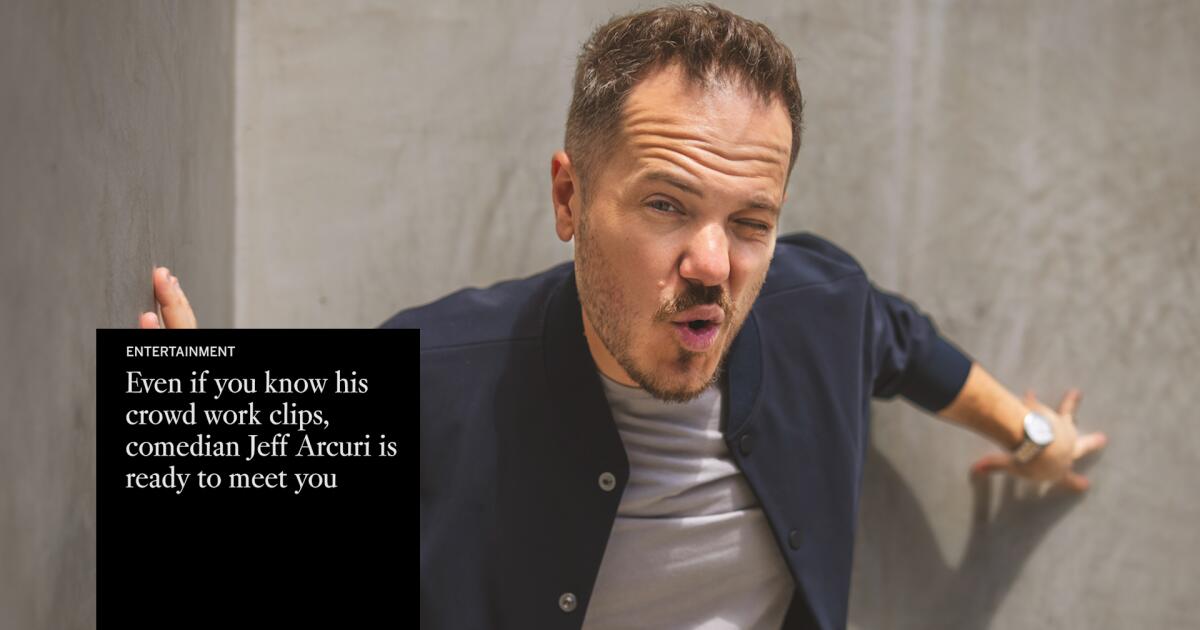 Entertainment24 minutes ago
Even if you know his crowd work clips and not his name, comedian Jeff Arcuri is ready to meet you
-

 Lifestyle31 minutes ago
Jessica McCormack: How a Challenger Is Seizing the Jewellery Opportunity
-
 Politics34 minutes ago
Commentary: Trump’s World Cup meddling only made matters worse for rattled U.S. squad
-
 Sports46 minutes ago
Looking back at the greatest high school basketball doubleheader in 2017

