Sports
Where do Travis Kelce and George Kittle fit in among the great NFL tight ends?

This Super Bowl showdown between Travis Kelce of the Chiefs and George Kittle of the 49ers is a clash of styles.
It’s Kelce’s tight fade versus Kittle’s straggly, anyone-know-a-good-barber? look.
Kittle’s pregame routine includes meditation, visualization and a salt bath. Kelce spends three hours selecting what he will wear.
Kelce pulls up in a Rolls-Royce Ghost, whereas it’s a classic Mustang for Kittle.
They are as different as Heath Ledger (Kittle has a tattoo of him) and Chris Farley (Kelce watches his movies repeatedly).
Kelce is a Burger King Whopper kind of guy; Kittle goes for the orange chicken at Panda Express.
And there’s more.
The opposing tight ends come from different branches of the same tree.
Kelce, with his confounding feel for understanding football’s intersections of time and space, is the representative of the receiving branch.
Kittle, the hit man who gives defensive ends tastes of turf, comes from the blocking branch, or perhaps we should call it the two-way branch.
Appropriately, Kittle is the son of a one-time left tackle and offensive line coach. That is not to say he catches as if he’s wearing boxing gloves, however. He once had 210 receiving yards in a game. Kittle led NFL tight ends in receiving yards this season — it was his third 1,000-yard season.
George Kittle goes for 58 yards!
📺: #BALvsSF on ABC
📱: Stream on #NFLPlus https://t.co/pkwa8SXokx pic.twitter.com/XPez8PpqDD— NFL (@NFL) December 26, 2023
In 2018, he had 1,377 yards, which was the most by a tight end in NFL history. Two years later, Kelce outdid him by 39 yards. Since Kittle came into the league in 2017, Kelce is the only tight end with more receiving yards.
Kelce has seven 1,000-yard receiving seasons — more than any tight end ever (he missed his eighth this season by 16 yards after sitting out the regular-season finale). In his career, he has averaged 71.2 receiving yards per game — highest among all tight ends.
Without Kelce’s 11 catches for 116 yards against the Ravens in the AFC Championship Game, the Chiefs are not in Las Vegas this week. And without Kittle’s 1,020 receiving yards during the regular season, the 49ers might be sitting this one out, too.
More than an opportunity to buy squares and dip wings, Super Bowl LVIII is a forum to consider Kittle, Kelce and their places among the greatest of tight ends.

Travis Kelce, left, has more 1,000-yard seasons than any tight end in NFL history, but George Kittle led the league’s tight ends in receiving yards this season. (Kevin Terrell / Associated Press)
Football’s first tight end was supposed to be a linebacker.
At least that’s what many teams thought. But Bears coach George Halas, head scout George Allen and assistant coach Luke Johnsos saw something in Mike Ditka that no one else did. They selected him and invented a new position, moving him a few yards from the offensive tackle on the line of scrimmage so he could have a two-way release, inside or outside the pressing defender.
Ditka caught 56 passes for 1,076 yards and 12 touchdowns, averaged 19.2 yards per catch and was named the league’s rookie of the year. He wasn’t fast by today’s tight end standards, but he could get open with physicality and was as difficult to tackle as any player ever. What’s more, he set a standard for blocking.
“You had to watch him for 60 minutes because he’d take your head off,” Hall of Fame defensive end Deacon Jones told NFL Films.
“Ditka defined the position,” says Hall of Fame general manager Ron Wolf, who scouted Ditka in person in the early 1960s.
In the 1963 championship game, the Bears trailed the Giants 10-7 late in the third quarter and faced a third-and-9 on the Giants’ 15 when Johnsos suggested Halas call “Ditka Special,” in which Ditka ran a shallow crossing route. Ditka caught the pass just past the line of scrimmage and took it to the Giants’ 1. The Bears scored the winning touchdown on the next play.

GO DEEPER
How does this 49ers-Chiefs rematch compare to their Super Bowl LIV showdown?
That same season, John Mackey made his debut for the Colts. For most of his time at Syracuse, Mackey was a fullback who blocked for Heisman winner Ernie Davis. But as a senior, he led his team in receiving. Colts coach Don Shula envisioned another Ditka, and Mackey subsequently averaged 20.7 yards per reception as a rookie and became the second great tight end.
“Mackey had a little more speed than Ditka,” says Dale Lindsey, who played against both as a linebacker with the Browns and Saints and later coached in the NFL for 21 years. “In coverage, Mackey gave you more problems. But he wasn’t as physical as Mike was. In the running game, Mike was head and shoulders above everybody else — a tough, physical guy.”
In a move that would have momentous implications for the tight end position, Steelers coach Chuck Noll hired former Georgia Tech coach Bud Carson as a defensive backs coach in 1972, then promoted him to defensive coordinator the following season. Carson brought the Cover 2 defense to the NFL, which made the middle of the field vulnerable to attack. Offensive minds looked for ways to counter with players who could exploit the open spaces in the zone defense.
Dave Casper had been an All-America offensive tackle at Notre Dame in 1972. The following year, he was an All-America tight end. Oakland Raiders owner Al Davis chose him in the second round in 1974 and helped Casper become a tight end who made legendary plays.
“They lined him up on the left side with Art Shell and Gene Upshaw and ran every play to the left,” says one-time NFL defensive back, Hall of Fame coach and NBC commentator Tony Dungy, who played against Casper. “They didn’t care if you knew it. Dave became what everybody was looking for, a guy you could run behind on third-and-1 and also outrun a safety and make the catch to win the game.”
But the Steelers were having so much success with Carson’s Cover 2 that the NFL made a change in 1978 to try to help offenses. The “Mel Blount rule” limited contact between defenders and receivers to the 5-yard area just beyond the line of scrimmage. Before 1978, defenders could jostle receivers all the way downfield without penalty.
For offenses, this was seismic, and an opportunity for innovation.
At 6 foot 2 and maybe 215 pounds, Ozzie Newsome was a big wide receiver at Alabama. He wasn’t big enough to be a tight end in the way Ditka, Mackey and Casper were, but Newsome could run and catch like few before him or since. With the Browns, he became a different kind of tight end, and when Newsome retired 13 years later, he was the all-time-leading tight end receiver.
GO DEEPER
Why this year’s 49ers team reminds the ‘Greatest Show on Turf’ Rams of their Super Bowl run
The year after Newsome entered the league, San Diego Chargers coach Don Coryell and offensive coordinator Joe Gibbs were looking for an explosive playmaker who could create matchup problems. They found one like no other when they drafted Kellen Winslow in 1979.
“Gibbs and Coryell said, ‘If I have that talent, why leave him at the tight end position?’” Dungy says. “‘I’ll move him and create mismatches.’ So Winslow did everything Ozzie did, but he lined up as a tight end, a wide receiver, in the backfield and in the slot. He was hardly ever asked to block.”
Winslow led the NFL in receptions twice and finished second and third in two other years.
“He was the first big, athletic guy who could run, jump, block,” says former Commanders coach Ron Rivera, who played against Winslow as a Chicago linebacker. “And he had really good hands.”

Tony Gonzalez led a new wave of athletic tight ends in the 1990s, many of them with basketball backgrounds. (Photo by Al Tielemans / Sports Illustrated via Getty Images)
After Winslow, the emphasis became more on versatility and less on physicality. In 1990, the Denver Broncos drafted a small-school wide receiver in the seventh round and made him a tight end. Shannon Sharpe became a latter-day Newsome and was the first tight end to have 10,000 receiving yards.
Tight ends up to that point got open mostly with speed, size or scheming. Then came a wave of players — Tony Gonzalez, Antonio Gates and Jimmy Graham among them — who got open with savvy. Each of the aforementioned had a basketball background.
According to Tyler Dunne’s book, “The Blood and Guts: How Tight Ends Saved Football,” Gonzalez didn’t run routes like most. Instead of exploding out of his stance, he slow-played the defender until he got near him, then created separation with a subtle shove.
“That little split right there is all he needed,” former Jets and Saints linebacker Jonathan Vilma said. “He nudges you on the hip with the elbow and then he bursts full speed for an out route. Now it’s too late. There is nothing you can do.”
Gonzalez, who has the flashiest statistics of all the tight ends, wanted to be considered a receiving tight end and clashed with coaches who wanted him to embrace the more muscular aspects of his job.
Defenders often thought they had Gates smothered only to see him make a catch. He had more touchdown receptions than any tight end and is seventh in touchdown catches among all players. Former NFL safety Eric Weddle, who played against Gates, Gonzalez, Rob Gronkowski, Kelce and Kittle, says Gates was the most difficult to cover.
“Knowing how to position his body is what made him special,” Rivera says. “I think it came from his basketball background. For him, a catch was a rebound. He was the best underneath target I ever saw.”
Amid positional evolution, Gronkowski was a throwback — more Ditka and Mackey than Gonzalez and Gates.
“The thing about Gronk was Gronk could also block like a tackle,” former teammate Julian Edelman said in “The Blood and Guts.” “Nowadays, you’re getting tight ends who are just receiver tight ends. They don’t put their head in the mix. Gronk was an elite — an elite — blocker.”
GO DEEPER
Once taboo, Las Vegas preparing to ‘pull out all the stops’ as Super Bowl host
But Gronkowski was a special weapon as a receiver, as well. He had five seasons scoring at least 10 touchdowns, more than any tight end in history.
“He wasn’t going to run away from you or route you up,” Weddle says. “But he would create so much separation with his first two steps. You would be able to get back in phase with the next three, four steps because you’re faster. But then he would body you up. He was so big and had such a big wingspan. If the ball was anywhere close to him, he was catching it.”
Ditka, Mackey, Casper and Gronkowski led to Kittle.
Newsome, Winslow, Sharpe, Gonzalez and Gates led to Kelce.
Nine tight ends have been enshrined in the Pro Football Hall of Fame — Casper, Ditka, Gonzalez, Mackey, Newsome, Charlie Sanders, Sharpe, Jackie Smith and Winslow. Gates is a semifinalist in his first year of eligibility and will likely join the others, as will the not-yet-eligible Gronkowski and Jason Witten.
In 2019, the NFL assembled a panel of dignitaries to name a 100th anniversary team. It included five tight ends — Ditka, Mackey, Winslow, Gonzalez and Gronkowski.
The Athletic published “The Football 100” before the 2023 season and included the same five tight ends among its top 100 players. Gronkowski ranked 47th, Mackey 57th, Gonzalez 81st, Winslow 82nd and Ditka 97th.
Most historians agree those are the five best tight ends, though the order of the five comes down to which style is preferred. Whether Kelce or Kittle can crack the five remains to be seen.
In 1988, Ditka became the first tight end inductee, which says something. Some who saw Ditka and Mackey play remain convinced the first were the best.
“The best tight end in the history of pro football is Mike Ditka,” Wolf says. “Right on his tail is John Mackey. These other guys are just guys compared to them. They wrote the book. I can’t believe anybody who’s watched Ditka play could think anyone was better.”
Ditka, perhaps out of modesty, disagrees with Wolf.
“I don’t believe I was the greatest tight end,” he said. “I think John Mackey was. He had more speed than me and was a little better receiver than me. I couldn’t do all the things he could, and he couldn’t do all the things I could. But we were probably two of the best in our time.”
Some — including the panel that selected “The Football 100” — favor Gronkowski. While he may be the beneficiary of recency bias and playing with Tom Brady, there is no arguing that his impact was phenomenal.
The story of the greatest players in NFL history. In 100 riveting profiles, top football writers justify their selections and uncover the history of the NFL in the process.
The story of the greatest players in NFL history.
Buy
Gronkowski ran through many tackles. Similarly, Kittle’s business card is yards after the catch. Since he came into the league, he has led all tight ends with an average of 7.3 yards after the catch, according to TruMedia.
“Kittle is like a rhinoceros when he’s running with the ball,” Weddle says. “I wouldn’t say he’s that hard to cover with his route running, but when he gets the ball in his hands, it’s a tall task to bring him down. That and the way he blocks separate him from everybody else in today’s game.”
Kittle has already been voted to five Pro Bowls. That pales next to Gonzalez’s 14, but Kittle has played only seven seasons and could enhance his legacy for many years.
Gonzalez is the only tight end elected to the Pro Football Hall of Fame on the first ballot. Hall of Fame front office executive Gil Brandt once ranked Gonzalez the greatest tight end ever for NFL.com.
Kelce is 34 years old, has played 11 seasons, has been voted to nine Pro Bowls and has secured a place among the greatest. He already has more postseason catches than any player ever and Sunday he will tie Gronkowski for most postseason games by a tight end with 22.
Kelce also has the highest profile of any tight end in history. He leads the league in TV commercials, co-hosts one of the most listened-to podcasts in the country and canoodles with someone with many more downloads to her credit.
Maybe he is the lucky one.
OH MY GOODNESS TRAVIS KELCE pic.twitter.com/b8W7hs0ih4
— Kansas City Chiefs (@Chiefs) January 28, 2024
Kelce is reminiscent of Winslow in that both were the beneficiaries of their circumstances. Winslow had two Hall of Fame coaches guiding him and a cutting-edge scheme. He had a Hall of Fame quarterback throwing to him and played with three wide receivers who were All-Pro at one time or another.
Kelce plays for one of the greatest offensive minds and head coaches of his era, is thrown to by football’s best quarterback and lined up with one of the league’s best wide receivers until the 2022 season.
Kelce’s numbers dwarf Winslow’s partly because his Chiefs, like all teams today, are throwing the ball more — a trend for which Winslow’s teams were partially responsible. But Kelce arguably has been more important to the Chiefs than Winslow was to the Chargers. In his career, Winslow accounted for 18 percent of his team’s receiving yards; Kelce has accounted for 25 percent. Kelce has led the Chiefs in receiving yards six times, including in 2023; Winslow led the Chargers just once.
Opponents looked at Winslow and thought, “How can I guard this guy?” They look at Kelce and say, “How does he make plays?” He’s not as physically gifted or imposing as Winslow was, but he is no less effective. Rivera says Kelce plays faster and bigger than expected.
GO DEEPER
What makes Travis Kelce the NFL’s best tight end
Kelce approaches his position with the understanding of a quarterback, which he believes he could be after playing the position in high school and his early college days.
“He thinks like a quarterback, understanding the passing game and coverages,” Dungy says.
Route running is his superpower.
“In how he changes speeds, manipulates defenders, stresses your leverage, I’d put him in a category with Keenan Allen as a receiver,” Weddle says. “He’s not a burner by any means, but he’s always open because of that. All the things that are challenging in route running, he has.”
Weddle and Dungy point out the Chiefs rarely run to Kelce’s side and count on him to clear a path for a ball carrier. So Kittle can help the 49ers win in more ways. But Kelce can make more big plays.
One of them almost assuredly is going to do something that helps his team bring home the Lombardi Trophy.
It will be a victory for one conference, one team and one style of tight end.
GO DEEPER
Why the Chiefs are the NFL’s blueprint and the 49ers are an outlier: Sando’s Pick Six
GO DEEPER
As Super Bowl week begins for Chiefs and 49ers, 10 compelling stories to follow
GO DEEPER
Inside 49ers-Chiefs Super Bowl matchup: What to watch when KC has the ball
(Top photos: Dustin Bradford / Icon Sportswire via Getty Images; Michael Zagaris / San Francisco 49ers / Getty Images)


NEWYou can now listen to Fox News articles!
Baltimore Orioles manager Craig Albernaz was involved in a terrifying moment during the team’s victory over the Arizona Diamondbacks on Monday night.
Albernaz was struck by a line drive off the bat of Orioles second baseman Jeremiah Jackson in the fifth inning. The ball hit the manager’s left cheek and he left to be looked at by the team’s medical staff.
Baltimore Orioles manager Craig Albernaz talks to media in the dugout before a baseball game against the Chicago White Sox in Chicago on April 8, 2026. (Nam Y. Huh/AP)
Albernaz briefly returned to the game after Jackson hit a grand slam to help the Orioles to the 9-7 win.
“He’s doing good. Just as a precaution, he’s going to get it scanned,” Orioles bench coach Donnie Ecker said.
Jackson said he had a sunken feeling when he saw Albernaz in pain after the errant liner.
“I hit and then I kind of saw Alby holding his face. My heart kind of dropped,” Jackson said. “I was able to see him afterward and see he was doing OK.”
AVALANCHE COACH TAKES PUCK TO THE FACE, WILL MISS FINAL REGULAR-SEASON GAMES
Baltimore Orioles manager Craig Albernaz stands on the field before the game against the San Francisco Giants at Oriole Park at Camden Yards in Baltimore, Md., on Apr. 10, 2026. (Mitch Stringer/Imagn Images)
“Knowing he was OK helped. It made me feel a little bit better,” Jackson added. “I’m just happy he’s doing OK and in good spirits.”
Albernaz and Jackson embraced after the infielder hit the big home run in the sixth inning.
“That was awesome,” Jackson said of the impromptu embrace from his manager. “You never want to hurt anybody, and Alby’s awesome. It sucked. But he wore it well and he’s in good spirits so it made me feel better.”
Albernaz is in his first year as Baltimore’s manager. He served as a bench coach and assistant manager for the Cleveland Guardians in 2024 and 2025.
Baltimore Orioles’ Jeremiah Jackson rounds the bases after hitting a home run during the eighth inning against the Arizona Diamondbacks in Baltimore on April 13, 2026. (Stephanie Scarbrough/AP)
CLICK HERE TO DOWNLOAD THE FOX NEWS APP
Baltimore improved to 9-7 with the win and are tied with the New York Yankees for first place in the American League East.
The Associated Press contributed to this report.
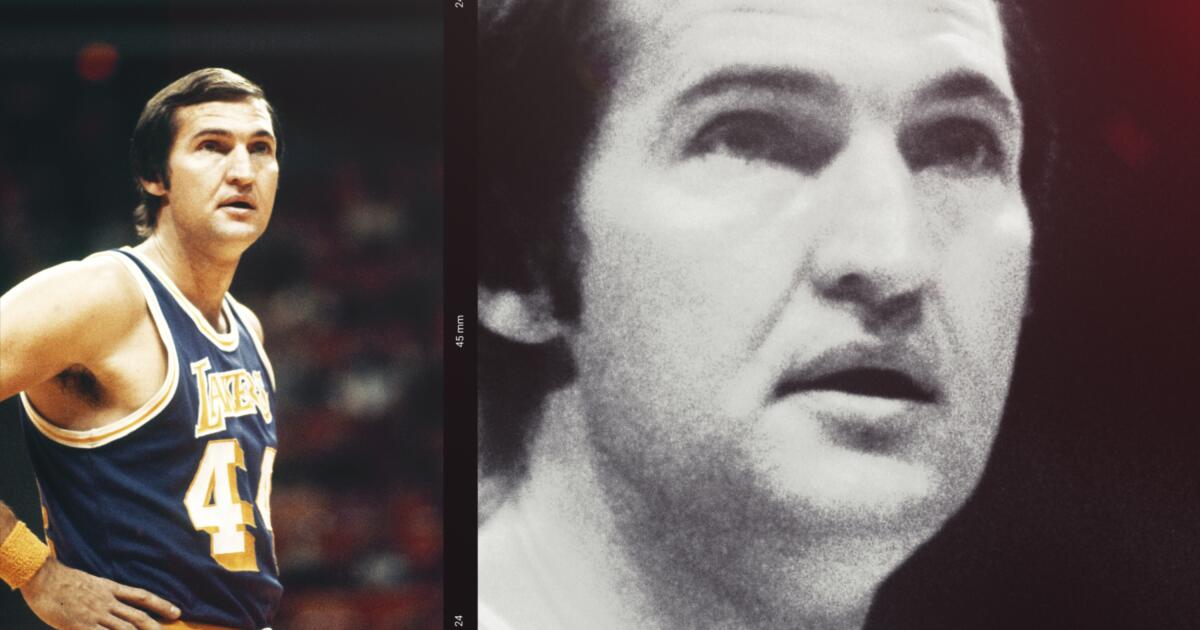
Jerry West’s legend was so well established when he retired from the Los Angeles Lakers in 1974 that he’d already been the inspiration for the NBA’s logo. Half a century later, West remains seventh all-time in points per game and holds the points-per-game record for a playoff series, numbers even more remarkable because he did it without the three-point shot.
But, of course, West wasn’t done. As a scout and general manager, he was a key architect of the Showtime Lakers teams of the 1980s and later acquired both Kobe Bryant and Shaquille O’Neal to build another dynasty. West also was an executive for the Golden State Warriors in their heyday, providing crucial advice on player personnel.
Through it all, however, West struggled with depression and a sense of self-loathing, and had trouble with intimacy, much of it a by-product of a hardscrabble childhood in West Virginia with a domineering father.
That dichotomy, his outer success and inner turmoil, are the heart of “Jerry West: The Logo,” a new documentary for Prime Video, from “black-ish” creator Kenya Barris, directing his first documentary.
Kenya Barris in “Jerry West: The Logo.”
(Prime)
“I’m from L.A. and was a fan of the Showtime Lakers growing up,” Barris says, so he put his name in for the project figuring he’d at least get to meet a hero. “But we immediately hit it off and I felt a kinship with him.”
That ability to connect was part of West’s magic, as attested to by the string of NBA legends who pay tribute to him in the documentary, including Lakers such as Magic Johnson, James Worthy, Pat Riley and O’Neal, along with Steph Curry and Michael Jordan.
Vlade Divac was traded by West to secure the rights to Bryant, but he selected West to introduce him at his Hall of Fame induction. In a recent phone interview, Divac praised West as “a father figure when you needed it and a friend when you needed it. He was very honest and he cared about people and helped you achieve your goals. He’s one of the best guys I ever met. Period.”
Barris, who did extensive interviews with West before the Laker icon died in 2024, spoke by video recently about making the documentary, which also includes NBA Commissioner Adam Silver acknowledging for the first time that West was the sport’s logo. This conversation has been edited for length and clarity.
Jerry had already opened up about his life in his memoir, “West by West,” but do you think this was still cathartic for him?
His book really drew me to doing the documentary because it was so honest. I think the idea of him actually saying these things out loud in front of a camera with his kids and his grandkids around was a catharsis for him.
Did he feel he was nearing the end?
Jerry would say, “I feel like I’m in God’s waiting room.” He didn’t like getting old because he was so much in touch with his body as an athlete — he could jump higher and run farther than his friends. When I first met him, he was on the treadmill and jogging with weights. He was in his 80s but was saying, “I used to be able to jog with more weights.”
He was feeling old but I don’t think that he thought he was about to pass.
Was he annoyed by his depiction in HBO’s Lakers series “Winning Time,” which generated controversy in 2022?
The show was entertaining, but it really bothered him and he didn’t think it was fair. I think that series might’ve pushed him into wanting to do this, if I’m being completely honest.

“Jerry would say, ‘I feel like I’m in God’s waiting room,’” said director Kenya Barris, who conducted extensive interviews with the Lakers legend before his death in 2024.
(Prime)
He and his family talk openly on camera about his mental health issues. Was it hard to balance that tonally with his great accomplishments in basketball?
I did not want to make something that was morose or a melodrama. But it would not be complete if he didn’t talk about the struggles. When I first met him, he was just coming out of a depression and anyone who’s ever been through that understands that it is actually a struggle. So forming a whole picture of who this character was was really important. And also it was important for his family because they lived through this with him as well. They were sad to see him suffer, but they had suffered through it too.
We wanted to really talk about who this character was and what formed him. Most of who we are is formed between the ages of 0 and 12 and in those years, Jerry saw a lot and went through a lot of stuff.
When his older brother was killed in Korea and his father put the casket by the Christmas tree …
That was crazy. If we could get the audience to understand who this man was, it would give them empathy for everything after.
As a GM [general manager], he was a white guy in this predominantly Black sport, but he came in with a chip on his shoulder, too, and he saw these young players who hadn’t had strong father figures and came from socioeconomically deprived places like he did and he was able to build real relationships with them.
He didn’t want to talk about it a lot in the doc, but he did a lot for civil rights and for players’ advocacy of the NBA, for the Black players, who didn’t have the same voice that he had. But he did it quietly.

Jerry West signed Shaquille O’Neal to the Lakers in 1996 after four years with the Orlando Magic. (Andrew D. Bernstein/NBAE via Getty Images)

Jerry West, left, Kobe Bryant and Lakers head coach Del Harris in 1997. Bryant was acquired in a trade for Vlade Divac. (Juan Ocampo/NBAE via Getty Images)
One thing the documentary avoids is the contentious relationship with Phil Jackson — who isn’t even mentioned — and the cause of West’s departure from the Lakers right after he built that dynasty. Did he not want to discuss it?
We spoke about it. You can’t have that long a career and not rack up some controversial things. But I did not want this to be a salacious look at the negative accounts. I got in there the idea of a strain with the Lakers, but I wanted to make sure to not defile that relationship based upon certain things that I wasn’t going to dig into. It was not a gotcha sort of documentary. It was more of a tribute to him.
People have wondered if he had stayed on, whether he could have stopped the relationship between Kobe Bryant and Shaquille O’Neal from going south, and I would have been interested to know what he thought.
We did talk about that. He believes that he could have got them to stay together and he said that he believes they could have gone on and won four or five more championships.
Sports
Mike Breen says fans ‘deserve to be thrown a bone’ as NBA cuts all local broadcasts from the playoffs

NBA playoffs begin, Will anyone stop the Thunder? | The Herd
The NBA playoffs are underway, with the Play-In tournament starting tomorrow. The Oklahoma City Thunder are the heavy favorite to repeat as champions. Colin Cowherd asks if the San Antonio Spurs, Boston Celtics, or anyone else can stop the Thunder.
NEWYou can now listen to Fox News articles!
Mike Breen, the New York Knicks’ play-by-play announcer and star NBA voice with ESPN, is not happy with a key league move heading into the NBA Playoffs.
And he didn’t hold back his frustrations during the Knicks’ regular-season finale on Sunday night.
For the first time in NBA history, all local network broadcasts are being pushed out of the playoffs for nationally televised games. Those networks paid a premium to air the playoffs, but the league had always allowed the local home broadcast to be aired as well as the national TV spots in previous seasons.
ESPN play-by-play sports commentator Mike Breen looks on prior to the game between the Boston Celtics and Philadelphia 76ers at the Wells Fargo Center on Feb. 25, 2023 in Philadelphia, Pennsylvania. The Celtics defeated the 76ers 110-107. (Mitchell Leff/Getty Images)
Breen, alongside his longtime partner, Knicks great Walt “Clyde” Frazier, ripped the league’s decision on the final day of his broadcasting duties for the Eastern Conference squad.
“First time ever that no longer can the home team announcers and broadcasters televise the first round,” Breen mentioned during the 110-96 loss to the Charlotte Hornets while broadcasting on MSG.
KNICKS BROADCASTER’S JOKE COMPARING BULLS’ ‘OBLITERATED’ DEFENSE TO IRAN LEAVES PARTNER STUNNED
“The entire playoffs are exclusive to national TV broadcasters. I mentioned this earlier this season. I think, personally, Clyde, it’s a poor decision. Fans want to hear their home team announcers, at least in the first round. For so many of us, they become part of the family.”
Breen added that he understands “the networks pay a fortune for exclusivity,” granted he works for one of those networks on ESPN.
“But fans deserve to be thrown a bone once in a while in terms of letting the home team have a little bit of the first round,” he continued.
The NBA reached a whopping $76 billion broadcast rights deal that kicked in at the start of this season, and it will last for the next 11 seasons. Like other pro sports leagues, the deal is carved out across various platforms, both long-standing networks and streaming.
ESPN play-by-play announcer Mike Breen calls the game between the Los Angeles Lakers and the Dallas Mavericks at Crypto.com Arena in Los Angeles, California, on Jan. 17, 2024. (Kirby Lee/USA TODAY Sports)
While the NBA got together the deal it liked with Disney, Amazon and NBCUniversal, Breen hopes it would consider working something out to get local broadcasters back into the fold for the playoffs.
However, he knows how the business is at the end of the day.
“Somehow, if there’s any way they can work out some kind of compromise, I’m not hopeful for that, but it would be wonderful to have it because this is our final telecast of the season,” Breen said.
Breen, now, will focus on his ESPN duties as the lead commentator for the “Worldwide Leader” on the court. His famous “Bang!” call on clutch three-pointers has been synonymous with the biggest moments in the NBA Playoffs for years now, and that will get started very soon as teams in both the East and West gun for their shot at the Larry O’Brien Trophy and to call themselves NBA Finals champions.
The Oklahoma City Thunder, the reigning Finals champs, are the No. 1 seed in the Western Conference once again, while teams like the San Antonio Spurs, Denver Nuggets and Los Angeles Lakers will battle them to be crowned conference champions.
Mike Breen looks on before the game between the Golden State Warriors and the Los Angeles Lakers during Round 2 Game 3 of the Western Conference Semi-Finals 2023 NBA Playoffs on May 6, 2023 at Crypto.Com Arena in Los Angeles, California. (Andrew D. Bernstein/NBAE/Getty Images)
CLICK HERE TO DOWNLOAD THE FOX NEWS APP
In the East, Breen’s Knicks own the No. 3 seed, while the Detroit Pistons (No. 1) and Boston Celtics (No. 2) had successful regular-season campaigns to earn a top spot heading into the playoffs.
The Play-In Tournament will be the first games for the NBA Playoffs, which will stream exclusively on Amazon Prime Video. Then, the first round will split its tipoffs on NBC/Peacock, Prime Video and ESPN.
Follow Fox News Digital’s sports coverage on X and subscribe to the Fox News Sports Huddle newsletter.

Kentucky Wildcats set to host Utah transfer Terrence Brown on visit

Hour-by-hour: When to expect showers & thunderstorms Tuesday in Vermont, New York

Virginia’s Spanberger Approves Workplace Heat Safety Standards

Aviation safety bill based on DC midair collision faces House vote Tuesday

A tornado touched down in Taylor County on April 13, NWS confirms

Florida High School Football Rankings: Top 25 teams – Oct. 21

How old is Bo Nix? What to know about Oregon quarterback ahead of 2024 NFL Draft

Cleary's 21 help Le Moyne down Central Connecticut State 69-64 in OT

99th annual Pony Swim held in Virginia

Indiana Members Credit Union announced as new anchor tenant at Bottleworks District

Video: How Stephen Miller Is Adjusting Trump’s Immigration Agenda

Biden DOJ weaponized FACE Act against pro-life Americans, 882-report alleges

Mass drone warfare is Europe’s rising security threat
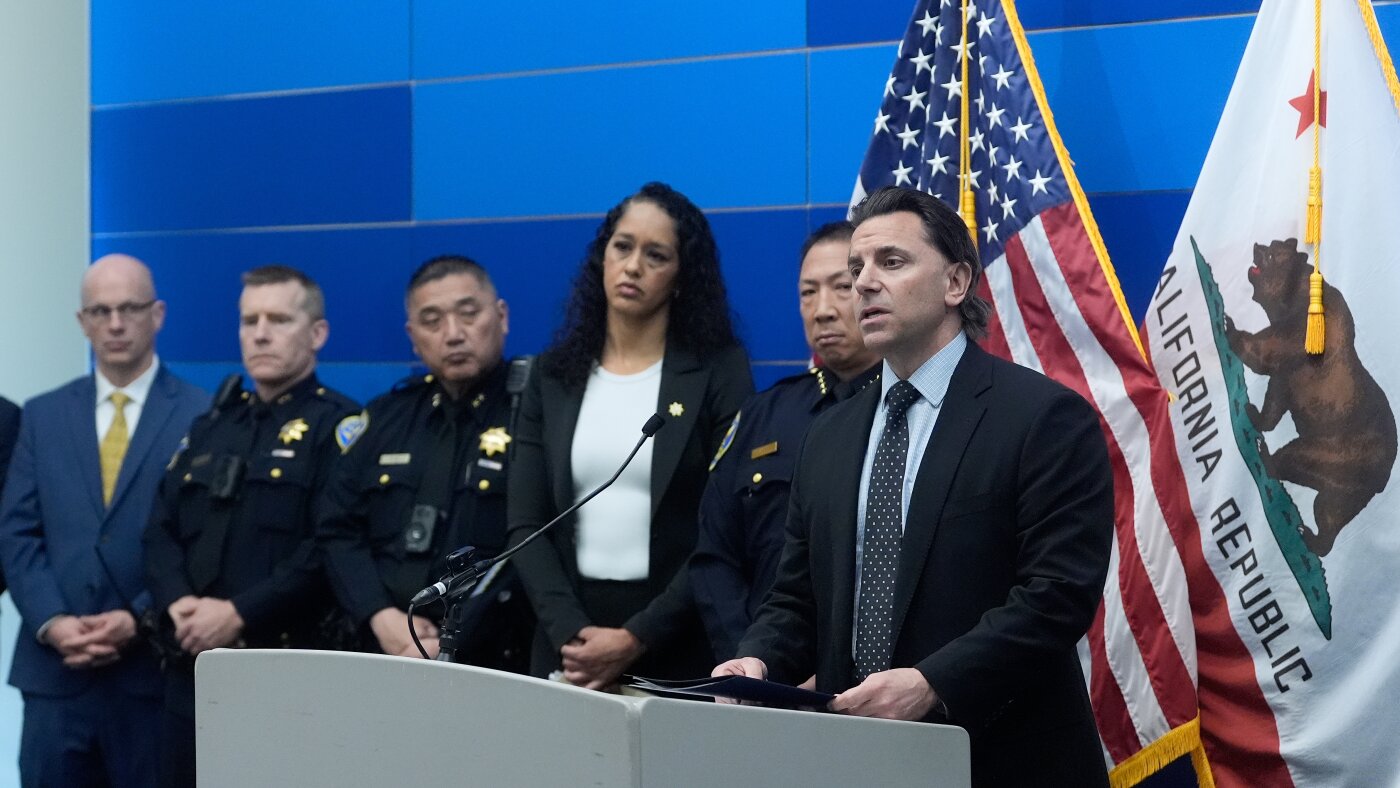
Man accused in Molotov cocktail attack of OpenAI CEO’s home charged with attempted murder

Embattled Rep Tony Gonzales announces plans to resign amid sexual misconduct allegations
-

 Atlanta, GA1 week ago
1 teenage girl killed, another injured in shooting at Piedmont Park, police say
-

 Georgia7 days ago
Georgia House Special Runoff Election 2026 Live Results
-

 Arkansas4 days ago
Arkansas TV meteorologist Melinda Mayo retires after nearly four decades on air
-

 Pennsylvania1 week ago
Parents charged after toddler injured by wolf at Pennsylvania zoo
-
 Milwaukee, WI1 week ago
Potawatomi Casino Hotel evacuated after fire breaks out in rooftop HVAC system
-

 Austin, TX6 days ago
ABC Kite Fest Returns to Austin for Annual Celebration – Austin Today
-

 World1 week ago
Zelenskyy warns US-Iran war could divert critical aid from Ukraine
-

 World1 week ago
Indonesia receives bodies of peacekeepers killed in southern Lebanon