West Virginia
Trump promised to cut electric costs in half. In energy-rich West Virginia, bills now top mortgages

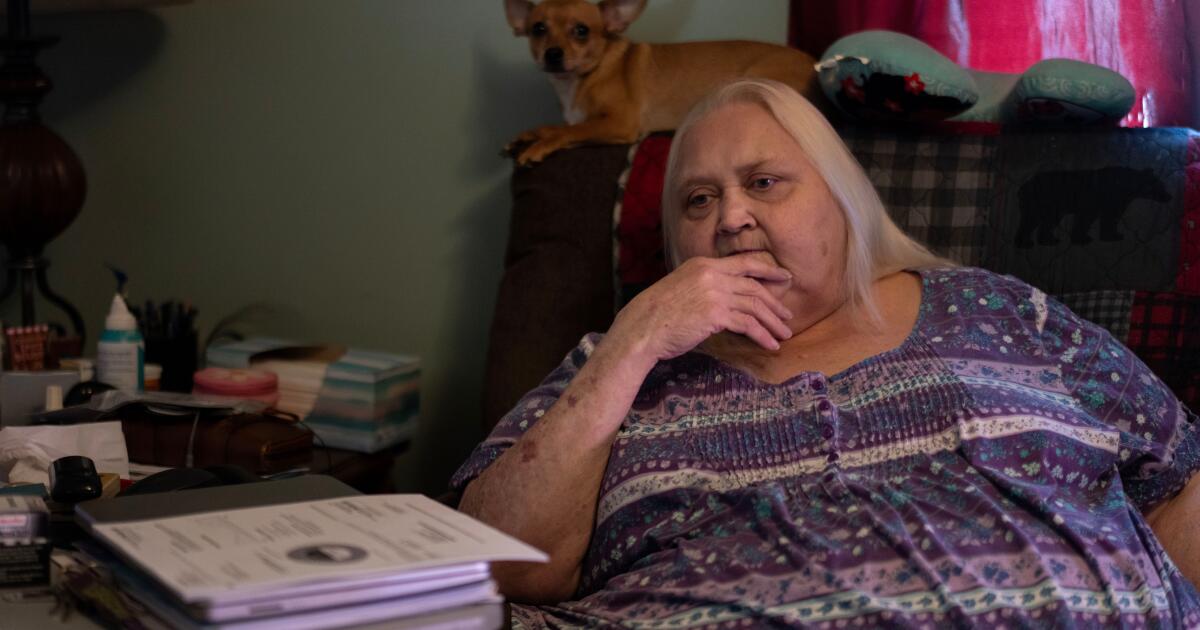
RAINELLE, W.Va. — Every month, Rebecca Michalski takes a deep breath before opening her electric bill. She lives on a fixed income, and heating her small house this winter has been staggering: Her February charge was $940.08 — more than her check.
It makes no sense. She turns the lights off during the day and only burns one lamp with an energy-efficient bulb in the living room at night, but she keeps falling further behind on payments. In desperation, she took out a loan after getting a cut-off notice during an extended arctic blast that kept the state’s heaters cranking when temperatures regularly dipped below zero.
“Every time you see that power bill, you’re just sick,” Michalski said, rifling through a stack of statements totaling thousands of dollars. “I already know before I open it. I just dread seeing how much.”
She’s taken to social media, demanding answers alongside thousands of other West Virginians, including those who have been posting screenshots of their monthly charges. They are angry and perplexed over soaring utility costs that are sometimes surpassing rents and mortgages in one of the most energy-rich, yet poorest, corners of America, where families have been forced to choose between paying for food or heat.
President Trump, as part of his campaign pitch to “make America affordable again,” promised to cut Americans’ electricity bills by half during his first year to 18 months in the White House.
“And if it doesn’t work out, you’ll say, ‘Oh well, I voted for him, I still got them down a lot,’” he said. “You will never have had energy so low as you will under a certain gentleman known as Donald J. Trump.”
It hasn’t worked out.
Instead, electricity increased 4.8% in February nationwide and piped natural gas prices rose 10.9%, both compared with a year earlier, according to the Labor Department’s Consumer Price Index. That surpassed inflation even before the attacks on Iran by the U.S. and Israel sent energy costs ballooning.
It’s becoming an increasingly aggravating issue for some voters. Rising electricity bills emerged as a campaign issue in recent elections, including during gubernatorial races won by Democrats in New Jersey and Virginia. Cost concerns are expected to surface during midterms this fall, and an analysis by the nonprofit PowerLines found residents are not likely to get a break any time soon because new gas and electricity rate hike requests could affect more than 80 million Americans.
An AP-NORC poll conducted in March also found 35% of U.S. adults were “extremely” or “very” concerned about being able to afford electricity in the next few months.
“It’s breaking me. And there’s nothing that can be done for it, unless the president does something,” Michalski said about her skyrocketing power bills, adding she no longer supports Trump. “And I don’t see him doing it. He’s had plenty of time.”
Increased demand, extreme weather and events, upgrading and maintaining aging infrastructure and rising natural gas prices are pushing electricity bills higher. Rising energy costs could also be worsened by the Trump administration’s push to export more liquefied natural gas, because that tightens domestic supply.
Ratepayers are also wary as more power-gobbling data centers for artificial intelligence and cloud computing are built or warmly embraced by politicians in places like West Virginia — where residents deep in Trump country have gone from having the cheapest electricity rate nationwide in 2005, to experiencing one of the fastest increases in the country, far outpacing the national average, according to data from the U.S. Energy Information Administration.
All in a place where people are living atop vast deposits of coal, oil and gas.
King Coal
Coal remains king here, but it wears a pricey crown. The state is an outlier nationwide because of its stubborn resistance to adopting cleaner, cheaper sources of energy. Instead, West Virginia clings to aging coal-fired electric plants more than anywhere else in the country — about 87% of all production. Its supermajority Republican-led government — there are only 11 Democrats in the House and Senate — has doubled down on this reliance, blaming past Democratic administrations for a war on coal fueled by increased federal regulations and restrictions, while Trump poses for photo ops with coal miners at the White House and regularly touts “beautiful, clean coal.”
“Lowering electricity prices is a top priority for President Trump,” said White House spokeswoman Taylor Rogers, blaming former President Joe Biden for the problem. “He is aggressively unleashing reliable energy sources like coal and natural gas.”
Trump has forced unprofitable coal-powered plants to remain open, rolled back pollution standards for them and provided hundreds of millions of dollars to improve them. He’s also streamlined permitting and regulations to push for mining expansion when coal mines had been shutting down in the state.
“If you’re not 100% in on coal, then you’re a traitor. … It’s like a measure of patriotism,” said Jamie Van Nostrand, policy director at the nonprofit Future of Heat Initiative and a former West Virginia University professor who wrote a book about the state’s reliance on coal energy. “I think if you went to the average West Virginian and said, ‘Yeah, we understand you want to support the coal industry, but do you want to support it to the extent that you’re OK paying twice as much as you should be for electricity?’”
The state’s average household electricity rate per kilowatt-hour has surged 73%, natural gas has increased 51% per 1,000 cubic feet and water has risen 45% per 1,000 gallons from 2015 to 2025, according to West Virginia’s Public Service Commission, a three-member panel. It includes a former power company lobbyist and the former head of the state coal association — appointed by the governor and charged with approving rate hikes.
Even though monthly bills remain higher in other states, salaries in West Virginia have simply not kept pace — it’s the only place in the country where the median inflation-adjusted household income was lower in 2023 than it was in 1970, according to the Urban Institute. That means residents are seeing larger chunks of their paychecks going to utilities compared to people in other places.
Michalski, who’s disabled and uses a walker to get around, said she tries not to run anything in her house that can suck electricity, including her air conditioning in summer. But she simply can’t turn off the heater. During the past year, her statements totaled over $5,000. She asked family for help paying the bill this winter, but said she’s now out of options.
She knows what’s next.
“They come and cut off your power. Then you’re sitting in the dark. And I see that happening,” she said. “And I think for a lot of other people, it’s gonna happen too.”
‘It only makes the rich richer’
Isolated by its beautiful, rugged mountains, West Virginia sits entirely within Appalachia and has long been listed at the bottom of a laundry list of failings, including poor health and a lack of education. Many residents from rural areas have lived on the same land for generations, watching a cycle of outside companies profit from extracting the state’s resources — from timber to coal and oil and gas — only to pollute and abandon communities afterward. Its people are known for being fiercely independent and proud despite their hardships, including a lack of clean drinking water that has persisted for decades in some areas, forcing residents in the southern coal fields to ferry jugs to and from roadside springs or abandoned mines while spending up to $250 a month for bottled water to cook with and drink. They also pay for public water piped into their homes that often runs black, yellow and brown.
Some, including those living in scenic areas where tourism is a major revenue driver, are protesting Big Tech companies rushing to build enormous data centers, fearing they could lead to the next cycle of outsiders taking advantage of the state’s resources. They have been loud over a lack of public input and transparency around plans to build the complexes, questioning noise pollution, huge water consumption and the effect on ratepayers’ electricity prices.
“We just roll back regulations and we keep being promised that deregulating and privatizing our systems is gonna fix everything, and it never does,” said Caitlin Ware, a pastor who advocates for clean water in southern West Virginia — her thoughts briefly interrupted as the electricity abruptly went off in her Sandyville United Methodist Church. “It only makes the rich richer, and it only puts us in a worse situation.”
In February, Gov. Patrick Morrisey proudly announced plans to build a data center on nearly 550 acres in Berkeley County.
“This $4 billion investment is a historic win that proves West Virginia can compete at the highest level for the global tech economy,” he said in a statement. It did not explain where the water or electricity would come from to run the 600 megawatt, 1.9 million square foot facility.
Morrisey’s office did not respond to a request for comment.
Skyrocketing electricity costs and the growth of data centers, which can use enough power to run 100,000 homes, faced voter backlash in Georgia last fall where Democrats ousted two Republicans on the state’s utility regulatory commission for the first time in nearly two decades. Trump recently tried to ease Americans’ concerns by announcing a “ratepayer protection” pledge at the White House with Big Tech companies promising to bear the cost and produce their own energy, though it’s not clear how that would be enforced.
The reasons behind nationwide utility price hikes are complex and vary among regions. They include adding new transmission, distribution lines and power poles; increased brutal high and low temperatures; extreme weather events such as hurricanes and wildfires; and volatility in fuel costs such as surging gas prices during the war in Ukraine.
These all play a huge role in rising bills that have left some 80 million Americans struggling to pay their monthly gas and electric bills, said Charles Hua, founder of consumer advocacy organization PowerLines that found investor-owned gas and electric utility companies asked for nearly $31 billion in increases last year nationwide, double the amount requested a year earlier. He said utility costs have become the new affordability issue akin to soaring egg prices that previously enraged consumers, making it a possible player in this fall’s elections to control Congress.
“Electric bills have gone up 40% over the last five years,” he said. “This is likely to continue to rise. This is definitely something that the Trump administration and President Trump are very concerned about.”
In West Virginia, all 55 counties voted for Trump in 2024. But it was a Democratic stronghold for decades prior to the switch when coal mines were the lifeblood, and unions were virtually unbreakable. The state has struggled immensely under both parties: It has experienced a major brain drain, a devastating opioid epidemic, a growing elderly population and its coveted coal industry jobs have dried up with nothing to replace them. That leaves people who work minimum wage jobs, those on fixed incomes and even college-educated middle-class families with two paychecks being pushed to the breaking point with affordability issues, including rising car insurance, grocery bills, health care and housing.
Ashley Nicole Dixon of Danese works as a manager at a Dollar General store and has a teenage daughter at home and another in college. She flipped through bills on her phone totaling more than $5,000 charged last year for electricity in her house that’s just over 1,000 square feet, even though her air conditioner didn’t work last summer. She voted for Trump, but said she’s done with him because he and other Republican politicians in West Virginia’s Capitol aren’t looking out for her interests.
“I love West Virginia because it’s beautiful. But anymore, it’s just a sham from the local government all the way up to Charleston,” she said, adding she believes the state’s Public Service Commission should be elected, and Trump should send her a check since he promised to cut electricity bills in half.
“I have no choice. It has to be paid,” she said. “And that’s what makes me sick because now I’m going to have to go … take more money out of my savings account just to keep the lights on.”
‘Why is this so high?’
The coldest winter months were the hardest. Some people confined themselves to one room with small space heaters or used generators when they got behind on their electricity bills and were disconnected. Others were forced to choose between food, medicine and warmth, with some turning their thermostats down to 60 degrees and bundling up or coming out of retirement to take part-time jobs.
For some, the spiral began in November when their Supplemental Nutrition Assistance Program, or SNAP, benefits were put on hold due to the federal government shutdown. United Way’s Central West Virginia helpline saw more than a 1,300% increase during that time, and calls for help paying utilities were second only to housing last year.
More than one in three West Virginia households is considered energy burdened, spending more than 6% of their income on electricity and other fuel costs. Of those, about 20% are low-income residents who shoulder some of the highest energy costs in the state.
Last year, Trump fired the staff of a federal program that assists millions of low-income Americans with heating bills in the winter and proposed eliminating all of its funding in his budget — a move repeated this year. Congress allocated money for it, but billions of dollars were delayed due to the shutdown. However, many West Virginians falling behind on bills are not eligible to apply because they make just a little too much money.
Jennifer Brown of Kingwood lands in that category. She’s employed at West Virginia’s federally funded Head Start program for low-income children and her husband is a postal worker. They have four kids and during the winter months, their combined utilities can climb to $1,000 a month, eclipsing their $798 mortgage. They were on a payment plan for their gas this winter after receiving a shut-off notice, and she said they were still paying off a water bill from their previous home.
“Every month we get our utility bills, I’m so angry. I’m like, ‘Why is this so high?’” she said, adding it’s not unusual to pay $200 to $300 for electricity and the same for water, sewage and garbage combined every month. “And we can’t figure it out. Nothing seems to be wrong … and we’re not wasteful.”
It’s been a particularly tough burden for some small businesses to carry. In the western town of Ravenswood, just across the river from Ohio, some shop owners were forced to shut down this winter because they couldn’t pay their electric bills.
Heather Santee said the power at her bakery was abruptly terminated just ahead of Valentine’s Day. She was behind on her bill, but said she would have been able to pay the necessary chunk of the $4,000 she owed if she could have stayed open long enough to fulfill the holiday orders. Instead, the shut-off forced her out, leaving the tenants living in apartments upstairs without heat too.
“Once I started getting those high electric bills in the winter, I was like, ‘This will be what closes me down,’” she said, adding the bakery was her dream and the loss has her thinking maybe it would be better to just leave the state altogether. “West Virginia is holding back a lot of people because they are allowing these bills to be so high.”
She’s not alone. Just a couple blocks down the street, Anthony Crihfield Jones packed up his overstock retail shop, JCD Bargain and Trading, moving inventory to another warehouse because he can no longer afford to pay thousands of dollars in electricity charges for his home and businesses.
Even though he still supports Trump, after leaving the Democrats to vote Republican, he’s becoming increasingly concerned that neither party cares about struggling people in America.
“All I heard was … ‘Drill, baby, drill,’” he said, repeating Trump’s popular catchphrase to encourage domestic energy production. “OK. Well, they’re drillin’. Why’s my bill the same?”
___
Contact AP’s global investigative team at Investigative@ap.org or https://www.ap.org/tips/.
Mason writes for the Associated Press.


WEST VIRGINIA (WCHS) — On Wednesday, Gov. Patrick Morrisey announced a statewide plan to review every bridge in the state.
Bumpy roads and crumbling bridges are something drivers in West Virginia like Molly Darby are all too familiar with.
“We just bought a newer car and we actually got to take out additional insurance just for the tires, because you worry about that,” Darby said. “You worry about the popping and that can be a huge added expense to a lot of other people.”
About 19% of the state’s 7,300 bridges were deemed to be in poor condition in the 2025 infrastructure report card.
“We have DOT conducting a comprehensive review of all the bridges across West Virginia,” Morrisey said. “We have to be proactive. We have to stay ahead of maintenance and never let our state fall behind.”
Transportation Secretary Todd Rumbaugh said his team at the DOT is working to lower the number of problem bridges that effect every corner of the state.
“We are doing a comprehensive review of all of our bridges,” Rumbaugh said. “We’ve been going through making priorities and we currently have our statewide transportation improvement plan out there for public comment.”
One massive step being taken on the infrastructure front is the nearly $75 million bridge deck replacement on the Fort Hill Bridge in Charleston, one of the most traveled bridges in the state.
“This rehab project represents a once in a generational investment in our economic corridor,” Rumbaugh said. “It’s about much more than concrete, structural steel and orange barrels. It’s about safety reliability and planning for the next 50 years.”
West Virginia
Repair work on busiest bridge in West Virginia to happen in phases to “minimize disruptions”

CHARLESTON, W.Va. — Traffic in the Capital City will soon have to adjust as the busiest bridge in West Virginia draws closer to undergoing a rehabilitation project.
The West Virginia Division of Highways recently awarded a $74.5 million contract for the rehabilitation of the Eugene A. Carter Bridge to Triton Construction. The bridge, also known as the Fort Hill Bridge, is located in the Capital City and carries Interstate-64 over the Kanawha River.
Around 100,000 vehicles travel across the bridge each day.
Gov. Patrick Morrisey joined state and local officials Thursday at Magic Island to officially announce the contract awarding. DOH officials have told MetroNews that crews will build two median crossovers this August, with the majority of that construction taking place at night and on weekends to minimize its impact on traffic. Official repair work is expected to begin in early 2027, with an anticipated conclusion next December.
DOH officials said everything should be “back to normal” by Spring 2028 under the current timeline.
Del. J.B. Akers, R-Kanawha, was on hand for the news conference. He emphasized that motorists will have to be flexible with their routes.
“We’ll have a little bit of an inconvenience while that’s going on,” Akers said. “This is going to be a huge project that impacts traffic from all over the East Coast, really.”
Issues have popped up at the Carter Bridge in recent years. The state DOH made emergency repairs to fix potholes that had popped up last summer, causing traffic delays. Triton Construction also repaired concrete, installed a waterproof membrane, and added a 2-inch layer of asphalt last October.
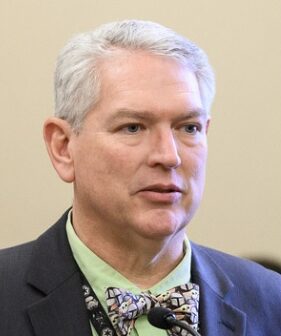
Minimizing the impact on motorists during this project has been a top priority, according to state Transportation Secretary Todd Rumbaugh.
“Our team at the Department of Transportation has worked tirelessly to phase this construction, so we minimize the disruptions on your daily commute and your businesses,” Rumbaugh said.
DOH officials said crews will work on one side of the bridge first, then crews will shift traffic and begin work on the other side. Motorists can stay up to date on the project by visiting the Division of Highways website to see the anticipated construction schedule.
Akers commended Morrisey and Rumbaugh for taking action now.
“For doing the hard thing, on a project like this, which is a maintenance and repair project,” Akers said. “They’re not kicking the can down the road for some other administration to deal with. They’re dealing with a major issue, right now, and this will be a generational project for this bridge. It’s going to prevent us from having to deal with this in the future.”
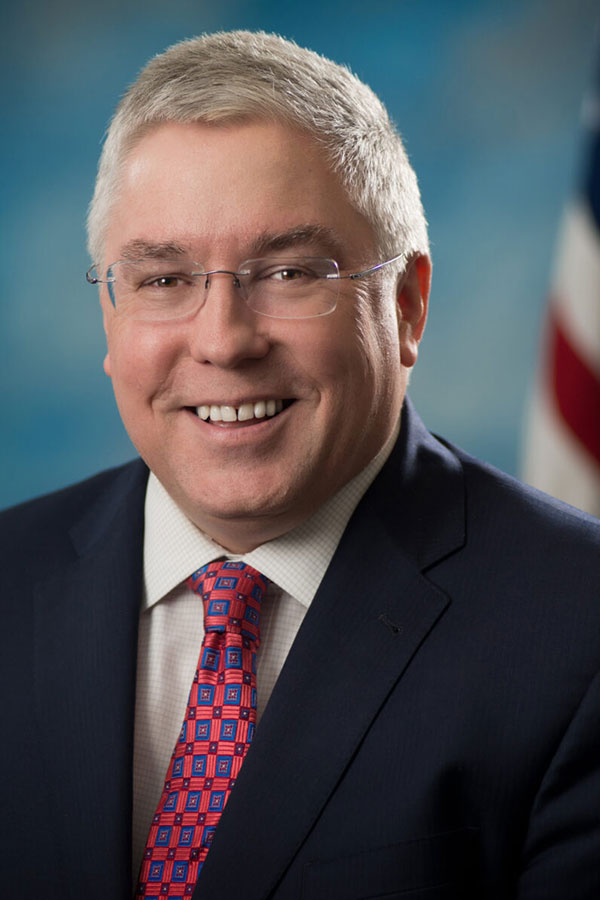
The governor mentioned the state had previously been given poor grades by national surveys on bridge safety. He said his administration is committed to improving bridges all across the state, starting with the heavily trafficked bridge in Charleston.
“This is a signal that we take bridge repair work very seriously,” Morrisey said. “When we inherit being an ‘F’ in bridges, I do not want that to be the case. We need safe bridges for our people, and I’m going to keep working every day to make sure that happens.”
Morrisey said in his year and a half as governor, the administration has been focused on “getting back to the fundamentals.”
“Site-selection and remediation, speed to build; cutting red tape faster, that’s what’s why I’m so excited about our one-stop shop permitting. (That’s) going to make things go even faster, and responsibly.”
Those efforts have been paying off, Morrisey said.
“When you have that kind of economic growth, that level of construction, it’s particularly important to make sure that your infrastructure is strong,” Morrisey said. “That’s really why we’re here today.”
Rumbaugh said the investment signals a commitment to the future of the Mountain State and its travelers.
“This rehab project represents a once-in-a-generation investment in our economic corridor,” Rumbaugh said. “It’s about much more than concrete, structural steels, and orange barrels. It’s about safety, reliability, and planning for the next 50 years.”
West Virginia
Concerned West Virginians speak out against proposed Monongalia County power plant – WV MetroNews

CHARLESTON, W.Va. — Concerned citizens, coal miners, and political candidates made a unified stand against a proposed gas-fired power plant in Monongalia County.
32 people spoke during the state Public Service Commission public comment session Wednesday night in Charleston. Every single one opposed the plant.
The PSC is reviewing a proposal from Mon Power and Potomac Edison for a combined cycle gas plant at the Fort Martin Power Station in Maidsville. There would be three solar arrays as part of the investment as well, one each in Tucker, Preston, and Hancock counties.
The plant would generate 1,200 megawatts of electricity and construction would cost around $2.48 billion. The solar arrays warrant an estimated $182 million cost for installation.
To foot the bill on the investment, Mon Power has proposed an initial surcharge to customers of .9 percent or $1.18 per month.
One speaker, Britta Aguirre, said she had to choose a few months ago between paying her phone or electric bill. She said this struggle is not unique to herself in West Virginia; many residents have lived that experience.
She wondered what’s going to happen going forward as bills continue to rise.
“Can you really call yourself free when you’re working full time, three jobs, and you still can’t pay your electric bills?” Aguirre asked. “Come on. When you have to choose between groceries and your medicines, when your power bills go up and we don’t consent, and y’all (the PSC) still don’t listen. That’s not freedom. That’s survival.”
Nine coal miners, who are also members of the United Mines Workers of America (UMWA), addressed PSC Chairwoman Charlotte Lane during the meeting. They expressed concern over what would become of the coal industry with this investment.
Former UMWA Research Director and coal miner Michael Buckner said there have been mixed messages from Mon Power/First Energy when discussing the Fort Martin property. Buckner said while there have been claims that they won’t replace the existing coal-fired plants, there have been statements suggesting to the contrary.
“The CEO of First Energy, Brian Tierney, was quoted in the press last month saying, “I could see us adding between one and four combined cycles of about 1,000 megawatts each that could ultimately replace Fort Martin and Harrison,”” Buckner said.
Buckner said the coal industry is a critical piece of West Virginia economy, not just providing jobs in the mines. He said there’s a ripple effect with each coal mining job, as he said every single one creates five additional jobs in the community.
Mike Knight, a fourth-generation coal miner and local union president at the Ohio County Mine, said if the PSC approves the Mon Power request, the coal industry will be devastated in the Fort Martin area.
“The new gas plant will replace the coal-fired power plant at Fort Martin, wiping out high-paying coal jobs and pushing more coal companies towards bankruptcy,” Knight said. “When those companies collapse, so do the retirement benefits earned through decades of hard work, and dangerous work.”
Raleigh County native Courtney Vandall said her grandfather and great-grandfather were coal miners. She said her great-grandfather was killed in the mines. Vandall blasted the proposed plant, saying it’s the latest example of West Virginians getting exploited for national gain.
“This isn’t for West Virginians,” Vandall said. “That’s nonsense to pretend like that this is for West Virginians. This is for the companies. This is for the corporation. This is for a CEO that makes over $13 million, and I bet he’s never had to worry about how he’s going to pay his power bill.”
Longtime West Virginia House of Delegates member Barbara Evans-Fleischauer spoke at the meeting. Her main point was that there’s no demand in the Mountain State for this type of investment.
“West Virginia residential consumers did not ask for or demand AI (artificial intelligence),” Evans-Fleischauer said. “We resent being forced into becoming cash cows for giant multinational corporations for something we may not ever want or need.”
Paige Reiring, the Mountain Party’s 79th District candidate for the West Virginia House of Delegates, said this investment is not about helping West Virginians at all. She said it’s all about fueling data centers. For people in the state who already struggle to pay their bills, Reiring said this will continue to be devastating.
“Now we are being asked to bear even more financial burden for a project that will continue to pollute our state, poison our bodies, and leave us on the hook for every cost,” Reiring said. “You can’t enhance the economy unless people actually have money to spend.”
Energy Efficient West Virginia Legal and Policy Director Emmett Pepper attended the meeting. He discussed the proposal on MetroNews “Midday” on Tuesday and said the power plant seems to be for two data centers.
“If those companies want to build their own power plant, they’re free to, and actually, First Energy, the parent company, would be free to build a power plant for those two companies if they wish, but it wouldn’t have to be paid for by a ratepayer,” Pepper said. “But that’s not what they’re asking for. They’re asking for guarantees, money starting to flow immediately, even if it’s never used.”
Another speaker, Michael Attfield, said there’s no guarantee that the power plant will remain successful going forward. He said increased costs to electric bills are tough to take when they’re based on projections.
“The power plant proposal depends on assumptions about future electricity demand, future fuel prices, future construction costs, future market conditions, and what resources will be available years from now,” Attfield said. “If those assumptions are wrong, customers will still have big electricity bills to pay.”
Jim Kotcon, chairman of the citizen advisory group Morgantown Municipal Green Team, sounded the alarm on environmental impacts of the plant. He said it would be a mistake to continue down this path.
“The bottom line is that climate change is real. Mon Power knows that climate change is real,” Kotcon said. “If Mon Power executives and their shareholders had to share the risk for a fossil fuel plant, they would make better decisions.”
The PSC has scheduled evidentiary hearings on the matter to begin Thursday morning. The hearings start at 9:30 a.m. in downtown Charleston and will continue into Friday.
-

 Los Angeles, Ca1 hour ago
LADWP begins long-term repairs after West Hollywood water main rupture
-

 Detroit, MI2 hours ago
Livestream: Mayor Sheffield, Detroit health chief to address wildfire smoke threat
-
 San Francisco, CA2 hours ago
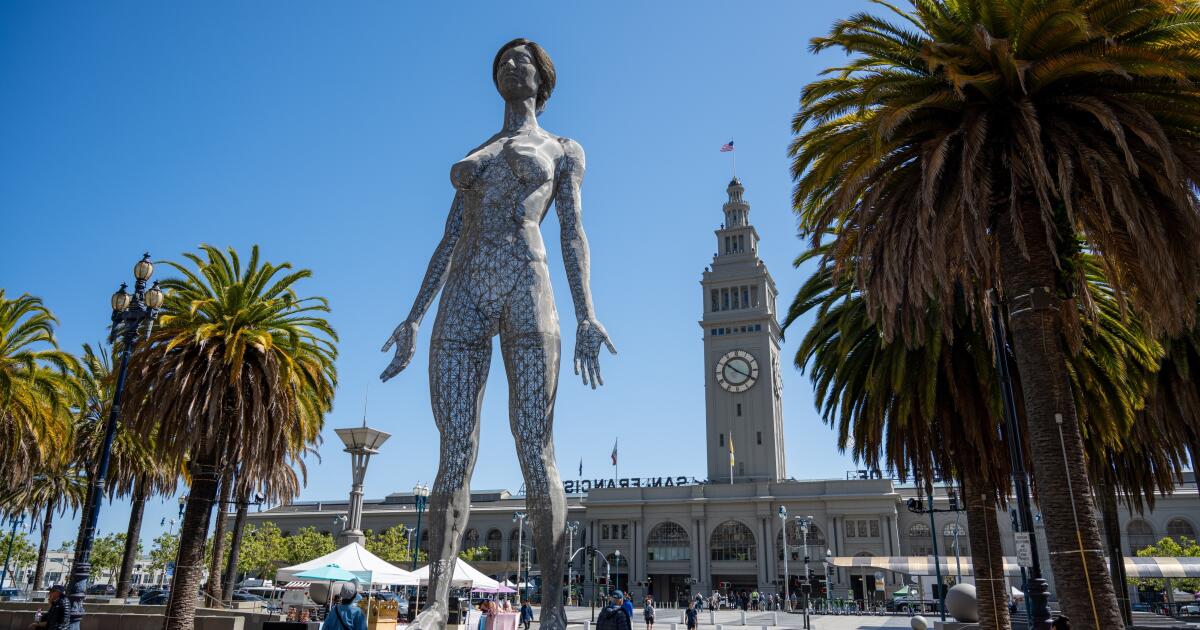
A sculpture of a giant naked woman goes on sale in San Francisco. Bring a crane
-

 Dallas, TX2 hours ago
No ‘straight answer’: Why Pioneer Cemetery is the latest battleground at City Hall
-

 Miami, FL2 hours ago
TSA hosts news conference ahead of World Cup third place match at Miami Stadium
-

 Boston, MA2 hours ago
ICE Boston arrests Barbados national during targeted operations in Attleboro
-

 Denver, CO2 hours ago
Denver Broncos training camp is 2 weeks away
-

 San Diego, CA3 hours ago
Daily Business Report: July 17, 2026, San Diego Metro Magazine

