West Virginia
Allowing the rusty MVP to go into service puts West Virginian lives and the climate at risk • West Virginia Watch


West Virginians are at greater risk of pipeline explosions, environmental pollution, and climate catastrophe than we were a week ago. Last week the Federal Regulatory Commission approved the Mountain Valley Pipeline to go into operation after a decade of community resistance, six years of delayed and costly construction, and numerous violations along the construction route.
The approval comes only one day after the developer, Equitrans Midstream, stated that the project was “mechanically complete.” By the end of the week, the developer turned on the pipeline to begin transporting the fracked gas. The $7.85 billion, 303-mile and 42-inch diameter pipeline resulted in costing more than double the initial proposal of $3.5 billion. A pipeline of this length and diameter has never been tried in our mountainous region. Yet, the present and future cost of this pipeline goes far beyond finances.
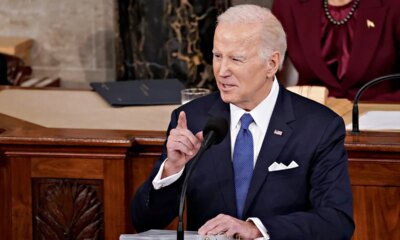
The federal green light comes just a year after so-called “climate” President Joe Biden signed legislation to raise the debt ceiling. Stemming from a deal with Democratic Senate leaders, the bipartisan debt ceiling agreement included a congressional mandate to expedite the completion of the Mountain Valley Pipeline despite environmental compliance issues and associated legal setbacks. Beyond being a quid pro quo to advance Sens. Joe Manchin and Shelley Moore Capito’s fossil fuel interests, this legislation demonstrated the fragility of our country’s government in both executive and legislative overreach of its regulatory and judicial decisions.
The Mountain Valley Pipeline poses unique risks to local communities and ecosystems going into service this summer due to the steel pipes used and then neglected in development. Steel pipes are particularly prone to corrosion when exposed to oxygen, sunlight, and water even coated with epoxy. Equitrans Midstream left sections of pipes out to the elements for years increasing concerns of explosion potential.
This safety risk is not theoretical — during hydrostatic testing on May 1 in Virginia, a section of the pipeline installed in 2018 ruptured and released water and sediment into local streams and properties. Residents near the burst shared that there is a lack of communication from federal and state agencies about the pipe failure. If the pipeline fails this standard pressure test mere weeks before requesting to go into service, can it truly be safe to transport highly flammable fracked gas through the places where West Virginians live, play and work?
Even more, the pumping of fracked gas through corroded pipelines poses an additional risk of groundwater infiltration of methane and radioactive materials produced in fracking, along with significant greenhouse gas emissions. This environmental pollution threatens the air and water of local residents, landowners, farmers, and business owners.
At a national and global scale, we know that climate change is not just a distant threat but happening now. It is well established science that extracting and burning fossil fuels are the source of human caused climate change. The only way to avoid even worse impacts is to stop approving and advancing fossil fuel projects. Even the International Energy Agency, an intergovernmental organization created in response to the 1973-1974 oil crisis and with deep roots in the oil and gas industry, made clear in 2021 that new oil and gas projects must stop immediately.
It should not be controversial to say that people residing along the Mountain Valley Pipeline deserve to live without fear of a pipeline explosion or the leakage of methane and radioactive waste, and we all deserve a livable future in the face of climate change. It is not too late for the federal government to remedy their rash decision to circumvent judicial review, dismiss the separation of powers, and expedite permits for a pipeline proven to cause harm.
The fight against the Mountain Valley Pipeline and fossil fuels, in general, is far from over. While the Biden Administration has taken more climate action than any president in American history, the bar of success is as low as the depths of the Marcellus and Utica Shale, where gas from the Mountain Valley Pipeline is said to be sourced.
By declaring climate change the emergency it is and following through on his commitment to address climate change as the “number one issue facing humanity,” President Biden has a responsibility to answer for his detrimental decisions shaped by fossil fuel interests. If he doesn’t, young voters, like myself, will ensure that his administration pays that price through this November’s election.
GET THE MORNING HEADLINES DELIVERED TO YOUR INBOX







The No. 17 West Virginia Mountaineers (17-4, 5-1) are in a top 25 road matchup and look to remain atop the Big 12 Conference standings against the No. 22 Arizona State Devils (18-6, 4-2) for a three-game weekend series. Game one is Friday night with the first pitch set for 9:30 p.m. EST (ESPN+) game two is Saturday at 9:30 p.m. EST (ESPN+) and the series finale is scheduled for Sunday night at 9:00 p.m. EST (ESPN2).
West Virginia comes into the game on a six-game winning streak after taking two of three from Baylor, sweeping BYU and knocked off Marshall Tuesday night.
Two Mountaineers reside in the top five of the Big 12 in batting averaging. Paul Schoenfeld has emerged as the Mountaineers leader at the plate, hitting a team-high .418, which ranks third in the conference with a team-best 26 RBI. The senior is currently on an 11-game hitting streak.
Gavin Kelly is fourth in the league with a .416 batting average and is riding a 17-game hitting streak. The sophomore leads the team in hits (37), runs (28) and doubles (11).
Senior Matthew Graveline has clubbed a team-high four home runs, while junior Armani leads the Mountaineers in stolen bases with 12.
On the mound, West Virginia is expected to start Dawson Montesa in the series opener. The junior right hander threw seven innings in his last outing against BYU, tying a season-high, with seven strikeouts. He holds 4-0 record with 4.65 ERA and 39 strikeouts.
Lefty Maxx Yehl is scheduled to move to the middle of the series after closing out each of the first six series of the season. The redshirt junior is second in the conference in ERA at .084, allowing a mere three runs in 32.0 innings of work. In the last two outings, he has recorded a combined 23 strikeouts, upping his season total to a team-leading 44 strikeouts on the season.
Chansen Cole will start game three. The right-handed sophomore had his toughest outing of the season last weekend against BYU. He allowed six earned runs in three innings, but registered six strikeouts. He is currently 3-0 with a 4.00 ERA with 29 strikeouts.
Arizona State is 11-2 after a four-game skid against SEC opponents, and notched its series wins over TCU and Kansas State.
Sophomore Landon Hairston leads the team with a .458 batting average, tie with fifth-year senior Dean Toigo with 11 home runs, 11 doubles, 36 runs, and 34 RBI.
Junior lefty Cole Carlon is slated to counter with Cole Carlon (2-1, 3.19 ERA), junior right-hander Alex Overbay (0-0, 5.19 ERA), is set for game two, and senior righty Kole Klecker (3-1, 5.61 ERA) is scheduled for the series finale.
This is the first meeting between the two programs.
West Virginia
West Virginia Agencies Shielding Details on $1.44B DOE Coal Bail-out Loan from Public – CleanTechnica

Support CleanTechnica’s work through a Substack subscription or on Stripe.
West Virginians Are On the Hook to Pay DOE for Short-Sighted Projects with Big Health Impacts
CHARLESTON, W.Va. — Following two postponements, the West Virginia Department of Commerce has informed Sierra Club’s West Virginia Chapter that there are “no non-exempt records” responsive to the Club’s Freedom of Information Act (FOIA) request pertaining to the U.S. Department of Energy (DOE) plans to loan local utilities $1.44 billion to fund refurbishment projects at six unnamed West Virginia coal-fired power plants.
The DOE and Governor Patrick Morrisey first announced the $1.44 billion in coal refurbishment projects as part of a larger $4.2 billion suite of fossil-fuel expansions in November 2025. The projects are intended to extend the lives of the six coal plants up to 20 years. However, regardless of how long the coal plants manage to continue operating, payments on the low-interest DOE loans will be passed on to West Virginians’ electric bills for decades.
According to the West Virginia Department of Commerce, “certain public records within the scope” of the Sierra Club’s FOIA request are, “exempt from disclosure.” In the January FOIA filing, Sierra Club requested a detailed list of the six plants set to receive loans, as well as information on the cost and the specific upgrades proposed at each plant.
In addition to funding the projects, West Virginians will also shoulder the public health impacts. According to a Sierra Club study, West Virginia’s in-state coal plants currently account for hundreds of expensive hospital visits and 20 West Virginian deaths annually. West Virginia’s coal plants also account for 335 out-of-state deaths annually.
“West Virginians are being kept in the dark,” said Bill Price, Sierra Club West Virginia Chapter Chair. “Our local state agencies, tasked with serving the public interest, are expecting the public to repay billions of dollars in loans — blindfolded. No honest lender operates this way. No reasonable borrower would accept it. So why ask us to go along with the Governor’s deal without any details? In this time of increasing energy costs and high bills, people need to know where their money is going. We will continue to seek the answers and transparency West Virginians deserve.”
“West Virginia’s Freedom of Information Act states quite clearly, ‘The people, in delegating authority, do not give their public servants the right to decide what is good for the people to know and what is not good for them to know. The people insist on remaining informed so that they may retain control over the instruments of government they have created.’ Before the State loads down West Virginia citizens with over a billion dollars in loans, they should at least tell us what this is for, what we have to pay back, and who profits from these loans,” added Jim Kotcon, Conservation Chair for Sierra Club West Virginia.
About the Sierra Club
The Sierra Club is America’s largest and most influential grassroots environmental organization, with millions of members and supporters. In addition to protecting every person’s right to get outdoors and access the healing power of nature, the Sierra Club works to promote clean energy, safeguard the health of our communities, protect wildlife, and preserve our remaining wild places through grassroots activism, public education, lobbying, and legal action. For more information, visit www.sierraclub.org.
Sign up for CleanTechnica’s Weekly Substack for Zach and Scott’s in-depth analyses and high level summaries, sign up for our daily newsletter, and follow us on Google News!
Have a tip for CleanTechnica? Want to advertise? Want to suggest a guest for our CleanTech Talk podcast? Contact us here.
Sign up for our daily newsletter for 15 new cleantech stories a day. Or sign up for our weekly one on top stories of the week if daily is too frequent.
CleanTechnica uses affiliate links. See our policy here.
CleanTechnica’s Comment Policy

Math plan would help a generation of Ohio students | Opinion

OU basketball vs South Carolina prediction, our pick for Women’s NCAA Tournament Sweet 16
Oregon Lottery Mega Millions, Pick 4 results for March 27

Pa. House committee advances bill to require radon testing and mitigation in schools

Think you’re middle class in Rhode Island? Here’s the income range

Florida High School Football Rankings: Top 25 teams – Oct. 21

How old is Bo Nix? What to know about Oregon quarterback ahead of 2024 NFL Draft

Cleary's 21 help Le Moyne down Central Connecticut State 69-64 in OT

99th annual Pony Swim held in Virginia

Indiana Members Credit Union announced as new anchor tenant at Bottleworks District

Dem senators dodge crucial question on illegal alien accused of killing Chicago college student

EU Parliament unblocks key political hurdle in digital euro talks

Man arrested in plot to firebomb Palestinian activist’s home after undercover op

WATCH: Senate hearing goes silent after Angel Father confronts top Dem over daughter’s death

US diplomat Marco Rubio denounces settler violence, tolls in Hormuz strait
-

 Detroit, MI1 week ago
Drummer Brian Pastoria, longtime Detroit music advocate, dies at 68
-

 Movie Reviews1 week ago
‘Youth’ Twitter review: Ken Karunaas impresses audiences; Suraj Venjaramoodu adds charm; music wins praise | – The Times of India
-

 Sports7 days ago
IOC addresses execution of 19-year-old Iranian wrestler Saleh Mohammadi
-

 New Mexico6 days ago
Clovis shooting leaves one dead, four injured
-
 Business1 week ago
Disney’s new CEO says his focus is on storytelling and creativity
-

 Technology6 days ago
YouTube job scam text: How to spot it fast
-

 Tennessee5 days ago
Tennessee Police Investigating Alleged Assault Involving ‘Reacher’ Star Alan Ritchson
-

 Texas1 week ago
How to buy Houston vs. Texas A&M 2026 March Madness tickets