Business
President Trump Wants to Be Everywhere, All the Time


To understand how Mr. Trump has achieved this omnipresence, The New York Times reviewed the first 329 days of his second term, finding at least one instance each day when he attracted the public’s attention to himself and his actions.
The review encompassed more than 250 media appearances, more than 320 official appearances, and more than 5,000 Truth Social posts or reposts. The analysis shows that while Mr. Trump has lagged his predecessors in his number of official appearances, he has pursued a raft of innovative methods to force himself into the public consciousness on a daily, and sometimes even hourly, basis.
The battery of activity started from the moment he was inaugurated, when he traveled from the Capitol Building to the Capital One Arena to publicly sign a flurry of executive orders.
Since then, he has stayed in the public eye in part by doing things no president has ever done. High-stakes Oval Office meetings, like his negotiations with President Volodymyr Zelensky of Ukraine, are held on-camera and broadcast live on global news networks. His Q.-and-A. sessions with reporters frequently last an hour or more.
He regularly airs his opinions – on social media, in discursive asides at rallies – about idiosyncratic subjects that range widely across the zeitgeist, from Sydney Sweeney’s sexy denim ads to the redesigned logo of the Cracker Barrel restaurant chain to the mysterious fate of the aviator Amelia Earhart, who vanished over the Pacific Ocean in 1937.
And his engagement with the news media has soared well beyond the start of his first administration.
Through Dec. 14, Mr. Trump took reporters’ questions on 449 occasions, compared with 223 during the same period of his first term. On average, Mr. Trump has interacted with journalists roughly twice a day, doubling his rate from 2017, according to Martha Joynt Kumar, a Towson University political scientist who tracks presidential press interactions. Mr. Trump limits which news outlets can ask questions at small events, but in sheer volume, he is the most media-accessible modern president, and far outpaces his predecessor, Joseph R. Biden Jr.
“Reporters will be in my office asking me for the president’s reaction to a breaking news story,” Karoline Leavitt, the White House press secretary, said in an interview. “And I’ll just say to them, ‘I don’t know, why don’t you ask him yourself in 30 minutes?’”
President Trump’s media appearances have soared this year, more than doubling both the Biden administration’s and those of his own first term.
Finding the Cameras
Many of his public moments go viral online, like his diatribe about restoring the name of the Washington Redskins, or the A.I.-generated video meme he posted of himself dribbling a soccer ball with Cristiano Ronaldo in the Oval Office. They take on a life of their own, rippling across social media and dissected and amplified by influencers and mass media platforms alike.
The result is a president whose not-so-inner monologue is injected into our daily lives in myriad ways, when we are watching TV on the weekends or idly scrolling the web – a Greek chorus for our national narrative.
“He’s the most ubiquitous president ever,” said Douglas Brinkley, the presidential historian.
The media strategy aligns with his political strategy.
Dating back to his years as an outspoken real estate developer and reality TV star, Mr. Trump has relished being unavoidable for comment. But at age 79, he has been outdoing his younger self. And there is a logic to his logorrhea.
Mr. Trump’s allies often speak of the political benefits of flooding the zone: pursuing so many policies, ideas, and dramatic restructurings of the normal ways of governance as to overwhelm the system. “All pedal, no brake,” as Stephen K. Bannon, Mr. Trump’s one-time adviser, has called it.
“We joke internally that he is our ultimate director of communications,” Ms. Leavitt said. “He has incredible media instincts, and he is the final decision maker on all policy, and he has been in a ‘flood the zone,’ ‘do as much as possible’ mindset since he walked into the Oval Office on Jan. 20.”
All presidents benefit from the awesome news-making powers of the office, with its agenda-setting influence over a dedicated global press corps. But Mr. Trump has outstripped his predecessors in whipsawing the public’s attention onto matters small and large – and limiting the level of scrutiny that any one shocking remark or policy proposal receives.
“People can really only focus on a handful of things a day,” said Bill Burton, a deputy White House press secretary under former President Barack Obama. “This attention flood is working for Trump because he is able to do an extraordinary amount of executive actions and very little of it can get attention.”
Or as Mr. Brinkley put it: “He plays to win the day, every day, around the clock.”
His commentary takes on a life of its own.
One of Mr. Trump’s political assets is his instinct for virality.
With a natural feel for the web, Mr. Trump has a knack for amplifying wacky memes and pop culture curios that can drive days of online discourse. Sometimes, coverage of his offhand remarks or late-night social media posts can crowd out the more significant, norm-shattering changes he is making to American governance.
Late one Friday night in May, the president posted an obviously A.I.-generated image of himself as the pope. It struck a nerve.
Mr. Trump had already courted controversy days earlier, after the death of Pope Francis on April 21.
“I’d like to be pope,” the president told reporters who asked about who should become the next pontiff. “That would be my number one choice.”
The comment disturbed some Catholics, who said the notion was crude and insensitive. That reaction seemed only to prompt Mr. Trump to double down, posting the A.I.-generated image to his Truth Social account days later. By the weekend it had become a cultural phenomenon, mocked on “Saturday Night Live” and called out by experts as an example of misleading A.I. content.
After Mr. Trump posts the A.I. image …

May 2
Trump posts A.I. image of himself as Pope
There is nothing clever or funny about this image, Mr. President. We just buried our beloved Pope Francis and the cardinals are about to enter a solemn conclave to elect a new successor of St. Peter. Do not mock us.
May 3
NYS Catholic Conference says “do not mock us”
May 3
“Saturday Night Live” covers fake image
May 3 Vatican asked about image, declines to comment
May 4
Cardinal Joseph Tobin of New Jersey criticizes image as “not good”
May 4
JD Vance defends Trump on X, calling it a joke … some Catholics were outraged, prompting a news cycle focused on the controversy …
5
Says “the Catholics loved it”
… before Mr. Trump suggested he had nothing to do with it.
Mr. Trump, who is not Catholic, had plenty of defenders, too. They said his commentary and the A.I. image were simply jokes, part of the president’s unique comedic style.
“As a general rule, I’m fine with people telling jokes and not fine with people starting stupid wars that kill thousands of my countrymen,” Vice President JD Vance, who is Catholic, wrote on X.
In his quest for attention, the president is often aided by a cottage industry of right-wing influencers and activists who are primed to syndicate, reinforce and defend whatever content he pushes out each day. For this conservative media ecosystem, Mr. Trump’s messaging and commentary are the raw fuel that drives clicks, shares and views.
On June 7, the president’s visit to a raucous U.F.C. fight – complete with a “Trump dance” entrance into the arena – generated an immediate spike in online interest, including about 50,000 posts on X. Five days later, when he promoted a “Trump gold card” visa, his announcement led to roughly 30,000 posts on X.
A barrage that distracts from bad news.
One pattern in Mr. Trump’s behavior: When his administration is faced with bad news, he launches a fusillade of distraction.
This can take the form of outlandish, out-of-left-field claims about political opponents. Or he might weigh in on a pop culture subject far afield from Washington politics – from the ratings of late-night hosts like Seth Meyers to the physical appearance of a megastar like Taylor Swift.
The events of July 2025 offer a case in point.
As the Jeffrey Epstein files returned to the news – along with speculation that Mr. Trump might appear in them – the president embarked on a breathtaking series of tangents. Mr. Trump claimed without evidence that former President Bill Clinton had bankrolled an effort by senior intelligence officials to frame him for a crime, mused about stripping the actress Rosie O’Donnell of her U.S. citizenship, and accused the singer Beyoncé of accepting millions of dollars to endorse his erstwhile rival, former Vice President Kamala Harris.
July 8
F.B.I. publishes memo about Epstein files On July 8, the F.B.I. said it would not declassify more Epstein files.
10
Claimed intelligence officials tried to frame him
10
Pushed to defund NPR and PBS
10 Directed ICE to arrest protesters
12
Threatened Rosie O’Donnell’s citizenship
15
Claimed Adam Schiff engaged in mortgage fraud Over the following days, Mr. Trump seemed to lash out in every direction.
On July 18, the Justice Department filed a request to unseal grand jury testimony about Mr. Epstein, again raising questions about Mr. Trump’s involvement. The president promptly lobbed insults at late-night talk show hosts, dismissed the Epstein affair as “fake news” and shared fresh claims about a supposed Obama administration plot to undermine him after the 2016 election.
July 18
Request filed to unseal grand jury testimony
On July 18, the Department of Justice filed a request — later denied — to unseal grand jury testimony.
20
Criticized Washington Commanders name
21
Called the “Russia hoax” the “crime of the century”
22
Called Epstein controversy “fake news”
22
Criticized Kimmel and Fallon
24 Criticized Federal Reserve chairman
Over the following days, Mr. Trump bounced from topic to topic.
On July 25, The Wall Street Journal published a major scoop: The paper had unearthed a risqué birthday letter that Mr. Trump had apparently written to Mr. Epstein in 2003. Mr. Trump responded with his attack on Beyoncé and revived his threat to revoke the broadcast licenses of TV networks. Then he announced the imminent construction of an enormous gilded ballroom at the White House, at a cost of $200 million. (He has since revised the cost upward to $400 million.)
Asked if there was a deliberate strategy to distract from negative news, Ms. Leavitt noted that every administration seeks to minimize unhelpful headlines.
“Yes, there have been times in which we’ve tried to do that, but also often it just happens naturally, because the president is willing to weigh in on so many subjects,” she said. “Sometimes it’s really not deliberate. It’s just him speaking his mind on whatever news cycle or news story is brought to him in that moment.”
He has added tricks to his arsenal.
Mr. Trump’s devotion to Truth Social mirrors the hair-trigger Twitter habit of his first term; on one recent December evening, he posted 158 times between 9 p.m. and midnight. And he has continued to appear on Fox News with certain preferred hosts.
But this year, he has added to his media arsenal by appearing in many more public spaces that fall outside of a president’s typical itinerary.
Mr. Trump has stopped by a Washington Commanders N.F.L. game, popped up in the New York Yankees locker room, attended the Ryder Cup golf tournament and the men’s tennis final at the U.S. Open, sat ringside at numerous U.F.C. fights, and traveled to the Daytona 500. He is the first sitting president to attend a Super Bowl. When FIFA staged the Club World Cup final in New Jersey, Mr. Trump not only attended, but joined the winning team onstage for the trophy ceremony.
The net effect is a sense of inescapability, that no corner of American life remains Trump-free – which itself amounts to a potent expression of presidential authority and command. “His power, in part,” said Mr. Burton, the former Obama aide, “comes from the attention that people give him, or that he forces on them.”
Can it ever be too much?
In the fall of 2009, President Barack Obama appeared on David Letterman’s talk show, gave interviews to CNBC and Men’s Health magazine, and made the rounds of all five major network Sunday shows. Washington was abuzz about whether he was overexposed.
That debate sounds quaint today. But the question of whether a president can be too visible remains open.
“The public is being desensitized” to Mr. Trump’s omnipresence, argued Mr. Brinkley, the historian. “It starts becoming blather. The enemy for Trump isn’t Democrats; it’s the public being bored with the show.”
Ms. Leavitt said that if there was a risk to his ubiquity, “President Trump would not be president right now.” She added: “He is a businessman who speaks his mind and tells it like it is, and sometimes people don’t like that. But obviously the vast majority of our country does, or else he wouldn’t be in this office.”
During Mr. Trump’s first term, the public eventually tired of his frenzied pace. And in some ways, Mr. Trump appears to be slowing down physically as he approaches his 80th birthday in June (which he will celebrate in part by staging a nationally broadcast U.F.C. fight on the White House lawn). He has appeared to doze at some Oval Office meetings, and he is holding fewer formal public events than he did at this point in 2017.
Still, Mr. Trump and his team have embraced the everywhere-all-at-once nature of modern media. Average Americans, busy with work and family, do not tune in for daytime news conferences or Cabinet meetings. And 6:30 p.m. newscasts and local newspapers are no longer the primary vessels by which Americans learn about their commander-in-chief.
Instead, politics now suffuses our lives as a kind of ambient noise – via TikTok videos, social media posts, YouTube talk shows and family Facebook messages – never fully separate from our leisure pursuits. “Right now the game is attention, in terms of what’s culturally breaking through,” Mr. Burton said. “The fact that so much message exists is the point.”
Mr. Trump has both propelled this merging of culture and politics, and continues to strategically exploit it. In December, he became the first president to personally host the Kennedy Center Honors, comparing himself onstage to Johnny Carson and musing that he would do a better job than Jimmy Kimmel.
“This is the greatest evening in the history of the Kennedy Center,” Mr. Trump told the crowd. “Not even a contest. There has never been anything like it.”
His performance will air in prime time on CBS on Dec. 23.
Photo and video sources: Graham Dickie/The New York Times; Doug Mills/The New York Times; Roll Call Factba.se; PBS; Mauro Pimentel/Agence France-Presse — Getty Images; Kenny Holston/The New York Times; The New York Times; Annabelle Gordon/Reuters; Eric Lee/The New York Times; Fox; Cheriss May for The New York Times; Wilfredo Lee/Associated Press; Margo Martin, via Storyful; Mark Abramson for The New York Times; Global News; Al Drago/Getty Images; Fox News; Dave Sanders for The New York Times; Pete Marovich for The New York Times; Ted Shaffrey/Associated Press … Show all



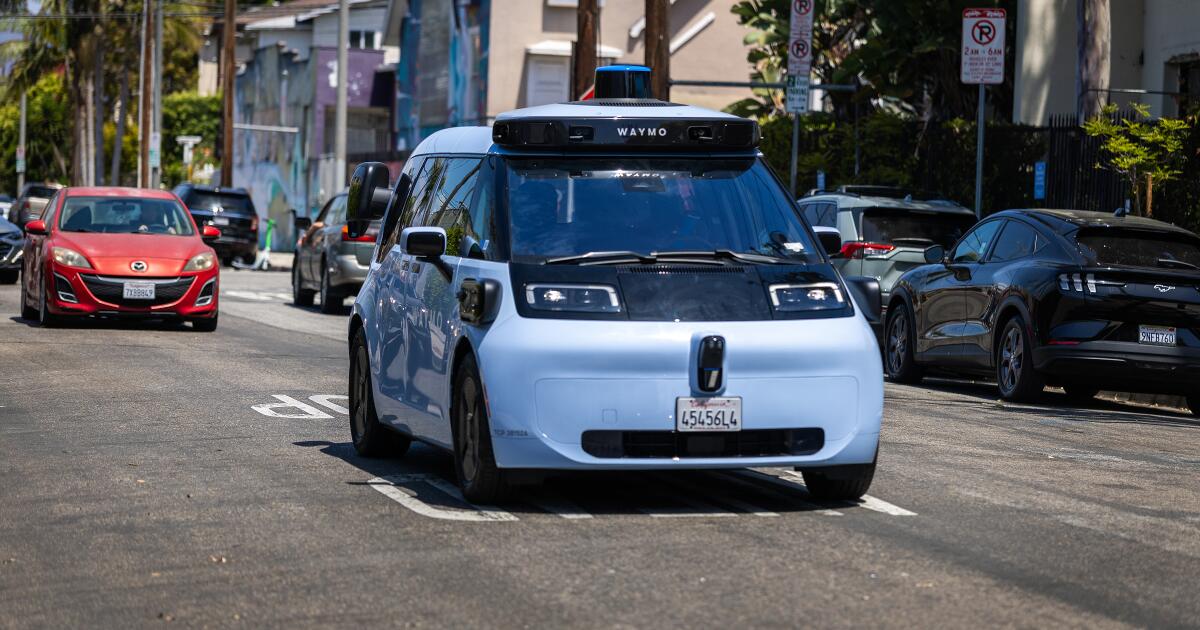
Waymo, the driverless taxi company that operates in more than 10 cities, will soon serve customers in San Diego.
The company has been testing its autonomous vehicles in San Diego with a safety driver behind the wheel since earlier this year. Rides without a human driver became available to employees Thursday and will open to members of the public later this year.
Waymo, which announced the expansion Wednesday, will also bring its taxis to Tampa, Las Vegas and Denver.
“If you’re in one of these four new cities, download the app to be notified when it’s time to ride,” the company said in a blog post.
Waymo has offered fully autonomous rides in San Francisco since 2022 and in Los Angeles since 2024.
It also serves customers in Nashville, Phoenix, Miami and other cities.
In May, Waymo launched a cheaper robotaxi dubbed the Ojai, which is better equipped for difficult driving conditions such as snowy roads.
The Ojai will supplement Waymo’s fleet of Jaguar I-Paces, the company said. In San Diego, services will be provided with the Ojai.
Waymo also announced Wednesday it’s beginning autonomous driving with a safety driver in its newest retrofitted vehicle, the Hyundai IONIQ 5.
“This phase allows us to validate our technology for fully autonomous operations as we work to bring riders even more ways to enjoy Waymo in the future,” the company said.
The company plans to eventually have tens of thousands of driverless taxis made per year, starting with the Ojai, then scaling using the IONIQ 5s.
The move into San Diego and three other cities widens the gap between Waymo and its competitors in the robotaxi race.
Elon Musk’s Tesla robotaxis and Amazon-owned Zoox are shuttling customers autonomously, but are nowhere near the scale at which Waymo operates.
Other companies are working on autonomous trucks and freight trains.
Waymo’s San Diego service area will include Pacific Beach, Normal Heights, La Playa and Southcrest, among other neighborhoods, the company said.
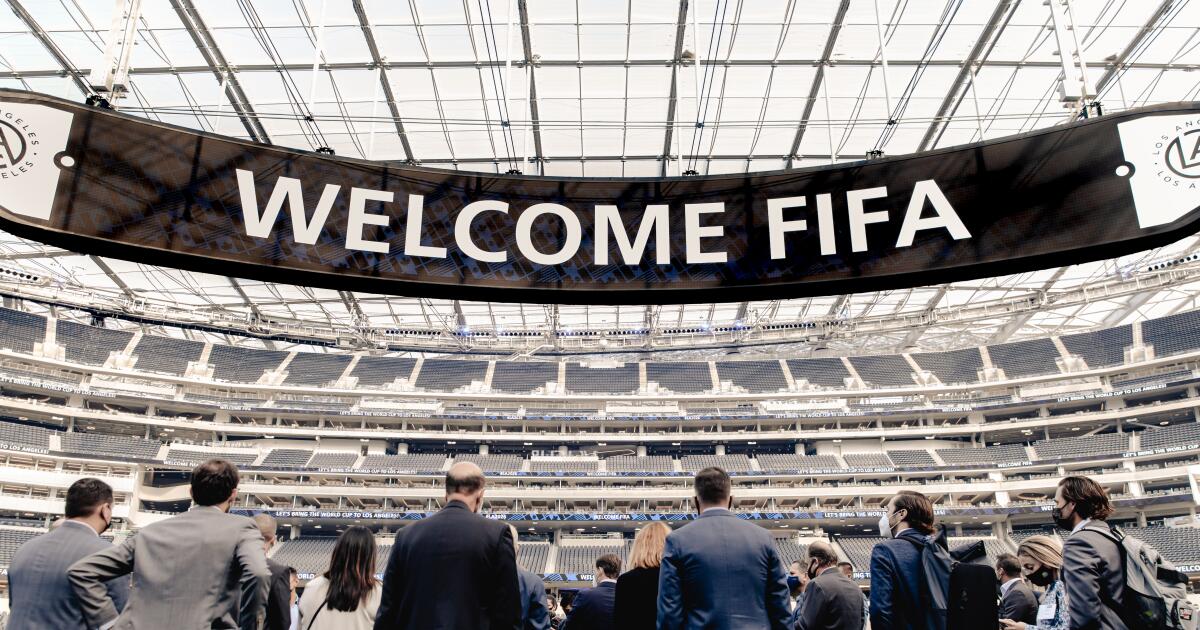
StubHub is getting a red card from some World Cup fans
Two World Cup customers are suing the New York-based ticket-selling company, alleging “false and misleading” advertising that left them without tickets or a refund for the World Cup games they paid to attend.
In federal court in New York last week, two Californians — Julia Reeker Moghal and Reuben Renteria — sued StubHub seeking monetary damages and a ban on the company selling World Cup tickets. The lawsuit aims to become a class action and comes after weeks of fierce criticism and complaints from customers regarding the company’s practices.
Throughout the World Cup, videos have emerged on Instagram and TikTok of StubHub customers describing their nightmare experiences with the ticket-selling platform.
Some said they had purchased tickets to World Cup games as early as November of last year, booked flights and hotels and arranged travel plans, then StubHub notified them days to weeks before the match of a refund for their tickets, which they never requested.
There were similar complaints about last-minute cancellations from people who bought Coachella tickets on StubHub.
In the lawsuit, Moghal said she had purchased three tickets for nearly $2,000 for the June 18 match between Switzerland and Bosnia-Herzegovina at SoFi Stadium in Inglewood, which were then canceled by StubHub. Moghal said she was contacted by StubHub and told her tickets would remain canceled, then was later told the tickets would be available one hour before the game.
When the match began, Moghal said she was at SoFi Stadium, but the tickets never came.
Renteria said he paid around $2,300 for the June 18 Mexico versus South Korea match in Guadalajara, Mexico, but they were canceled
“Devoted soccer fans have traveled from around the world to attend World Cup matches — and they reasonably relied on StubHub to provide the tickets they paid for as well as on StubHub’s warranty,” Blake Hunter Yagman, the attorney representing the two, said in a statement. “Instead of rewarding their business, StubHub sold them World Cup tickets that they either could not provide or on speculation, only to be stranded, in many cases, at the stadium gates without any recourse.”
According to StubHub’s website, its Fan Protect Guarantee states the platform will deliver valid tickets or refund in the event of a ticket issue, and that it will “go out of our way to find replacement tickets” of a comparable value. The lawsuit alleges the replacement tickets many fans were given by StubHub were worse than their original tickets.
FIFA, the World Cup organizer, states in its terms and conditions that the FIFA Marketplace, its own ticket-selling platform, is the only authorized platform for World Cup tickets, and that only tickets purchased through it are guaranteed by FIFA to be valid.
Despite the risk of purchasing through a third-party platform such as StubHub, many fans opted to do so to avoid the 30% FIFA resale tax, believing that the Fan Protect Guarantee would safeguard their order.
Since World Cup tickets began selling on FIFA Marketplace last September, fans have expressed disappointment in the expensive price tag. FIFA utilized a dynamic pricing system for the sale, and as sales phases progressed leading up to the games, the cost of tickets increased tremendously. In March, the extreme cost of tickets prompted 69 members of Congress to write a letter to FIFA urging them to lower their prices.
Tickets for the upcoming Friday match between Spain and Belgium in Los Angeles are selling on StubHub for over $1,300.
StubHub said in various statements to the news and in legal proceedings that ticket cancellations were a result of transfer problems and issues with FIFA’s ticketing infrastructure.
StubHub did not respond to requests for comment.
A FIFA spokesperson responded to this accusation in a statement, saying, “FIFA has no visibility over, or control of, secondary market ticket transactions carried out on third-party platforms. The transactions facilitated on these platforms occur entirely independently of FIFA’s official ticketing platform. With reference to the reliability of the services available to fans on FIFA’s official ticket platform, FIFA rejects any suggestion that the functional issues being experienced by users of third-party platforms with respect to FIFA World Cup 2026 tickets are the result of FIFA’s ticketing infrastructure.”
Business
Commentary: Trump wants to let companies make fewer disclosures, thus keeping investors in the dark

Trump’s SEC is considering eliminating the mandate for quarterly corporate financial reports, but even some big investors call it a lousy idea.
This being the “information age,” it would be understandable if investors sometimes feel inundated with too much information to wade through about the stocks in their mutual fund portfolios.
The Securities and Exchange Commission, bowing like a puppy to the urgings of President Trump, is considering exactly the wrong solution to this supposed burden. It’s proposing to allow public companies to give their investors less information, as though that’s a good thing.
On May 8, the SEC proposed rescinding its mandate that public companies report financial results on a quarterly schedule. Instead, it suggests, semiannual and annual reports should suffice.
This takes an already-unlevel playing field where Main Street investors are already disadvantaged, and makes it more unlevel.
— Dennis Kelleher, Better Markets
The SEC left its proposal open for public comment for 60 days, meaning the window closed Monday. By then, the agency had received more than 68,000 comments, according to a tracker posted online by accounting professor Tzachi Zach of Ohio State.
Almost 99.9% of the comments were negative. Several organizations of institutional investors and auditing professionals, as well as a tsunami of individual investors, expressed opposition.
A similar initiative the SEC aired in 2018, during Trump’s first term, received an overwhelmingly negative response and was eventually dropped.
The tide of opposition coming from individual investors shouldn’t be surprising. “Taking away basic quarterly information means investors are blind for six months at a time,” says Dennis Kelleher, co-founder and chief executive of the investor advocacy nonprofit Better Markets.
That’s especially true for small investors, though perhaps not so much for major institutions, insiders or deep-pocketed individuals. “If you’re a big dog, you’ll get the information anyway,” Kelleher told me. “And insiders, who are trading in their own stock all the time, will have the information. This takes an already-unlevel playing field where Main Street investors are already disadvantaged, and makes it more unlevel.”
Trump set off the latest initiative with a social media post on Sept. 15, advocating the move to a six-month reporting schedule. It read, in part, “This will save money, and allow managers to focus on properly running their companies. Did you ever hear the statement that, ‘China has a 50 to 100 year view on management of a company, whereas we run our companies on a quarterly basis???’ Not good!!!”
As was usual with Trump, his argument was a string of uninformed and irrelevant non sequiturs.
It’s doubtful that eliminating quarterly reports will save much, if any, money. Most 10-Qs are cookie cutter documents disclosing financial figures already embedded in corporate records.
The idea that managers would become empowered to “focus on properly running their companies” if only they were relieved of the burden of preparing a report every three months is just malarkey: Any CEOs who feel the impulse to drop everything and involve themselves in what is essentially an automated process can’t be very good at their jobs.
As for China’s “50 to 100 year view on management of a company,” what would that even mean, even if it were true? China doesn’t operate on a 50 to 100 year corporate horizon, but rather on a string of five-year plans. The most recent of these was adopted by the government in March, covers the period up to 2030, and is its 15th in a row.
Despite the flaws in Trump’s arguments, Trump’s SEC Chairman Paul Atkins, a former corporate lawyer and securities industry consultant, fell into line. Within a few days of Trump’s post, he showed up on CNBC to minimize the potential effect of the change. Private companies rely on semiannual reports, after all, he noted, although the idea of taking private companies as models for publicly traded corporations might not strike experienced investors as the wisest thing.
Atkins cited an enduring chestnut, for which there’s no evidence, that quarterly reporting is responsible for “short-term thinking” in corporate suites (though he admitted that his evidence was “anecdotal”). And he suggested that small investors have ample access to corporate information even without quarterly reports — why, he said, they can just tune in to CNBC!
“To propose change in what our rules are now would be a good way forward,” he said. “So I welcome the president’s putting this up for discussion.”
Something more insidious undergirds the SEC’s proposal than its immediate effect on corporate behavior. The agency rationalizes its proposal as seeking “a tradeoff between reducing regulatory burdens … and promoting efficient financial markets through timely disclosure.”
The problem here, Kelleher points out, is that “reducing regulatory burdens” isn’t part of the SEC’s mission in any way, shape or form. It’s a regulatory agency, and its mission since its founding in 1934 has been to protect investors, not to make things fluffier for stock issuers.
The history of financial disclosure in the U.S. shows a long-term trend favoring more disclosure, not less. In the 1880s, quarterly reporting by railroads and other transportation companies were common.
Early on, pressure for more frequent disclosure came not from government regulators, who barely existed before 1934, but from investors. The reporting of quarterly earnings, notes corporate finance expert Owen Lamont of Acadian Asset Management, was “a bottom-up historical phenomenon reflecting voluntary arrangements between firms and investors, not a top-down phenomenon imposed by law.”
By 1931, according to financial historians, 63% of New York Stock Exchange-listed firms were publishing their quarterly earnings. The Big Board mandated that frequency for most listed companies in 1939. The SEC mandated semiannual reports in 1955 and quarterly reports, as Atkins said, in 1970.
The evidence in favor of dropping the quarterly reports is uniformly thin. Some advocates cite a 2018 op-ed in the Wall Street Journal by JPMorgan Chase CEO Jamie Dimon and Warren Buffett that was headlined “Short-Termism Is Harming the Economy.”
Couple of points about this: First, the target of Dimon and Buffett wasn’t quarterly financial reporting, but quarterly earnings guidance — that is, the practice of some top executives who project their earnings into the future. (This guidance usually comes at the same time they issue their SEC disclosures.)
It’s guidance, they wrote, that is “a major driver” of short-termism in corporate behavior. That’s because management is giving itself a target it feels obligated to meet, even if factors outside its control interfere with the quest.
Furthermore, Dimon and Buffett wrote, “Our views on quarterly earnings forecasts should not be misconstrued as opposition to quarterly and annual reporting.” They called transparency about financial and operating results “an essential aspect of U.S. public markets … so that the public, including shareholders and other stakeholders, can reliably assess real progress.”
Individual investors may be unmoved by the SEC’s proposal because — let’s be candid — how many of them read quarterly earnings reports, anyway? But that’s unimportant, Kelleher says, because other market participants are reading them. “So that information is in the marketplace, and that’s what actually enables price discovery, so stock prices roughly reflect what’s going on at a company, most of the time.”
More to the point, the quarterly reports reflect the highest-quality, detailed information, the information the SEC requires executives to disclose on pain of facing a civil lawsuit from the agency or even criminal liability for faking data. “Main Street investors, whether they read quarterly reports or not, are the real beneficiaries,” Kelleher says.
That’s so. The bottom line is that quarterly financial reporting helps investors. It doesn’t promote short-term behavior and its costs, modest as they are, don’t outweigh its benefits.
Over the decades, scandal-ridden corporations have hidden fraudulent behavior in the interstices between mandated disclosures—think Enron, WorldCom and Tyco, among others. Why give any corporation, even an honest one, the opportunity to disclose less?
-
Politics5 minutes ago
Black mold and $1 wages: Settlement forces immigrant detention centers to protect workers
-
 Science8 minutes ago
Trump administration seeks to limit federal funding that doesn’t ‘advance’ presidential policies
-
 Sports13 minutes ago
Commentary: ‘I don’t want any handouts.’ Amid the Angels’ drought, a starry homecoming for Mike Trout
-

 World23 minutes ago
Does more World Cup history beckon for Norway? England stand in their way
-
 News50 minutes ago
Waymo called the cops on teen riders, raising privacy concerns
-

 Los Angeles, Ca2 hours ago
O.C. police prep for beach, theme park ‘takeovers’ promoted on social media
-

 Detroit, MI3 hours ago
Detroit city leaders to DHS: Stop ICE pursuits which endanger the community
-

 San Francisco, CA3 hours ago
SF Supervisor Jackie Fielder hosts listening session after medical leave


