Washington, D.C
Republicans join effort to change confederate statues representing MS in Washington


Statuary Hall could have changes coming in 2025
Several Republican Mississippi lawmakers are now seeking to replace confederate statues representing the state in Washington, D.C. just weeks after Arkansas installed a statue of a civil rights activist next to Mississippi’s Jefferson Davis.
During the 2024 session, several bills were filed to either replace or establish a commission to find replacements for Davis, a U.S. Senator and most notably president of the Confederate States of America, and James Z. George, a Confederate politician, military officer and namesake of George County. However, those bills died without ever being brought up in House or Senate Rules Committees.
The statues, meanwhile, have been displayed for about 100 years in the U.S. Congress’ Statuary Hall. The Davis statue now stands adjacent to that of Arkansas’ Daisy Bates, a Black civil rights leader involved in the integration of Little Rock’s Central High School among many other efforts. The juxtaposition of thew two is notable.
House Rules Committee Chairman Fred Shanks, R-Brandon, who previously declined to comment on a related report in February, told the Clarion Ledger Tuesday he is planning to address changing the statues in the 2025 session.
More on 2024 efforts Confederate symbols removal pushed by Mississippi Democrats in State Capitol, Washington DC
“It’s a big deal, and it’s going to be an extremely hot topic,” Shanks said. “I wanted some time to look at it when we don’t have some of the other major things that impact the state going on like we did this past session.”
Senate Rules Chairman Dean Kirby, R-Pearl, did not respond to several calls and messages seeking comment, nor did House Speaker Jason White, R-West. Lt. Gov. Delbert Hosemann’s staff declined to comment.
Sen. Nicole Boyd, R-Oxford, told the Clarion Ledger she has been quietly working on this legislation for a few years, and she plans to pitch an outside group connected to tourism to lobby, advocate and spearhead efforts for replacing Davis and George with more modern historical representations of Mississippi.
“It’s not about who’s coming down. It’s about who we can put there,” Boyd said. “It’s about what are the things that we want to promote in the state that we want to use as tourism to attract people.”
Senate Minority Leader Derrick Simmons said he believes it has bipartisan support.
“Even though this effort has been laid by Democrats, Democrats and Republicans want to honor someone who is more representative of a modern day Mississippi,” Simmons, who is from Greenville, said.
Several other House and Senate Democrats had harsh words for Republican leaders waiting until now just to address the statues.
“It shows that the leadership of those various committees had the opportunity to review that legislation but turned their eye and turned away from doing what’s right,” Rep. Chris Bell, D-Jackson, said.
Sen. David Blount, D-Jackson, said the state can simply do better than have Davis and George representing the state in the Capitol.
“I anticipate that we will file this bill again. It sets up a commission to study who best represents Mississippi,” he said. “There are any number of controversial subjects that go to the Rules Committee and (it’s) generally not the place for controversial topics, and I understand that, but this is important.”
What is Statuary Hall, and who is Daisy Bates?
Statuary Hall was established in the U.S. Congress’ Capitol building in 1807, but it was destroyed by British troops in 1814. The hall, along with the Capitol, was rebuilt a few years later.
Over the many years, states have submitted so many statues that the Architect of the Capitol has had to display several in other places around the capitol building. Mississippi is also one of only a few states with confederate statues still in the building. Arkansas, a previous member of that list, voted to change its statue in 2019.
Since 2000, 17 states have changed their statues, according to congressional records, and some Southern states have or are replacing Confederate people with modern historical figures, civil rights activist and even prominent Native Americans. Arkansas now has Bates; Virginia has Barbara Johns, and Florida now has Mary McLeod Bethune, one of the most important Black educators of the 20th century.
According to the National Women’s History Museum, Bates was a prominent civil rights activist in Little Rock Arkansas. Throughout the 1900s, she helped lead a popular newspaper, The Arkansas Weekly, served as the President of the NAACP Arkansas chapter and pushed the state’s schools to integrate after the U.S. Supreme Court deemed segregation unconstitutional in 1954.
She was widely known for her efforts with the Arkansas Nine, a group of nine students she regularly drove and assisted to integrate Central High School in Little Rock.
“She regularly drove the students to school and worked tirelessly to ensure they were protected from violent crowds. She also advised the group and even joined the school’s parent organization,” the Museum wrote about her.
The Arkansas NAACP chapter, nor the chapter representing her native Union County, responded to several calls or messages asking for comment on Bates or her statue’s placement in Congress.
How to replace a statue, who is being considered?
Boyd said that even if the Legislature approves replacing Davis and George, it will need approval from a congressional committee, and locations to move the two existing statues will need to be submitted and approved as well.
All the costs associated with removing the old statues and the construction and installation of the new statues would be put on the state.
Sen. John Horhn, D-Jackson, who spoke to the Clarion Ledger earlier this year, floated rock’n’roll legend Elvis Presley and Blues icon B.B. King. Another name suggested by Democrats was famous civil rights leader Fannie Lou Hamer.
Read about Tunica Casino project See which former Mississippi casino could house undocumented immigrant children
Grant McLaughlin covers state government for the Clarion Ledger. He can be reached at gmclaughlin@gannett.com or 972-571-2335.




Berk Kutay Gökmen
02 July 2026•Update: 02 July 2026
US Defense Secretary Hegseth on Thursday faced protesters while hosting the Trump administration’s DC Safe and Beautiful Task Force ceremony in Washington DC.
During the ceremony at Meridian Hill Park, which saw the gathering of National Guardsmen, dozens of demonstrators gathered near the park to protest Hegseth.
Footage shows the demonstrators chanting a short distance away from where Hegseth and roughly 200 members of the National Guard had gathered in the park
In social media posts, one protester was seen holding a Palestinian flag, while another person was holding a sign that reads “arrest Hegseth.” The protesters want a “Free DC,” according to social media posts.
In his address to the National Guard, Hegseth said that “this background noise is perfect,” referring to the protests.
“It’s the sound of ingrates, of ingratitude—of people who are so blinded by ideology they can’t see law and order and common sense in front of them,” he said.
Meridian Hill Park was repaired by the National Park Service and the Interior Department as part of a larger initiative to restore and enhance federal parks and public spaces throughout the nation’s capital in preparation for America’s 250th anniversary, which falls on this Saturday, July 4.
Though such beautification projects are typically popular with the public, the current initiative has been controversial both for its choice of projects and the use of no-bid contracts to hire firms to do the work, sometimes with disappointing results.
The work aligns with President Donald Trump’s DC Safe and Beautiful Task Force, established by a March 2025 executive order that directs federal agencies to coordinate public safety and beautification efforts across Washington.
Washington, D.C
Metro, DC leaders lay out more details on transit at new Commanders stadium – WTOP News

D.C. officials expressed an urgency Wednesday to begin preparing transit infrastructure for the opening in 2030 of the new Washington Commanders stadium on the old RFK Stadium campus.
D.C. officials expressed an urgency Wednesday to begin preparing transit infrastructure for the opening in 2030 of the new Washington Commanders stadium on the old RFK Stadium campus.
The work will impact far more than the single, cramped Metro station nearby.
During a roundtable discussion with District leaders, Metro General Manager and CEO Randy Clarke laid out the need for improvements to the existing Stadium-Armory Metro stop, and touted a new rapid bus transit line with dedicated lanes.
In tandem, those will be key to getting tens of thousands of people to events at the coming stadium, Clarke said.
“I absolutely believe the first couple of experiences that people have going to a Commanders game, going to some of the first big events, is going to dictate how people feel about taking transit,” D.C. Council member Charles Allen, who chairs the committee that oversees transportation projects, said. “So, we don’t have an option to get it wrong. We have to get it right.”
That’s why Clarke and other District leaders agreed that reaching a memorandum of understanding that lays out the roles, responsibilities and financials of these projects by July 23, the next Metro board meeting, is crucial.
“I think we’re all working towards that, and pretty optimistic,” Clarke said. “Then we’ve got to work really hard on design, we’ve got to work really hard on procurement, we’ve got to work really hard on construction.”
Clarke said the stadium’s ability to attract blockbuster events will depend on the transit agency and its ability to move people in and out of the complex.
“We’re not going to try to get, hosting the Super Bowl, we’re not going to try to host women’s World Cup, we’re not trying to get Taylor Swift and Beyoncé back here. I mean, at the end of the day, Metro is going to be the key to the success. We understand the pressure on us,” he said.
For the Stadium-Armory station, that means renovating the mezzanine and adding elevators to handle the increased demand. Clarke also talked about new street-level infrastructure to help manage the flow inside the station.
“So it’s very Disney-esque, where people feel like they’re constantly moving without actually going too far, if you know what I mean,” Clarke said. “Then we filter them where we need to go. That is a good example of what we need to do at the surface.”
But Metro won’t rely entirely on its trains. The roundtable also discussed what’s been dubbed the Gold Line, which would run buses from Union Station to the stadium.
Construction estimates for bus line are in the $75 million range, District Department of Transportation Director Sharon Kershbaum said
The Gold Line is to run through the heart of the H Street corridor, and transportation leaders said the impact will be everything the streetcar was supposed to be.
“This is now going to be the east-west corridor that we never were able to accomplish on the streetcar,” Kershbaum said.
“This is going to have frictionless service, because it will be center-running. So all of the issues — when a car double-parked and it stopped streetcar service — all of those things, we’ll be immune from. We are going to see the transportation service that was really never ever reached by streetcar achieved with this,” she said.
The vision for the Gold Line goes beyond the handful of weekends when NFL football is played at the stadium, and beyond initial Union Station-stadium route. Transportation officials see the buses eventually traveling between the Benning Road Metro Station and Rosslyn, Virginia.
“We want the Gold Line to solve the cross-town problem we’ve had in this community for a long, long time,” Clarke said.
That means providing access to the convention center and also solving the gridlock that fills up K Street NW every day. Clarke said coming up with dedicated lanes on K Street would actually be the most pivotal part of this new transit line.
“The downtown core of D.C. does not move, especially during p.m. rush hour,” Clarke said. “If you want people in Benning Road that may work, say on K Street, to have better transportation, solving K Street is equally as important, if not more important, because of time savings and reliability.”
Officials did not specify a timeline for the full expansion, but it would not be completed by 2030.
Where it does run, Gold Line buses would travel in the middle lanes, to avoid what caused problems for the Streetcar, which could grind to a halt when cars would double park. Building out the Gold Line would mean more changes to the way cars move along H Street in Northeast.
“You can’t do what you want to do and also keep all the parking,” At-Large Council member Christina Henderson said.
“There’s intersections where we’re going to have to take turns away at certain intersections, maybe parking in certain places,” Clarke said. “In other places parking could be kept, because we’re looking at putting platforms.”
Stadium-related transit construction will run far beyond H Street and the Stadium Armory stop.
“We do want to minimize outages, but there’s going to be significant outages to do this project,” Clarke said.
“It’s all about where we can turn trains around and how to manage that,” he added. “So if we do an outage to Stadium Armory, what that really means is we’re impacting customers from New Carrollton and Largo all the way through the system, and some people that are west of the system that want to go east of Stadium Armory won’t be able to.”
But with the project not even really in the design phase yet, it’s hard to plan out how and when those impacts will happen.
“We’ll be doing obviously overnight work,” Clarke said. “We’ll probably do some, what we call, early outs. Sometimes we’ll start at 10 o’clock at night. We might be able to do some single tracking on certain types of work. Other work is going to be complete shutdowns.”
“And the question is, is that going to be X amount of weekends or is it going to be like a two-, three-, four-week block at a time,” he added. “We’ve got to work through all of that.”
Get breaking news and daily headlines delivered to your email inbox by signing up here.
© 2026 WTOP. All Rights Reserved. This website is not intended for users located within the European Economic Area.

WASHINGTON, D.C. — Ohioans are among the visitors traveling to the nation’s capital this week for the Great American State Fair, part of the country’s 250th birthday celebration.
On Wednesday, visitors trickled into the Ohio state pavilion booth, which includes a map of Ohio’s most iconic places and an exhibit on several children’s initiatives championed by Gov. Mike DeWine, First Lady Fran DeWine and Lt. Gov. Jim Tressel.
“I wanted to come here, we wanted to see the sights here. We figured once in a lifetime,” said Carolyn Golamb of Fremont, who was visiting Washington, D.C. with her husband, Mark.
The fair has been a source of controversy after multiple musicians scheduled to perform at a kickoff concert withdrew, citing political concerns.
The event was organized by Freedom 250, a White House-backed group that has been accused of usurping the government’s official America250 commission, created by Congress 10 years ago for the same purpose. In addition, many elements of the fair have pushed a partisan message, such as President Donald Trump’s campaign-style rally on June 25 and events like “MAHA Mondays.”
Amid the controversy, attendance at the fair has been sparse.
Rep. Dave Taylor, R-Ohio, attributed the light turnout not to politics, but to forecasts of triple-digit heat this week.
“The weather is going to hold numbers down a little bit,” he said. “There’s a lot of walking to go from one place to another here, and people are here visiting with little kids. I think you’re going to see the numbers pick up as we get closer to Saturday for sure.”
Several visitors from Ohio said they did not notice any partisanship at the fair.
“That is the reason why I’m here, is because all of us have made a big positive contribution to what makes America great. And it’s not just one group or one party or anything. It’s all of us together,” said Toledo native Cassandra Newsome.
“It’s the 250th anniversary. No matter who was in power at the time, I still would be here,” said Mark Golamb.
The fair runs June 25 to July 10 on the National Mall.
-

 Health14 minutes ago
She Ate High-Protein Ice Cream Daily and Lost 193 Lbs—Her Keys to Success
-
 Lifestyle29 minutes ago
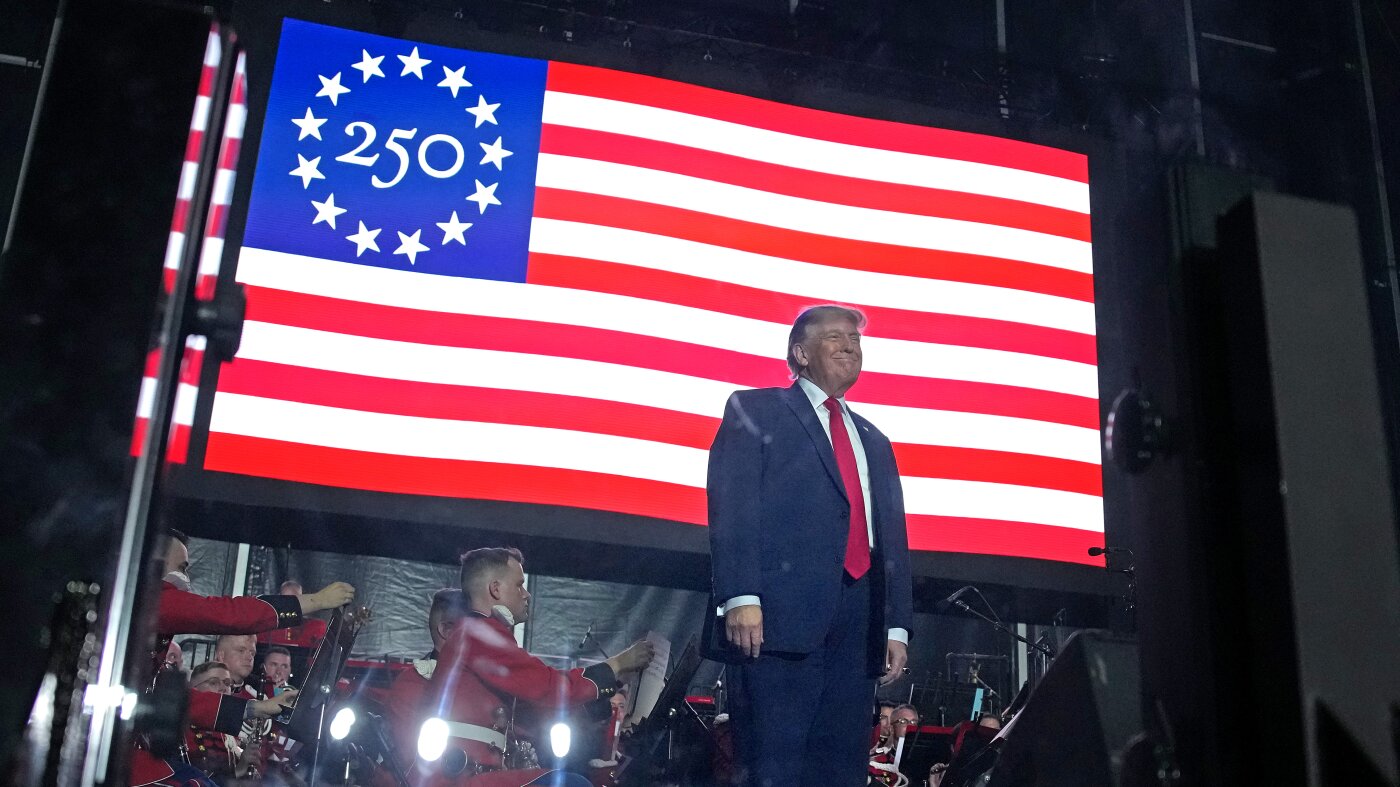
House Democrats accuse Trump of ‘hijacking’ America’s 250th birthday for his own gain
-

 Technology41 minutes ago
Tesla driver faces manslaughter charges over Texas crash that killed a woman inside her home
-

 World44 minutes ago
Six Kurdish fighters killed in IRGC ambush as clashes spread across western Iran
-

 Politics49 minutes ago
Sanctuary county refused 615 ICE transfer requests, turned over just 11 illegal immigrants, records show
-

 Health56 minutes ago
Mystery parasite leaves Americans battling ‘explosive’ illness as CDC investigates
-

 Sports59 minutes ago
2026 World Cup Round Of 16 Odds: Who’s Favored To Advance?
-

 Technology1 hour ago
Fox News AI Newsletter: American manufacturer says AI is creating jobs, not replacing them

