Violent crime and murder fell in many major cities around the United States last year, including Baltimore. Yet trends still moved the wrong way in D.C., which experienced more homicides in 2023 than any year since 1997. These data underscore the urgency of the wide-ranging crime-control legislation on which the D.C. Council’s public safety committee plans to vote on Wednesday.
Washington, D.C
Opinion | A crime-free D.C. starts with drug-free zones


We’ve previously advocated several of the measure’s 100-plus provisions, and most of them enjoy wide support among law enforcement, elected officials and the community. Key elements of the proposal, compiled by council member Brooke Pinto (D-Ward 2), would extend emergency legislation from the summer that made it easier to hold those suspected of violent crimes in jail pending trial — and require judges to issue a written explanation when they refuse to do so. It makes organized retail theft a felony; legalizes the sale of pepper spray and using it for self-defense; expands services for crime victims; bans wearing masks for the purposes of intimidation or committing a crime; expands the definition of carjacking to include coercing drivers to hand over their keys; and it gives police the authority to enforce civil offenses for Metro fare evasion.
One of the contested provisions of the bill, which some council members might try to remove before final passage, would reinstate D.C. police’s ability to declare temporary drug-free zones in crime hot spots. Supporters argue that it’s necessary to stem the violence associated with open drug-dealing. Using cannabis has been decriminalized in the District, but its sale for recreational purposes remains illegal, and much of the pot-dealing business takes place on the streets, as does the trade in meth and fentanyl. Mayor Muriel E. Bowser (D) recently estimated there are about 10 “open-air drug markets” in the city. Though that’s fewer than there were at the height of the crack-cocaine epidemic of the 1980s, they still create nuisances and hazards for the community, as the presence of illicit cash inevitably leads to fights, robberies and, all too often, shootings.
The bill would address this by empowering the police to declare 1,000-square-foot areas drug-free zones for five days, whereupon officers would issue notices declaring it unlawful to congregate in them for the purpose of using, buying or selling drugs. Police would have the authority to disperse anyone whom they see, say, exchanging small packages or otherwise behaving in a way that police reasonably consider related to drug-dealing or usage.
Undoubtedly, any such criteria could be susceptible to abuse. Melissa Wasser, the American Civil Liberties Union’s D.C. policy counsel, has argued that “allowing officers to … harass people in designated zones will not make D.C. safer” and that “the District can’t make it a crime to simply stand around.” Similar concerns led the council in 2014 to take away from police the authority to declare drug-free zones, though the version of the law in force at the time had not been successfully challenged in court. As a council member, Ms. Bowser was one of those who voted in the majority on that bill. But she had a change of heart in response to new realities; D.C. needs a drug-free zone law, she said in October, to stop an “emerging trend” of drug-dealing along prominent corridors such as H Street NE and Chinatown.
The proposal before the council appropriately balances public safety and constitutional concerns. To assuage concerns about the power being misused, Ms. Pinto added language specifying that police cannot target people who are waiting in line for medical services, such as near a methadone clinic, or at their home.
Meanwhile, the decline of Gallery Place shows the quality-of-life deterioration that a brazen drug trade in a central commercial area — or anywhere in the city, for that matter — can breed. The Metro station’s exits often reek of marijuana. It’s common to see people buying and selling drugs under the Chinatown arch. Before he signed a deal to move the Capitals and Wizards to Virginia, Monumental Sports founder Ted Leonsis and his representatives repeatedly complained about these illicit transactions outside Capital One Arena.
Drug-free zones, used properly, are an appropriate tool to reclaim public spaces and help revitalize downtown Washington. Assuming the public safety committee passes the bill on Wednesday, the full council will take it up next week. The mayor says she’ll sign it. Along with the rest of the bill, drug-free zones wouldn’t be a panacea for D.C.’s crime problem, but they would be a step in the right direction.



February 27, 2026, was a flash point in the cold war between Silicon Valley and Washington, D.C.
The AI giant Anthropic had drawn a red line with the Pentagon, forbidding the military from using its product for autonomous weapons or the mass surveillance of Americans. The Pentagon retaliated by ending their contract and designating Anthropic a supply-chain risk. Anthropic has since sued to overturn this designation.
The feud-turned-legal battle is an acute example of a long-festering dynamic: technologists who want control over the use of their creations and who do not trust the government to understand or regulate their products, and policymakers wary of an unelected tech oligarchy that has become its own power center in American society.
Trae Stephens is no stranger to this dynamic.

(Photo courtesy of North Dakota National Guard. via the North Dakota Monitor)
(North Dakota Monitor) – North Dakota will send 60 National Guard members to Washington, D.C., starting in April, for an estimated three months to help police the city.
The move is in support of President Donald Trump’s August executive order declaring an emergency in D.C. The president said assistance from states is necessary to address what he described as rampant crime in the nation’s capital.
“Safeguarding the citizens, federal workers and elected leaders in our nation’s capital is a matter of national security, and we appreciate these Soldiers volunteering for this important mission,” Gov. Kelly Armstrong said.
Most of the 60 North Dakota members will come from the 131st Military Police Battalion, based in Bismarck, according to the announcement.

Thousands turned out at the dozens of No Kings rallies scattered across Maryland, part of the millions expected across the country for the third such event. In Maryland, turnout was particularly heavy in Hagerstown, near a proposed ICE detention facility.
Oregon1 minute ago
Oregon Lottery Pick 4 results for March 29

Pennsylvania7 minutes ago
What you can do to lower your electric bill in Pennsylvania

Rhode Island13 minutes ago
This RI Garden Transforms Into a Fairy Wonderland

South-Carolina19 minutes ago
How to watch TCU vs. South Carolina women’s basketball Elite Eight: TV, streaming

South Dakota25 minutes ago
Argus Leader First/Second Five: South Dakota’s best girls high school basketball players

Florida1 year ago
Florida High School Football Rankings: Top 25 teams – Oct. 21

Oregon2 years ago
How old is Bo Nix? What to know about Oregon quarterback ahead of 2024 NFL Draft

Connecticut2 years ago
Cleary's 21 help Le Moyne down Central Connecticut State 69-64 in OT

Virginia2 years ago
99th annual Pony Swim held in Virginia

Indiana2 years ago
Indiana Members Credit Union announced as new anchor tenant at Bottleworks District

News2 hours ago
Video: Iran to Allow More Oil Ships Through Strait of Hormuz, Trump Says

Politics3 hours ago
Dem senator warns deportation could let Virginia woman’s illegal immigrant killer ‘escape accountability’

World4 hours ago
Newsletter: G7 ministers to hold talks on war’s economic fallout
News5 hours ago
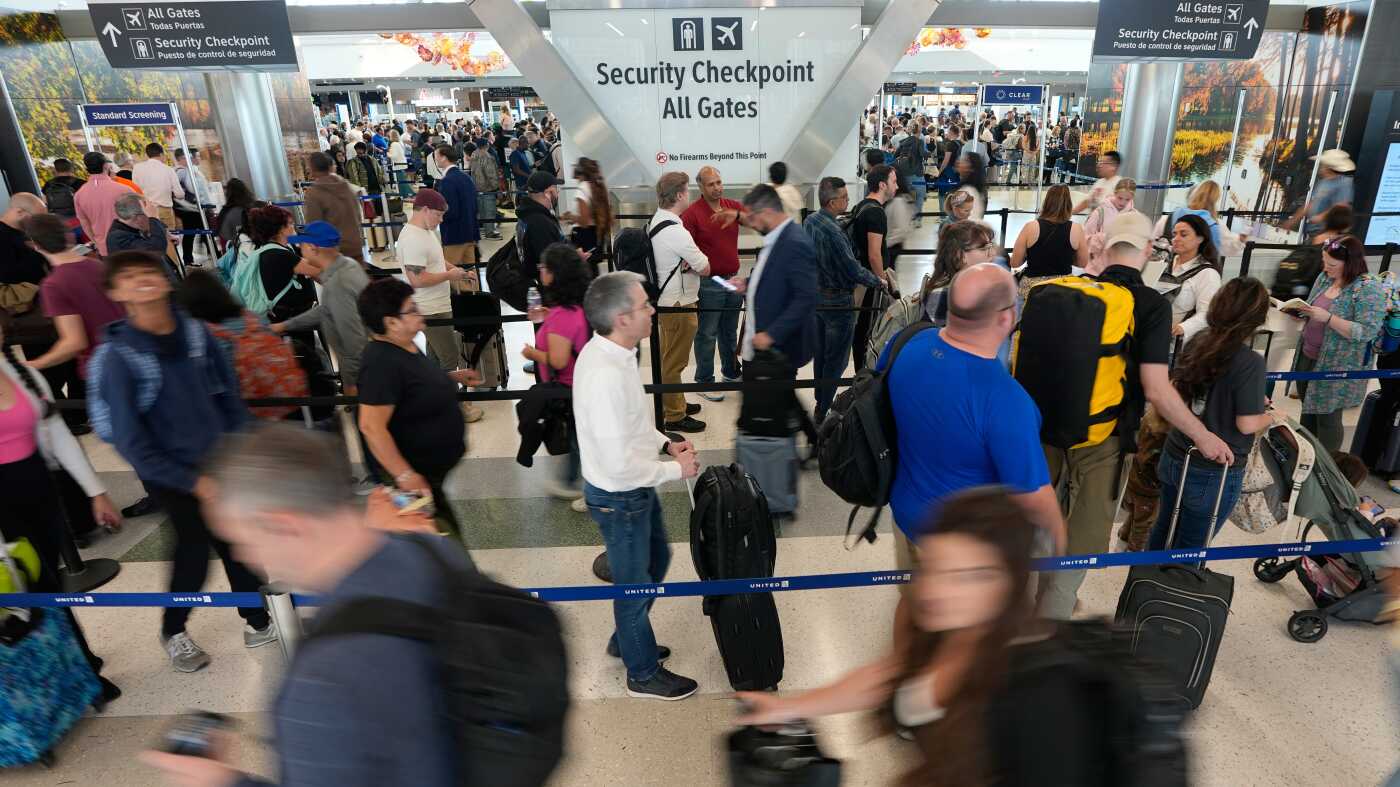
ICE officers could remain at airports after TSA workers are paid

Politics15 hours ago
Scathing report claims nation’s oldest labor union ‘betrayed’ MAGA members through ‘shocking’ spending
-

 Sports1 week ago
IOC addresses execution of 19-year-old Iranian wrestler Saleh Mohammadi
-

 Miami, FL4 days ago
Jannik Sinner’s Girlfriend Laila Hasanovic Stuns in Ab-Revealing Post Amid Miami Open
-

 New Mexico1 week ago
Clovis shooting leaves one dead, four injured
-

 Politics1 week ago
Schumer gambit fails as DHS shutdown hits 36 days and airport lines grow
-

 Tennessee7 days ago
Tennessee Police Investigating Alleged Assault Involving ‘Reacher’ Star Alan Ritchson
-

 Minneapolis, MN4 days ago
Boy who shielded classmate during school shooting receives Medal of Honor
-

 Science1 week ago
Record Heat Meets a Major Snow Drought Across the West
-

 Technology1 week ago
YouTube job scam text: How to spot it fast