Tennessee
Tennesseans who suffer from food insecurity face long-term health issues and complications


To improve health outcomes and promote preventive care, BlueCross BlueShield of Tennessee is introducing a statewide initiative called FarmBoxRX.

What is food insecurity? How food deserts are impacting Americans.
What to know about food insecurity and how it impacts millions of Americans.
Whenever I’m asked to share an example of health inequity that hits close to home, I think about how many Tennesseans struggle with food insecurity, particularly in urban areas.
There’s a misconception that food insecurity simply means people are at risk of starving. But it actually refers to the affordability and accessibility of nutritious food.
In other words, there may be a prevalence of processed and fast-food options within easy driving distance in many communities, but these areas lack grocery stores or markets that offer fresh fruits, vegetables and proteins. And some may be able to put food on the table but can’t afford the healthier choices.
Lack of access to nutritious food has long-term consequences
Food insecurity is a social driver of health, and several areas in Davidson County and Middle Tennessee are at increased risk. Within our health equity report, we define these drivers of health as obstacles that can lead to health disparities, or unfair and avoidable differences in health status.
A lack of nutritious food consumption can lead to long-term health issues and complications. We’ve seen these effects on our Medicare and Medicaid populations, particularly. Oftentimes senior members may lack transportation or family assistance to drive long distances for healthy food, much less the financial stability to afford it.
Many of our Medicaid members in the BlueCare Tennessee program are working multiple jobs to support their families and may rely solely on drive-thrus or canned goods from convenience stores to ensure everyone is fed.
This is a stressful reality for so many in our state. Each person’s life experiences and situations guide their health journey. And social drivers can affect anyone, not just those working to make ends meet. These factors can also correlate with racial and ethnic identities because of the historic inequities these groups have faced.
Our data has shown that maternal health, cancer screening, chronic condition management, child and adolescent well-care, and behavioral health are all negatively impacted by social drivers of health, particularly among minority populations. Debt burden, education level, language barriers, and community safety can all disproportionately impact these populations and their health care access.
Maternal and mental health care are among the disparities 2024 equity report identified
For example, someone living in an area without public transportation and who speaks English as a second language may struggle to find a doctor and schedule a preventive care visit. That’s why BlueCross is taking proactive steps to address these drivers before they develop into health conditions.
Community-based solutions can aid in tackling food insecurity
Our BlueCare team has worked to decrease food insecurity in rural areas across the state by supporting the creation and maintenance of community food gardens. These gardens support those living in food deserts. They’re a supplement for people who rely on social services, food pantries, and food banks to meet nutrition needs as well. BlueCare has also partnered with Nashville Community Fridge, providing fresh produce and pantry goods to families in need.
To improve health outcomes and promote preventive care, we’re introducing a statewide initiative called FarmBoxRX. BlueCare members will receive food boxes shipped directly to their doors after receiving well-childcare or diabetes care.
Of course, this is just one of many social drivers of health that we’ve identified, measured, studied, and begun to proactively address. For all social drivers and risk factors, we’re increasing our coordination with providers and making it easier for them to contact us so that we can get involved and steer our members toward available resources and help get them on track. That way we’re closing the loop between member, provider, community organization (where applicable) and health plan.
Our goal is to use this integrated approach to help people make progress toward their own goals for better health. But all of us have a role to play in addressing these social drivers. Ask yourself, what are some barriers to care that you see in your everyday life, or maybe in the life of a neighbor or family member, and why are they there? Sometimes simply putting yourself in someone else’s shoes can lead to understanding, inspiration and action.
Sherri Zink is senior vice president and chief data officer at BlueCross BlueShield of Tennessee.



Tennessee
Former Tennessee Football Position Coach Beats Out Vols For Commitment of Elite Recruit | Rocky Top Insider

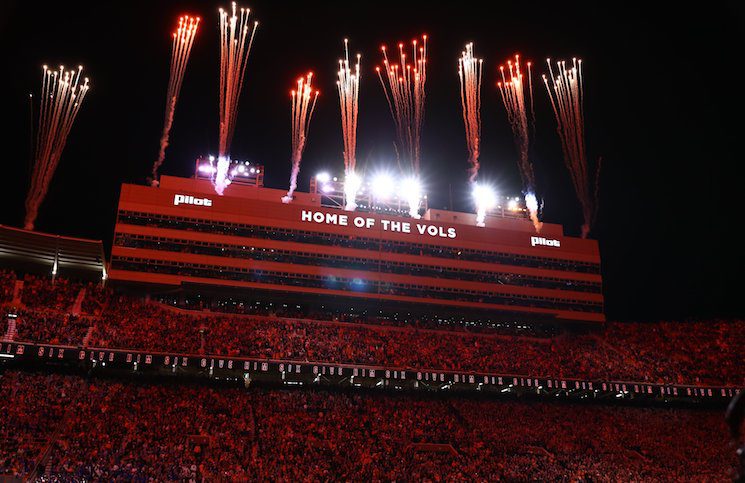
Tennessee football made the final cut for one of the top linebackers in the class of 2027, Roman Igwebuike, but couldn’t seal the deal. Instead, he’s taking his talents to Notre Dame as he announced his commitment to the Irish on Saturday evening.
It was a former Josh Heupel Era UT position coach who led the charge for Igwebuike, as well. Brian Jean-Mary, the Vols’ linebackers coach from 2021-23, now leads the linebacker room at Notre Dame and was the primary recruiter for Igwebuike.
Jean-Mary left Tennessee for a position at Michigan as defensive run game coordinator/linebackers coach. However, with the coaching change in Ann Arbor this offseason, he landed on his feet and joined the Irish’s staff as Marcus Freeman’s run game coordinator/linebackers coach.
More From RTI: Nike Reportedly Not Willing to Help Ohio State’s Recruitment of David Gabriel Georges
Igwebuike is one of the top linebackers in the class of 2027. On 247 Composite, he ranks as the No. 123 player in the country, No. 9 linebacker and No. 8 player from the state of Illinois. He is from Chicago, where he plays for Mount Carmel.
“Well-rounded linebacker that has a chance to be a linchpin in the middle for a College Football Playoff hopeful after a productive prep career outside of Chicago,” 247 director of scouting Andrew Ivins wrote. “Looks the part with a muscular 6-foot-3, 225-pound frame. Sees it well from the shelf as he reads his keys and flows to the football. Navigates busy intersections at a higher level and can slip underneath blocks. Comfortable dropping into space and is rather effective as a spy…”
Igwebuike’s primary recruiter at Tennessee was linebackers coach William Inge. He has made trips to Knoxville to see the Vols, including the Orange and White Game this past April, but never announced an official visit to UT.
Tennessee currently holds 16 commitments in the 2027 class, which ranks 43rd in the country on 247. This features two linebackers, both legacies, in four-star Kenneth Simon II and three-star JP Peace.

Tennessee freshman forward Chris Washington Jr met with the local media earlier this week in his first press conference after committing and signing with the Vols back in the spring.
Washington discussed why he chose Tennessee, what position he has mostly been working at this summer and much more. Here’s everything Washington said.
More From RTI: What Director of Sports Performance Garrett Medenwald Said About Tennessee Basketball Offseason
On what led to him de-committing from Alabama, eventually committing to Tennessee
“Honestly, I just felt like that for me and my family, that was just the best decision for me. And I found my right school, I feel like.”
On his first impressions of the team
“Like I said, me and the guys, we came a long way just from this first month, you know, getting help from DeWayne, and the team, it’s just been a blessing.”
On what the first month has been like for him personally
“Honestly, just getting better day by day. Coach Barnes, he’s coaching me hard. So honestly, just stacking days, just getting better day by day.”
On what Rick Barnes is harping on with him right now
“My defense. The whole country know I can score the ball, so just me, just working on my rotations, being right in the gaps. Defense.”
On what position he is working at.
“Right now, they got me playing four.”
On if they sold development based on his film or Tennessee’s track record
“I mean, honestly, just the track record of like guys he did put in the league, you know what I’m saying? I want to be pro, so like I said, I came to Tennessee, I felt like they’re gonna get me there, he’s gonna get me there.”
On who have been the verbal leaders on the team
“My boy DeWayne and my boy Kenbell (Duncan Campball), them two. They’ve been kind of really helping me.”
On how Tennessee sophomore forward DeWayne Brown has helped the newcomers understand what it’s like to play for the Vols
“I be in practice sometimes, I’ll get lost and he’ll kind of just help me a little bit. I mean, honestly, him just guiding us when we mess up.”
On his relationship with the rest of his freshman class: Manny Green, Ralph Scott and Marquis Clark; if he knew about them on the AAU circuit
“It’s been a great relationship. I didn’t play those guys on the circuit, so for us to be all on the same team, it’s a good thing.”
On playing AAU basketball in Knoxville; if that helped his decision
“It’s great, you know? It’s just amazing, honestly. I’m just glad to be here.”
On how he is liking the new Adidas uniforms
“I’m loving it. We’re in Adidas gear. I’m liking it, I’m loving it.”
On his strengths on offense
“I’d say getting to the rim, getting to my spots, and my (ability) to catch and shoot.”
On where his spots are
“Really just getting to the mid-range, getting down hill.”
On watching last year’s Vols get drafted
“Coach Barnes, him getting those guys there, I know my time’s gonna come.”
On his freshman class
“Oh, we got the best class, I feel like, honestly. We got a good class.”
Why he feels Tennessee has the best freshman class
“Shoot, we all can score, honestly. (Barnes) recruited a lot of scores this year. Even our freshman class, we can all get a bucket.”
Tennessee
Where Tennessee Baseball Players, Commits Land In Final MLB Mock Drafts, Rankings | Rocky Top Insider

The 2026 MLB Draft gets underway on Saturday afternoon to jump start MLB All-Star game festivities in Philadelphia. The two-day, 20-round draft is a highly important once for Tennessee baseball. While there are fewer current Vols projected to be selected, there will be no shortage of Tennessee prep signees and transfer commits who are draft risks.
We’ve compiled a number of both mock drafts and overall draft prospect rankings from a multitude of outlets that give us a look at where Tennessee players, transfers and commits could go. There’s a handful of Tennessee transfer commits who are not listed but are also draft risks including Wright State outfielder Andrew Duncan, Baylor shortstop Travis Sanders, FIU infielder Mario Trivella and Clemson right-handed pitcher Hayden Simmerson.
Taking a look at the mock drafts and draft rankings here.
More From RTI: Clemson Transfer Pitcher Commits To Tennessee Baseball
Current Tennessee player. Tennessee transfer commit. Tennessee high school signee
Mock Drafts
ESPN Two-Round Mock Draft
- LHP/OF Jared Grindlinger — No. 11 to Kansas City
- OF Trevor Condon — No. 14 to Miami
- RHP Tegan Kuhns — No. 34 to Pittsburgh
- RHP Kaiden McCarthy — No. 51 to Pittsburgh
The Athletic One-Round Mock Draft
- LHP/OF Jared Grindlinger — No. 11 to Baltimore
- RHP Tegan Kuhns — No. 24 to Seattle
CBS One-Round Mock Draft
- LHP/OF Jared Grindlinger — No. 18 to Cincinnati
Prospect Rankings
MLB Pipeline Top 250
- OF Trevor Condon — No. 13
- LHP/OF Jared Grindlinger — No. 16
- RHP Tegan Kuhns — No. 25
- RHP Kaiden McCarthy — No. 61
- RHP/SS Cole Koeninger — No. 99
- SS Jack Dugan — No. 106
- C Sean Dunlap — No. 124
- RHP Shawn Sullivan — No. 132
- RHP Tyler Putnam — No. 139
- RHP Gary Morse — No. 141
- 3B/OF Henry Ford — No. 148
- LHP Jake McCoy — No. 152
- C/OF Garrett Wright — No. 190
- RHP Cannon Grant — No. 212
- RHP Bo Rhudy — No. 219
- LHP Ricky Ojeda — No. 243
ESPN Top 250
- LHP/OF Jared Grindlinger — No. 11
- OF Trevor Condon — No. 16
- RHP Tegan Kuhns — No. 32
- C Sean Dunlap — No. 49
- RHP Kaiden McCarthy — No. 52
- RHP Gary Morse — No. 98
- RHP/SS Cole Koeninger — No. 107
- SS Jack Dugan — No. 109
- RHP Tyler Putnam — No. 112
- RHP Cannon Grant — No. 125
- 1B Cody Boshell — No. 142
- LHP Jake McCoy — No. 156
- C/OF Garrett Wright — No. 162
- 3B/OF Henry Ford — No. 183
- RHP Bo Rhudy — No. 201
Perfect Game Top 400
- LHP/OF Jared Grindlinger — No. 16
- OF Trevor Condon — No. 29
- RHP Tegan Kuhns — No. 50
- RHP Kaiden McCarthy — No. 51
- RHP/SS Cole Koeninger — No. 62
- C Sean Dunlap — No. 68
- 3B/OF Henry Ford — No. 134
- 1B/OF AJ Curry — No. 153
- RHP Cannon Grant — No. 176
- RHP Tyler Putnam — No. 190
- SS Jack Dugan — No. 201
- LHP Jake McCoy — No. 227
- RHP Shawn Sullivan — No. 231
- RHP Gary Morse — No. 241
- LHP Ricky Ojeda — No. 251
- RHP Bo Rhudy 255
- SS Jaxson Wood — No. 262
- C/OF Garrett Wright — No. 269
- LHP Brandon Arvidson — No. 274
- SS Manny Marin — No. 375
- OF Reese Chapman — No. 386
- LHP Drew Christine — No. 387
-

 Pittsburg, PA1 minute ago
Motorcyclist killed in crash with sedan in North Huntingdon Township
-

 Augusta, GA6 minutes ago
State Championship winning coach and CSRA icon Otis Smart passes away
-

 Washington, D.C14 minutes ago
Homicide detectives probe fatal shooting of teen in Northeast DC
-
 Cleveland, OH16 minutes ago
Wanted sex offender arrested at home where Tennessee woman’s body found
-

 Austin, TX22 minutes ago
Man shot and killed by police after pointing gun at people in Austin, Texas
-

 Alabama29 minutes ago
Alabama has Talent returns with local connection
-

 Alaska31 minutes ago
Alaska Sports Scoreboard: July 11, 2026
-

 Arizona36 minutes ago
Cardinals Mailbag: Latest on Jacoby Brissett, Carson Beck, and Arizona’s QB Future

