Tennessee
Restoring voting rights after a felony is rare in Tennessee. The process has gotten harder. – Stateline

This story originally appeared in the Tennessee Lookout.
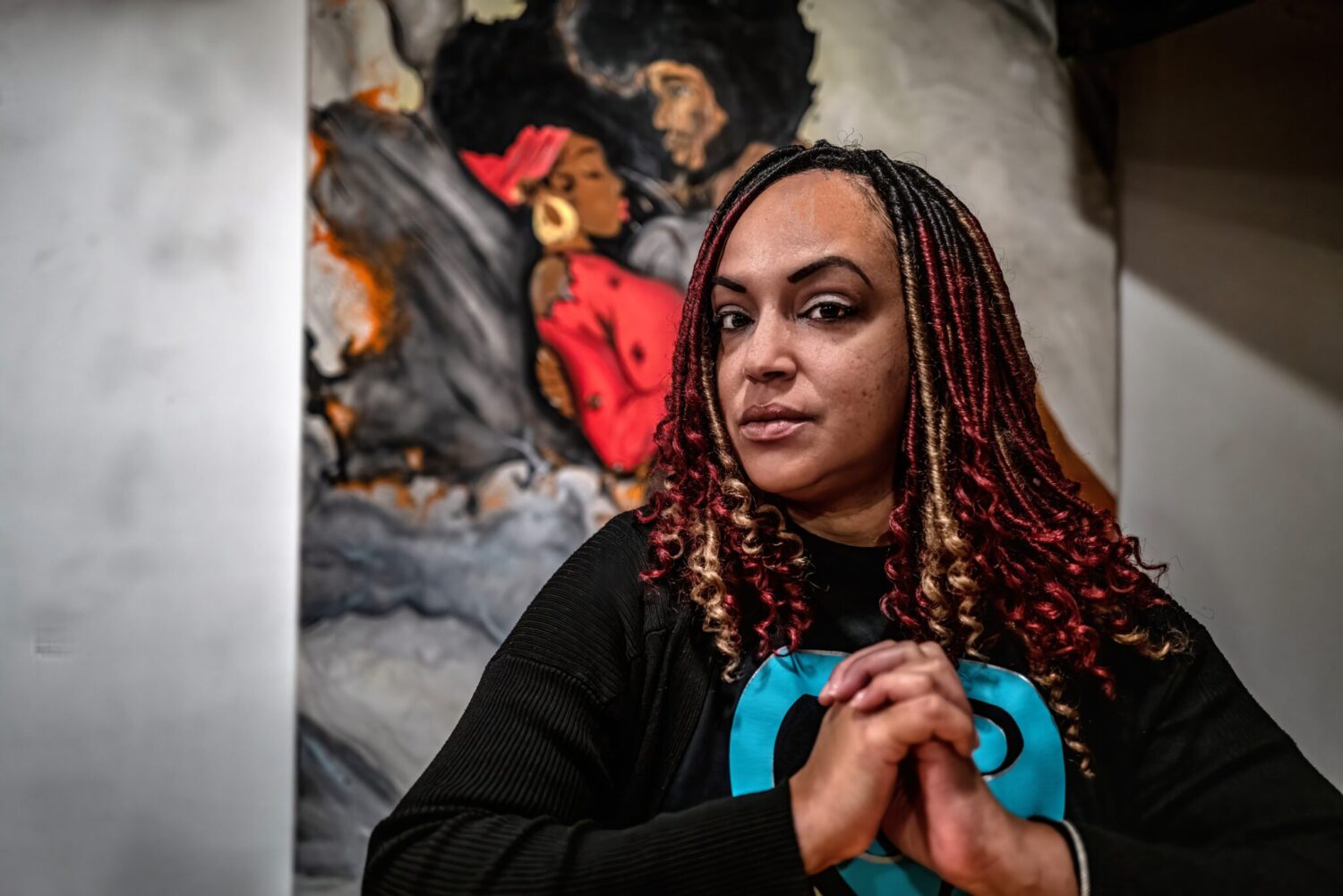
Janiqua Thompson was in her early 20s when she began stealing from the hotel she worked for. Her motivation was to catch up on bills to support her mother and three younger brothers, but her felony conviction only added more financial strain. She spent a day in jail and three years on probation, faced $20,000 in restitution fees and lost her voting rights.
“I made a decision that impacted my family way worse than I thought it would,” Thompson, now 28, said. “I let a temporary circumstance control my future.”
With her probation behind her and a 3-year-old daughter to raise, Thompson wants to regain her voting rights. She wants a say in the leaders shaping her country and community and to feel like a full citizen again. But now, along with the more than 470,000 Tennesseans with felony convictions excluded from the polls, she faces a voting rights restoration process made more difficult in recent months.
“I would love to have a voice,” Thompson said. “I just want to be able to change things for my kid.”
In at least 35 states, those with felony convictions can vote again after their full sentence is complete, and several states have eased the path to voting rights restoration in recent years. But in Tennessee, where financial and logistical hurdles already prevent many from regaining their rights, the process has become harder. In July, Tennessee officials issued new guidance mandating that instead of choosing between two paths of restoration, those with felony convictions would need to complete both.
Nearly 10% of the voting population in Tennessee is excluded from the polls because of felony convictions, a rate second only to Mississippi and one that especially affects people of color. One in 5 Black Tennessee residents is unable to vote because of a felony conviction, the highest rate in the nation.
“We have already had, before this new rule, the most complex voter restoration laws of any state,” said Dawn Harrington, founder of Free Hearts in Nashville, which supports families navigating incarceration. “This is a huge obstacle that has been put in front of us.”
The Tennessee Secretary of State’s office reported that nearly 3,350 Tennesseans regained their voting rights since 2018, which is less than 1% of those disenfranchised with a felony conviction who have completed their sentences.
The new guidance has further slowed the pace of restoration but has also spurred a new sense of urgency around the issue. Free Hearts and other reentry support groups have begun collaborating across the state to educate more attorneys on the process and to push harder for action from lawmakers and Republican Gov. Bill Lee.
“This is a big moment for shining the light on a process that has long been broken,” Blair Bowie, a director at Washington, D.C.-based Campaign Legal Center, said. “This new guidance really exposes just how big of a problem Tennessee has with felony disenfranchisement.”
‘There is no process in place’
For decades, Tennesseans with felony convictions could regain voting rights by receiving a pardon or by restoring their citizenship rights in court. In 2006, lawmakers added another alternative: complete a certificate verifying all legal debts were paid and child support was up to date. Tennessee Elections Coordinator Mark Goins cited a June Tennessee Supreme Court decision in recently declaring that the two existing paths are both required.
Tennessee Supreme Court rules in felony voting rights case
The 2006 option had become the preferred path for Tennesseans seeking to restore their voting rights. The citizenship restoration process, now step one, can take several months and typically requires help from an attorney. Lawyers often gather dozens of pages of documentation to present to the judge, including letters of recommendation and certificates from programs completed during incarceration. Prosecutors can again testify against an individual, and approval is up to a judge’s discretion, which can be intimidating for many who were previously convicted. A court appearance also means new court fees. In Memphis and in Nashville, the amount is about $160.
“Some folks, they just don’t want to have to relitigate anything about their case again. They don’t want to have to stand in judgment again,” said Keeda Haynes, a Free Hearts legal adviser in Nashville. “It can be very triggering for folks.” She added, “People are not going to have the money for the filing fees and people are not going to have the money to pay a lawyer.”
Few online resources are available on how to file a petition for citizenship restoration. Staff at the Davidson County Circuit Court Clerk’s office said petition forms were not yet available but they could be drawn up. In more rural Coffee and Benton counties, circuit court staff did not have information on how to proceed with the citizenship restoration petition.
When Shelby County Office of Re-Entry Director DeAndre Brown sought to help his Memphis clients with voting rights ahead of the recent city elections, he found few officials could advise him on the citizenship petition process. He created a court filing form that Thompson and others used to file for a court date and a Memphis nonprofit agreed to pay the court fees.
“We reached out to the clerk’s office and the (district attorney’s) office and no one was really sure on what to do,” Brown said. “Really, there is no process in place, no standard that people can just look to. Everyone has questions and since they have questions, no one really wants to do it the wrong way. So, people just didn’t do it.”
The cost of voting rights
If Thompson gains a judge’s approval for citizenship, she will then have to complete the second part of the voter restoration process by certifying her legal debts have been paid. While she said she feels confident going before a judge again, she is less certain on how she will cover the more than $1,000 in court debt and any restitution or probation fees still owed. She said she made payments during her probation by waiting tables and turning to family and friends for support. The amount owed could not be confirmed through multiple calls to probation authorities.
“I just basically worked as much as I could,” Thompson said “It was really hell. I’m still getting my life together, even now.”
Tennessee is one of about 10 states that tie voting rights to legal financial obligations and it is the only state that requires child support payments are up to date, according to 2022 research by the Sentencing Project. For some individuals, the debt owed is insurmountable and can be as high as six figures, Harrington said. Many formerly incarcerated individuals, because of their convictions, struggle to find work and to cover the cost of basic needs like housing, food and transportation, making legal costs especially challenging to resolve.
Beyond the requirements, the process itself poses hurdles to individuals and is the subject of a federal lawsuit filed against Tennessee. In the 2022 complaint, plaintiffs described the process as “a wild-goose chase” and demanded new safeguards to ensure a uniform and responsive system.
Tennessee Attorney General moves to shut down suit by NAACP over restoration of voting rights
For each felony conviction, individuals must gain signatures from a parole or probation officer, and sometimes a county court clerk, whose willingness and training varies by county. If restoration is denied, there is no appeals process. For those with out-of-state convictions, completing the restoration documents can mean road trips, plane flights or multiple days off work. Several convictions, including murder and rape, are permanently disqualified.
“It’s so inaccessible and opaque and error ridden,” said Bowie, who is representing the plaintiffs in the 2022 federal lawsuit. “The process is just a huge mess.”
Law students who had begun helping Tennessee clients pursue the 2006 certificate process prior to the new guidance, have begun also compiling lengthy citizenship petitions for those who still want to move forward and more legal groups are joining these efforts, said Joy Radice, director of University of Tennessee’s Legal Clinic in Knoxville. A pro bono attorney who might have helped 10 clients at clinics now is likely to focus on just one.
“We have definitely had to be strategic about slowly helping a smaller number of clients because of this change,” Radice said. “From our clients’ perspective, it’s extremely discouraging.”
Since July, Tennessee Secretary of State Tre Hargett’s office has recorded 40 denials for voting rights restoration and one approval. About 35 Tennesseans have gained voting rights by expunging their convictions, a process available to some felonies after certain time periods. Hargett’s office declined to comment on the new voting rights guidance because of the ongoing litigation.
Still, Radice is heartened by the response she has seen from legal leaders and activists since July. The Tennessee Supreme Court’s Access to Justice Commission is launching a pilot project on civil rights restoration in January and has begun training law students and attorneys for the project. Free Hearts continues a letter writing campaign on the issue and brought together advocates from across the state in September to determine next steps.
“It feels like there is more energy, and my hope is that that will lead to attention that will lead to legislative change,” Radice said.
‘We need the governor to act’
Harrington is looking directly to Lee for action. Iowa Gov. Kim Reynolds, also a Republican, issued an executive order in 2020 restoring voting rights for those with felony convictions who completed their sentences, with the exception of homicide offenses. Harrington discussed the concept with members of Lee’s and Reynolds’ staff in March and said Lee’s officials seemed receptive to the concept. That was before the Secretary of State’s office made the voting process more challenging.
“We need the governor to act,” Harrington said.
Lee, who has long pushed for criminal justice reform and reentry support, said in October he is not considering an executive order, but he encouraged Tennessee lawmakers to discuss potential changes to voting rights laws.
“At least have the conversation, make sure that the General Assembly is engaged in that,” Lee said. “It’s much more appropriate to use the process of legislation to do that.”
For voting rights advocates, reversing the new guidance from Goins legislatively is imperative, but it is just the minimum of fixes needed in Tennessee. “A bill that just goes back to the system we had [before the new law] is not enough,” Bowie said.
Lawmakers on both sides of the aisle have sought changes to the restoration process for years. In 2019, two Republican lawmakers unsuccessfully pushed to reinstate voting rights for those who completed their sentences, regardless of their ability to pay civil or criminal fees, and to streamline the process of restoration. Similar legislation was introduced in 2021 and 2023 by Democrat lawmakers, including State Sen. Raumesh Akbari.
“Your financial situation should not impact your ability to vote and exercise your voice,” Akbari said. “We have talked about the power of redemption and the purpose of the justice system. Surely, someone should not have to be abridged to their right to vote for the rest of their lives.”
Some victims’ rights advocates disagree that the path to restoration should be eased. Verna Wyatt, co-founder of Tennessee Voices for Victims, supports those who have been able to restore their rights through the current process, but she also wants individuals with felony convictions to have to gain approval after a certain period of time following their conviction.
“People should be able to earn back their voting rights. I don’t think it should be something that is automatic.” Wyatt said, speaking for herself and not her organization. “They broke trust with the community and, many times, they broke trust in a very, very big way. That’s part of accountability and consequences.”
Republican House Speaker Cameron Sexton said he would need more details on potential legislation before determining his support. He disagreed with the term “disenfranchisement” to describe those who lost their vote because of a felony offense.
“They disenfranchised themselves by committing the crime,” Sexton said. “I don’t consider the state disenfranchising them when they are the ones who committed the crime.”
Although her probation sentence is behind her, Thompson says she still faces the ramifications of her crime whenever she applies for a job or a rental to live in. Voting rights is one more consequence she wants to move past.
“My mistake was done seven years ago,” Thompson said. “It’s really an ongoing battle. You start to wonder, when are they going to stop punishing us?”
Tennessee Lookout is part of States Newsroom, a national nonprofit news organization.



Tennessee freshman forward Chris Washington Jr met with the local media earlier this week in his first press conference after committing and signing with the Vols back in the spring.
Washington discussed why he chose Tennessee, what position he has mostly been working at this summer and much more. Here’s everything Washington said.
More From RTI: What Director of Sports Performance Garrett Medenwald Said About Tennessee Basketball Offseason
On what led to him de-committing from Alabama, eventually committing to Tennessee
“Honestly, I just felt like that for me and my family, that was just the best decision for me. And I found my right school, I feel like.”
On his first impressions of the team
“Like I said, me and the guys, we came a long way just from this first month, you know, getting help from DeWayne, and the team, it’s just been a blessing.”
On what the first month has been like for him personally
“Honestly, just getting better day by day. Coach Barnes, he’s coaching me hard. So honestly, just stacking days, just getting better day by day.”
On what Rick Barnes is harping on with him right now
“My defense. The whole country know I can score the ball, so just me, just working on my rotations, being right in the gaps. Defense.”
On what position he is working at.
“Right now, they got me playing four.”
On if they sold development based on his film or Tennessee’s track record
“I mean, honestly, just the track record of like guys he did put in the league, you know what I’m saying? I want to be pro, so like I said, I came to Tennessee, I felt like they’re gonna get me there, he’s gonna get me there.”
On who have been the verbal leaders on the team
“My boy DeWayne and my boy Kenbell (Duncan Campball), them two. They’ve been kind of really helping me.”
On how Tennessee sophomore forward DeWayne Brown has helped the newcomers understand what it’s like to play for the Vols
“I be in practice sometimes, I’ll get lost and he’ll kind of just help me a little bit. I mean, honestly, him just guiding us when we mess up.”
On his relationship with the rest of his freshman class: Manny Green, Ralph Scott and Marquis Clark; if he knew about them on the AAU circuit
“It’s been a great relationship. I didn’t play those guys on the circuit, so for us to be all on the same team, it’s a good thing.”
On playing AAU basketball in Knoxville; if that helped his decision
“It’s great, you know? It’s just amazing, honestly. I’m just glad to be here.”
On how he is liking the new Adidas uniforms
“I’m loving it. We’re in Adidas gear. I’m liking it, I’m loving it.”
On his strengths on offense
“I’d say getting to the rim, getting to my spots, and my (ability) to catch and shoot.”
On where his spots are
“Really just getting to the mid-range, getting down hill.”
On watching last year’s Vols get drafted
“Coach Barnes, him getting those guys there, I know my time’s gonna come.”
On his freshman class
“Oh, we got the best class, I feel like, honestly. We got a good class.”
Why he feels Tennessee has the best freshman class
“Shoot, we all can score, honestly. (Barnes) recruited a lot of scores this year. Even our freshman class, we can all get a bucket.”
Tennessee
Where Tennessee Baseball Players, Commits Land In Final MLB Mock Drafts, Rankings | Rocky Top Insider

The 2026 MLB Draft gets underway on Saturday afternoon to jump start MLB All-Star game festivities in Philadelphia. The two-day, 20-round draft is a highly important once for Tennessee baseball. While there are fewer current Vols projected to be selected, there will be no shortage of Tennessee prep signees and transfer commits who are draft risks.
We’ve compiled a number of both mock drafts and overall draft prospect rankings from a multitude of outlets that give us a look at where Tennessee players, transfers and commits could go. There’s a handful of Tennessee transfer commits who are not listed but are also draft risks including Wright State outfielder Andrew Duncan, Baylor shortstop Travis Sanders, FIU infielder Mario Trivella and Clemson right-handed pitcher Hayden Simmerson.
Taking a look at the mock drafts and draft rankings here.
More From RTI: Clemson Transfer Pitcher Commits To Tennessee Baseball
Current Tennessee player. Tennessee transfer commit. Tennessee high school signee
Mock Drafts
ESPN Two-Round Mock Draft
- LHP/OF Jared Grindlinger — No. 11 to Kansas City
- OF Trevor Condon — No. 14 to Miami
- RHP Tegan Kuhns — No. 34 to Pittsburgh
- RHP Kaiden McCarthy — No. 51 to Pittsburgh
The Athletic One-Round Mock Draft
- LHP/OF Jared Grindlinger — No. 11 to Baltimore
- RHP Tegan Kuhns — No. 24 to Seattle
CBS One-Round Mock Draft
- LHP/OF Jared Grindlinger — No. 18 to Cincinnati
Prospect Rankings
MLB Pipeline Top 250
- OF Trevor Condon — No. 13
- LHP/OF Jared Grindlinger — No. 16
- RHP Tegan Kuhns — No. 25
- RHP Kaiden McCarthy — No. 61
- RHP/SS Cole Koeninger — No. 99
- SS Jack Dugan — No. 106
- C Sean Dunlap — No. 124
- RHP Shawn Sullivan — No. 132
- RHP Tyler Putnam — No. 139
- RHP Gary Morse — No. 141
- 3B/OF Henry Ford — No. 148
- LHP Jake McCoy — No. 152
- C/OF Garrett Wright — No. 190
- RHP Cannon Grant — No. 212
- RHP Bo Rhudy — No. 219
- LHP Ricky Ojeda — No. 243
ESPN Top 250
- LHP/OF Jared Grindlinger — No. 11
- OF Trevor Condon — No. 16
- RHP Tegan Kuhns — No. 32
- C Sean Dunlap — No. 49
- RHP Kaiden McCarthy — No. 52
- RHP Gary Morse — No. 98
- RHP/SS Cole Koeninger — No. 107
- SS Jack Dugan — No. 109
- RHP Tyler Putnam — No. 112
- RHP Cannon Grant — No. 125
- 1B Cody Boshell — No. 142
- LHP Jake McCoy — No. 156
- C/OF Garrett Wright — No. 162
- 3B/OF Henry Ford — No. 183
- RHP Bo Rhudy — No. 201
Perfect Game Top 400
- LHP/OF Jared Grindlinger — No. 16
- OF Trevor Condon — No. 29
- RHP Tegan Kuhns — No. 50
- RHP Kaiden McCarthy — No. 51
- RHP/SS Cole Koeninger — No. 62
- C Sean Dunlap — No. 68
- 3B/OF Henry Ford — No. 134
- 1B/OF AJ Curry — No. 153
- RHP Cannon Grant — No. 176
- RHP Tyler Putnam — No. 190
- SS Jack Dugan — No. 201
- LHP Jake McCoy — No. 227
- RHP Shawn Sullivan — No. 231
- RHP Gary Morse — No. 241
- LHP Ricky Ojeda — No. 251
- RHP Bo Rhudy 255
- SS Jaxson Wood — No. 262
- C/OF Garrett Wright — No. 269
- LHP Brandon Arvidson — No. 274
- SS Manny Marin — No. 375
- OF Reese Chapman — No. 386
- LHP Drew Christine — No. 387

Sissy arrived at The Elephant Sanctuary in Tennessee in 2000, where caretakers began monitoring and managing her osteoarthritis. Sanctuary leaders said a recent progression of the disease caused what they described as “clear signs” of pain and swelling in her right wrist.
-

 News22 minutes ago
US congressman says he was detained by armed Israeli settlers in occupied West Bank
-

 Los Angeles, Ca2 hours ago
New details emerge in fatal stabbing of boy in El Monte
-

 Detroit, MI2 hours ago
1 dead, 1 injured after two-vehicle crash at Collingwood and Belleterre in Detroit
-

 San Francisco, CA2 hours ago
4 arrested, 3 cited after brawl following Giants vs. Rockies game at Oracle Park
-

 Dallas, TX2 hours ago
Mark Cuban takes legal action against Dallas Mavericks ownership over potential new arena deal
-

 Miami, FL2 hours ago
South Florida Dirt: A timeline of the Vacchi vs. Stern legal battle
-

 Boston, MA2 hours ago
Tall Ships begin historic Boston parade of sails
-

 Denver, CO3 hours ago
Lakers Proposed to Land Peyton Watson in Massive 9-Player Blockbuster Trade

