Tennessee
Everything Florida coach Billy Napier said the 23-17 loss at No. 8 Tennessee


Everything Florida coach Billy Napier said after the Gators lost 23-17 in overtime at No. 8 Tennessee Saturday night at Neyland Stadium in Knoxville:
Florida’s decision to kick the point after at the end of regulation
“We had a play that we felt good about and then obviously they burned their timeout and I think we felt from the three there we were playing pretty good on both sides of our team at that point in time so we thought, ‘Let’s go play overtime. Let’s go give our guys a chance to play some more plays.’ Defensively, we kept ourself in it. Wasn’t quite ready to do that at that point in time.”
Florida not getting off a field goal at the end of the first half, the half ending on a Florida penalty
“It was relative to an injury, just to be cut and dry. It was a substitution error based on an injured player who stayed on the field. Yeah, that’s exactly what it was. The injured player that had been substituted on that unit did not come off. He stayed.”
Injury updates for Florida quarterback Graham Mertz and running back Montrell Johnson
“I think it’s tough. Obviously Graham played phenomenal in the game. I thought he was lights out. Really prepared well and came to play. He does have an injury, a lower-body injury. Obviously, we’ll give you some updates on that when we get to next week. It was significant enough that he couldn’t complete the game. I think that Montrell Johnson was in that category as well. He wasn’t able to return and then RJ Moten had an injury that was a little bit of a setback.”
This Florida team being really close to a good team
“I would think the defensive performance and then just our ability to move the ball throughout. We had opportunities in the red area. I think we’re three of six in terms of scoring opportunities, and ultimately that was the tale of the tape. Fumble on the 1-yard line; 3rd-and-1we get stopped, forced to kick a field goal; we go for it on 4th-and-1, great play by their corner running over the top, great tackle; and then we missed the field goal in overtime. Technically speaking, just a ton of missed opportunities in terms of points in the first half.”
What stuck out to him defensively
“We played with good gap integrity. I thought the line of scrimmage, on the edges, we tackled well, we mixed in the pressures. We were able to create some negative plays, made some long-yardage situations, and then ultimately we got off the field. We were pretty good on conversion downs throughout the day. So defensively, we we kept ourselves in the game. We had a chance to really take control of the game in the first half, and we missed on those opportunities.”
Florida freshman running back Jadan Baugh:
“Those guys are all capable players. Jadan and Ja’Kobi, both are rookies. But I do think they’re both very capable. Certainly, Jadan has already done some good things this year, and we have a ton of confidence in both players. They practice the right way. They have character, smart, they’re tough and they’re productive. So we’re going to continue to get those guys involved.”
The mood of Florida players
“It’s the hardest part about it. They played their tails off. I had a front-row seat to it. They played extremely hard in the game. There’s no guarantees in this game. You have to put yourself out there, with no guaranteed reward. It takes courage to do that. I think ultimately, there’s an opportunity here for our team. I just really believe there’s something good on the other side of this. I do think that it’s a challenge. I think that ultimately we’re all going to be tested, we’re all going to be challenged. This game it’s going to be that way. If you’re a competitor, you play this game, you’re always going to be challenged, you’re always going to be tested, there’s always going to be scenarios where you don’t get the results you want. And do you have the discipline to reset, do it again? Or will you get distracted? Will you compromise your character? I don’t think we have that issue. I think we got a bunch of guys that care about each other, that played their tails off, that prepared the right way and competed. I think we just came up with a handful of plays short. That’s where, as a coach, it’s a punch in the gut relative to you just want to do everything you can do to help the players.”
Florida’s injuries playing into competition at practice
“We will continue to operate, it’s working. That’s what I would tell you. I think our kids have bought into it. It’s helped our level of play in all parts of our team.”
Florida playing hard, fighting in spite of injuries
“We got a group. We’ve got a great combination of players relative to veteran leadership and we have some young guys that have the right mindset and have the right makeup that have an opportunity to contribute. There’s a lot of guys, so many people that contribute to what you watched out there tonight. A bunch of them didn’t get a chance to make the trip but they worked their tail off all throughout the week to help the team prepare. It’s one of the best things about this group. Obviously, this will be a challenge here. We will have an opportunity to respond. We will play football next week.”
The performance from DJ Lagway
“One of the things about DJ that I respect is that as a competitor he has this unique ability to raise his level of play at critical moments. I think you obviously not only picked the right route progression but had to move and threw a strike in a critical moment. And, look, I thought he even did some of his more impressive stuff in the first half when he was playing. I thought he did a lot of really good things. For a rookie to go, play on the road in that environment, to step up in a big time, big moment. He’s got that in his DNA. There’s a bright future ahead of it for him.”
His confidence if DJ Lagway has to lead the team moving forward
“Well, he started one game earlier in the year and then obviously he’s had an opportunity to contribute each week. He’ll be more prepared. But we’ll cross that bridge when we get to it. I have absolute confidence in DJ Lagway.”
Florida’s failed jet sweep to Eugene Wilson III on fourth and inches
“We got them all blocked. I think the guy that had Tre man-to-man ran over the top of the play and made a heck of a play. We blocked the perimeter really well. DJ Made a good decision. I think it’s an outstanding play by the corner that had Tre, to show up on the other side. It was a good physical tackle and a really good play by the defender.”



The real reason we have an Education Department
The Education Department was created to level the field. Here’s why students with disabilities and marginalized communities still depend on it today.
If lawmakers don’t update how the state determines children to be low-income, Tennessee school districts could see tens of millions less K-12 funding because of new restrictions on federal food programs in President Donald Trump’s Big Beautiful Bill.
New, stricter eligibility requirements for SNAP and TANF implemented in the Trump Administration’s landmark budget bill have caused hundreds of Tennessee children to no longer automatically qualify for state “economic disadvantage” funding for K-12 schools.
Cocke County in upper East Tennessee lost the supplemental funding for more than 340 students this year, Director of Schools Manny Moore told a House committee last month.
That will mean a budget cut of more than $500,000 for the Cocke County Schools this year.
“That’s a pretty big loss for our rural distressed district of 4,000 students,” Moore told lawmakers.
Tennessee funds public schools by providing $7,295 in base funding for each K-12 student and adding more funding for certain learning needs, including for low-income students. Schools receive $1,824 each year from the state for each student determined “economically disadvantaged.”
The state considers students “economically disadvantaged” only if they are actively participating in federal food aid programs like SNAP and TANF. Tennnessee has some of the strictest restrictions around SNAP in the country.
Unlike many other states, Tennessee does not use Medicaid enrollment to qualify a student for economic disadvantage funding, even though income requirements are the same as for the federal feeding programs that do qualify students.
Because of new federal restrictions and Tenessee’s uncommonly narrow qualifyers, thouands of students who are income-eligible for supplemental K-12 funding do not recieve it.
“These kiddos were devastated that they no longer qualified, but their income did not change,” said Rep. Gloria Johnson, D-Knoxville, a veteran school teacher.
Funding all low-income children that qualify for the supplemental dollars would cost the state an estimated $83.7 million, according to fiscal analysts.
Gov. Bill Lee’s last two budgets have included “hold harmless” funding to continue stable funding levels as school districts navigate drops in “economically disadvantaged” students because of expiring federal pandemic-era waivers. The state funded 75% of the funding lost because of drops in economic disadvantage qualification in 2026, and Lee is proposing a 100% continuation of that funding this year.
“The Lee Administration is committed to ensuring Tennessee students, especially those in our most vulnerable communities, have access to a quality education,” said Lee spokesperson Elizabeth Johnson.
“The Governor welcomes the General Assembly’s partnership in identifying long-term solutions to ensure every Tennessee student continues to receive the resources they need to succeed,” she added.
A legislative fix?
Two Republicans are working to add Medicaid participation as a qualifier for Tennessee’s K-12 funding formula so that all students who financially qualify for state “economic disadvantage” funding can actually receive it.
While income limits are the same for the state’s Medicaid program, TennCare, participation in TennCare doesn’t automatically qualify a student for that extra K-12 funding.
House Bill 2485 would change that.
“We’re missing a lot of kids who should qualify but don’t actually participate in SNAP and TANF, many of them however do participate in Medicaid,” said sponsor Rep. Kirk Haston, R-Lobelville.
There were about 630,522 children ages 5 to 18 enrolled in TennCare as of July, according to state fiscal analysts.
Right now, the bill is stuck behind the state budget.
Not making the change could take a financial toll on school districts as soon as this year.
“Without this change each one of us has a school system in our district that would lose about $2 million,” Haston told the House Finance Committee last week.
In Hancock County, for example, 43% of the county’s 842 students are considered economically disadvantaged, but 76% are enrolled in TennCare. Were the state to certify students’ incomes by TennCare enrollment, the district could qualify for $1.1 million in “economic disadvantage” funding. The district received $711,379 last fiscal year, according to an analysis by EdTrust.
Schools in Sevier, Bedford and Roane counties could each see losses of more than $1 million this year. Meigs County is projected to lose $420,000, while Obion and Wayne counties are set to lose $300,000 each.
Tennessee’s distressed counties could see a combined loss of about $3.3 million, according to an analysis by EdTrust.
“These schools are not looking for additional funding. They’re just looking for the funding that they were promised at the very beginning that was already there, that is leaving,” Haston said. “This is a make-whole bill in my opinion.”
House Finance Chair Ryan Williams, R-Cookeville, noted this month that Haston’s proposal “is super expensive.”
But much of it is funding the state was already required to spend based on the TISA formula before the federal changes disqualified participants.
Do Republicans support the measure?
Not all Republicans are on board. Reps. Lee Reeves, R-Franklin, and Gino Bulso, R-Brentwood, voted against the measure in the House Education Committee.
Bulso said Tennessee’s K-12 funding structure, the Tennessee Investment in Student Achievement formula, already has “some unfairness.”
“The area that I represent is perhaps the leading LEA in terms of being disadvantaged by the allocation of TISA funding,” Bulso said.
Middle TN districts could see some of the biggest losses
According to a database created by EdTrust, Middle Tennessee districts would be some of the most impacted. Here’s what each district is projected to gain if TennCare enrollment is added as a financial qualifier for “economic disadvantage” funding:
- Davidson County – $21.1 million
- Williamson County – $5.3 million
- Montgomery County – $7.1 million
- Cheatham County – $853k
- Dickson County – $2.5 million
- Rutherford County – $15.5 million
- Wilson County – $4.3 million
- Maury County – $3.7 million
Vivian Jones covers state government and politics for The Tennessean. Reach her with questions, tips and story ideas at vjones@tennessean.com.
Tennessee
Tennessee immigration bill sparks nonprofit concerns over unintended impacts on vulnerable US citizens

NASHVILLE, Tenn. (WTVF) — Tennessee lawmakers are considering legislation that would require state and local governments to verify U.S. citizenship before distributing taxpayer-funded benefits, prompting concerns from local healthcare nonprofits.
House Bill 1710 is one of nine immigration-related bills crafted by Tennessee Republicans and the Trump administration currently under review on Tennessee’s Capitol Hill.
The bill requires state and local entities, including health departments, to verify the lawful presence of anyone 18 or older applying for public benefits. It also mandates reporting undocumented immigrants to the centralized immigration enforcement division of the state’s Department of Safety. Under the proposed legislation, failing to report is a Class A misdemeanor, and the state attorney general could withhold taxpayer funds from non-compliant groups.
“House Bill 1710 requires all Tennessee state and local governments to verify U.S. citizenship or lawful presence before giving out taxpayer funded benefits,” Rep. Dennis Powers, R-Jacksboro, said during debate on the bill. “They do have to verify whether they’re here legally before they receive benefits, if it’s a non-emergency situation.”
Neighborhood Health, a nonprofit operating 12 clinics across Middle Tennessee, provides care regardless of a patient’s insurance status. “We want everyone in Nashville and Middle Tennessee to have access to medical, dental and behavioral healthcare services,” said Brian Haile, CEO of Neighborhood Health.
Haile worries the bill, while targeting undocumented immigrants, will unintentionally impact U.S. citizens who cannot locate their paperwork. “There are a lot of potential unintended consequences and hidden costs to this legislation,” Haile said. “We’re really grateful when we get a full legal name and a birthday, but getting a social security number, much less a birth certificate or a passport, that’s not going to happen.”
Citizens unable to produce the required documentation could be classified as undocumented, even if they were born in the U.S. “I think this will disproportionately hurt citizens who are homeless, those in domestic violence shelters, those who are being human trafficked, even veterans on the street may not have this paperwork,” Haile said.
Nonprofits like Neighborhood Health could lose the state and local funding they rely on to operate. “If we don’t have funding to provide the care, how do we keep the doors open?” Haile said.
Haile became especially concerned last week when Powers filed an additional amendment that would have expanded the scope of the bill to impact even more nonprofits dealing with people who may be undocumented. A spokesperson for Powers said there are no plans to attach that lengthy amendment to the bill this session.
Powers was unavailable for an interview Monday but provided a statement regarding the legislation. “Tennessee taxpayers and families deserve confidence that public benefits funded by their hard-earned tax dollars go only to eligible Tennesseans,” Powers said. “By strengthening accountability, enforcement and privacy protections, this legislation protects our state and communities.”
The bill is scheduled to be debated Tuesday in a House committee. The Senate version is slightly different, so those differences will have to be reconciled in order for the bill to become law. If passed, the primary requirements of the legislation would take effect July 1, 2026.
Do you have more information about this story? You can email me at Chris.Davis@NewsChannel5.com.
Checking in on Cole: Gallatin rallies around teen battling brain tumor with prayer vigil
Austin Pollack brings us an update on a remarkable young man facing great odds, and his family has one simple request: pray for Cole. I believe in the power of prayer and hope you’ll join me in lifting up Cole and his family.
– Carrie Sharp
Tennessee
The Tennessee Vols are shooting their shot with a coveted transfer guard who has plenty of suitors

The Tennessee Vols are working to get into the mix for one of the most coveted guards in the NCAA transfer portal. Rick Barnes and the Vols are continuing to look for ways to upgrade the roster.
Rick Barnes and the Tennessee Vols are shooting their shot with one of the top guards in the NCAA transfer portal.
According to a report from VolQuest, the Vols held an in-home visit with Wake Forest Demon Deacons transfer guard Juke Harris on Sunday evening.
Harris, 6-foot-7/200 pounds from Salisbury, NC, averaged 21.4 points per game as a sophomore for the Demon Deacons this past season.
The North Carolina native was recruited by Tennessee before he eventually landed with Wake Forest out of high school.
Juke Harris is already very familiar with Tennessee
Harris would fill the go-to scorer role that Vols head coach Rick Barnes knows he needs.
Several other notable programs, however, are also very much in the mix for Harris, including the Michigan Wolverines.
Harris visited Michigan over the weekend.
The Wake Forest transfer, though, is already familiar with Barnes and the Vols after being recruited out of high school by Tennessee.
Harris, in fact, was on a recruiting visit to Tennessee in 2022 when the Vols knocked off Alabama in Neyland Stadium.
“The most memorable part of the visit was when we all rushed the field after the game,” said Harris to On3 after his official visit to UT for the Bama game in 2022. “So many Tennessee fans were saying my name and stopping their celebration to tell me they wanted me to commit. That made me feel super welcomed.”
The existing relationship with Harris should help the Vols in their pursuit of the talented guard. But if Tennessee is going to land Harris, they’ll likely need to be the top bidder for his services.
Harris is also going through the NBA Draft process, so there’s no guarantee that he’ll spend another season in college.

Illinois Holocaust Museum honors Holocaust victims for Yom HaShoah

Fantasy Football Video: Will the Raiders reunite Fernando Mendoza with an Indiana WR in the 2026 NFL Draft?

Are tornadoes in Iowa possible today? Here’s what forecasters say

Kansas City murder suspect added to FBI’s Ten Most Wanted Fugitives list

New Roster Numbers to Monitor at the Kentucky Spring Game

Florida High School Football Rankings: Top 25 teams – Oct. 21

How old is Bo Nix? What to know about Oregon quarterback ahead of 2024 NFL Draft

Cleary's 21 help Le Moyne down Central Connecticut State 69-64 in OT

99th annual Pony Swim held in Virginia

Indiana Members Credit Union announced as new anchor tenant at Bottleworks District

Video: How Stephen Miller Is Adjusting Trump’s Immigration Agenda

Biden DOJ weaponized FACE Act against pro-life Americans, 882-report alleges

Mass drone warfare is Europe’s rising security threat
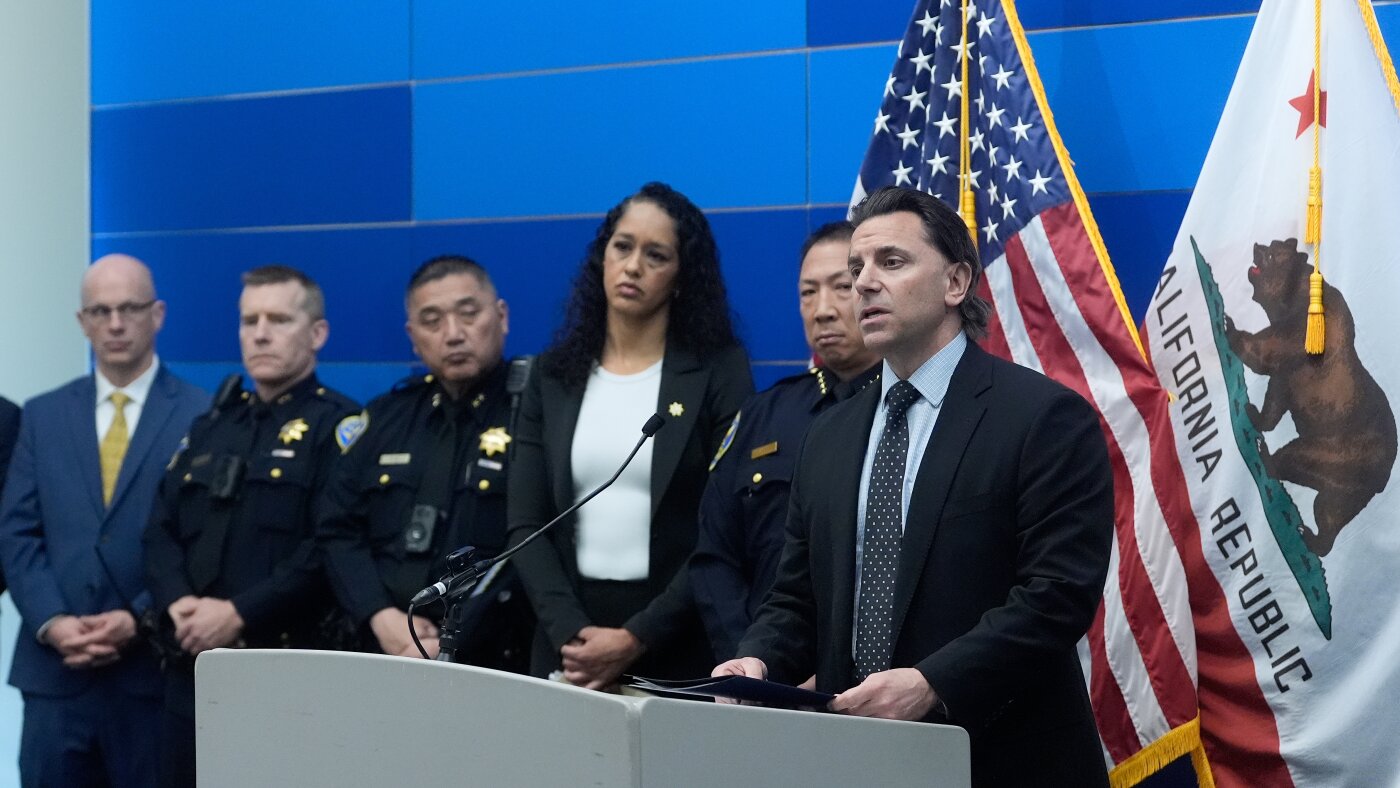
Man accused in Molotov cocktail attack of OpenAI CEO’s home charged with attempted murder

Embattled Rep Tony Gonzales announces plans to resign amid sexual misconduct allegations
-

 Atlanta, GA1 week ago
1 teenage girl killed, another injured in shooting at Piedmont Park, police say
-

 Georgia1 week ago
Georgia House Special Runoff Election 2026 Live Results
-

 Arkansas4 days ago
Arkansas TV meteorologist Melinda Mayo retires after nearly four decades on air
-

 Pennsylvania1 week ago
Parents charged after toddler injured by wolf at Pennsylvania zoo
-
 Milwaukee, WI1 week ago
Potawatomi Casino Hotel evacuated after fire breaks out in rooftop HVAC system
-

 Austin, TX7 days ago
ABC Kite Fest Returns to Austin for Annual Celebration – Austin Today
-

 World1 week ago
Zelenskyy warns US-Iran war could divert critical aid from Ukraine
-

 World1 week ago
Indonesia receives bodies of peacekeepers killed in southern Lebanon