Tennessee
TN school districts set for funding cut under Trump’s new SNAP rules


The real reason we have an Education Department
The Education Department was created to level the field. Here’s why students with disabilities and marginalized communities still depend on it today.
If lawmakers don’t update how the state determines children to be low-income, Tennessee school districts could see tens of millions less K-12 funding because of new restrictions on federal food programs in President Donald Trump’s Big Beautiful Bill.
New, stricter eligibility requirements for SNAP and TANF implemented in the Trump Administration’s landmark budget bill have caused hundreds of Tennessee children to no longer automatically qualify for state “economic disadvantage” funding for K-12 schools.
Cocke County in upper East Tennessee lost the supplemental funding for more than 340 students this year, Director of Schools Manny Moore told a House committee last month.
That will mean a budget cut of more than $500,000 for the Cocke County Schools this year.
“That’s a pretty big loss for our rural distressed district of 4,000 students,” Moore told lawmakers.
Tennessee funds public schools by providing $7,295 in base funding for each K-12 student and adding more funding for certain learning needs, including for low-income students. Schools receive $1,824 each year from the state for each student determined “economically disadvantaged.”
The state considers students “economically disadvantaged” only if they are actively participating in federal food aid programs like SNAP and TANF. Tennnessee has some of the strictest restrictions around SNAP in the country.
Unlike many other states, Tennessee does not use Medicaid enrollment to qualify a student for economic disadvantage funding, even though income requirements are the same as for the federal feeding programs that do qualify students.
Because of new federal restrictions and Tenessee’s uncommonly narrow qualifyers, thouands of students who are income-eligible for supplemental K-12 funding do not recieve it.
“These kiddos were devastated that they no longer qualified, but their income did not change,” said Rep. Gloria Johnson, D-Knoxville, a veteran school teacher.
Funding all low-income children that qualify for the supplemental dollars would cost the state an estimated $83.7 million, according to fiscal analysts.
Gov. Bill Lee’s last two budgets have included “hold harmless” funding to continue stable funding levels as school districts navigate drops in “economically disadvantaged” students because of expiring federal pandemic-era waivers. The state funded 75% of the funding lost because of drops in economic disadvantage qualification in 2026, and Lee is proposing a 100% continuation of that funding this year.
“The Lee Administration is committed to ensuring Tennessee students, especially those in our most vulnerable communities, have access to a quality education,” said Lee spokesperson Elizabeth Johnson.
“The Governor welcomes the General Assembly’s partnership in identifying long-term solutions to ensure every Tennessee student continues to receive the resources they need to succeed,” she added.
A legislative fix?
Two Republicans are working to add Medicaid participation as a qualifier for Tennessee’s K-12 funding formula so that all students who financially qualify for state “economic disadvantage” funding can actually receive it.
While income limits are the same for the state’s Medicaid program, TennCare, participation in TennCare doesn’t automatically qualify a student for that extra K-12 funding.
House Bill 2485 would change that.
“We’re missing a lot of kids who should qualify but don’t actually participate in SNAP and TANF, many of them however do participate in Medicaid,” said sponsor Rep. Kirk Haston, R-Lobelville.
There were about 630,522 children ages 5 to 18 enrolled in TennCare as of July, according to state fiscal analysts.
Right now, the bill is stuck behind the state budget.
Not making the change could take a financial toll on school districts as soon as this year.
“Without this change each one of us has a school system in our district that would lose about $2 million,” Haston told the House Finance Committee last week.
In Hancock County, for example, 43% of the county’s 842 students are considered economically disadvantaged, but 76% are enrolled in TennCare. Were the state to certify students’ incomes by TennCare enrollment, the district could qualify for $1.1 million in “economic disadvantage” funding. The district received $711,379 last fiscal year, according to an analysis by EdTrust.
Schools in Sevier, Bedford and Roane counties could each see losses of more than $1 million this year. Meigs County is projected to lose $420,000, while Obion and Wayne counties are set to lose $300,000 each.
Tennessee’s distressed counties could see a combined loss of about $3.3 million, according to an analysis by EdTrust.
“These schools are not looking for additional funding. They’re just looking for the funding that they were promised at the very beginning that was already there, that is leaving,” Haston said. “This is a make-whole bill in my opinion.”
House Finance Chair Ryan Williams, R-Cookeville, noted this month that Haston’s proposal “is super expensive.”
But much of it is funding the state was already required to spend based on the TISA formula before the federal changes disqualified participants.
Do Republicans support the measure?
Not all Republicans are on board. Reps. Lee Reeves, R-Franklin, and Gino Bulso, R-Brentwood, voted against the measure in the House Education Committee.
Bulso said Tennessee’s K-12 funding structure, the Tennessee Investment in Student Achievement formula, already has “some unfairness.”
“The area that I represent is perhaps the leading LEA in terms of being disadvantaged by the allocation of TISA funding,” Bulso said.
Middle TN districts could see some of the biggest losses
According to a database created by EdTrust, Middle Tennessee districts would be some of the most impacted. Here’s what each district is projected to gain if TennCare enrollment is added as a financial qualifier for “economic disadvantage” funding:
- Davidson County – $21.1 million
- Williamson County – $5.3 million
- Montgomery County – $7.1 million
- Cheatham County – $853k
- Dickson County – $2.5 million
- Rutherford County – $15.5 million
- Wilson County – $4.3 million
- Maury County – $3.7 million
Vivian Jones covers state government and politics for The Tennessean. Reach her with questions, tips and story ideas at vjones@tennessean.com.



Tennessee
Tennessee Man Reaches For Item At Lowe’s. Then He Runs Into A Surprising New Touchscreen: ‘No Need To Wait’

Anyone who’s ever needed something locked behind a glass door (or some other security measure that makes it hard to just grab an item off the shelf) knows the drill. You try to click the button to call an employee, wait for an employee to show up, hope the employee isn’t busy with someone else first, and maybe even leave without your item because you’re tired of waiting or just frustrated at the friction of the shopping experience.
One Tennessee electrician went to grab wire for a job and expected the usual wait. Instead, he found Lowe’s had quietly changed the system to seemingly give customers more autonomy in the store.
Lowe’s Gets a Security Upgrade
In a trending video with more than 55,000 views, content creator and contractor Tim, of Tri Cities Electric (@tricities.electric), stopped at a Lowe’s in Tennessee to pick up some wiring for a job.
“One of my least favorite things about coming to Lowe’s was that I’ve obviously got to buy wire, and they keep it behind these cages,” he says, showing what look like wire doors on the retailer’s shelves.
This time, though, there was a touchscreen mounted right on the metal doors, so Tim tried it out.
“We simply click ‘use your cell phone,’ agree to whatever that is, put your phone number in,” he said.
A code landed on his phone seconds later, and he typed it back into the screen.
The screen accepted it, and two electromagnets holding the cage shut released on their own. No waiting for an associate required.
“Case is now unlocked. Got two electromagnets up here; they release. Now, I have all the access in the world to this. How neat. Good job, Lowe’s,” he said.
“No need to wait for wire at @Lowe’s anymore!” he wrote in the caption.
Why Stores Are Locking Everything
The National Retail Federation says that retail theft costs the industry about $95 billion across sectors, and stores have responded by locking down anything with resale value, Business Insider reported.
Visits by an Insider reporter to Walmart, Target, and Home Depot found the same pattern everywhere: power tools sealed in cages, spider-wrap alarms clipped onto smaller items, and security cameras trained on entire aisles.
Lowe’s specifically has cages on power tools, alarms on display units, and—as of last year—some tools that won’t even power on until they’re activated at checkout.
Retail Theft: Is It That Bad?
The “retail theft crisis” narrative is a lot messier than it sounds. Retail executives spent a solid year sounding alarms about “shrink”—inventory loss from theft, employee error, and accounting mistakes combined—but by 2024, several major chains were quietly walking those claims back, according to NPR.
Walgreens’ own finance chief admitted the company might have “cried too much” about theft the year before. And the industry’s go-to shrink figure, sourced from a National Retail Federation survey, has barely moved over the past decade—hovering around 1.4% to 1.6% of sales for years.
That hasn’t stopped the security theater, though: Nearly a third of shoppers say locked-up products make them think worse of a store, and more than a quarter say it’s enough to make them walk out without buying anything.
‘Better Than Home Depot’
The comments filled up with a mix of impressions about the tech.
“So then what’s the point of the cage….” a top comment read.
“Bout time because finding one of them associates isn’t easy,” a person said.
“Until someone leaves it open….” another wrote.
“And now you will be all kinds of marketing text or in that permissions agreement you gave them access to your contacts and to install software,” a commenter added.
Motor1 reached out to Tim via email and Instagram direct message for comment. We’ll be sure to update this if he responds.

SCOTT COUNTY, Tenn. (WVLT) – The Tennessee Highway Patrol is investigating a deadly crash involving a UTV and a train in Scott County.
According to THP’s preliminary report, the crash happened Saturday off of Route 27 near Helenwood just before 5 p.m. when the driver of the UTV, identified as 52-year-old Ronnie Lloyd, “failed to stop” at the railroad crossing and hit a moving train.
Lloyd was not wearing a helmet at the time of the crash, THP said.
Additional information was not released.
Copyright 2026 WVLT. All rights reserved.

Four-star safety Ta’Shawn Poole will announce his commitment between Tennessee, Georgia and Florida State on July 17, according to Brendan Sonnone of 247Sports.
The 6-foot-2, 185-pound prospect is from Howard High School in Macon, Georgia. 247Sports ranks him as the No. 4 safety in the class and No. 6 player in Georgia.
Tennessee offered Poole a scholarship on Feb. 21, 2025. He has visited the Vols three times, including an official visit on June 5.
UNLV was the first school to offer Poole a scholarship on Aug. 1, 2024. Other Power Four schools to offer him scholarships include Louisville, Georgia Tech, Iowa State, Auburn, Missouri, Miami, North Carolina State, Kentucky, Nebraska, Florida, Michigan, Ohio State, Oklahoma State, North Carolina, Penn State, Ole Miss, Indiana, Mississippi State, Wake Forest, Alabama, Virginia Tech and Clemson.
Tennessee has 16 commitments in its 2027 football recruiting class: linebacker JP Peace, offensive tackle Princeton Uwaifo, quarterback Derrick Baker, athlete Jaden Butler, wide receiver KeSean Bowman, defensive back Carter Jamison and defensive back Brandon Leavell, tight end Malik Howard, defensive lineman Christian Mays, cornerback Dylan Haley, linebacker Kenneth Simon II, kicker Ford Fehling, long snapper Sam McKeown, offensive tackle Q’Mari Hudson, athlete Dayon Cooper, and safety Marcus Jones.
Follow Vols Wire on Facebook and X (formerly Twitter).
-

 Illinois3 minutes ago
Our Chicago: Celebrating America’s 250th birthday in Illinois
-

 Indiana6 minutes ago
Fever vs. Aces Prediction, Odds, Best WNBA Prop Bet for Sunday, July 5
-

 Iowa11 minutes ago
2027 Recruiting Class Shaping Up To Be Special One for Iowa State Football
-

 Kansas18 minutes ago
2026 K-State Football Early Opponent Preview, Game 6: Kansas
-

 Kentucky18 minutes ago
Recovery operations underway to find possible drowning victim on Kentucky Lake | NewsRadio 1230 AM/99.3 FM | Hopkinsville’s News Leader
-

 Louisiana26 minutes ago
Man killed, officer injured in shooting in alleyway near Sand Bar in downtown Shreveport
-
Maine33 minutes ago
People We’ve Lost
-
 Maryland36 minutes ago
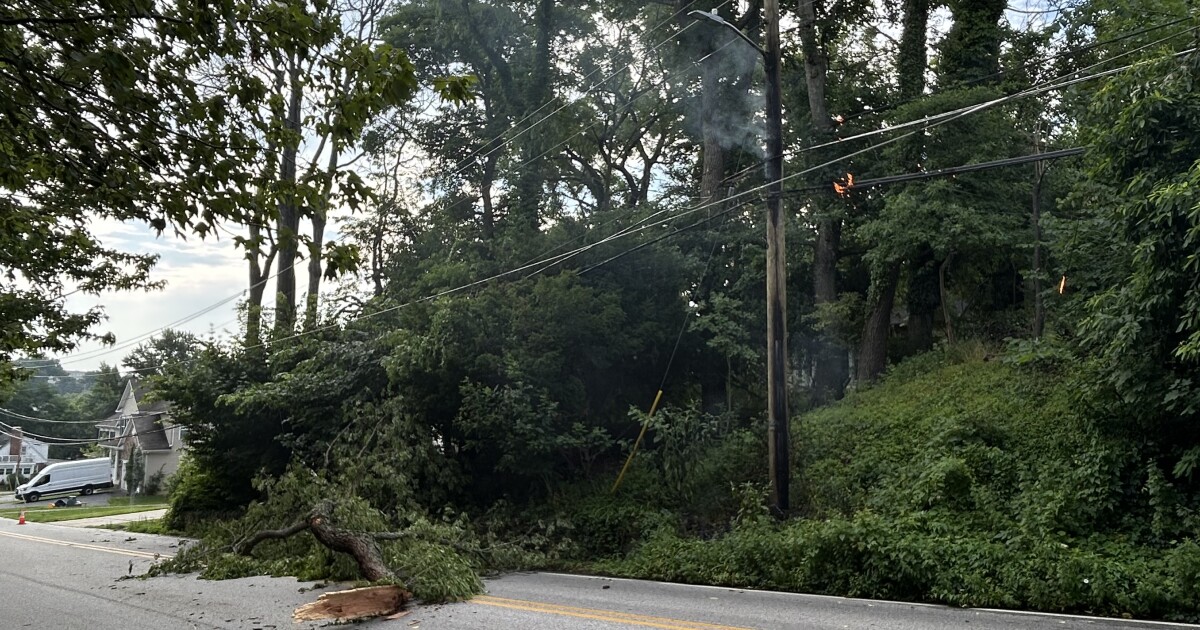
BGE working to restore power to over 40,000 customers after July 4th storms move through central Maryland


