


Related
South
Philippine schools cancel classes as major heat wave spreads across Southeast Asia

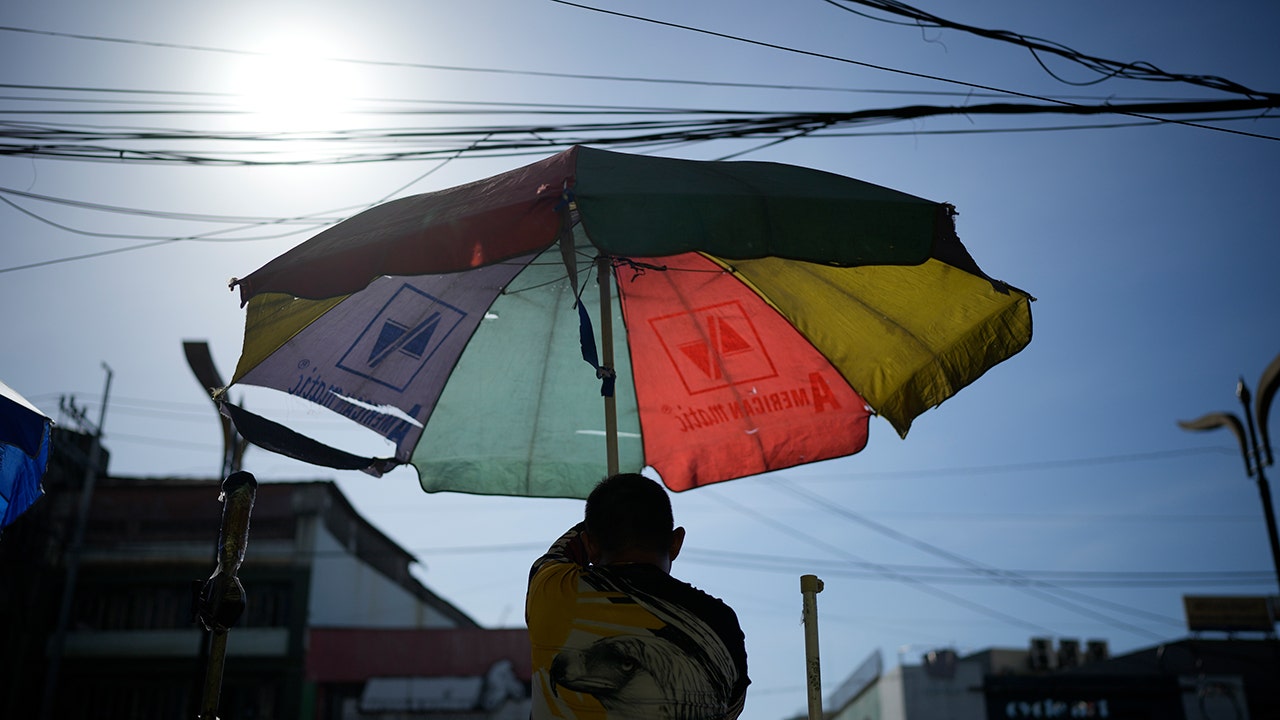
Southeast Asia was coping with a weekslong heat wave on Monday as record-high temperatures led to school closings in several countries and urgent health warnings throughout the region.
Millions of students in all public schools across the Philippines were ordered to stay home Monday after authorities canceled in-person classes for two days. The main advice for everyone, everywhere has been to avoid outdoor activities and drink plenty of water, but the young and the elderly were told to be especially careful.
Cambodia this year is facing the highest temperatures in 170 years, Chan Yutha, a spokesperson for the Ministry of Water Resources and Meteorology, told The Associated Press on Monday. His agency has forecast that temperatures in most parts of the country could reach up to 109 degrees Fahrenheit this week.
CDC WARNS OF EXTREME HEAT DANGERS AMID ‘RECORD-BREAKING HIGH TEMPERATURES’
Myanmar’s meteorological department said Monday that seven townships in the central Magway, Mandalay, Sagaing and Bago regions experienced record-high temperatures. Several towns in Myanmar last week were on lists of the hottest spots worldwide.
Schools in the Philippines are canceling classes as temperatures reach record-breaking numbers during major heat wave. (AP Photo/Aaron Favila)
Chauk township in Magway, historically the country’s hottest region, saw Myanmar’s highest temperature at 118.8 degrees Fahrenheit, breaking the previous record of 117.3 degrees Fahrenheit set in 1968.
The Philippines is among the nations worst affected by the sweltering weather in Southeast Asia, where the intense tropical summer heat worsened by humidity forced class cancelations in recent weeks and sparked fears of water shortages, power outages and damage to agricultural crops.
The Department of Education ordered students in more than 47,000 public schools to switch to home-based and online learning due to health risks from record-high temperatures and a three-day strike starting Monday by drivers who oppose a government program they fear would remove dilapidated passenger jeepneys from streets.
Large crowds have sought relief in air-conditioned shopping malls in Metropolitan Manila, the congested capital region of more than 14 million people where the temperature soared to 101.84 Fahrenheit Saturday, surpassing the record set decades ago, according to weather officials.
PHILIPPINES STRUCK BY DEEP 6.2 MAGNITUDE EARTHQUAKE
In Thailand, temperatures have topped 111 F in some areas in the northern parts of the country, while the capital Bangkok and metropolitan areas have seen temperatures go above 104 F. The forecast from the Meteorological Department said this year’s summer, which usually lasts from late February to late May, is expected to be 1-2 degrees hotter than last year, and rainfall will be lower than average.
Thailand’s Department of Disease Control said last week that at least 30 people have died from heatstroke so far this year, compared to 37 for all of last year.
Scientists have said the number of heat-related deaths around the world has been rising significantly in recent years along with temperatures, but the trend in Asia this year so far is unclear, partly because of the question of how to classify deaths that appear to be heat related.
At least 34 people have fallen ill due to the extreme heat in the Philippines so far this year, including six who died. The Department of Health said it was verifying what exactly caused the deaths.
Media in Bangladesh reported that in a five-day period earlier this month, at least 20 people died from heatstroke.
CLICK HERE TO GET THE FOX NEWS APP
In Cambodia, however, officials indicated there were few if any heat-related fatalities. The Khmer Times, an online news platform, quoted the head of the Health Department of Phnom Penh, the capital, saying there had been no heat-related deaths or collapses.


How much do you earn? And how far does that paycheck really go?
In Dallas, a $100,000 salary is a figure that’s more than double the area’s individual median income, but nevertheless a useful benchmark for the region’s burgeoning business community. However — once taxes and the local cost of living is factored in — it has the effective purchasing power of around $80,000 according to a new financial report.
Consumer-focused fintech site SmartAsset worked the numbers on the country’s 69 largest cities, determining the “estimated true value of $100,000 in annual income” in each location by measuring federal, state and local taxes as well as local cost of living data, including on housing, groceries and utilities.
It used its own proprietary figures, as well as information from the Council for Community and Economic Research.
Despite recent research suggesting North Texas has lately been losing some of its famous economic advantage — a major factor behind the region’s explosive growth — Dallas actually fared relatively well in SmartAsset’s analysis. Of the 69 cities, Dallas’ effective purchasing power, of $80,103 on the $100,000 salary, tied with Nashville to rank 22nd highest.
Like many cities in the report, Dallas also actually saw a year-over-year effective salary bump, likely because of slightly lower effective tax rates and living costs that have hewed closer to the national average. In 2024, the value of a $100,000 salary in Dallas came out to $77,197.
Other large Texas cities fared even better than Dallas. El Paso, where SmartAsset calculated the effective value of the $100,000 salary at nearly $90,300, ranked third highest overall.
San Antonio, where the effective value was around $86,400, ranked eighth. Houston, where the figure was around $84,800, ranked 10th, and Austin, where the figure was $82,400, ranked 17th.
Oklahoma City topped SmartAsset’s value ranking, with an effective salary of around $91,900, and Manhattan, which the website considered as its own city, came in with the lowest value, at around $29,400.
Dallas’ relatively strong effective value score won’t necessarily translate to the good life: Another financial report, published in November by the website Upgraded Points, determined that even a single adult with no kids needs a pre-tax salary of at least $107,000 to live “comfortably” in the Metroplex.

NEW YORK CITY — Miami’s own Marcello Hernandez brought a piece of home to SNL for his latest performance, giving a tribute to his hometown and a special teacher in that classic Miami accent.
During his performance, Hernandez definitely brought the character of “Mr. Fronzi” to life.
The over-the-top teacher with a big heart was a character inspired by his real-life theology teacher at Miami-Dade’s private Belen Jesuit Preparatory School, Angie Fernandez.
And Hernandez even flew her up to New York City to see the skit live in person.
“When I saw the skit, I was flabbergasted. I laughed from here to eternity. It was so good,” Fernandez said. “I am so honored that he chose to imitate me. That’s the best compliment you can give somebody!”
Fernandez said that while Hernandez drove her crazy in her classroom, he was also always humble, honest and she calls him one of her favorite students.
🏠 News From Your Neighborhood
Copyright 2026 by WPLG Local10.com – All rights reserved.

A man was arrested at a concert last week after he shoved two kids off their bicycles, causing one of them to fall into a fountain, Sandy Springs police said. FOX 5 Atlanta’s Brittany Edney reporting.
Show more

World1 minute ago
Iran continues firing missiles, drones at neighboring states, with multiple interceptions reported

Politics7 minutes ago
Paxton vows he’s ‘staying in this race’ even if Trump backs Cornyn in Texas GOP clash

Health13 minutes ago
Do collagen supplements really improve skin? Major review reveals the truth

Sports19 minutes ago
Law firm fighting for women’s sports in SCOTUS battle comments on ruling possibly impacting SJSU trans lawsuit

Technology25 minutes ago
Inside Microsoft’s AI content verification plan

Florida1 year ago
Florida High School Football Rankings: Top 25 teams – Oct. 21

Connecticut2 years ago
Cleary's 21 help Le Moyne down Central Connecticut State 69-64 in OT

Oregon2 years ago
How old is Bo Nix? What to know about Oregon quarterback ahead of 2024 NFL Draft

Virginia2 years ago
99th annual Pony Swim held in Virginia

Indiana1 year ago
Indiana Members Credit Union announced as new anchor tenant at Bottleworks District
Politics7 minutes ago
Paxton vows he’s ‘staying in this race’ even if Trump backs Cornyn in Texas GOP clash

World1 hour ago
Which Kurdish groups is the US rallying to fight Iran?

News2 hours ago
Man accused of plot to assassinate Trump testifies Iran pressured him, says Biden and Haley were other possible targets

Politics12 hours ago
DHS defends McLaughlin against allegations husband’s company profited millions from ad contracts: ‘Baseless’

Videos13 hours ago
Fareed Zakaria’s takes on Trump and the collapse of nuclear stability
-

 World1 week ago
Exclusive: DeepSeek withholds latest AI model from US chipmakers including Nvidia, sources say
-

 Massachusetts1 week ago
Mother and daughter injured in Taunton house explosion
-

 Wisconsin3 days ago
Setting sail on iceboats across a frozen lake in Wisconsin
-

 Maryland4 days ago
AM showers Sunday in Maryland
-

 Florida4 days ago
Florida man rescued after being stuck in shoulder-deep mud for days
-

 Denver, CO1 week ago
10 acres charred, 5 injured in Thornton grass fire, evacuation orders lifted
-

 Massachusetts2 days ago
Massachusetts man awaits word from family in Iran after attacks
-

 Oregon6 days ago
2026 OSAA Oregon Wrestling State Championship Results And Brackets – FloWrestling