South
Newsom calls Trump's claims 'pure fiction' after president-elect points finger over California fire tragedy

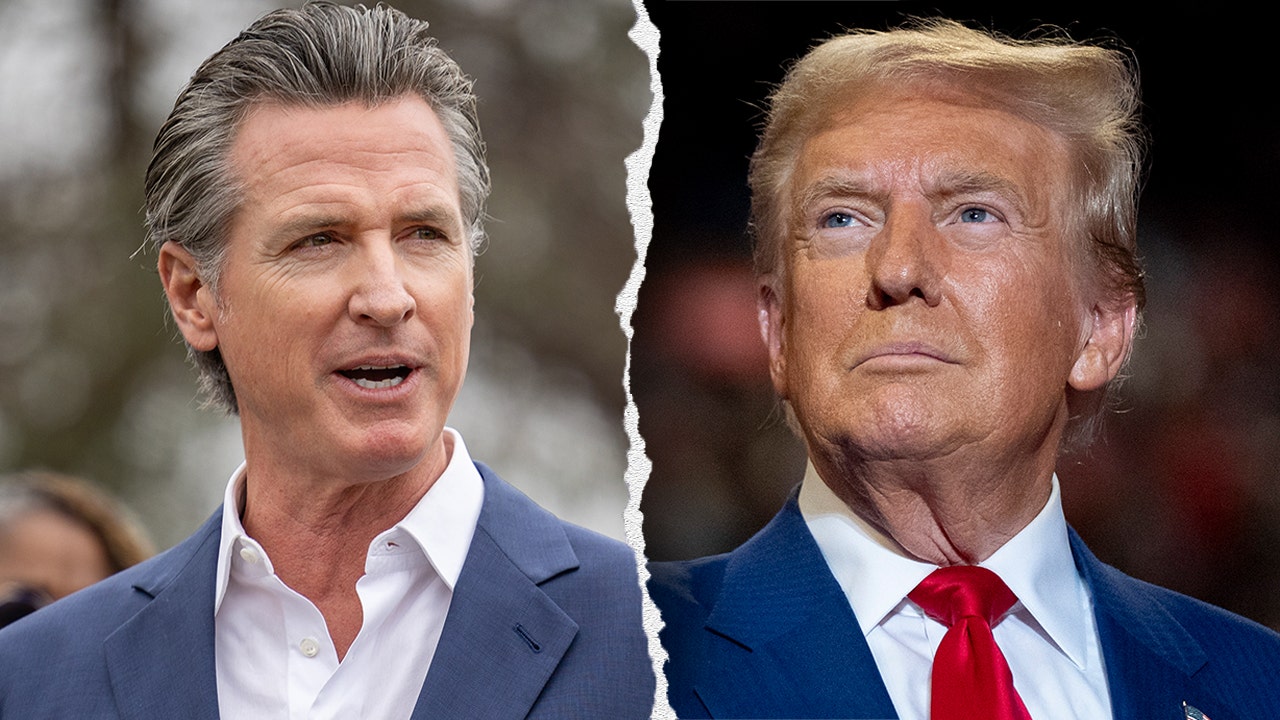
Gov. Gavin Newsom is firing back at President-elect Donald Trump for comments he made Wednesday about the response to deadly wildfires currently devastating Southern California.
Trump spoke with reporters after attending meetings Wednesday on Capitol Hill and accused Newsom of not “[doing] a good job,” but noted they “worked well together” and would again when he takes office later this month.
“It’s very sad because I’ve been trying to get Gavin Newsom to allow water to come – you’d have tremendous water up there, they send it out from the Pacific – because they’re trying to protect a tiny little fish,” Trump said. “For the sake of a smelt, they have no water… It’s a mistake of the governor, and you could say, the administration.”
Newsom’s press office released a statement on social media following Trump’s remarks saying there was a reason for not using the pumps.
PALISADES FIRE: HEIDI MONTAG, SPENCER PRATT LOSE HOME; CELEBRITIES FLEE RITZY NEIGHBORHOOD
California Gov. Gavin Newsom and President-elect Trump have clashed on various issues, including the California wildfires. (Getty/AP)
“LADWP said that because of the high water demand, pump stations at lower elevations did not have enough pressure refill tanks at higher elevations, and the ongoing fire hampered the ability of crews to access the pumps,” Newsom’s press office wrote on X.
His office added that the city used water tenders to supply water, which is a common tactic in wildland firefighting.
Newsom’s office also dismissed claims there is a water shortage.
MALIBU, CA – January 08: Firefighters continue to battle wind and fire as homes go up in flames in Malibu along Pacific Coast Highway near Carbon Canyon Road in the Palisades Fire on Wednesday, January 8, 2025. (David Crane/MediaNews Group/Los Angeles Daily News via Getty Images)
“Broadly speaking, there is no water shortage in Southern California right now, despite Trump’s claims that he would open some imaginary spigot,” Newsom’s office said.
The office posted a number of quotes from California officials saying water reliability and water supply are stable.
One of the comments said there was enough water to supply 40 million people for a year.
PACIFIC PALISADES INFERNO FORCES THOUSANDS TO FLEE CALIFORNIA HOMES; GOV. NEWSOM DECLARES STATE OF EMERGENCY
Earlier in the afternoon, Trump accused Newsom of refusing to sign a water restoration declaration and criticized him for the low fire containment.
“Let this serve, and be emblematic, of the gross incompetence and mismanagement of the Biden/Newscum Duo. January 20th cannot come fast enough!” Trump wrote on Truth Social.
Gov. Gavin Newsom (D-CA) fired back at President-elect Donald Trump Wednesday after accusations that he was mishandling the California wildfires. (Chip Somodevilla/Getty Images)
Newsom’s office said there was no such thing as a water restoration declaration.
They also noted that the supply and transport of water are unrelated.
“Trump is conflating two entirely unrelated things: the conveyance of water to Southern California and supply from local storage,” according to the post. “And again, there is no such document as the water restoration declaration – this is pure fiction.”
Still, Trump was not done with his criticism of Newsom.
In a scathing late-night post on Truth Social, Trump said the wildfires were “all his fault!!!”
Trump also called on Newsom to resign.
CLICK HERE TO GET THE FOX NEWS APP
“One of the best and most beautiful parts of the United States of America is burning down to the ground,” Trump wrote. “It’s ashes, and Gavin Newscum should resign. This is all his fault!!!”
In an interview with CNN’s Anderson Cooper earlier on Wednesday, Newsom was asked in general about Trump blaming him for the wildfire disaster.
“One can’t even respond to it. I mean… you know, people are literally fleeing. People have lost their lives. Kids lost their schools. Families completely torn apart. Churches burned down,” Newsom told Cooper. “This guy wanted to politicize it. I have a lot of thoughts, and I know what I want to say – I won‘t.”
Newsom went on to praise President Biden, saying he “didn‘t play politics.”
Biden visited a fire station Wednesday in Los Angeles alongside Newsom for a briefing from authorities on the raging wildfires.
The California wildfires, which ignited Tuesday afternoon, have already forced more than 100,000 people to flee their homes. The Los Angeles area fires are threatening at least 28,000 structures. At least five people were killed.
Newsom declared a state of emergency Tuesday after the Palisades fire grew to an unmanageable level.


FC Dallas is back out on the road tonight as they begin their nine-game road trip when they take on the San Jose Earthquakes.
Lineups are in from both sides. Let’s dive into what Eric Quill’s starting group looks like, who is on the bench, and who we believe will see minutes later on in this one.
What Changed From Last Match
As expected, we have several changes to the lineup tonight. Canadian international Jonathan Sirois earns his first FC Dallas start tonight in goal over Michael Collodi.
Outside of that swap, Herman Johansson, Santiago Moreno, Patrickson Delgado and Joaquin Valiente return to the lineup.
FC Dallas Lineup Notes:
Formation: 3-4-3
Projected lineup · subject to change
Starting XI
Bench
Big D Soccer has covered FC Dallas since 2009. If this is your first time here — stick around. Free to sign up, and members get the full tactical breakdown after every match.
Subscribe Today ->
Who should come off the bench?
Given the rotation in the lineup, I’d imagine we will see Cappis, Farrington, Sarver and Ibeahga, and Binyamin off the bench in this one.
Key Question Heading Into Kickoff
After the let down on Wednesday, can FC Dallas start the road trip off on the right foot?
This game is certainly going to set the tone for the long road trip. San Jose has been very good this season at home and Dallas hasn’t won there since 2016. If Dallas can find a way to withstand the early pressure, create some solid chances of their own on the counter attack, and limit the defensive mistakes that let them down on Wednesday, they should be able to come out with at least a point tonight.
Suspended: none
International duty: none
Season-ending injury list: Kaka Scabin (knee)
Out: Anderson Julio (Lower leg), Bernard Kamungo (lower leg)
Questionable: none
On Loan: Tsiki Ntsabeleng (Mamelodi Sundowns FC), Enes Sali (Al-Riyadh), Malachi Molina (Nashville SC), Geovane Jesus (North Texas SC), Enzo Newman (North Texas SC)
Unavailable (off-roster): Daniel Baran, Jaidyn Contreras

San Jose Lineup:
Formation: 4-2-3-1
Starting XI
How to watch
📅 Date: Saturday, May 16, 2026
⚽️ Kickoff: 7:30 PM
🏟 Venue: PayPal Park
📺 Streaming: MLS Season Pass
💬 Gameday Social: #FCDvSJE
☀️ Weather: 72, sunny

I have discussed this topic in the past, but it’s one of those things that never seems to fade in the minds of Miami Dolphins fans as a whole. As long as websites have been available on the internet, where people have been free to share any opinion they wish for the whole world to see, there has been a long-running complaint from many in our fan base that the media just flat-out disrespects or hates our Dolphins.
Many theories about why this happens center on the fact that most of the national media is based in the northeastern US. Many of the talking heads in this industry also come from places like New York, where, if they grew up as fans of one of the local teams, they probably grew up to hate the Dolphins, especially if they grew up in the 70’s or 80’s when the team was somewhere between great and at least good nearly every single season.
I, for one, have never really cared. First off, like many of you, I also grew up a diehard fan of the Miami Hurricanes football program. As such, I long ago learned to embrace the hate as I suspect it will always be there, even if most of their “reasoning” about the team being this way or another behavior-wise is tied to teams that are 30-40 years in the past. Ironically, many of those same players who were labeled as bad guys, thugs, etc., were then cheered and loved by the very same people once they joined their favorite NFL team. Funny how that works…
I can also remember a time, mostly because I am old, when this team was always good and, most years at least, a threat to get to the playoffs and do damage. In those days, and mind you, the media landscape was much different without the internet; the media was not so negative towards the team. In fact, I still have several old magazines, like Sports Illustrated, that had the Dolphins or Dan Marino on the front cover or in a positive featured story. Mind you, this was all during a time when the team was somewhat feared by other teams, not just the poster child for ineptitude.
So with that in mind, this evening’s Phinsider Question Of The Day is:
If you ever did in the first place, do you believe that the national media still shows utter disrespect for the Miami Dolphins, and if so, do you believe that this is deserved, earned, or just regional bias against a team that resides in a place that most of them wish they could actually live?
Please share your thoughts and answers in the comments section below-

ATLANTA – Zoo Atlanta was evacuated Saturday afternoon due to a hoax threat, according to Atlanta police.
What we know:
The Atlanta Police department said officers determined the call was “false.”
FOX 5’s Annie Mapp was at the zoo and spoke with visitors who said they were denied entry and told that the facility had been evacuated.
Mapp reported seeing staff members sitting outside the zoo gate and a heavy police presence in the area. K9 officers were also spotted outside Savannah Hall.
What they’re saying:
Zoo Atlanta released the following statement:
“Zoo Atlanta received a bomb threat late this afternoon. While this may be the latest in a series of unsubstantiated threats made to organizations around the U.S. in recent weeks, out of an extreme abundance of caution, all Members, guests, and Zoo team members were safely evacuated from Zoo grounds. Law enforcement responded quickly and has confirmed the Zoo is safe.”
What we don’t know:
The exact nature of the hoax has not been released.
FOX 5 is working to learn more about the situation and has reached out to officials for additional information.
This is a developing story. Check back for updates.
The Source: This story contains information from Atlanta police and Annie Mapp on the scene.
-

 New York1 hour ago
Video: Long Island Rail Road Service Suspended as Workers Strike
-

 Los Angeles, Ca1 hour ago
L.A. Jewish institution among targets of foiled terrorist attack, U.S. officials say
-

 Detroit, MI2 hours ago
Detroit Pistons release injury report ahead of Game 7 vs. Cavaliers
-

 San Francisco, CA2 hours ago
SF pet store owners prepare to fight as city plots ban on sale of live animals
-

 Dallas, TX2 hours ago
FC Dallas vs San Jose Earthquakes: Lineup notes 📝
-

 Miami, FL2 hours ago
Miami Dolphins Discussion: Media Perception Edition
-

 Boston, MA2 hours ago
Mass General Brigham Sports Medicine provides free preseason physicals for Boston Public Schools – Boston News, Weather, Sports | WHDH 7News
-

 Denver, CO2 hours ago
Forget Denver, Retire To An Underrated Utah City Near Gorgeous Canyons Instead (And It’s Affordable) – Islands