Mississippi
Five Reasons Why Arkansas Will Win at Mississippi State


Arkansas’ typically tough schedule included seven games against ranked teams. Silly as it may sound, today’s tilt against the school at the bottom of the 16-team SEC standings might be the most important outcome of the season.
Lose, and it’s not just a depressing ride home to Fayetteville. The Hogs would face steep odds just to win half their games to meet that seemingly low floor of six wins to qualify for a nondescript bowl game.
Win, and Arkansas coach Sam Pittman breathes a sigh of relief. Beating Mississippi State is far from a given, though.
The Razorbacks have been up and down, good then bad. A win gives the Hogs a 5-3 record, 3-2 in the SEC. It would also set them up to complete the sweep of Mississippi with another victory next week in Fayetteville against No. 18 Ole Miss.
That would be a small taste of Hog heaven for fans. Arkansas is favored by a touchdown but there are several scenarios where the ‘Dogs beat the Hogs.
The 11:45 a.m. kickoff usually favors the visiting team, so everyone know long before dinner if the Razorbacks found a way to rebound from last week’s disappointing performance. There are those who insist Mississippi State will win, that the Hogs will overlook the weakest SEC team they’ll play.
There are a few compelling arguements that Bulldogs will win. Here’s how it could happen.
Reason 1:
Messing with an angry dog is always dangerous. Mississippi State is 1-6 overall, 0-6 in the SEC and loser of six straight.
Obviously, they’re a terrible football team waiting to be drubbed again, right? Not exactly.
The Bulldogs played Georgia within 10 on the road (41-31) two weeks ago and lost by 10 last week at home to Texas A&M (34-24). Those guys are ranked Nos. 2 and 14.
Reason 2:
Ja’Quinden Jackson, Arkansas’ best running back, is sidelined by a persistent ankle injury. Back-up Rodney Hill was listed as questionable on Friday’s SEC report. That leaves freshman Braylen Russell, who is 6-1 and 253 pounds with agility, good feet and power. They’ll still miss Jackson, the best of the bunch.
Reason 3:
The Hogs are not to be trusted. If they don’t turn the ball over, they’ll likely win.
That’s been the case in every game this season. If they drop it or throw it away two or three times, they’re in trouble. Simple as that.
Reason 4:
Mississippi State has won the last two in series and there’s value in streaks. The Bulldogs claimed a thriller at Razorback Stadium last year, outscoring the Hogs 7-3.
The year before in Stark Vegas, the ‘Dogs romped 40-17. Recent history often means something.
Reason 5:
Cowbell, baby. Cowbell, cowbell and more cowbell.
Presumably an illegal noisemaker according to SEC rules, the MSU faithful get away with it … all game long. It is the most annoying sound imaginable.
For their sake, the Hogs have to tune it out. Ear plugs might be necessary equipment.
Quasi-Reason 6:
Arkansas kicker Kyle Ramsey won’t play because of a groin pull. Matthew Shipley is a capable replacement and some say an upgrade, but Ramsey has done most of the kicking this season.
Shipley, a transfer from Hawaii is 2-for-3 on field goals. He’s made a 51-yarder and a chip shot, but missed a 42-yarder.
So, let’s reconsider. According to Fox Sports, the Razorbacks have a 71.4% chance of winning.
Let’s say the Hogs will win. Here’s why:
Reason 1:
No turnovers. In last week’s disappointing debacle, Arkansas lost the turnover battle 0-3 in a 34-10 lopsided loss to visiting LSU.
It stands to reason they won’t be sloppy Hogs this week. Stay even on turnovers and win. Lose that battle by more than one and, well, see Reason 3 above.

Reason 2:
Taylen Green. ‘Nuf said.
If the extremely athletic, extremely fast, extremely inconsistent quarterback plays his best ball, this one’s already over. His passing proficiency has improved quite a bit since the season began.
However, if he (here it comes again) continues to turn it over, this one’s a toss-up.
Reason 3:
The Razorback defense. Almost always solid, sometimes aggressive with the blitz, occasionally sensational and stingy.
If Landon Jackson, the 6-foot-7, 280-pound wrecking ball who is increasingly harassing quarterbacks can do his thing and get help from 10 others, the Hogs could dominate and quiet the cowbells.
Reason 4:
If Braylen Russell is the second coming of Jerome Bettis. For those who don’t know or remember the Hall of Famer from Notre Dame, he starred for the Rams and was especially effective for the Steelers while running for more than 100 yards 50 times.
He helped lead the Steelers to the 2005 Super Bowl title and retired. He weighed 245, give or take a biscuit, and had quick feet. Russell could be Bettis 2.0.
Reason 5:
Big plays. Arkansas has 133 plays of 10-plus yards this season, fifth most in the country. That’s an average of 19 per game, compared to last year’s average of 14 with 168 in 12 games.
Receiver Andrew Armstrong is a big part of that stat as he’s averaging just under 108 yards per outing. Only eight FBS receivers, and two in the SEC, are averaging 100-plus yards a game.
Every stadium in the SEC makes it tough to escape with a win. However, gut instincts say the Razorbacks play well on the road for the third time and end their losing streak against the Bulldogs.
• Pair of guards send Arkansas guards into frenzy Friday against No. 1 Kansas
• Live Blog: Arkansas Razorbacks vs. Kansas Jayhawks
• Of Razorbacks’ complaints, not many coming about Devin Bale
• What Razorback Fans Can Expect Against Kansas
• Joy in coaching has returned for Calipari thanks to UA fans
• Things Hogs Fans Need to Know to Prepare for What’s Coming
• Subscribe and follow us on YouTube
• Follow HogsSI on X and Facebook


Odds of winning the Powerball and Mega Millions are NOT in your favor
Odds of hitting the jackpot in Mega Millions or Powerball are around 1-in-292 million. Here are things that you’re more likely to land than big bucks.
The Mississippi Lottery offers several draw games for those aiming to win big.
Here’s a look at July 16, 2026, results for each game:
Winning Mississippi Match 5 numbers from July 16 drawing
02-09-28-33-35
Check Mississippi Match 5 payouts and previous drawings here.
Winning Cash 3 numbers from July 16 drawing
Midday: 8-1-2, FB: 5
Evening: 8-7-4, FB: 5
Check Cash 3 payouts and previous drawings here.
Winning Cash 4 numbers from July 16 drawing
Midday: 2-0-5-6, FB: 5
Evening: 5-3-9-0, FB: 5
Check Cash 4 payouts and previous drawings here.
Winning Cash Pop numbers from July 16 drawing
Midday: 14
Evening: 10
Check Cash Pop payouts and previous drawings here.
Feeling lucky? Explore the latest lottery news & results
Story continues below gallery.
Are you a winner? Here’s how to claim your lottery prize
Winnings of $599 or less can be claimed at any authorized Mississippi Lottery retailer.
Prizes between $600 and $99,999, may be claimed at the Mississippi Lottery Headquarters or by mail. Mississippi Lottery Winner Claim form, proper identification (ID) and the original ticket must be provided for all claims of $600 or more. If mailing, send required documentation to:
Mississippi Lottery Corporation
P.O. Box 321462
Flowood, MS
39232
If your prize is $100,000 or more, the claim must be made in person at the Mississippi Lottery headquarters. Please bring identification, such as a government-issued photo ID and a Social Security card to verify your identity. Winners of large prizes may also have the option of setting up electronic funds transfer (EFT) for direct deposits into a bank account.
Mississippi Lottery Headquarters
1080 River Oaks Drive, Bldg. B-100
Flowood, MS
39232
Mississippi Lottery prizes must be claimed within 180 days of the drawing date. For detailed instructions and necessary forms, please visit the Mississippi Lottery claim page.
When are the Mississippi Lottery drawings held?
- Cash 3: Daily at 2:30 p.m. (Midday) and 9:30 p.m. (Evening).
- Cash 4: Daily at 2:30 p.m. (Midday) and 9:30 p.m. (Evening).
- Match 5: Daily at 9:30 p.m. CT.
- Cash Pop: Daily at 2:30 p.m. (Midday) and 9:30 p.m. (Evening).
This results page was generated automatically using information from TinBu and a template written and reviewed by a Mississippi editor. You can send feedback using this form.
Mississippi
Mississippi homeowners blame a noisy data center plant for sleepless nights. The mayor’s advice? “Consider selling.”

It was 4 a.m. on a Sunday and 46-year-old Jason Haley was once again wide awake.
The suburban silence that Haley had grown used to in his two decades as a resident of Southaven, Mississippi, had, for the last few months, been replaced by a constant whirring, like an airplane hovering over his home, he said.
The noise keeping Haley awake was coming from a plant powering Elon Musk’s xAI data centers in the area, according to a lawsuit filed in June against the company and its subsidiary, MZX Tech. Haley and two other Southaven residents, who live within a mile of the plant, allege in the suit that “near-constant” noise and vibrations are causing negative physical and psychological health effects.
The filing comes amid growing resistance toward data center development, with the majority of Americans opposing local construction of a data center, according to a Gallup poll published earlier this year.
Similar disputes are playing out across the country, like in Mount Pleasant, Wisconsin, where a lawsuit this month filed by residents alleges a data center emits “unreasonable and excessive noise” onto residents’ properties and in Lowell, Massachusetts, where noise from a data center’s cooling center “disrupts neighbors’ sleep,” according to an April suit.
There are more than 4,000 data centers in the U.S., according to a recent United Nations report. To power the data centers, developers are building their own plants, sometimes with little warning to residents like Haley.
Haley reached out to Southaven Mayor Darren Musselwhite about the noise in emails he shared with CBS News. In one last November, he urged Musselwhite to drive through the neighborhood “and take a listen to the constant high pitch noises.”
“I am aware of the noise and working on a solution with xAI officials,” Musselwhite had responded to Haley an hour later. “It is a problem,” he said in another email later in the day.
But soon, another sleepless night rolled around and Haley was emailing the mayor again.
“Anyone else I can reach out to?” Haley wrote to Musselwhite. “It’s almost 4 am and I can hear it from my bed. The high pitch and roaring combined is full force at this time. My ears are ringing. I can’t live in this. How was this ever approved?”
“I don’t care that this is Elon’s project”
Just north of Southaven, which sits on the Mississippi-Tennessee border, xAI’s data center Colossus went online in Memphis in September 2024. The company dubbed it “the world’s largest AI supercomputer.”
By late July 2025, Musk was announcing that another data center, Colossus 2, was set to begin operation in the area within weeks.
Days later, an announcement popped into the Facebook feeds of Southaven residents: An energy facility that had been dormant for decades will be revived to support xAI’s expanding data center operations in the area, Musselwhite said.
The post was met by a flood of comments, with some lauding the development and others expressing concern about the plant’s impact on the environment and strain on local resources.
Meanwhile, Haley started hearing sounds.
“My first thought was somebody’s got a leaf blower going all the time,” he said.
By December, the noise had become a fixture. He started getting headaches, stopped getting sleep and slipped into feelings of hopelessness and depression. The noise was inescapable, he said, and despite his best efforts to drown it out (sleeping with earplugs, getting a box fan for white noise), it continued to drone on.
So Haley began speaking up — at city government meetings, on Facebook and through TikTok, where he posts videos of himself measuring the noise with a sound meter. He later became involved in a grassroots coalition called Safe and Sound, drawing awareness to concerns surrounding xAI’s undertakings in the region.
The “activist” label is one he’s reluctantly accepted.
“I’ve never been into any kind of activism, never really kept up with politics a whole lot,” he said. “I’m just a guy that has a problem with this noise, and started speaking out and trying to raise awareness.”
When he emailed Musselwhite about the noise again in December, his message came with a disclosure: “I am not a republican or democrat, I don’t care that this is Elon’s project. I didn’t know whose it was when I started complaining about the noise that started in August.”
Musselwhite responded a few days later.
“As I mentioned to you in the public meeting, you seem to be a reasonable person,” he said. “I will give you some unsolicited advice from an older man, be careful with whom you associate so you don’t damage your credibility.”
By January, xAI was expanding its footprint with a third data center in Southaven, MACROHARDDR. As residents like Haley continued pushing back online and in city meetings, Musselwhite had a new message.
Southaven, he said in a Facebook post, was “under attack by all who choose to oppose Elon Musk because of his high-profile political stances.” He warned residents to “beware of the smokescreen of radical politics.”
In his emails to Haley, Musselwhite continued to acknowledge the noise as a problem.
“The noise issue is one of my highest priorities and I have been in detailed discussions with xAI and many independent professionals to resolve this,” he wrote in March.
But in the same email, he offered Haley more advice: “I know they want houses for employees, so you may want to consider selling your home.”
CBS News made multiple attempts to speak with Musselwhite and did not receive a reply.
Migraines, ringing ears and sleepless nights
Moving isn’t Haley’s preference, but he said he is in the financial position to do so if he chooses.
That’s not the case for everyone.
A little over a decade ago, 31-year-old Taylor Logsdon bought a home for her growing family in Southaven and began building her life around it.
“We loved it here,” she said. “It was peaceful, it was quiet, didn’t have to worry about nothing.”
But that was before the noise, so loud, she said, that it sometimes shakes her home. Logsdon, who is also involved in the Safe and Sound coalition and is suing xAI with Haley and one other Southaven resident, said she has experienced migraines and anxiety as a result of the noise.
She said she has persistent ringing in her ears and so do her children. A full night of sleep has become rare for the family.
“I would move tomorrow if I could,” she said, adding that she needs to save money before she can afford to move.
Her children, all under the age of 13, are having trouble staying awake at school.
“One of them is extra angry all the time — never, never has been that way, but he’s just irritable like all the time,” she said. “I feel like I’m snappier too.”
xAI spent millions of dollars trying to mitigate the sound with a sound wall, a berm and evergreen trees, Musselwhite said in a February Facebook post.
“It still hasn’t helped. It hasn’t even put a dent in it,” Logsdon said.
People living in areas where there is “constant humming or buzzing” report headaches, stress and sleep disturbance, said Dr. Samoon Ahmad, a clinical professor of psychiatry at New York University.
A 2023 study found that environmental noise exposure can lead to adverse associations for cardiovascular disease and mortality, diabetes, hearing impairment, neurological disorders and adverse reproductive outcomes.
“People think of annoyance as an abstract term,” Ahmad said. “It’s not an abstract term because it has real physiological ramifications.”
The World Health Organization recommends less than 40 decibels of annual average nighttime noise outside of bedrooms to prevent adverse health effects. Haley has recorded noise levels over 60 decibels as late as 10:15 p.m. from his Southaven backyard.
Musk’s Memphis
Even before Logsdon and Haley decided to take action against xAI, Musk’s growing presence in the Memphis area garnered attention from advocacy groups over health and environmental concerns.
The National Association for the Advancement of Colored People filed a lawsuit in April against xAI claiming the Southaven plant emits “significant” amounts of harmful pollutants from its 27 gas turbines, which has since increased to 59, according to a court filing reviewed by CBS News. The NAACP has also filed an appeal to challenge the Mississippi Department of Environmental Quality’s decision to issue an air permit allowing the Southaven plant to operate 41 permanent methane gas turbines. An independent study found their operation would increase air pollution in an area already grappling with a disproportionate number of asthma-related emergency room visits.
CBS News has reached out to xAI for comment.
Musk’s investment in the latest Southaven data center brings his company’s contribution to the area to $20 billion, according to the office of Mississippi Gov. Tate Reeves. The governor called it “the largest economic development project in Mississippi’s history.”
Musk’s financial footprint has also extended beyond the data centers — MZX Tech donated over $1.3 million to the Southaven Police Department in February, according to the donation agreement obtained by CBS News, and has offered half-priced Starlink for those in the Memphis region.
But Logsdon says the cost to her and her family’s health has her wondering why it feels like her city is willing to “hurt the few to get the benefits.”
“We were not a failure town before,” Logsdon said. “It’s not like our economics were terrible here.”
Southaven had a median household income of over $70,000 in 2024, according to the U.S. Census Bureau — $20,000 more than the state average.
Logsdon, currently a stay-at-home mom, will be searching for work this fall so she and her husband can start saving up to move away from the plant. For now, her goal is a full night’s sleep.
“I hope that my family can go back to having our normal,” she said. “Being able to sleep at night, being able to enjoy my backyard, being able to go swimming.”

GPS data from the Mississippi Department of Marine Resources, obtained by CBS News, tracks the movements of the boat that carried Nolan Wells to Horn Island on July 4. Wells was found dead after going missing following an outing on the island.
The vessel left a dock at approximately 9:56 a.m. that morning and arrived at Horn Island at 11:14 a.m. CBS News has previously reported that Wells was not on the boat when it departed the island.
According to the GPS data, the boat left Horn Island at 4:31 p.m. and returned to its original departure dock. It then traveled into Fort Bayou around 5:52 p.m. before returning to the dock at 6:06 p.m.
Later that evening, the boat went to the Fort Bayou boat launch at 7:19 p.m., according to the MSDMR report. From there, it traveled over land — presumably towed by a vehicle — to the Biloxi, Mississippi, residence of the boat’s owners.
The MSDMR report indicates that the boat’s owner, his mother and one other individual who was reportedly with Wells on the day of the incident have cooperated with the investigation.
The department’s report ends on July 5, following notification that the Jackson County Sheriff’s Office would take over as the lead investigative agency.
Wells, 18, was last seen on July 4 on Horn Island, where he had taken a boat trip with friends to celebrate the holiday, officials said. Wells traveled to the island with his friends but did not return to the mainland with them that afternoon, Jackson County Sheriff John Ledbetter has said.
He was last seen on the island at 3 p.m., according to attorney Ben Crump’s office. His mother reported him missing later that night and a search began.
His body was discovered July 6 off the coast of the island, which is about 10 miles south of the Mississippi mainland, following a search that involved the U.S. Coast Guard, the Mississippi Department of Marine Resources and the National Park Service.
Dental records confirmed the body was Wells, Jackson County coroner Bruce Lynd told CBS News. An autopsy took place on July 7, Lynd said, but the results were not immediately made public. Wells’ body was flown to Washington, D.C., for an independent autopsy, according to Crump.
Wells’ parents have said they don’t believe their son would’ve stayed behind on the island by choice when his friends left by boat.
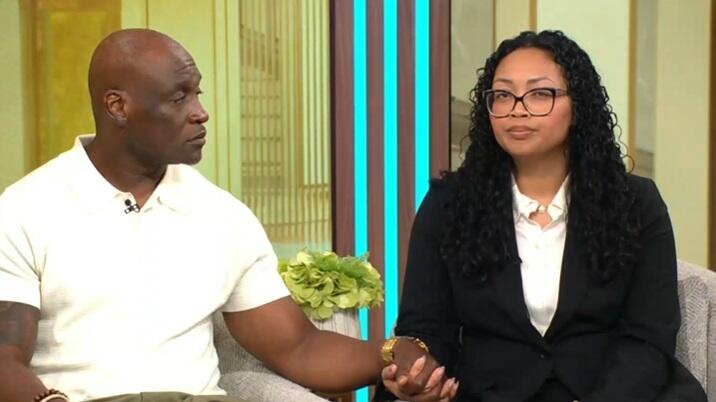
“No, he wouldn’t. Nolan always stays with the group,” Elmore Wonsley, Nolan’s father, told “CBS Mornings” last week. “If you be with me, you come back with me. So that I don’t understand, and with me being a parent, if I was in that situation, I would have told them, ‘You’re going to get back on this boat with me because I don’t want to answer to your parents if something happens to you.’”
When directly asked if he believed Nolan was left behind on the island, his father responded, “Yes. I don’t believe he decided to stay on the island by himself. It just doesn’t — that’s not his character.”
Wells went to Ocean Springs High School and was a rising sophomore on Southwest Mississippi Community College’s football team. Crump said Wells was a good swimmer.
-
 Lifestyle13 minutes ago
‘I Want You to Be Happy’ takes on modern-day dating
-

 Technology25 minutes ago
Apple’s plot to crush OpenAI
-

 World31 minutes ago
Leaked Iran report finds record public anger as regime focuses on holding power
-

 Politics37 minutes ago
White House dishes out new election security jab over Olive Garden’s pasta pass ID policy
-

 Health43 minutes ago
Doctors warn your ‘stomach bug’ may actually be a parasite that’s harder to detect
-

 Sports49 minutes ago
AEW star Kenny Omega blasts social media user over Charlie Kirk comment
-

 Technology55 minutes ago
New bank scam laws could stop suspicious payments
-
 Business1 hour ago
Environmental groups press to halt Imperial Valley lithium venture

