Louisiana
VIDEO: FBI shares footage showing New Orleans terrorist in French Quarter before deadly rampage • Louisiana Illuminator


NEW ORLEANS – The FBI has released video — some of it obtained from terrorist Shamsud-Bin Jabbar — that shows him in the French Quarter in the hours before he killed 14 people and injured dozens more, and his view as he rode a bicycle through the historic district exactly two months earlier.
The footage comes from French Quarter surveillance cameras and scenes Jabbar recorded on Meta glasses in October, during what the FBI said was the first of two trips he took to New Orleans before his early New Year’s Day massacre.
Authorities recovered three homemade bombs they said Jabbar placed in small coolers, including two that he’s seen on video placing on Bourbon Street. One of the explosive devices was found in the pickup truck he drove after he sped through a crowd of pedestrians and was killed in a shootout with police.
Also recovered from the truck was what the Bureau of Alcohol, Tobacco and Firearms considers a remote detonation device. Jabbar, a 42-year-old IT professional and U.S. Army veteran from Texas, could have used it to set off the bombs had New Orleans police not responded soon enough, ATF Special Agent in Charge Joshua Jackson said during a news conference Sunday.
The FBI compiled all of the footage it shared into a single video that’s nearly four minutes long. The timestamps that follow detail the content of the segments:
0:00 – Jabbar recorded footage on Meta eyeglasses Oct. 31 during his bike ride in the French Quarter and Canal Street. The FBI said Jabbar was wearing Meta glasses early Wednesday, but there is no indication he used them to record or live stream his attack.
1:36 – Jabbar recorded himself wearing Meta glasses looking into a mirror at a home investigators say he rented during his October trip to New Orleans.
1:41 – French Quarter surveillance video recorded at 1:53 a.m. Wednesday shows Jabbar with a blue cooler that investigators said had an improvised bomb inside. The FBI said Jabbar left it at the intersection of Bourbon and St. Peter streets, and it was found a block away at Orleans Street after “multiple unknowing Bourbon Street visitors grabbed the cooler’s handle and moved it.”
2:20 – At approximately 2:20 a.m., surveillance footage shows Jabbar leaving the second explosive device inside a “bucket-style” cooler at Bourbon and Toulouse streets. The video shows him standing next to a trash can receptacle as visitors walk and dance around him.
At one point, Jabbar is seen waving his hand while looking down Bourbon Street, then he walks away from the cooler. Investigators did not address who or what Jabbar might have been waving to or why during Sunday’s news conference.
2:42 – A still image from surveillance video clearly shows Jabbar walking down Governor Nicholls Street. The FBI said he was returning to his truck to pick up the second cooler. The brown long coat he is seen wearing was recovered from the truck at the scene of the deadly attack.
3:00 – Jabbar is seen on surveillance video walking up and down Governor Nicholls Street.
Federal investigators provided an update on their continuing investigation Sunday, saying they still believe Jabbar acted alone. However, they continue to look into trips they say Jabbar took to Egypt and Canada over the summer. He also traveled to the Atlanta and Tampa, Florida, areas.
Lyonel Myrthil, the FBI’s special agent in charge of its New Orleans office, said investigators are trying to determine who Jabbar might have come into contact with during his travels.
Mayor LaToya Cantrell said she has asked the Biden administration to provide an expert who can assess the city’s terrorism vulnerabilities ahead of the Super Bowl, which takes place Feb. 9 at the Superdome, and Mardi Gras.
Carnival season officially begins Monday and culminates on Fat Tuesday, March 4.
YOU MAKE OUR WORK POSSIBLE.



Louisiana
Red, Rock & Blue: Registration deadline approaches for tournament benefitting La. military charities

BATON ROUGE, La. (WAFB) – The Red, Rock & Blue charity softball tournament to benefit Louisiana military charities is quickly approaching.
SLOW-PITCH SOFTBALL TOURNAMENT
- April 17 – April 19
- BREC Oak Villa | Baton Rouge
Each team will get a three-game guarantee. There are different divisions for different skill levels.
Team registration is open to the public. You can register a team online.
The deadline to register is Friday, April 10.
Click here for more information about the 32nd annual charity slow-pitch softball tournament.
Past tournaments have been held in July, but the 2026 tournament was moved to spring for the cooler temperatures.
Red Rock and Blue typically gives $50,000 or more to military charities like The Blue Star Mothers of Louisiana and Gulf Coast Veterans each year.
The Caterie Reunion IV to benefit Red Rock and Blue is also set for August 15 at The Texas Club in Baton Rouge. More information on that event, including the musical lineup and ticket sales, is coming soon.
*WAFB is a sponsor and supporter of the Red, Rock & Blue non-profit organization.
Click here to report a typo. Please include the headline.
Click here to subscribe to our WAFB 9 News daily digest and breaking news alerts delivered straight to your email inbox.
Watch the latest WAFB news and weather now.
Copyright 2026 WAFB. All rights reserved.

Retired U.S. Air Force Col. Mark T. Guillory, second from right, speaks to fellow members of Save My Louisiana and, on the far left, State Treasurer Dr. John Fleming on Thursday, Nov. 21, 2025, outside the 19th Judicial District courthouse in downtown Baton Rouge. The group sued the state of Louisiana to challenge a law that allows companies seeking to do carbon capture to store the gas under private land. Fleming, a critic of carbon capture who is running for U.S. Senate, was present for the news conference held immediately after the lawsuit was filed. Guillory, a Rapides Parish resident, is one of the plaintiffs. Gary Musgrove, president of the group, is fifth from the right.

More than a dozen people were injured when a vehicle struck revelers at a parade celebrating the Lao New Year on Saturday in rural Louisiana, authorities said.
The driver was quickly arrested and charged with impaired driving, police said.
Video shared on social media showed multiple people on the ground at the annual event in Broussard and New Iberia. The videos showed firefighters tending to one person trapped beneath the car, which wound up in a ditch along the parade route.
About 15 people were hurt, some seriously, according to the Iberia Parish Sheriff’s Office.
“Based on the preliminary investigation, this does not appear to be an intentional act,” said a spokesperson for the Sheriff’s Office, Rebecca Melancon.
Acadian Ambulance, a private ambulance company, said on social media that it responded to the emergency at around 2:30 p.m. and sent 10 ambulances and a helicopter to aid the injured. Two patients were airlifted, it said.
The Louisiana State Police said the driver, who is 57 and lived in Jeanerette, La., appeared impaired when police arrived and later tested positive for a high blood alcohol level. He was charged with impaired, negligent and careless driving and having an open container of alcohol in the vehicle.
The parade is part of a three-day New Year celebration set in the Lanexang Village, a Laotian neighborhood near New Iberia with hundreds of families near the Buddhist temple grounds of Wat Thammarattanaram.
It features Southeast Asian food, live music, a parade and other family-friendly activities attracting thousands each year.
Louisiana Gov. Jeff Landry issued a statement on behalf of himself and his wife about the incident. “Sharon and I are praying for all those affected, and are grateful for the first responders who have responded to the scene,” he said.
The festival’s organizers issued a statement on Facebook saying they were “profoundly saddened” by the tragedy. “We are praying for the victims and for their families during this difficult time,” it said.
Afternoon and evening events were canceled, but the festival planned to hold religious services Sunday, the organizers said.

Suno is a music copyright nightmare

Baby among 3 dead in holiday horror as Easter egg hunt turns deadly

GOP races to pass ICE, Border Patrol funding bill as priorities pile up, divisions emerge

5 key factors may predict stroke risk years after first event, study finds

Dawn Staley gives classy answer after Geno Auriemma question following national title loss: ‘It’s UCLA’s day’

Florida High School Football Rankings: Top 25 teams – Oct. 21

How old is Bo Nix? What to know about Oregon quarterback ahead of 2024 NFL Draft

Cleary's 21 help Le Moyne down Central Connecticut State 69-64 in OT

99th annual Pony Swim held in Virginia

Indiana Members Credit Union announced as new anchor tenant at Bottleworks District
GOP races to pass ICE, Border Patrol funding bill as priorities pile up, divisions emerge
Jet fuel crisis: Rationing triggered at four airports in Italy
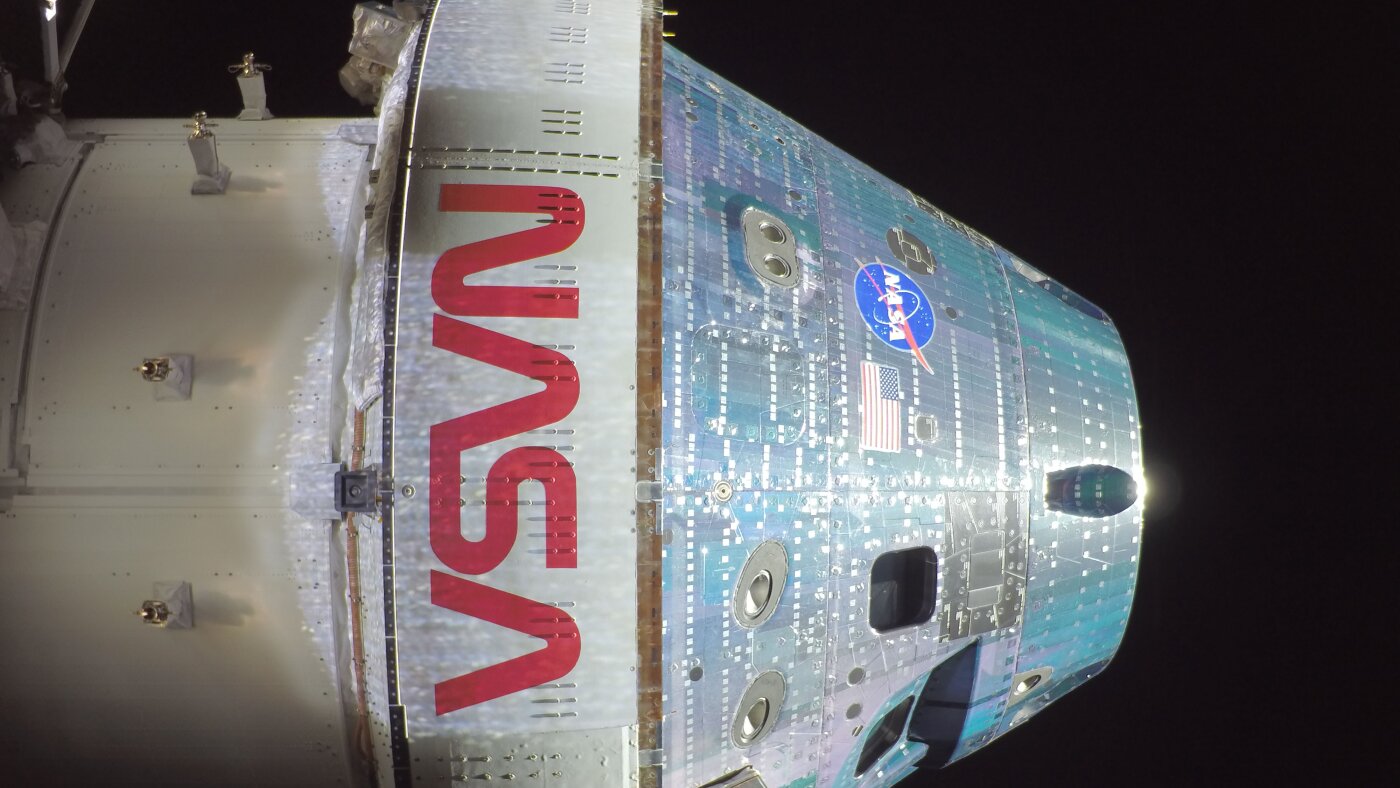
NASA’s Artemis II crew readies for Monday’s lunar flyby. Here’s what you need to know

Tax day is next week: Avoid these 5 common mistakes that can cost you money

Hamas armed wing says disarmament demands not acceptable
-

 South-Carolina1 week ago
South Carolina vs TCU predictions for Elite Eight game in March Madness
-

 Atlanta, GA1 day ago
1 teenage girl killed, another injured in shooting at Piedmont Park, police say
-

 Vermont1 week ago
Skier dies after fall at Sugarbush Resort
-

 Movie Reviews4 days ago
Vaazha 2 first half review: Hashir anchors a lively, chaos-filled teen tale
-

 Politics1 week ago
Trump’s Ballroom Design Has Barely Been Scrutinized
-

 Atlanta, GA1 week ago
Fetishist ‘No Kings’ protester in mask drags ‘Trump’ and ‘JD Vance’ behind her wheelchair
-
 Entertainment4 days ago
Inside Ye’s first comeback show at SoFi Stadium
-

 Politics1 week ago
JD Vance says he was ‘obsessed’ with UFOs, believes aliens are actually ‘demons’