Louisiana
‘New Orleans wrecked me’: How a young pastor’s time in Louisiana reshaped his faith


Jared Stacy doesn’t talk about his years in New Orleans as a charming chapter of early adulthood. He talks about them as devastation — the good kind.
“New Orleans wrecked me in the best way possible,” he said.
Near the end of his time in Louisiana, Stacy attended what he thought was a prayer gathering for pastors at LSU’s Pete Maravich Assembly Center. Instead, he found himself crossing a protest line between a Christian rally and pro-choice demonstrators — a moment that unsettled him in ways he didn’t yet understand.
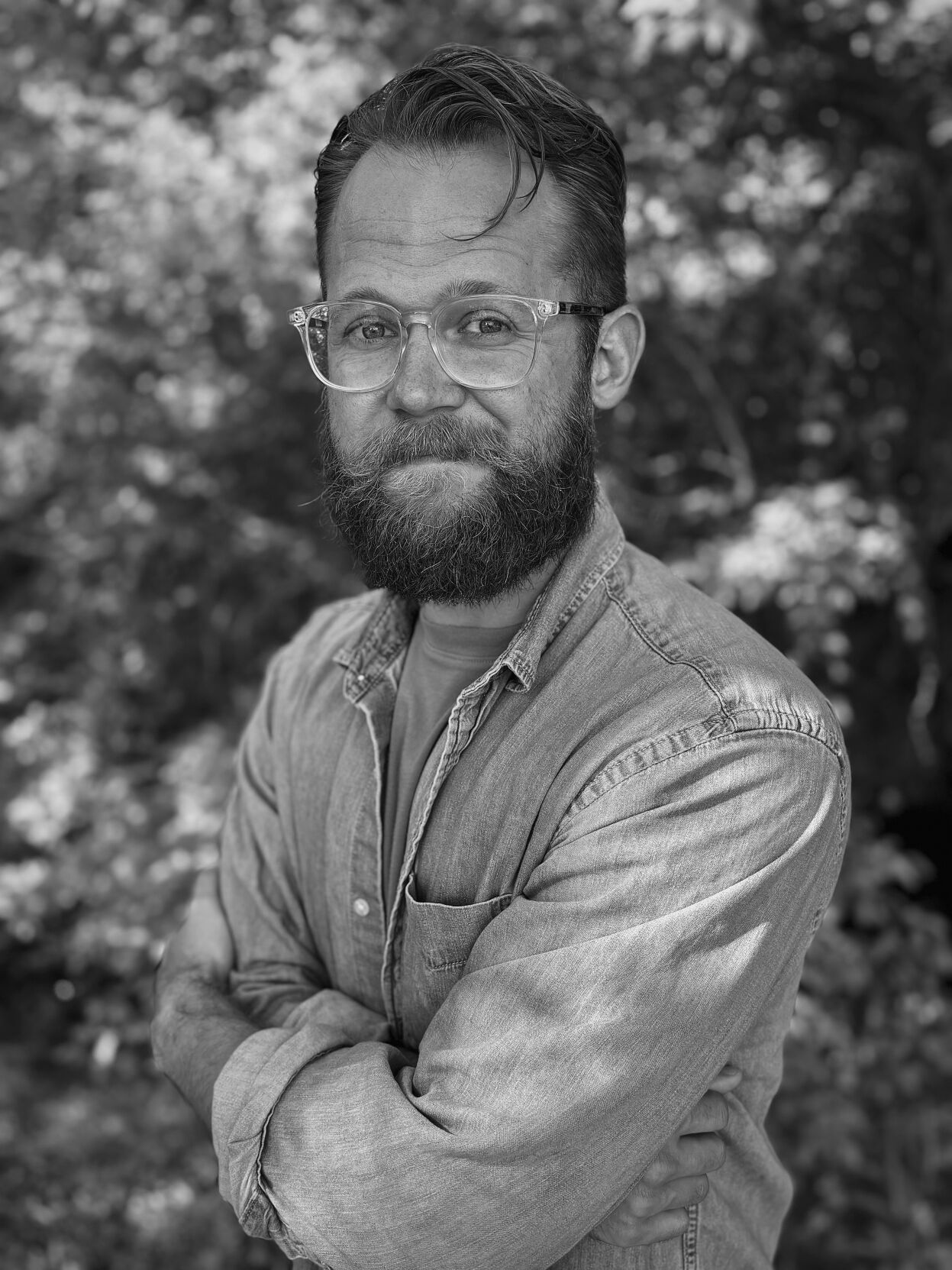
Author Jared Stacy’s new book, “Reality in Ruins: How Conspiracy Theory Became an American Evangelical Crisis,” will be released March 17. The book is published by HarperCollins.
Stacy, now 35 and living in St. Petersburg, Florida, grew up in a conservative Baptist environment that he describes as “hard right and far right.” As a child, the word “fundamentalist” simply meant serious Christianity.
In the church culture he knew, faith was defined by certainty — about theology, politics and the boundaries between believers and everyone else.
Living and working in New Orleans began to chip away at that certainty.
The experience eventually became the starting point for his work examining conspiracy thinking inside American evangelicalism — and for his new book, “Reality in Ruins: How Conspiracy Theory Became an American Evangelical Crisis,” which will be released March 17 by HarperCollins.
“I definitely grew up and knew the language,” he said. “Fundamentalist was a good thing. To me as a kid, it just meant we were Christians. We were serious Christians.”
A storefront church in Metairie
After marrying his wife, Stevie Noble, the couple chose New Orleans in 2012 so they could both pursue graduate degrees. Stacy enrolled at New Orleans Baptist Theological Seminary in Gentilly. Within six months he was pastoring a small church in Metairie.
The congregation met in a storefront church near Fat City, where apartment buildings, parade routes and late-night restaurants filled the surrounding blocks and the church door stayed open throughout the week. Neighbors drifted in and out. The surrounding neighborhood — dense, pedestrian and diverse — exposed him to people he had rarely encountered in his upbringing.
“People just walked in,” he said.
That environment brought him into conversations he had rarely experienced before.
The congregation included people with different political views and life experiences than the communities he had grown up around.
“I remember thinking, ‘Man, I’m going to church with people who are Democrats,’” he said. “That was a first for me.”
Living and working in the New Orleans area slowly dismantled assumptions he had carried since childhood. He says that the experience was not dramatic in the moment, but it gradually reshaped how he understood faith and the people around him.
“I really felt like I was the one being pastored just by the experience itself,” he said. “I didn’t have the language to be able to articulate the sort of changes that were occurring. The ways that my lived theology was undergoing a crisis that I didn’t realize.”
At the time, he did not fully understand the internal shift that was happening. Years later, those experiences would shape his academic work.
His book examines the long relationship between evangelical Christianity and conspiracy thinking in the United States. One of his central arguments is that conspiracy theories are not a recent intrusion into evangelical culture but something woven into its history.
“Conspiracy theory is very much like a load-bearing wall in the evangelical house in America,” he said. “It is a feature, not a bug.”
The idea deepened during his doctoral studies at the University of Aberdeen, which he completed in 2024.
The more he studied American history and evangelical culture, the more he saw how persistent conspiracy thinking had been.
“You can’t tell the story of America without conspiracy theories,” he said. “These stories are always the things that get told when we’re afraid of society getting turned upside out.”
What surprised him even more was how resistant those beliefs are to correction.
Fact-checking alone, he said, rarely changes deeply held beliefs shaped by religious or cultural narratives. Instead, he argues, conspiracy thinking often operates inside broader stories people already believe about the world — stories that make some claims feel plausible and others impossible.
Modern technology has only accelerated that dynamic.
“We are living with more facts, more information than we’ve ever lived with before,” he said. “And, ironically, we are less able to parse fact from fiction, reality from disreality than perhaps at any other time.”
For Stacy, those questions are not purely academic.
After their time in New Orleans, Stacy and his wife moved to her childhood church in Fredericksburg, Virginia.
“We didn’t realize how much we had changed. We thought we were going back to somewhere familiar,” Stacy said, “but that was the place where we began to work through how our beliefs changed and the contradictions between our beliefs and the Southern Baptist Convention were unveiled in a local, concrete place.”
From Fredericksburg, Stacy decided to go back to graduate school to earn a doctorate.
His research intersects with his own spiritual journey and with debates inside American Christianity about power, politics and belief.
He describes his approach as “doing theology against theology” — using Christian ideas to challenge political or religious movements that claim Christian authority.
“I do that as an insider,” he said. “I was in there — and I called White Christian nationalism just Christianity.”
The urgency of the problem, he argues, is not simply theoretical.
The stories communities tell about one another can shape how people treat each other in the real world.
“I call it a crisis because there are real human communities, human lives, human bodies that are placed in physical risk because of the stories we tell,” he said.
But the word “crisis,” he said, also carries another meaning.
Moments of crisis demand decisions.
“A crisis in the truest sense of the word calls for a decision,” he said. “To not choose is to choose.”
Noticing the signs at LSU
Walking across LSU’s campus with a Bible in hand, Stacy joined a group heading toward the event at the PMAC. Along the way, he struck up a conversation with an English professor walking beside him.
As they neared the PMAC, Stacy noticed the signs. He realized that the people he was walking with were part of a pro-choice demonstration that he would have to walk through to attend the Christian rally inside.
The moment forced him to confront two worlds colliding in the same space.
“I suddenly look around and realize that they are holding pro-choice signs,” he said. “And I have this moment where the guy that I was walking with, and I suddenly recognized that we’re not part of the same people here.”
Crossing the protest line to enter the rally unsettled him in ways he could not fully explain at the time.
He now sees that moment as an early glimpse of the religious and political fusion he later studied.
“I had this very unsettling sense that maybe the Jesus that I worshipped would not have crossed that picket line,” he said. “I felt like this lit professor and I might have had a lot to talk about. I’m like crossing this protest line to go to a prayer rally.”
Looking back, he says those kinds of experiences helped him recognize how closely political rallies and religious revivalism could mirror each other, seeing the two as almost indiscernible.
A crisis inside evangelicalism
Today, Stacy works as a hospice chaplain and attends what he describes as a “post-evangelical” church in St. Petersburg. The congregation still recites ancient Christian creeds and the Lord’s Prayer each week, but it has moved away from the evangelical label.
The shift reflects a broader attempt to acknowledge the tradition the church came from while moving beyond it.
“If we just give it up,” he said of the label evangelical, “no one has to say they’re sorry.”
Stacy still considers himself a Christian, though his faith looks different from the one he inherited and knew as a child. He says that his faith has been totally altered — and yet it hasn’t changed at all.
Part of faith, he believes, involves letting go of illusions.
“I think part of the Christian faith involves being dispossessed of our illusions,” he said.
For pastors and believers wrestling with the tensions he describes, Stacy says speaking honestly may come at a cost and that “courage can look like ruin.” The choice to challenge conspiracy thinking or Christian nationalism can threaten careers and congregations.
Pastors who speak out, he acknowledged, may lose jobs, relationships or stability. But, he says, silence carries its own consequences.
“Our world needs not just analysts and experts,” he said. “It also needs witnesses.”
For Stacy, that journey began years earlier in a storefront church in Metairie — where the certainty he once carried first began to come undone.



NEWTON COUNTY, Texas. (KPLC) – A DeRidder man reported missing was found dead in the Sabine River Sunday morning, according to the Newton County Sheriff’s Office.
Newton County Sheriff Colton Havard said Jordan Jamal Allen was located around 7:50 a.m. on July 12 with help from Texas Parks and Wildlife game wardens, the Beauregard Parish Sheriff’s Office, and 409 Search and Rescue.
Authorities say the body was recovered not far from where Allen went under Friday night near the U.S. 190 bridge east of Bon Wier at the Texas-Louisiana state line.
The sheriff said that Allen and a woman were said to be wading across the river Friday when the current began pulling the woman.
The sheriff said Allen tried to help her, but went under around 8:45 p.m. and wasn’t seen again. He said the woman made it back to land safely.
We will have more in this story as it develops.
Copyright 2026 KPLC. All rights reserved.

MONDAY
RED STICK FLY FISHERS PROGRAM: 7 p.m., Bluebonnet Regional Library, 9200 Bluebonnet Blvd., Baton Rouge. Open to the public. Email Brian Roberts: roberts.brian84@gmail.com. Website: rsff.org
WEDNESDAY
FLIES & FLIGHTS: 7-9 p.m, Rally Cap Brewing, 11212 Pennywood Ave., Baton Rouge. Casual fly tying. Open to public. Email Chris Williams: thefatfingeredflytyer@gmail.com
THURSDAY
ACADIANA FLY RODDERS PROGRAM: 6 p.m., Pack and Paddle, 601 E. Pinhook, Lafayette. Open to public. Email Darin Lee: at cbrsandcdc@gmail.com. Website: acadianaflyrodders.org
FRIENDS OF NRA/SOUTHWEST LA BANQUET: 6 p.m., Riverside Bar & Grill, 3748 Louisiana 3059, Lake Charles. Call Brack Cole 337-912-1620. Email: jbcoleair@yahoo.com
ONGOING
STATEWIDE TOURNAMENT & ANGLERS RODEO/S.T.A.R.: Through Sept. 7, Coastal Conservation Association’s summer-long fishing event. Tagged redfish, coastal/offshore species categories & youth division. CCA membership required. Website: ccalouisiana.com/star
LOTTERY HUNTS
DOVE/TEAL: July 27 application deadline for dove hunt on Elbow Slough Wildlife Management Area and teal hunt on White Lake Wetlands Conservation Area. Website applications only on Wildlife & Fisheries/Louisiana Outdoors License, Permits and Tags webpage. Fee $8.50. Details: dove hunt, David Hayden at dhayden@wlf.la.gov; teal hunt, Lance Ardoin at lardoin@wlf.la.gov
AROUND THE CORNER
JULY 21 — LAFAYETTE KAYAK FISHING CLUB MEETING: 6 p.m., Pack and Paddle, 601 E. Pinhook, Lafayette. Call 337-232-5854. Website: lafayettekayakfishing.com
JULY 21-22 — GULF COUNCIL SHRIMP COMMITTEE MEETING: Gulf Council office, 4107 W. Spruce St., Tampa, Florida. In conjunction with Scientific and Statistical committees. Website: gulfcouncil.org
JULY 23 — ACADIANA BUGS & BREWS: 6 p.m., Pack and Paddle, 601 E. Pinhook, Lafayette. Casual fly tying and local beers provided. Open to the public. Email Darin Lee: cbrsandcdc@gmail.com. Website: packpaddle.com
JULY 23-25 — International Grand Isle Tarpon Rodeo, Grand Isle Marina & Otto Candies Pavilion, Grand Isle. Website: tarponrodeo.org
JULY 24-25—BASSMASTER JUNIOR CHAMPIONSHIP: Kentucky Lake, Paris, Tennessee. Website: bassmaster.com
JULY 26 — SOUTH LOUISIANA HIGHPOWER CLUB MATCH: 8:30 a.m., Ascension Parish Sheriff’s Range, St. Landry Road, Gonzales. NRA XTC & F-Class match rifle or service rifle, 200-yard/50-rounds match course. Fee $15 members, $20 nonmembers, $5 juniors. $25 annual club (first match free) and Civilian Marksmanship Program membership (allows purchases from CMP). Call Mike Burke, 337-380-8120. Email: SouthLAHighPower@hotmail.com
FISHING/SHRIMPING
SHRIMP: Spring inshore season closed except for Breton/Chandeleur sounds; all outside waters open.
OPEN RECREATIONAL SEASONS: Private recreational red snapper; gray triggerfish; flounder; lane, blackfin, queen and silk snappers and wenchmen among other snapper species; all groupers except closed for goliath and Nassau groupers in state/federal waters.
CLOSED SEASONS: Greater amberjack; bluefin tuna; gag, goliath and Nassau groupers in state/federal waters. Commercial greater amberjack season closed.
LDWF UPDATES
Closed: Roads on Pomme de Terre, Richard Yancey & Bogue Chitto WMAs (flooding)
Drawdowns: Saline Lake (Natchitoches/Winn parishes through Oct. 5); Iatt Lake (Grant Parish through Oct. 5).
-

 Idaho49 seconds ago
Idaho Property Taxes are Here to Stay
-

 Illinois7 minutes ago
Man charged with trespassing at Illinois Gov. JB Pritzker’s home in Chicago on July 4: documents
-

 Indiana13 minutes ago
Indiana seeks coal ash program as feds move to rollback regulations
-

 Iowa19 minutes ago
Several Iowa High School Baseball Standouts Selected In MLB Draft
-

 Kentucky31 minutes ago
How one small KY town put aside its differences to celebrate America | Exclusive
-

 Louisiana37 minutes ago
Meta’s Louisiana Data Center to Surpass $250 Billion Price Tag
-

 Maine43 minutes ago
6 concerts, theater productions planned this week in central Maine
-

 Maryland49 minutes ago
Readers vote for best ice cream shop on Lower Shore of Maryland

