Louisiana
Commentary: Trump can be hard to take. But his tariffs keep this fisherman afloat


HOUMA, La. — For nearly 50 years, James Blanchard has made his living in the Gulf of Mexico, pulling shrimp from the sea.
It’s all he ever wanted to do, since he was around 12 years old and accompanied his father, a mailman and part-time shrimper, as he spent weekends trawling the marshy waters off Louisiana. Blanchard loved the adventure and splendid isolation.
He made a good living, even as the industry collapsed around him. He and his wife, Cheri, bought a comfortable home in a tidy subdivision here in the heart of Bayou Country. They helped put three kids through college.
But eventually Blanchard began to contemplate his forced retirement, selling his 63-foot boat and hanging up his wall of big green fishing nets once he turns 65 in February.
“The amount of shrimp was not a problem,” said Blanchard, a fourth-generation shrimper who routinely hauls in north of 30,000 flash-frozen pounds on a two-week trip. “It’s making a profit, because the prices were so low.”
Then came President Trump, his tariffs and famously itchy trigger finger.
Blanchard is a lifelong Republican, but wasn’t initially a big Trump fan.
In April, Trump slapped a 10% fee on shrimp imports, which grew to 50% for India, America’s largest overseas source of shrimp. Further levies were imposed on Ecuador, Vietnam and Indonesia, which are other major U.S. suppliers.

Views of the 47th president, from the ground up
Tariffs may slow economic growth, discombobulate markets and boost inflation. Trump’s single-handed approach to tax-and-trade policy has landed him before the Supreme Court, which is expected to rule by summer on a major test case of presidential power.

Blanchard snacks on a bag of dried shrimp.
But for Blanchard, those tariffs have been a lifeline. He’s seen a significant uptick in prices, from as low as 87 cents a pound for wild-caught shrimp to $1.50 or more. That’s nowhere near the $4.50 a pound, adjusted for inflation, that U.S shrimpers earned back in the roaring 1980s, when shrimp was less common in home kitchens and something of a luxury item.
It’s enough, however, for Blanchard to shelve his retirement plans and for that — and Trump — he’s appreciative.
“Writing all the bills in the world is great,” he said of efforts by congressional lawmakers to prop up the country’s dwindling shrimp fishermen. “But it don’t get nothing done.”
Trump, Blanchard said, has delivered.
::
Shrimp is America’s most popular seafood, but that hasn’t buoyed the U.S. shrimp industry.
Wild-caught domestic shrimp make up less than 10% of the market. It’s not a matter of quality, or overfishing. A flood of imports — farmed on a mass scale, lightly regulated by developing countries and thus cheaper to produce — has decimated the market for American shrimpers.
In the Gulf and South Atlantic, warm water shrimp landings — the term the industry uses — had an average annual value of more than $460 million between 1975 and 2022, according to the Southern Shrimp Alliance, a trade group. (Those numbers are not adjusted for inflation.)

A boat moves up a canal in Chauvin, La.
Over the last two years, the value of the commercial shrimp fishery has fallen to $269 million in 2023 and $256 million in 2024.
As the country’s leading shrimp producer, Louisiana has been particularly hard hit. “It’s getting to the point that we are on our knees,” Acy Cooper, president of the Louisiana Shrimp Assn., recently told New Orleans television station WVUE.
In the 1980s, there were more than 6,000 licensed shrimpers working in Louisiana. Today, there are fewer than 1,500.
Blanchard can see the ripple effects in Houma — in the shuttered businesses, the depleted job market and the high incidence of drug overdoses.
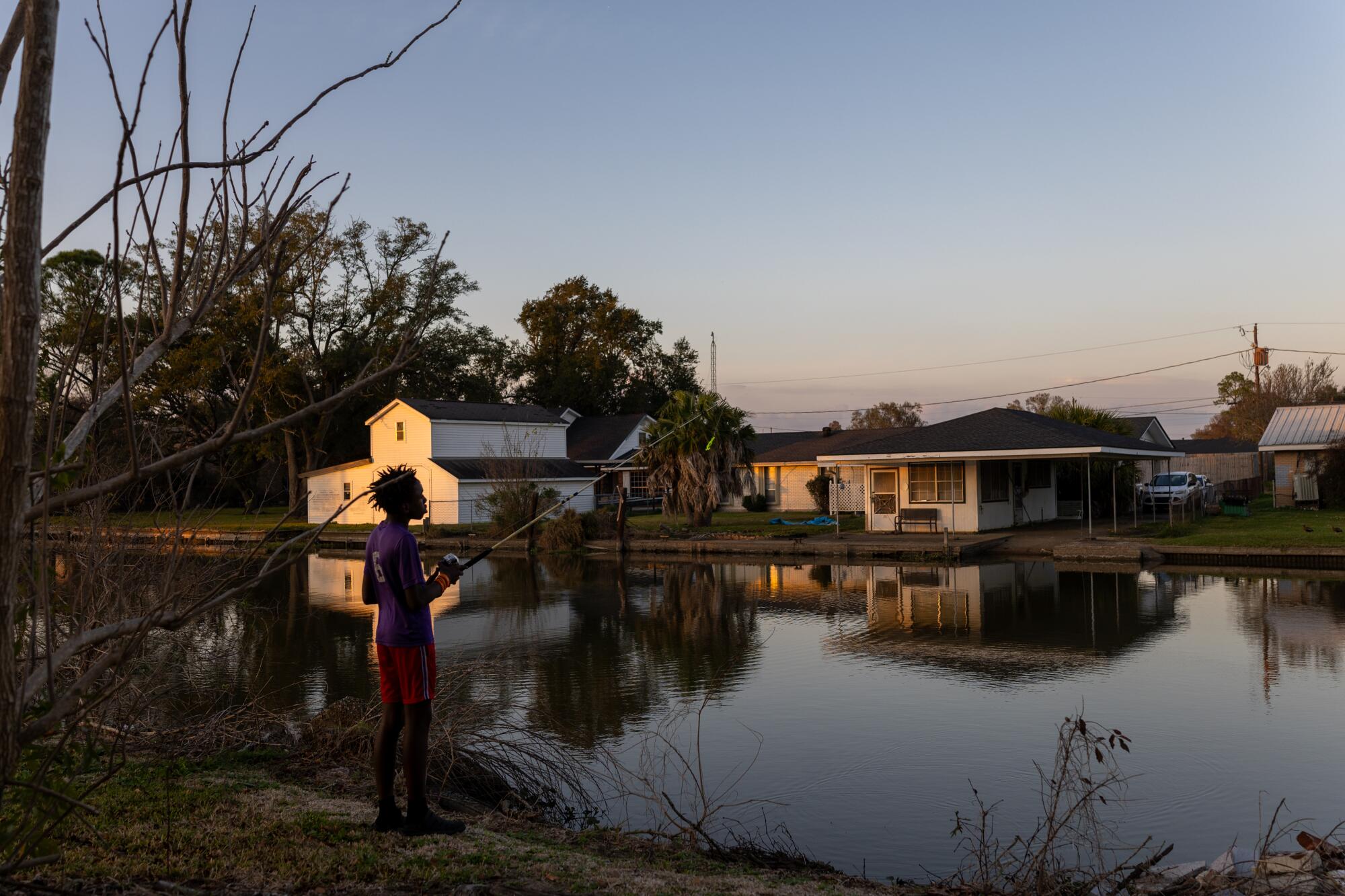
Latrevien Moultrie, 14, fishes in Houma, La.
“It’s affected everybody,” he said. “It’s not only the boats, the infrastructure, the packing plants. It’s the hardware stores. The fuel docks. The grocery stores.”
Two of the Blanchardses’ three children have moved away, seeking opportunity elsewhere. One daughter is a university law professor. Their son works in logistics for a trucking company in Georgia. Their other daughter, who lives near the couple, applies her advanced degree in school psychology as a stay-at-home mother of five.
(Cheri Blanchard, 64 and retired from the state labor department, keeps the books for her husband.)
It turns out the federal government is at least partly responsible for the shrinking of the domestic shrimp industry. In recent years, U.S. taxpayers have subsidized overseas shrimp farming to the tune of at least $195 million in development aid.
Seated at their dining room table, near a Christmas tree and other remnants of the holidays, Blanchard read from a set of scribbled notes — a Bible close at hand — as he and his wife decried the lax safety standards, labor abuses and environmental degradation associated with overseas shrimp farming.

James Blanchard and his wife, Cheri, like Trump’s policies. His personality is another thing.
The fact their taxes help support those practices is particularly galling.
“A slap in the face,” Blanchard called it.
::
Donald Trump grew slowly on the Blanchards.
The two are lifelong Republicans, but they voted for Trump in 2016 only because they considered him less bad than Hillary Clinton.
Once he took office, they were pleasantly surprised.
They had more money in their pockets. Inflation wasn’t an issue. Washington seemed less heavy-handed and intrusive. By the time Trump ran for reelection, the couple were fully on board and they happily voted for him again in 2024.

Republican National Committee reading material sits on the counter of James Blanchard’s kitchen.
Still, there are things that irk Blanchard. He doesn’t much care for Trump’s brash persona and can’t stand all the childish name-calling. For a long time, he couldn’t bear listening to Trump’s speeches.
“You didn’t ever really listen to many of Obama’s speeches,” Cheri interjected, and James allowed as how that was true.
“I liked his personality,” Blanchard said of the former Democratic president. “I liked his character. But I didn’t like his policies.”
It’s the opposite with Trump.
Unlike most politicians, Blanchard said, when Trump says he’ll do something he generally follows through.
Such as tightening border security.
“I have no issue at all with immigrants,” he said, as his wife nodded alongside. “I have an issue with illegal immigrants.” (She echoed Trump in blaming Renee Good for her death last week at the hands of an ICE agent.)
“I have sympathy for them as families,” Blanchard went on, but crossing the border doesn’t make someone a U.S. citizen. “If I go down the highway 70 miles an hour in that 30-mile-an-hour zone, guess what? I’m getting a ticket. … Or if I get in that car and I’m drinking, guess what? They’re bringing me to jail. So what’s the difference?”
Between the two there isn’t much — apart from Trump’s “trolling,” as Cheri called it — they find fault with.
Blanchard hailed the lightning-strike capture and arrest of Venezuelan President Nicolás Maduro as another example of Trump doing and meaning exactly what he says.
“When Biden was in office, they had a $25-million bounty on [Maduro’s] head,” Blanchard said. “But apparently it was done knowing that it was never going to be enforced.”
More empty talk, he suggested.
Just like all those years of unfulfilled promises from politicians vowing to rein in foreign competition and revive America’s suffering shrimping industry.
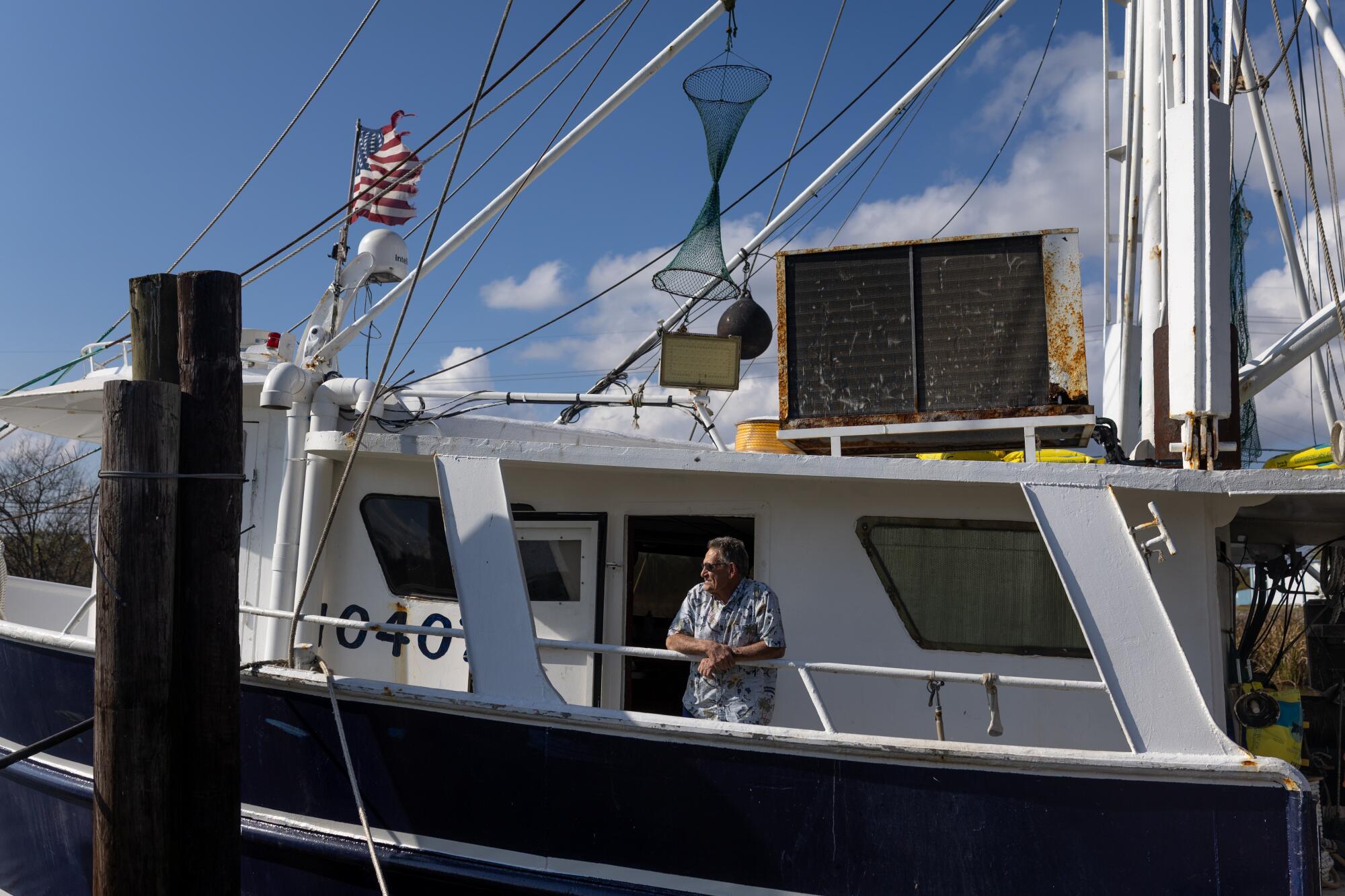
James Blanchard aboard his boat, which he docks in Bayou Little Caillou.
Trump and his tariffs have given Blanchard back his livelihood and for that alone he’s grateful.
There’s maintenance and repair work to be done on his boat — named Waymaker, to honor the Lord — before Blanchard musters his two-man crew and sets out from Bayou Little Caillou.
He can hardly wait.



NEWTON COUNTY, Texas. (KPLC) – A DeRidder man reported missing was found dead in the Sabine River Sunday morning, according to the Newton County Sheriff’s Office.
Newton County Sheriff Colton Havard said Jordan Jamal Allen was located around 7:50 a.m. on July 12 with help from Texas Parks and Wildlife game wardens, the Beauregard Parish Sheriff’s Office, and 409 Search and Rescue.
Authorities say the body was recovered not far from where Allen went under Friday night near the U.S. 190 bridge east of Bon Wier at the Texas-Louisiana state line.
The sheriff said that Allen and a woman were said to be wading across the river Friday when the current began pulling the woman.
The sheriff said Allen tried to help her, but went under around 8:45 p.m. and wasn’t seen again. He said the woman made it back to land safely.
We will have more in this story as it develops.
Copyright 2026 KPLC. All rights reserved.

MONDAY
RED STICK FLY FISHERS PROGRAM: 7 p.m., Bluebonnet Regional Library, 9200 Bluebonnet Blvd., Baton Rouge. Open to the public. Email Brian Roberts: roberts.brian84@gmail.com. Website: rsff.org
WEDNESDAY
FLIES & FLIGHTS: 7-9 p.m, Rally Cap Brewing, 11212 Pennywood Ave., Baton Rouge. Casual fly tying. Open to public. Email Chris Williams: thefatfingeredflytyer@gmail.com
THURSDAY
ACADIANA FLY RODDERS PROGRAM: 6 p.m., Pack and Paddle, 601 E. Pinhook, Lafayette. Open to public. Email Darin Lee: at cbrsandcdc@gmail.com. Website: acadianaflyrodders.org
FRIENDS OF NRA/SOUTHWEST LA BANQUET: 6 p.m., Riverside Bar & Grill, 3748 Louisiana 3059, Lake Charles. Call Brack Cole 337-912-1620. Email: jbcoleair@yahoo.com
ONGOING
STATEWIDE TOURNAMENT & ANGLERS RODEO/S.T.A.R.: Through Sept. 7, Coastal Conservation Association’s summer-long fishing event. Tagged redfish, coastal/offshore species categories & youth division. CCA membership required. Website: ccalouisiana.com/star
LOTTERY HUNTS
DOVE/TEAL: July 27 application deadline for dove hunt on Elbow Slough Wildlife Management Area and teal hunt on White Lake Wetlands Conservation Area. Website applications only on Wildlife & Fisheries/Louisiana Outdoors License, Permits and Tags webpage. Fee $8.50. Details: dove hunt, David Hayden at dhayden@wlf.la.gov; teal hunt, Lance Ardoin at lardoin@wlf.la.gov
AROUND THE CORNER
JULY 21 — LAFAYETTE KAYAK FISHING CLUB MEETING: 6 p.m., Pack and Paddle, 601 E. Pinhook, Lafayette. Call 337-232-5854. Website: lafayettekayakfishing.com
JULY 21-22 — GULF COUNCIL SHRIMP COMMITTEE MEETING: Gulf Council office, 4107 W. Spruce St., Tampa, Florida. In conjunction with Scientific and Statistical committees. Website: gulfcouncil.org
JULY 23 — ACADIANA BUGS & BREWS: 6 p.m., Pack and Paddle, 601 E. Pinhook, Lafayette. Casual fly tying and local beers provided. Open to the public. Email Darin Lee: cbrsandcdc@gmail.com. Website: packpaddle.com
JULY 23-25 — International Grand Isle Tarpon Rodeo, Grand Isle Marina & Otto Candies Pavilion, Grand Isle. Website: tarponrodeo.org
JULY 24-25—BASSMASTER JUNIOR CHAMPIONSHIP: Kentucky Lake, Paris, Tennessee. Website: bassmaster.com
JULY 26 — SOUTH LOUISIANA HIGHPOWER CLUB MATCH: 8:30 a.m., Ascension Parish Sheriff’s Range, St. Landry Road, Gonzales. NRA XTC & F-Class match rifle or service rifle, 200-yard/50-rounds match course. Fee $15 members, $20 nonmembers, $5 juniors. $25 annual club (first match free) and Civilian Marksmanship Program membership (allows purchases from CMP). Call Mike Burke, 337-380-8120. Email: SouthLAHighPower@hotmail.com
FISHING/SHRIMPING
SHRIMP: Spring inshore season closed except for Breton/Chandeleur sounds; all outside waters open.
OPEN RECREATIONAL SEASONS: Private recreational red snapper; gray triggerfish; flounder; lane, blackfin, queen and silk snappers and wenchmen among other snapper species; all groupers except closed for goliath and Nassau groupers in state/federal waters.
CLOSED SEASONS: Greater amberjack; bluefin tuna; gag, goliath and Nassau groupers in state/federal waters. Commercial greater amberjack season closed.
LDWF UPDATES
Closed: Roads on Pomme de Terre, Richard Yancey & Bogue Chitto WMAs (flooding)
Drawdowns: Saline Lake (Natchitoches/Winn parishes through Oct. 5); Iatt Lake (Grant Parish through Oct. 5).
-
 Detroit, MI20 minutes ago
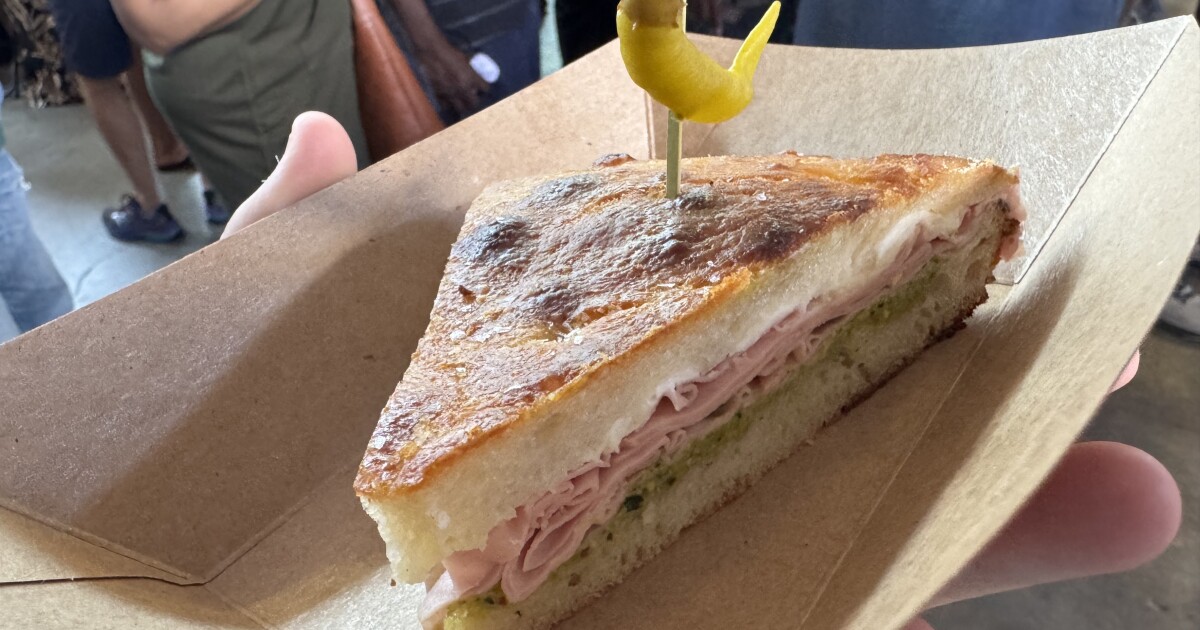
Detroit Sandwich Party returns to Eastern Market on Sept. 6
-

 San Francisco, CA32 minutes ago
A Leak of San Francisco Police Drone Footage Exposes the New Reality of Urban Surveillance
-

 Dallas, TX37 minutes ago
Viral East Dallas coffee shop fears major sales drop amid six-week road closure
-

 Miami, FL44 minutes ago
3 hurt in fire on Lincoln Road that started underground
-

 Boston, MA50 minutes ago
Rideshare driver charged in Logan airport passenger assault to appear in court
-

 Denver, CO56 minutes ago
Denver area events for July 13
-

 Seattle, WA1 hour ago
What could the Seattle Seahawks look like under new owners?
-

 San Diego, CA1 hour ago
Sports Night: Padres End 1st Half on Good Note, Midseason Grades, Manny Heats Up

