Kentucky
Kentucky awards final dispensary business licenses

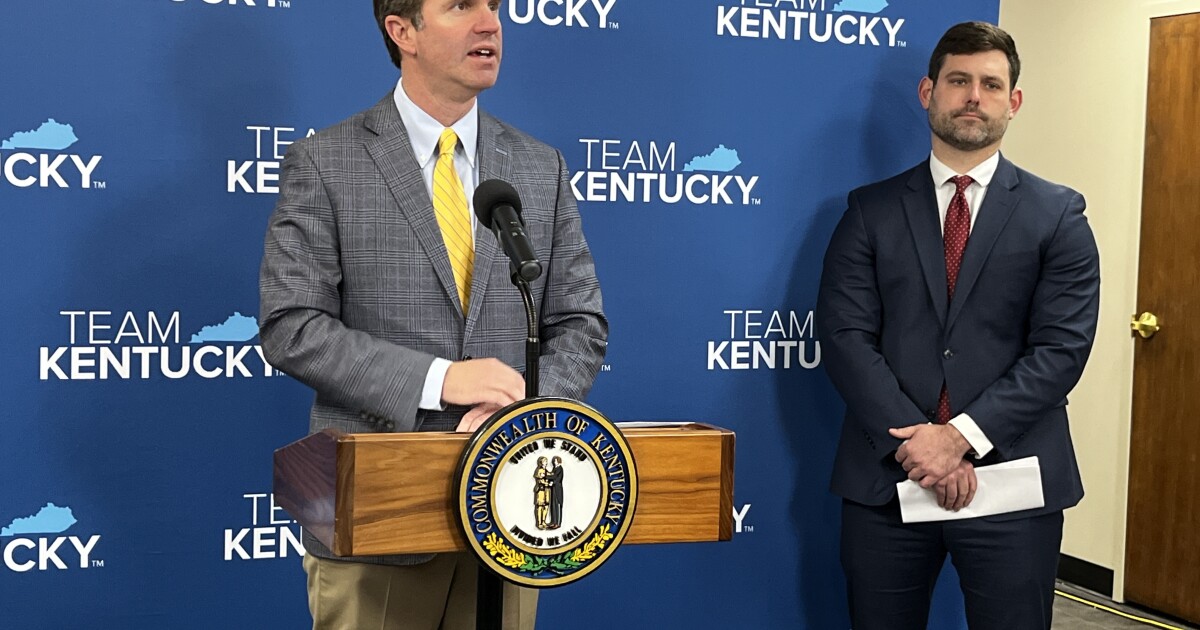
(LEX 18) — Kentucky awarded its final dispensary business licenses 15 days before the state’s medical marijuana program goes live.
Gov. Andy Beshear and the Office of Medical Cannabis announced dispensary business license winners for Jefferson and Fayette counties and the Bluegrass and Kentuckiana regions at the lottery headquarters in Louisville. Three weeks ago, licenses were awarded for most other counties in Kentucky.
In October, licenses were awarded to cultivators and processors. The reason those licenses were selected first was to give the businesses some extra time before the medical marijuana program goes live on Jan. 1, 2025. However, Beshear warns that supply may be limited in the early weeks of the program.
“It’s my hope that we’ll see it in Q1 of next year – product on the shelf,” said Beshear.
“Certainly, it’s going to take a little bit of time to ultimately get the dispensaries open and to get that product there,” he added.
Part of Kentucky’s program requires all products to be grown in the Commonwealth. So, is there a product currently being grown? The governor’s answer was unclear.
“There’s an ability to bring in seedlings, which is going to help it be grown faster in Kentucky,” he said. “Certainly, our cultivators have been licensed now – for what – about a month, and I know are working as quickly as they can towards that. And there’s at least one cultivator that was Kentucky-based before any and all of this.”
Beshear emphasized that Kentucky is still currently ahead of its original schedule. The initial law that created the medical marijuana program did not allow the state to even take business applications until Jan. 1, 2025.
There has been some criticism over Kentucky’s method of selecting businesses for licenses. Many of the selected companies are owned by out-of-state groups and some local businesses have questioned why current Kentucky businesses were not prioritized.
Sam Flynn, the executive director of the Kentucky Office of Medical Marijuana, defended the state’s lottery system, calling it the “most fair and transparent” way to provide licenses given the limited number available.
Beshear added that he gets the criticisms. He said the lottery system is the state’s way to avoid lawsuits. He said other states’ medical marijuana programs have been delayed due to lawsuits. That’s something Kentucky wanted to avoid.
“We set up this process with the patient in mind, believing that they should be able to get their medical cannabis as quickly as they can,” said Beshear.



A massive addition to the transfer portal just happened as former Liberty guard Brett Decker Jr. announced that he plans to hit the portal when it opens on April 7th. This should immediately catch the eye of Mark Pope, as Decker Jr. is a Kentucky native from Elizabethtown.
This season for the Flames of Liberty, Decker Jr. averaged 16.9 points per game while shooting 49.9% from the field and 47.1% from three. Decker Jr. will more than likely end up being the best three-point shooter in the transfer portal, so knowing this, plus the fact that he is a Kentucky native, Coach Pope needs to do everything in his power to land Decker Jr.
Last season, the Wildcats didn’t have that much three-point shooting outside of Collin Chandler. Otega Oweh, Denzel Aberdeen, and Kam Williams all were solid shooting the three ball, but Chandler was the only player fans could rely on to make one from deep.
When Pope doesn’t have a lot of players who are capable of making threes, his offense isn’t going to be that good, and this is why the Wildcats had a rough season last year. Coach Pope needs to learn from this mistake and make sure that he adds a bunch of players via the portal who can fill it up from deep. Obviously, Decker Jr. is a player who makes a ton of sense for this staff to target to come in and play the Koby Brea role.
If Decker Jr. does pick Kentucky, he could come off the bench as a flamethrower from deep, and in the games where he just can’t seem to miss, Pope won’t take him off the floor. When it comes to the other backcourt members Pope recruits, he will need guys who can score all over the floor, while Decker Jr. could just be the shooter for this team.
Decker Jr. is only a sophomore, so if Kentucky were to land him, he could develop the rest of his game and be one of the better players in the nation during his final two seasons of college hoops. Pope needs players who are going to be knockdown shooters from deep, and a good start would be to land the best shooter in the portal.
If Kentucky is able to land Decker Jr., Pope will still need to go out and get some more players who can be reliable from three, but he would be an excellent start. Coach Pope needs to do everything in his power to bring the Kentucky kid home.

A man who recently won a $167m Powerball lottery jackpot stands accused of stealing the relatively paltry sum of $12,000 after breaking into a house in his home state of Kentucky on Saturday, according to authorities who arrested him.
James Farthing’s arrest on Saturday on counts of burglary and illicit marijuana possession reportedly was at least his third since winning Kentucky’s most lucrative lottery prize ever.
Farthing, 51, was allegedly captured on surveillance cameras at the side door of a woman’s home in Lexington before unlawfully entering the place, police wrote in an arrest citation that was reported by the local news outlet WKYT. The break-in victim heard a loud noise consistent with a door being busted open, and she realized $12,000 was missing from the home after Farthing broke in, officers alleged in the citation.
Police later found Farthing at a casino and harness-racing track and took him into custody in connection with the alleged burglary. Officers said they added the illegal marijuana possession count after searching his car and finding the herb along with multiple blunts, including one that had burnt out in his vehicle’s ashtray.
Farthing had spent most of his life in and out of incarceration before he, his mother and girlfriend bought the winning ticket for a $167m Powerball jackpot awarded in April 2025, according to the Smoking Gun website.
Hitting that jackpot left them with deciding whether to collect the full amount in annual increments over 29 years or immediately in a one-time, lump sum of $77.3m.
Farthing and his family said they would talk with a financial adviser before choosing the better option for them.
As Farthing put it, the win resulted from playing the odds. “I’m always buying [lottery tickets] ’cause I’m like, ‘Somebody’s gotta win,’” he later told WKYT.
It was a matter of days before he recorded another brush with the law – when officials in Florida said he hit a hotel guest in the face, kicked a deputy and violated his parole conditions by leaving Kentucky without permission.
He pleaded guilty to that case in early March as part of a deal requiring him to pay $1,000 in fines but sparing him any additional jail time, WKYT reported.
Furthermore, in February, Kentucky authorities arrested Farthing on allegations that he tried to intimidate a participant of a legal process. Investigators said the alleged victim in that case reported meeting Farthing and being pressured into ingesting a marijuana edible. The woman later reportedly called police and reported that people with a weapon wanted to hurt her.
Officers who responded to the scene alleged that they found marijuana and a gun. And as the alleged victim was being questioned, police accused Farthing of sending her a text message which read, “Why would you do this to me? Unreal. I’d never hurt you.”
Farthing was tentatively due in court in the burglary case on Monday and on the intimidation charge on Thursday. He also reportedly has an separate hit-and-run case pending.

Mark Pope and the Kentucky Wildcats will be looking to replace a lot in the transfer portal, and one thing that Pope will need a ton of is three-point shooting. The three-point shooting this season for Kentucky outside of Collin Chandler was rough. Otega Oweh, Kam Williams, and Denzel Aberdeen all had a solid shooting season, but Chandler was the only true, reliable three-point shooter.
Williams is a player that fans expect to get much better from three next season if he is back in Lexington, but Pope is still going to need a lot of shooting.
When Pope took the job at Kentucky, he wanted to shoot over 30, perhaps even 35 threes per game, but in his two seasons, this has not happened. Coach Pope needs to get back to this for his offense to work at a high level, but he will need the roster to get it done.
While the portal is not technically open yet, some players have announced that they plan to enter the portal when it does open on April 7th. Some Kentucky fans have already started to list players whom Pope should reach out to in the portal. Many of the guard’s BBN wants look good on paper, but don’t have elite three-point shooting percentages.
The point of this article is to make the case that Coach Pope can’t gamble with the players he brings in via the portal to be shooters. A great example of this is Jaland Lowe, as he came over from Pitt with a bad three-point shooting percentage. He didn’t play enough this year to really judge him as a shooter, but Pope doesn’t need projects like this.
He shouldn’t take guards who shot 31% from three. Pope needs to take players who are true knockdown shooters from deep, so the Wildcats offense next season will have a handful of players who are all capable of making threes.
There are some guards and forwards in the portal right now who had great seasons shooting the ball from deep and more will enter when it officially opens on the 7th. Coach Pope needs a bunch of players who shot 35% or better from deep, so the Wildcats are an elite team from beyond the arc.
If Kentucky isn’t a good shooting team, we will see a season similar to this one next year, so shooting is a top priority for the staff when the portal opens here in about a week.

NY Islanders second period collapse costs them in crucial loss to Pittsburgh Penguins

Augusta mayoral candidates outline priorities during debate

This Day in History: March 27, 1912: First cherry blossom trees planted in Washington, D.C.

Ohio Teams Start 2026 Season Strong – Cleveland Today

Ronald McDonald House Charities Central Texas opens first in-hospital house at Texas Children’s Austin

Florida High School Football Rankings: Top 25 teams – Oct. 21

How old is Bo Nix? What to know about Oregon quarterback ahead of 2024 NFL Draft

Cleary's 21 help Le Moyne down Central Connecticut State 69-64 in OT

99th annual Pony Swim held in Virginia

Indiana Members Credit Union announced as new anchor tenant at Bottleworks District

Emanuel pushes back on ‘straight White man’ question, says ideas matter most in 2028

French police make two more arrests over foiled attack on Bank of America

‘What’s going on?’: US judge calls aspects of new Pentagon press policy ‘weird’

Video: Iran to Allow More Oil Ships Through Strait of Hormuz, Trump Says

Dem senator warns deportation could let Virginia woman’s illegal immigrant killer ‘escape accountability’
-

 Sports1 week ago
IOC addresses execution of 19-year-old Iranian wrestler Saleh Mohammadi
-

 Miami, FL5 days ago
Jannik Sinner’s Girlfriend Laila Hasanovic Stuns in Ab-Revealing Post Amid Miami Open
-

 South-Carolina2 days ago
South Carolina vs TCU predictions for Elite Eight game in March Madness
-

 New Mexico1 week ago
Clovis shooting leaves one dead, four injured
-

 Politics1 week ago
Schumer gambit fails as DHS shutdown hits 36 days and airport lines grow
-

 Minneapolis, MN5 days ago
Boy who shielded classmate during school shooting receives Medal of Honor
-

 Tennessee1 week ago
Tennessee Police Investigating Alleged Assault Involving ‘Reacher’ Star Alan Ritchson
-

 Science1 week ago
Record Heat Meets a Major Snow Drought Across the West