Florida
Hurricane Helene hits Florida homeowners already facing soaring insurance costs


As Hurricane Helene barreled through Florida, the storm’s winds and flooding left a trail of damaged homes in its wake, causing up to an estimated $6 billion in private insurance losses, according to global reinsurance broker Gallagher Re.
As homeowners assess the damage, the storm is again drawing attention to wobbly Florida’s property insurance market. Soaring premiums have squeezed homeowners, who shouldered a 45% increase in insurance rates from 2017 to 2022, according to a recent report from the Florida Policy Project.
The average annual premium for a Florida homeowner is $5,500 — about 140% higher than the average U.S. homeowner’s insurance premium of $2,285, according to Bankrate. The spike in costs sometimes leads people to forego insurance altogether, with some Florida residents telling CBS Miami that they’ve been socked with rates reaching $20,000 per year.
With extreme weather becoming more frequent and destructive due to climate change, homeowners in parts of the U.S. facing mounting risks are likely to see significantly higher insurance costs in the years ahead, according to a June paper from experts at the University of Wisconsin and University of Pennsylvania.
“Property insurance serves as the front line of defense against climate risk for homeowners and real estate investors,” the researchers noted. “By 2053, we estimate that climate-exposed homeowners will be paying $700 higher annual premiums due to increasing wildfire and hurricane risk.”
Separate research from Harvard University, Columbia University and the Federal Reserve found that Florida ranks among the top U.S. states for projected future economic losses linked to climate change.
But insurance industry losses in Florida are affecting property coverage in the present, as well. Traditional insurers have pulled back from offering home policies in the state, especially in its more disaster-prone regions, with the insurer-of-last resort, Citizens Property Insurance Corp., and newer insurers picking up the slack.
At the same time, those insurers are facing higher rates from reinsurance companies, which are financial businesses that offer insurance for insurers. Because insurance companies can get financially flattened by an extreme storm or other catastrophic event, they often turn to reinsurance companies to help mitigate the risk.
“Florida, much more than any other state in the country, is exposed to the global reinsurance market,” Jeff Brandes, founder and president of the Florida Policy Project, told CBS MoneyWatch.
Hurricanes highlight why reinsurers “are very cautious about lowering prices, which definitely impacts Floridians,” Brandes added, while noting that initial damage assessments suggest Helene’s impact on Florida properties appears to be less severe than initially feared.
“If this had shifted a few degrees east and hit Tampa Bay, the damages would be 20 times greater,” he said.
In the meantime, recent reforms to Florida’s insurance market may provide some relief to cost-burdened homeowners. Republican Gov. Ron DeSantis signed a sweeping property insurance bill at the end of 2022 that aims to deter frivolous lawsuits and limit insurer costs.
Although that could help stave off rate increases in the short term, over the longer term Florida homeowners and insurers might be powerless as the planet continues to warm.
“As losses from climate change worsen, the financial stability risks of insurers is likely to become even more pronounced,” noted the researchers from Harvard, Columbia and the Fed. “We are likely to see policymakers face difficult tradeoffs in maintaining affordability, availability and reliability of insurance markets.”



Maternal health care training
The University of South Florida is sending medical educators into rural Florida communities to provide critical maternal health care simulation training to local hospital staff and first responders. FOX 13’s Briona Arradondo reports.
TAMPA, Fla. – The University of South Florida is sending medical educators into rural Florida communities to provide critical maternal health care simulation training to local hospital staff and first responders.
Florida rural medical training
The backstory:
Fewer hospitals are delivering babies or providing maternity health care in rural Florida communities, forcing pregnant women to travel hours for care. In response, USF Health launched a state-funded maternal health care training program covering 16 rural counties.
The program is led by a partnership between Florida Center for EMS at USF, Florida Prenatal Quality Collaborative and Center for Advanced Medical Learning and Simulation. It brings high-tech simulation mannequins directly into local patient rooms. These advanced simulators can mimic life-or-death scenarios like seizures, preeclampsia and postpartum hemorrhaging.
“I was really surprised, because my background as a firefighter-paramedic I worked in an urban environment where I had those resources. But going out to the rural communities in the Panhandle, sometimes the transport time is over two hours away,” said Penni Eggers, the director of education and assistant professor at the Florida Center for EMS at USF.
The program has already trained emergency personnel in Calhoun County, and the cities of Perry and Arcadia, teaching critical symptom management from the moment a patient enters an ambulance.
Saving mothers and babies
Why you should care:
According to Eggers, 80% of maternal deaths are preventable, and up to half happen after birth. Providing rural staff with hands-on tools builds the confidence needed to handle critical issues until a patient can be safely transferred to a specialized unit.
Emergency training sentiments
What they’re saying:
“This is actually going to touch more people and save more lives, I think. This is more to me, one of the most rewarding things we’ve ever done,” Eggers said.
She added that after training, “they feel much more confident that they can handle an emergency maternal problem, and they feel that they have some tools now and resources that they can actually do their job.”
Expanding medical simulation
What’s next:
The mobile USF Health training team plans to head to Wauchula next to conduct its next simulation exercises for local health care workers.
The initiative began in 2025 as a successful pilot program in Franklin County. The positive results secured a grant through the Florida Department of Health to expand operations, which will fund the training for the next year or two.
The Source: The information in this story was gathered by FOX 13’s Briona Arradondo with the director of education Penni Eggers at USF Health’s Florida Center for EMS.

Immigration advocates in Florida have decried a “cruel and harmful” new rule by education officials aligned to hard-right Republican governor Ron DeSantis to ban undocumented students from state colleges and universities.
The Florida board of education voted on Tuesday to bar access to its 28 state-funded institutions to anybody not a US citizen or “lawfully present” in the country. It follows Florida’s move last year to strip discounted in-state tuition rates for certain immigrant students.
Opponents on Wednesday assailed the new directive, which some analysts estimate could cost Florida up to $15m annually in lost tuition and other fees. They also questioned if it was legal, given that it was approved by DeSantis’s hand-picked board of seven, instead of the elected state legislature.
“The rule-making process is supposed to implement existing legislation and laws that were passed, not create its own, and not create its own policies, which is exactly what the department is trying to do,” said Alexis Tsoukalas, senior analyst of the Florida Policy Institute, at a press conference hosted by the Florida Immigrant Coalition.
She said the action ran contrary to DeSantis’s own “Sail to 60” goal, a 2019 policy that sought to lift the number of Florida residents with “high-value” post-secondary education from below 50% to at least 60%.
“The Florida college system is already struggling with declining enrollment, this has been the case for the past several years, and it’s only gotten worse,” she said.
“It’s not like there are students waiting in the wings to enroll when others are denied admission. Florida cannot reach its attainment goal if a shrinking share are enrolling, so it is very much a concern for the state.”
Alexander Vallejos, a so-called Dreamer and computer science student at the University of Central Florida, who came with his family from South America in 2001 as a one-year-old, said it was cruel to dash the hopes of immigrant children who worked though the school system to graduate high school, only to find their pathway to higher education blocked.
“This ruling sends a painful message to young people who have done everything right,” he said. “It tells them that their hard work isn’t enough, and that their dreams are less because of something they have no control over.
“Behind every policy is a real person, a student’s story, where they’re staying up late to study, a young person working two jobs to pay just to pay for college, a future engineer, teacher, nurse, entrepreneur. They just want the chance to succeed.”
Luisa Santos, an elected member of the Miami-Dade school, who was brought to the US by her family from Columbia as an eight-year-old, said the state faced “serious consequences” for moving ahead with the ban.
“[It’s] everything from the $15m in lost tuition and fees estimated as a result of this, and even our governor getting in his own way of stated goals like Sail to 60, which so many school districts around Florida have worked so hard to try to accomplish,” she said.
“What I really want to focus on is how cruel, harmful, and just unnecessary this rule is right now. These rule changes took me back to the darkest days of high school, where, like Alexander, I felt the world caving in on me.
“No matter how hard I worked, I felt like opportunities were being taken away.”
Republican state senator Don Gaetz told the Florida Phoenix that only citizens and documented immigrants should be allowed to attend the state’s colleges and universities.
“The policy issue is: should illegal aliens receive taxpayer-funded higher education in Florida? And in my view, the answer to that question should be no,” he said.
“And if necessary, I will file legislation to ensure that the decision of the state board is enshrined in statute.”
But Anna Eskamani, a Democratic state representative running to become Orlando mayor, spoke by telephone during the public comment section of Tuesday’s board of education meeting to denounce the policy, according to the outlet.
“The attempt to restrict a child’s access to higher education based on the documentation status that is no fault of their own is un-American, it’s unfaithful, and it’s absolutely also constitutionally concerning because, obviously, we did not pass legislation on this matter,” she said.
Florida
New Florida domestic violence laws take effect, adding tougher penalties and new victim protections

Several new Florida laws aimed at strengthening the state’s response to domestic violence and dating violence took effect Wednesday, including tougher penalties for repeat offenders.
The changes come right after as investigators in Jacksonville responded to a Northside shooting that police say stemmed from a domestic dispute and left a 4-year-old girl dead and her 2-year-old sister and their mother in life-threatening condition.
The new laws also arrive months after a high-profile domestic violence case in Bradford County. Deputies said a mother, Rachael Kerr, was killed in an apparent murder-suicide on Jan. 29 after her estranged husband shot her. Investigators said their two children were inside the home at the time.
Below is a breakdown of what’s changing under the new laws.
Tougher penalties for repeat domestic violence offenders (HB 277)
One of the biggest changes is a new penalty enhancement for people who commit a domestic violence crime and already have a prior domestic violence conviction.
Under HB 277, the penalty level for a new domestic violence offense can be reclassified upward if the person has a prior conviction for domestic violence.
Here’s the breakdown in the new law:
-
A second-degree misdemeanor can be reclassified to a first-degree misdemeanor
-
A first-degree misdemeanor can be reclassified to a third-degree felony
-
A third-degree felony can be reclassified to a second-degree felony
-
A second-degree felony can be reclassified to a first-degree felony
-
A first-degree felony can be reclassified to a life felony
Electronic monitoring pilot programs for certain domestic violence and injunction cases (HB 277)
HB 277 also creates new electronic monitoring pilot programs that can apply in certain cases involving domestic violence crimes and violations of protective injunctions when a court has issued a no-contact order as a condition of probation.
The law creates:
-
A misdemeanor-level pilot program in Pinellas County (July 1, 2026 through June 30, 2028)
-
A felony-level pilot program in Florida’s Sixth Judicial Circuit (July 1, 2026 through June 30, 2028)
In those pilot areas, the law allows a judge to order electronic monitoring as a condition of probation. It also requires monitoring in certain situations if a judge finds clear and convincing evidence the defendant poses a threat of violence or physical harm to the victim.
The law also requires evaluations and reports to the Legislature on how the pilot programs are working.
Expanded address confidentiality protections for dating violence victims (SB 296)
Another new law, SB 296, expands Florida’s Address Confidentiality Program to include victims of dating violence, not just domestic violence.
The Address Confidentiality Program is designed to help victims keep their residential, work or school addresses from being publicly disclosed through records requests.
SB 296 also defines “dating violence” in state law for purposes of the program, describing a range of violent acts or threats committed by someone in a continuing and significant romantic or intimate relationship with the victim.
New 911 alert system feasibility study (SB 296)
SB 296 also directs the state to explore the creation of a web-based 911 alert system for victims of domestic violence and dating violence.
The law says the study should look at whether an alert system could do things like:
-
Create a unique telephone number for each user that connects to a public safety answering point (PSAP)
-
Allow a user to enter a code or phrase after contacting 911 to indicate they need immediate law enforcement help
-
Support real-time data sharing between 911 centers and law enforcement agencies
The Division of Telecommunications within the Department of Management Services must report the results of that study to the Legislature by Jan. 31, 2027, according to the law.
Help is available
If you or someone you know is experiencing domestic violence, help is available 24/7 through the National Domestic Violence Hotline at 1-800-799-SAFE.
Resources
If you or someone you know is experiencing domestic violence — help is available 24/7 through the National Domestic Violence Hotline at 1-800-799-SAFE.
Additionally, there are a number of resources in the Jacksonville area that provide help for victims of domestic violence.
Hubbard House
The Hubbard House has a hotline open 24/7 with operators who will talk confidentially to anyone experiencing domestic violence or questioning aspects of their relationship.
Operators can be contacted at 904-354-3114.
Victim services
The City of Jacksonville’s Social Services Division provides referral and victim advocacy services to victims of crime. Services are intended to help reduce trauma associated with domestic violence crimes.
Calls made to 904-630-6300 are all confidential.
InVEST (Intimate Violence Enhanced Services Team)
InVEST is a program aimed at increasing victim safety in the most potentially lethal cases. It’s a joint effort by the Jacksonville Sheriff’s Office, City of Jacksonville, and Hubbard House.
On a daily basis, InVEST staff review police reports and assess cases for lethal indicators. They then contact the victim to offer services.
For further information, please call (904) 255-3388.
Trinity Rescue Mission
Trinity Rescue Mission offers services to women who are trying to escape from dangerous circumstances and situations. It’s not a certified shelter, but it will provide assistance.
Copyright 2026 by WJXT News4JAX – All rights reserved.
-
 Lifestyle6 minutes ago
To be or not to be a parent : It’s Been a Minute
-

 Technology18 minutes ago
Sony’s PlayStation disc factory is already being repurposed
-

 World21 minutes ago
Couple publicly caned after alleged TikTok kiss sparks outrage in Indonesia
-

 Politics26 minutes ago
WATCH: Controversial SCOTUS decision strikes a divide among lawmakers
-

 Health33 minutes ago
Big Medicare change slashes weight-loss drug costs for eligible seniors
-

 Sports36 minutes ago
VAR denies Croatia’s game-tying goal as Cristiano Ronaldo leads Portugal to Round of 16
-

 Technology41 minutes ago
New sodium-ion battery could reshape grid storage
-
 Business48 minutes ago
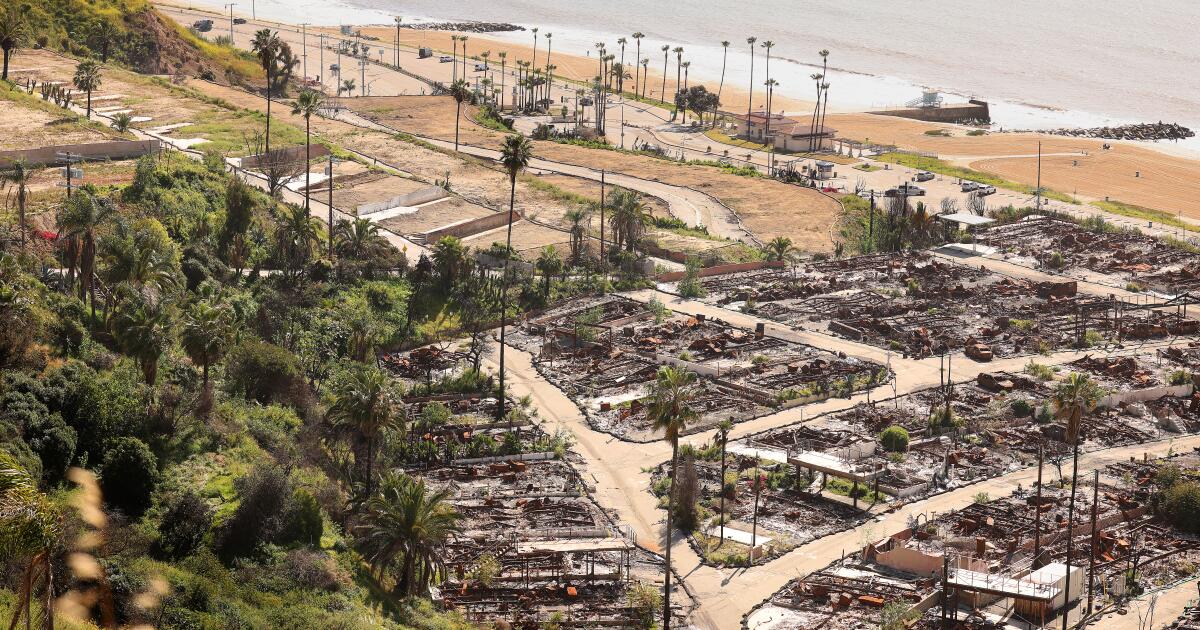
Home insurer surcharges for wildfires is legal, judge rules

