Florida
Florida’s Affordable Housing Crisis: The Troubled Path part 1 of 4


Inside Florida’s affordable housing crisis
FOX 13’s Chief Political Investigator Craig Patrick reports on Florida’s ongoing affordable housing problems, and how the state plans to combat the growing crisis in the near future.
TAMPA, Fla. – Brad Butler works long hours as a carpenter and home remodeler. He and his work partner spent three weeks and $6,000 of their own money updating a house in Dade City. But instead of getting paid for their work, they accepted a deal to rent the house at a discounted price of $1,400 per month for a year—because they could not find other options they could afford. After a year when the rent increases, they’ll look for other options.
“I’m a very honest hard-working person, but it just doesn’t seem that the economy has it in it to make hard-working people successful right now,” said Butler. “Prices have skyrocketed three times, I think. And just in this area.”
People who recently moved to the Tampa Bay area may not believe what houses used to cost. For example, in 1998, a three-bedroom waterfront home in St. Peterburg sold for $133,000. That was near the start of the tech boom, which helped ignite the housing crisis.
Two years later, the tech boom crashed. Investors moved what was left of their fortunes into real estate, snatching up houses everywhere—but especially Central Florida. Real estate in our area had flown under the radar until the age of the internet revealed comparatively cheap homes (on or near the water) for the whole world to see.
At the same time, banks lowered their standards—approving high-risk adjustable mortgages to high-risk buyers with lower credit scores— while investors flipped one home after another. Many starter homes got demolished and replaced by larger, more expensive homes—further reducing the supply of homes working class families could afford.
Then, by 2008, those high-risk buyers stopped paying the soaring costs of the high-risk mortgages. Banks failed, the economy tanked and real estate dipped—but in the Tampa Bay area, houses still cost much more than they did ten years before. For example, the same house that sold for $133,000 in 1998, sold for $275k in 2009 at the end of the downturn.

The Great Recession and glut of foreclosures crushed home builders, reducing the supply of new homes as the economy recovered.
“We did have a, a shortage of building for a while, especially in Florida after the market crash. You know, we were ground zero for the market crash. It took a long time for builders to get back online. A lot of builders went bust as well when that happened,” said St. Petersburg City Councilman Richie Floyd.
Builders who kept going started building larger, more expensive homes for larger profits—increasing the shortage of starter homes.
As millennials moved out on their own, they preferred urban living, which drove a movement from the suburbs to the spiraling costs of living in cities like Tampa, St. Pete, Clearwater, and Sarasota.
Meanwhile, the government offered new tax credits for home buyers, and interest rates dropped. Warren Buffett advised his fellow mega investors to snatch up homes—saying he’d buy a couple hundred thousand himself if he could. They followed his lead by purchasing more houses, condos, and apartments across the nation—and Florida in particular. Large investors and corporations replaced small landlords and homeowners, and they charged soaring rents (especially in urban areas).
Then President Trump signed new tax cuts on investment profits- fueling the real estate frenzy.
Then the pandemic hit. Florida stood out for lifting lockdowns and restrictions before other states. That drove a flood of relatively wealthy newcomers eager to buy.
“Post pandemic and during the pandemic, we saw this shift from high tax states to states like Florida, where people can work here and get the benefits of living here and that has only accelerated that challenge,” said Florida Policy Project and former Florida State Senator Jeff Brandes.
A wave of hurricanes, a property insurance crisis, and a trend of millennials migrating south combined to burn working-class people who can’t find an affordable place to live- unless they really scrimp and live a long way from work.
We don’t yet know the long-term impact of the Hurricanes Debby, Helene, and Milton. But studies like this one in Science Direct show hurricanes tend to drive Florida home prices up in the short term.
“750 people are moving to Florida every single day. And there just isn’t enough housing being built to support that,” said Brandes. “And that’s kind of created the supply and demand challenge.”
STAY CONNECTED WITH FOX 13 TAMPA:



Florida
New Florida domestic violence laws take effect, adding tougher penalties and new victim protections

Several new Florida laws aimed at strengthening the state’s response to domestic violence and dating violence took effect Wednesday, including tougher penalties for repeat offenders.
The changes come right after as investigators in Jacksonville responded to a Northside shooting that police say stemmed from a domestic dispute and left a 4-year-old girl dead and her 2-year-old sister and their mother in life-threatening condition.
The new laws also arrive months after a high-profile domestic violence case in Bradford County. Deputies said a mother, Rachael Kerr, was killed in an apparent murder-suicide on Jan. 29 after her estranged husband shot her. Investigators said their two children were inside the home at the time.
Below is a breakdown of what’s changing under the new laws.
Tougher penalties for repeat domestic violence offenders (HB 277)
One of the biggest changes is a new penalty enhancement for people who commit a domestic violence crime and already have a prior domestic violence conviction.
Under HB 277, the penalty level for a new domestic violence offense can be reclassified upward if the person has a prior conviction for domestic violence.
Here’s the breakdown in the new law:
-
A second-degree misdemeanor can be reclassified to a first-degree misdemeanor
-
A first-degree misdemeanor can be reclassified to a third-degree felony
-
A third-degree felony can be reclassified to a second-degree felony
-
A second-degree felony can be reclassified to a first-degree felony
-
A first-degree felony can be reclassified to a life felony
Electronic monitoring pilot programs for certain domestic violence and injunction cases (HB 277)
HB 277 also creates new electronic monitoring pilot programs that can apply in certain cases involving domestic violence crimes and violations of protective injunctions when a court has issued a no-contact order as a condition of probation.
The law creates:
-
A misdemeanor-level pilot program in Pinellas County (July 1, 2026 through June 30, 2028)
-
A felony-level pilot program in Florida’s Sixth Judicial Circuit (July 1, 2026 through June 30, 2028)
In those pilot areas, the law allows a judge to order electronic monitoring as a condition of probation. It also requires monitoring in certain situations if a judge finds clear and convincing evidence the defendant poses a threat of violence or physical harm to the victim.
The law also requires evaluations and reports to the Legislature on how the pilot programs are working.
Expanded address confidentiality protections for dating violence victims (SB 296)
Another new law, SB 296, expands Florida’s Address Confidentiality Program to include victims of dating violence, not just domestic violence.
The Address Confidentiality Program is designed to help victims keep their residential, work or school addresses from being publicly disclosed through records requests.
SB 296 also defines “dating violence” in state law for purposes of the program, describing a range of violent acts or threats committed by someone in a continuing and significant romantic or intimate relationship with the victim.
New 911 alert system feasibility study (SB 296)
SB 296 also directs the state to explore the creation of a web-based 911 alert system for victims of domestic violence and dating violence.
The law says the study should look at whether an alert system could do things like:
-
Create a unique telephone number for each user that connects to a public safety answering point (PSAP)
-
Allow a user to enter a code or phrase after contacting 911 to indicate they need immediate law enforcement help
-
Support real-time data sharing between 911 centers and law enforcement agencies
The Division of Telecommunications within the Department of Management Services must report the results of that study to the Legislature by Jan. 31, 2027, according to the law.
Help is available
If you or someone you know is experiencing domestic violence, help is available 24/7 through the National Domestic Violence Hotline at 1-800-799-SAFE.
Resources
If you or someone you know is experiencing domestic violence — help is available 24/7 through the National Domestic Violence Hotline at 1-800-799-SAFE.
Additionally, there are a number of resources in the Jacksonville area that provide help for victims of domestic violence.
Hubbard House
The Hubbard House has a hotline open 24/7 with operators who will talk confidentially to anyone experiencing domestic violence or questioning aspects of their relationship.
Operators can be contacted at 904-354-3114.
Victim services
The City of Jacksonville’s Social Services Division provides referral and victim advocacy services to victims of crime. Services are intended to help reduce trauma associated with domestic violence crimes.
Calls made to 904-630-6300 are all confidential.
InVEST (Intimate Violence Enhanced Services Team)
InVEST is a program aimed at increasing victim safety in the most potentially lethal cases. It’s a joint effort by the Jacksonville Sheriff’s Office, City of Jacksonville, and Hubbard House.
On a daily basis, InVEST staff review police reports and assess cases for lethal indicators. They then contact the victim to offer services.
For further information, please call (904) 255-3388.
Trinity Rescue Mission
Trinity Rescue Mission offers services to women who are trying to escape from dangerous circumstances and situations. It’s not a certified shelter, but it will provide assistance.
Copyright 2026 by WJXT News4JAX – All rights reserved.

A 37-year-old man was jailed June 29 after Port St. Lucie Police reported finding nearly 5 ounces of cocaine, other drugs and firearms at his home, according to an affidavit.
Wallick Cooper, of the 800 block of Southwest Monica Street in Port St. Lucie, was arrested on charges including a single count of cocaine trafficking; two counts of possession of controlled substance without prescription; and three counts possession of firearm or ammunition by a felon.
Police conducting surveillance June 25 at a gas station in the 300 block of Southwest Port St. Lucie Boulevard reported a Mercedes-Benz arrived and backed in. Detectives reported seeing a suspected drug transaction between the driver and a man who approached the driver’s window.
Investigators stopped the Mercedes after it left, alleging the window tint was illegal. Cooper, the only occupant, reportedly “immediately began lying about where he was coming from and where he was heading,” an affidavit states.
He let police search the vehicle. They found no drugs but turned up about $1,000 they suspected came from drug sales, though Cooper “smirked and denied accusations,” the affidavit states.
Cooper was released from the scene.
Police told his probation officer about the encounter, and the probation officer on June 29 reported finding suspected drugs in Cooper’s home.
Ultimately, police got a search warrant, and they reported finding about 4.92 ounces of cocaine; about 12.9 ounces of marijuana; three firearms; and a small amount of pills.
Cooper has a medical marijuana card, but hadn’t gotten pot since February, according to police. Police reported the recovered marijuana wasn’t packaged “consistent with legally possessed marijuana.”
Cooper was held July 1 in the St. Lucie County Jail on no bond, a jail official said.
Will Greenlee is a breaking news reporter for TCPalm. Follow Will on X @OffTheBeatTweet or reach him by phone at 772-267-7926. E-mail him at will.greenlee@tcpalm.com.
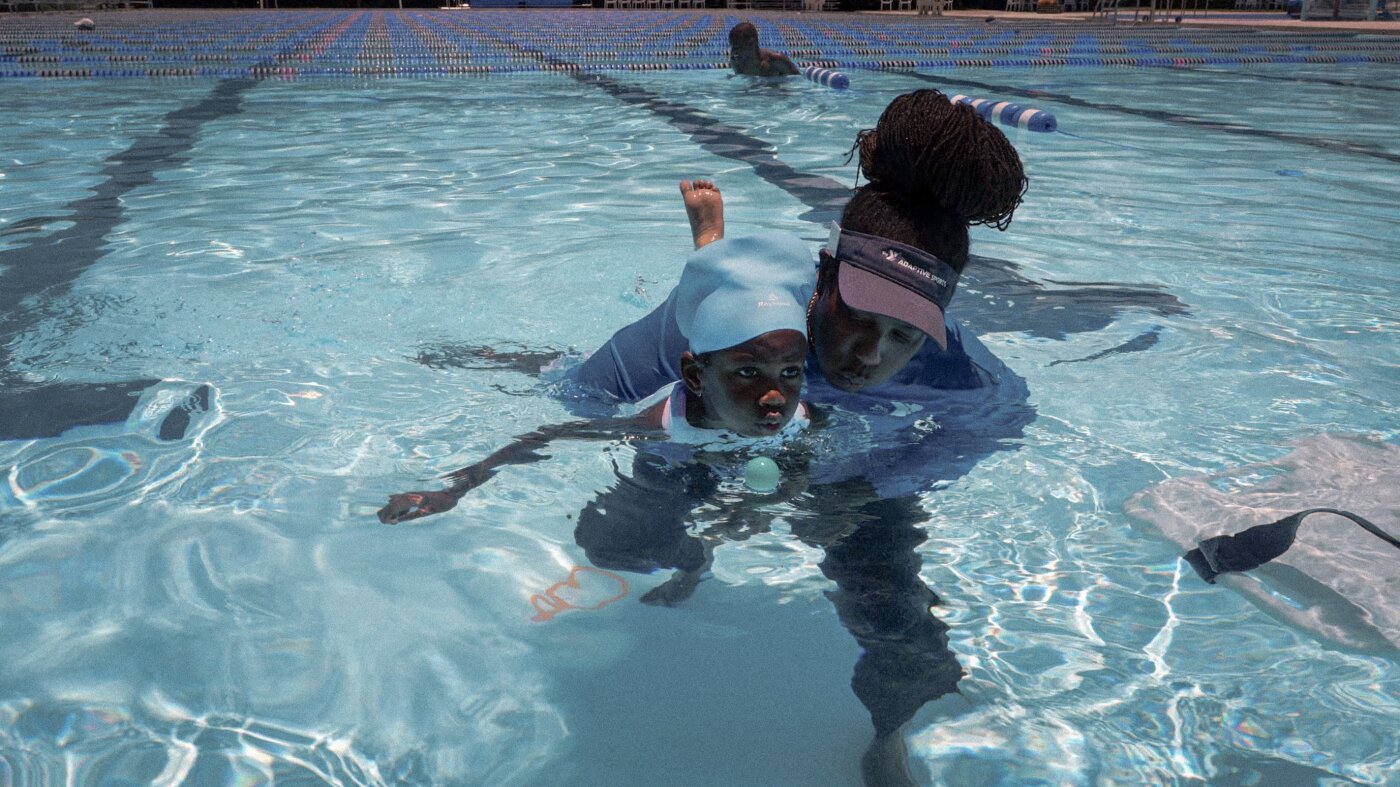
Garland Jones, recreational therapist and senior program director of the YMCA of South Florida’s special needs program, teaches Mackenzie Wesley, 5, to breathe safely in water by using a ping pong ball as a visual aid.
LA Johnson/NPR
hide caption
toggle caption
LA Johnson/NPR
WESTON, Fla. — Mackenzie Wesley sports a big grin and bright blue Lilo & Stitch swim gear as she runs into her weekly swim lessons. It’s fitting, because the 5-year-old has something in common with movie character Lilo: She adores water.
“Whether it’s the pool or beach, she enjoys it fully,” says her dad Steven Wesley.
Mackenzie isn’t alone: Many kids with autism share a natural love for water because it can be sensory bliss — the feeling on their skin, the pressure and the sparkle of the water can all be soothing. Lucky for her, Mackenzie lives here, less than an hour outside of Miami in a state that’s dotted with bodies of water.

But there’s a tragic reality tied to that fact, as Mackenzie’s mom, Brittany Bucknor, is all too aware. “In Florida, there’s water everywhere, and also with kids her age, and also just being on the spectrum, it’s a very — way higher — rate of having an incident of drowning.”
Kids with autism are 160 times more likely than other children to die from drowning, according to a seminal 2017 study from Columbia University. In fact, in Florida, most children drown in backyard pools. That’s largely because about half of autistic children have a tendency to wander from safe settings. That fact, combined with an attraction to water can make for a dangerous combination. Quality swim lessons can help.
That’s one of the reasons Mackenzie’s parents enrolled her in Swim Buddies, the YMCA of South Florida’s low-cost program aimed at children with disabilities. It’s also why the state of Florida, which has one of the highest childhood drowning rates in the nation, is expanding a voucher program on July 1 that will put children ages 1-7 who have autism at the front of the line for subsidized swim lessons. “We have tragic circumstances and stories across the state of Florida of young children with autism that are wandering away, they’re eloping from their homes, from their classrooms,” says Florida state Rep. Anna Eskamani, a Democrat, and one of the lawmakers who sponsored the bipartisan bill that changed the state’s swim vouchers.
“These [tragedies] are so preventable, but if that child at an early age does not have access to drowning prevention and swimming lessons, then those statistics will only continue.”
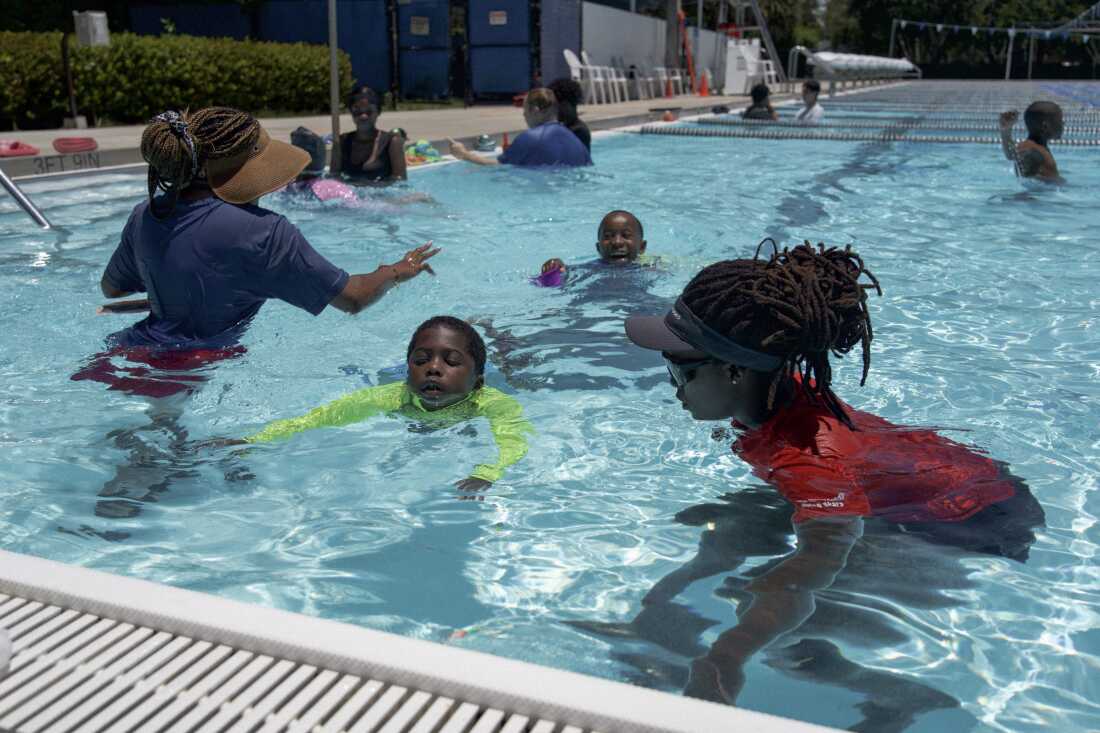
Recreational therapist Tiera Chaney works with Amir Williams, 6, during a recent Swim Buddies session.
LA Johnson/NPR
hide caption
toggle caption
LA Johnson/NPR
Once the updated law takes effect, many healthcare providers across the state will begin providing parents of newborns with information about drowning prevention and the state swim program, Eskamani says. Generally, the voucher comes out to about $200, she says, and pays for up to eight swim lessons.
A “whole-person” approach
The YMCA of South Florida has one of the largest adaptive recreational programs for kids with special needs in the area, including those with autism, who make up the fastest-growing group of children with disabilities. “We provide this program for those with a variety of disabilities, primarily over 60 percent of our youth who do come have a diagnosis of autism,” says Alison Bregman-Rodriguez, vice president of the YMCA of South Florida, where she oversees 64 locations, 27 of which serve children with learning differences. “This program, however, does serve all who want to feel like they belong.”
When Mackenzie’s parents learned that their local YMCA already had a robust and low-cost program for one-on-one instruction with kids with disabilities in mind, they jumped on the opportunity. “I really appreciate the program and specifically Miss Garland. She’s been very patient with Mackenzie and challenged her too,” Bucknor says.
She is referring to Garland Jones, who oversees the special needs recreational program here and also spends time working directly with swimmers, alongside other recreational therapists and trained volunteers. Jones agrees that patience is key in working with kids with disabilities, something that’s emphasized in the training for instructors. “We come at everything with a whole-person approach instead of just a physical approach. We do the physical, the emotional, the social.”

A selection of colorful, sparkly toys are often used for positive reinforcement and redirection in Swim Buddies lessons.
LA Johnson/NPR
hide caption
toggle caption
LA Johnson/NPR
The program’s hallmarks are individualization and one-on-one instruction rather than traditional group lessons. Staffers assess each child to learn about their needs and tailor their lessons in response. “We might have a kid who loves to get in the bathtub and splash around in the water or we might have a child who is very fearful of getting in the water,” Jones says.
On this recent summer Sunday, Tania Santiago Perez is sitting poolside, observing the Swim Buddies lessons. She is a professor at Florida International University who studies effective swim instruction for children with autism, including at this YMCA, with research partner and professor Tana Carson. Their research shows that when done right, swim instruction for kids with autism can help save lives. “The fact that we have been seeing that in five or six sessions they’re able to improve swim skills, to us, is very powerful,” Santiago Perez says.
Each lesson begins with group introductions to help swimmers build trust with the teachers and fellow participants in the pool. “That’s one thing to promote group cohesion and then the socialization with other kids,” says Santiago Perez. “Because with kids with autism, sometimes they’re very to themselves and that social behavior is one thing we want to develop.”
After the meet-and-greet, each child must wait to be explicitly told it’s safe to enter the water.

The adaptive swim lessons at the YMCA of South Florida serve more than 600 children with disabilities, but the program is overwhelmed with requests. Jones says she hopes the state will provide more funding to help facilities like theirs meet the need.
LA Johnson/NPR
hide caption
toggle caption
LA Johnson/NPR
Because many autistic children are prone to “eloping,” or running away suddenly, Santiago Perez says instructors are trained to stay no more than an arm’s length from each swimmer.
During one Swim Buddies session, a swimmer dashes out of the pool. “So the therapist is trying to redirect him back to get inside the pool,” says Santiago Perez as she points to the instructor gently but firmly guiding the child physically and with clear verbal commands.
Next, the instructor tries luring the child back into the pool with a sparkly pink rubber duck, which does the trick. “Toys help a lot because at the end of the day, they’re kids and kids learn by play and positive reinforcement,” Santiago Perez says.
In another corner of the pool, Garland Jones is working with Mackenzie Wesley on safe breathing techniques above the water because, in the past, putting her face under water has been uncomfortable and led to choking. Jones is using a bright blue ping pong ball in front of Mackenzie so she can see how her breath is physically moving the ball.
Once Mackenzie is eased in, Jones helps her practice blowing bubbles in the water, making a humming noise to show what it should sound like. “Hmmmm,” mimics Mackenzie. Then she ducks her head under water and pops back up, with a smile on her face. “Mackenzie has grown so much. I’m so proud of her,” says Jones, who’s been working with her in Swim Buddies for over a year. “We had a couple of instances where she was [swallowing] water a lot.” Now, she blows bubbles and goes under water like a pro.
Demand overwhelms supply of lessons
Parents looking on during Swim Buddies lessons have heard about the swim voucher program, and many were excited that it could make life-saving lessons affordable for lower-income families. “People who don’t have kids on the spectrum don’t take in mind that we’re paying a lot already for stuff like behavioral therapy, speech, occupational therapy,” says Augusto Sandino, whose son David has been in Swim Buddies for a year and a half. “All the programs, everything is money, man. So every little bit helps, and also, creating these inclusive communities is a big win.”
While Florida maintains a list of approved providers around the state, Jones and Santiago Perez both share the concern that many facilities lack enough qualified instructors. “You have people who are biters, spitters, who will scratch, things of that nature,” Jones says. “I just think we need more individuals who are trained in working with individuals with special needs so that they can be successful.”
The YMCA of South Florida is already overwhelmed with requests for its specialized swim lessons. Alison Bregman-Rodriguez, the vice president, says they do their best to find a spot for every child, but they don’t want to compromise the quality of lessons they provide. And while the voucher may increase demand, facilities like this often have to leverage other sources of money to keep programs like Swim Buddies afloat.

Researcher Tania Santiago Perez of Florida International University helped train some of the instructors at the Swim Buddies program. Her research has found that even after five or six quality lessons, most kids with autism showed improvement.
LA Johnson/NPR
hide caption
toggle caption
LA Johnson/NPR
Even before the new priority for children with autism, demand for swim lessons outstripped supply. “The problem is access,” says Santiago Perez. In the program’s first year, only about a third of families who applied for vouchers actually got them. She worries that the gap will only increase.
NPR reached out to the Florida Department of Health for details about how the changes to the swim program will work. They declined an interview and did not answer questions about how many vouchers would be available.
As Mackenzie Wesley’s swim lesson comes to an end, her parents wrap her in a towel and share that just a few weeks ago, she had a big milestone: She was invited to her very first pool party. “She was in the pool like she was a pro, an expert,” her mom says. “She had her little floatie and she was doing her own thing, so she’s been a lot more confident in the water and a way stronger swimmer for sure.”
This, says Garland Jones, is the kind of milestone that makes her work so rewarding. It means Mackenzie is on her way to having the skills that will allow her to embrace her natural love for water, and to do it safely.
Edited by: Nirvi Shah
Visual design and development by: LA Johnson
-

 San Francisco, CA3 minutes ago
Discovery Bay driver arrested for San Francisco fatal vehicle collision | Contra Costa Herald
-

 Dallas, TX10 minutes ago
Erling Haaland’s Dallas Western wear purchase goes viral
-

 Miami, FL13 minutes ago
Miami’s FIFA Fan Fest draws thousands to Bayfront Park to watch Team USA win World Cup match against Bosnia
-

 Boston, MA18 minutes ago
2026 Yukon Denali Ultimate gets pricey, but tops the charts
-

 Denver, CO25 minutes ago
Nuggets Sign Marvin Bagley to 1-Year Deal: What It Means
-

 Seattle, WA28 minutes ago
FOURTH OF JULY 2026: Here’s where Seattle Parks will leave the lights on longer
-
 San Diego, CA33 minutes ago
USA fans pack San Diego bar to cheer on USMNT’s dominant World Cup knockout win
-
 Milwaukee, WI40 minutes ago
Hundreds rally on Milwaukee’s South Side against ICE arrests and in solidarity with immigrants

