Florida
Amendment 3: Will pot legalization spark a stoned driving epidemic in Florida?


As Florida voters consider legalizing marijuana in November, opponents are painting a scary picture of what might happen: an epidemic of stoned driving that will make the state’s roads more dangerous and deadly.
But the research from other states that have legalized pot isn’t conclusive, and backers of Amendment 3 argue treating the drug like alcohol — making it legal but regulated — will make Floridians safer.
Two of Florida’s largest and most influential law enforcement groups are opposed to the measure, convinced it will lead to more deaths on the road.
If they need an example, they can highlight the horrific May accident in Ocala that killed eight farmworkers. Their bus was hit by a truck driven by a man who told police he’d smoked marijuana oil and taken prescription drugs.
Paula Cobb, whose daughter was killed near the University of Central Florida by a driver police believe was impaired by marijuana, said Florida will need a plan — and tougher penalties for those who smoke and get behind the wheel — if the ballot measure passes.
“We’ve got to better enable our law enforcement and give them better tools, better education, stronger regulations and guidance,” said Cobb, who lives in Columbia, South Carolina.
Her daughter, London Harrell, then a UCF senior, was struck by a hit-and-run driver when she was walking home in 2019 from The Knight’s Pub near campus. The driver, Yousuf Hasan, left Harrell dying in the street. Hasan, 30, failed a field sobriety test and a blood test detected the active ingredient in marijuana. He was sentenced to 12 years in prison.
Cobb doesn’t oppose legalization, but she thinks states need to be prepared. In particular, she said educational campaigns are important to hammer home the dangers of marijuana and driving to the public.
The amendment needs at least 60% support from Florida voters in the Nov. 5 election to make recreational marijuana legal. Several polls have shown Amendment 3 clearing that threshold, though one from Florida Atlantic University showed it just short with 56% support.
Twenty-four states and the District of Columbia have legalized recreational marijuana, and impaired driving has been an issue for policymakers. Minnesota launched a massive public education campaign to coincide with marijuana legalization warning about the dangers of smoking and driving and reiterating that driving stoned is a crime. Colorado includes representatives from the marijuana industry on its DUI task force.
The Florida Highway Patrol already has highlighted the issue of marijuana-impaired driving with a “Drive Baked, Get Busted” campaign. The agency rolled out billboards, posters and video ads in 2018 in the wake of the state’s vote to legalize medical marijuana.
Spend your days with Hayes
Subscribe to our free Stephinitely newsletter
Columnist Stephanie Hayes will share thoughts, feelings and funny business with you every Monday.
You’re all signed up!
Want more of our free, weekly newsletters in your inbox? Let’s get started.
Explore all your options
‘Marijuana DUIs are difficult to detect’
Finding and then successfully prosecuting marijuana-impaired drivers isn’t easy, said Joel Leppard, an Orlando DUI lawyer.
“Marijuana DUIs are difficult to detect,” he said. “Officers are trained to spot drunk drivers, not stoned ones. The roadside exercises they use are designed for alcohol, not marijuana. And the experts who are trained to recognize drug impairment — there aren’t many of them, so they rarely get involved in these cases.”
While marijuana breathalyzers are in development, no reliable one is widely available. Florida and many other states have no standard limit for marijuana’s active ingredient in the blood, meaning there is no clear threshold for prosecution as there is with alcohol. Marijuana can also linger in the system for weeks, making it hard to establish if someone drove under the influence.
As marijuana becomes legal across the country, specialized officers known as drug-recognition experts are in short supply.
Law enforcement agencies in Florida have 342 drug-recognition experts, who are trained to spot drug-impaired drivers, according to the the International Association of Chiefs of Police. That’s about one drug-recognition expert per 66,000 Floridians.
The Florida Highway Patrol has 54, and the Orange County Sheriff’s Office has six drug-recognition experts. But all county officers receive generalized draining on driving under the influence, said Michelle Guido, a sheriff’s office spokeswoman.
Orange County Sheriff John Mina is among law enforcement leaders with concerns about legalization, issuing a statement that voters should consider the dangers of impaired driving. The Florida Sheriffs Association and the Florida Police Chiefs Association oppose Amendment 3.
Marijuana is already available through an unregulated street market, said Morgan Hill, a spokeswoman for Safe & Smart Florida, the group backing Amendment 3, when asked about the issue of pot-impaired driving.
“We expect adults to make responsible choices and believe no one should be driving under the influence of any substance,” she said. “We look forward to working with the Legislature to ensure there is continued education and common-sense regulation to support our law enforcement officers to identify and stop impaired driving of any kind.”
How dangerous is stoned driving?
Marijuana affects driving by slowing reaction times, impairing judgment of distance and decreasing coordination, according to the National Highway Traffic Safety Administration.
Guohua Li, a researcher at Columbia University, has been studying whether marijuana legalization results in more deadly crashes.
I It’s complicated to draw conclusions from crash statistics because traffic deaths in recent years have been affected by improved car-safety features and ride sharing services like Uber making it easier for intoxicated people to avoid driving.
And studying marijuana-related driving deaths can be tricky as some drivers could test positive for the drug, even if they smoked a week before the crash. In other cases, a driver might have used marijuana but also other drugs or alcohol, making it hard to tease out pot’s role in a crash.
Roadway deaths declined consistently for 30 years, but progress stalled over the past decade and went in the wrong direction in 2020 and 2021, according to the U.S. Department of Transportation.
Studies on marijuana legalization’s role in this trend delivered conflicting results, but Li said he thinks legalization has led to more traffic deaths.
“More scientifically rigorous methods have shown that legalization of recreational cannabis is associated with modest but statistically significant increase in fatal motor vehicle crashes,” he said.
Research has shown marijuana is even more dangerous if it is mixed with alcohol, which is becoming more common with legalization, Li added.
Legalization advocates, however, note a study that showed changes in traffic death rates for Washington and Colorado were not statistically different from those in similar states that did not legalize marijuana.
In 2023, marijuana was involved in 190 traffic deaths in Florida, according to Florida Highway Safety and Motor Vehicles. It’s possible those cases involved multiple drugs as the state does not provide statistics on crashes in which only marijuana was used.
People need to think of the consequences impaired driving could have on others, Cobb said.
Her daughter’s future looked bright, she said. An event management major at UCF, Harrell had just completed a summer internship in Amsterdam. Aside from her studies, she helped to raise money for sick children and cancer patients.
“He took her life,” Cobb said. “He took so much away from the world — the potential that she already realized and the greatness of the person that she was.”



/cloudfront-us-east-1.images.arcpublishing.com/tbt/4DLXMJBS6JDU3N75Q6AVJCW4H4.jpeg?w=400&resize=400,240&ssl=1 "Rubio, Scott call fast-tracking of Florida state park golf course plan ‘ridiculous’")
/cloudfront-us-east-1.images.arcpublishing.com/tbt/4DLXMJBS6JDU3N75Q6AVJCW4H4.jpeg?w=80&resize=80,80&ssl=1 "Rubio, Scott call fast-tracking of Florida state park golf course plan ‘ridiculous’")


A 77-year-old man is facing charges after deputies say he threatened a woman with a firearm during a domestic incident in the Florida Keys.
According to the Monroe County Sheriff’s Office, the incident happened around 2:50 p.m. on March 28 near Mile Marker 38 on U.S. 1.
Authorities say Charles Durand Wilkinson, of Okeechobee, retrieved a revolver and told the victim, “I aught to shoot you.”
The woman was able to pull over, disarm Wilkinson, and throw the firearm into nearby bushes, deputies said. The weapon was later recovered by responding officers.
Wilkinson was arrested and charged with aggravated assault with a deadly weapon.
No serious injuries were reported.

The train hit a pedestrian about 7:20 a.m. March 29 at the 77th Street railroad crossing, just west of Old Dixie Highway.
A man died in a freight train crash on the morning of March 29 in Indian River County, according to sheriff’s officials.
The Florida East Coast Railway train hit the man, identified as a pedestrian, about 7:20 a.m. at the 77th Street railroad crossing, just west of Old Dixie Highway, according to officials.
The man was pronounced deceased at the scene, according to officials. His name was withheld pending notification of his next of kin.
Because of the length of the train, several crossings in the area remain closed until the train can be moved. Drive alternate routes if traveling in the area.
County Road 510 at the crossing and 77th Street at 58th Avenue are currently closed.
A Brightline train was seen stopped just south of 69th Street unable to travel north.
Sheriff’s deputies and railroad officials remain at the scene investigating the cause of the crash.
No further information was immediately available.
Laurie K. Blandford is a breaking news reporter with TCPalm. Email her at laurie.blandford@tcpalm.com.

HALLANDALE BEACH, Fla. — Commandment broke his maiden last fall at Churchill Downs. He’ll soon be headed back there, looking for a much bigger victory.
By the slimmest of margins — a photo finish — Commandment won the Florida Derby on Saturday, completing a worst-to-first rally in the six-horse field and overtaking The Puma with the final bob of his head.
It was the fourth consecutive win for Commandment, who had jockey Flavien Prat aboard on Saturday. Next up: the Kentucky Derby, the start of the Triple Crown series on May 2 at Churchill Downs.
“He’s a racehorse, bottom line,” said trainer Brad Cox, who saddled the Florida Derby winner for the second consecutive year. “He always shows up. … He’s a Grade 1 winner. Florida Derby’s a big race. Proud of the horse. Very proud of the horse.”
The Puma took the lead at the top of the stretch and was maybe an inch or two shy of keeping it the rest of the way. Bettors roared when the official order of finish was announced, and Cox could finally exhale.
“Little too close for comfort,” Cox said.
Commandment returned $5.80 for the win. Chief Wallabee was third, favorite Nearly — the 7-5 top choice — was fourth and Wayne’s Law was fifth.
Commandment got 100 points toward the Road to the Kentucky Derby leaderboard. The Puma got 50 for finishing second, Chief Wallabee got 25 for third, Nearly got 15 for placing fourth and the fifth-place showing by Wayne’s Law earned him 10 points.
The Puma and Commandment went into Saturday’s race with spots for the Kentucky Derby basically secured, based on their point totals coming in — The Puma had 56, Commandment 50, and those likely would be enough to make the field.
Now, assuming both emerge from Saturday healthy and stay that way, they’re locks for the Run for the Roses.
“He’s got a great mind,” said Cox, just the fourth trainer to win the Florida Derby in back-to-back years, joining Todd Pletcher (who did it three times), Nick Zito and Horace Jones. “That’s going to take him a long way, the first Saturday in May.”
History has shown there’s a clear path from the winner’s circle at Gulfstream Park to the winner’s circle at Churchill Downs. The Florida Derby has been run by 26 eventual Kentucky Derby winners, more than any other prep race — most recently Sovereignty last year. Sovereignty was second in last year’s Florida Derby.
And Florida Derby winners have gone on to win 31 Triple Crown series races, including the Kentucky Derby on 15 occasions — the last of which was when Always Dreaming pulled it off in 2017. Those 31 victories in the Kentucky Derby, Preakness and Belmont have come from 21 different Florida Derby winners.
UAE Derby
On Dubai World Cup day at Meydan, Wonder Dean won the UAE Derby for trainer Daisuke Takayanagi.
Wonder Dean is the fifth consecutive Japanese-trained winner of the UAE Derby. All four of the others went to the Kentucky Derby and Takayanagi — who guided T O Password to a fifth-place finish at the Run for the Roses in 2024 — said Wonder Dean is on his way as well.
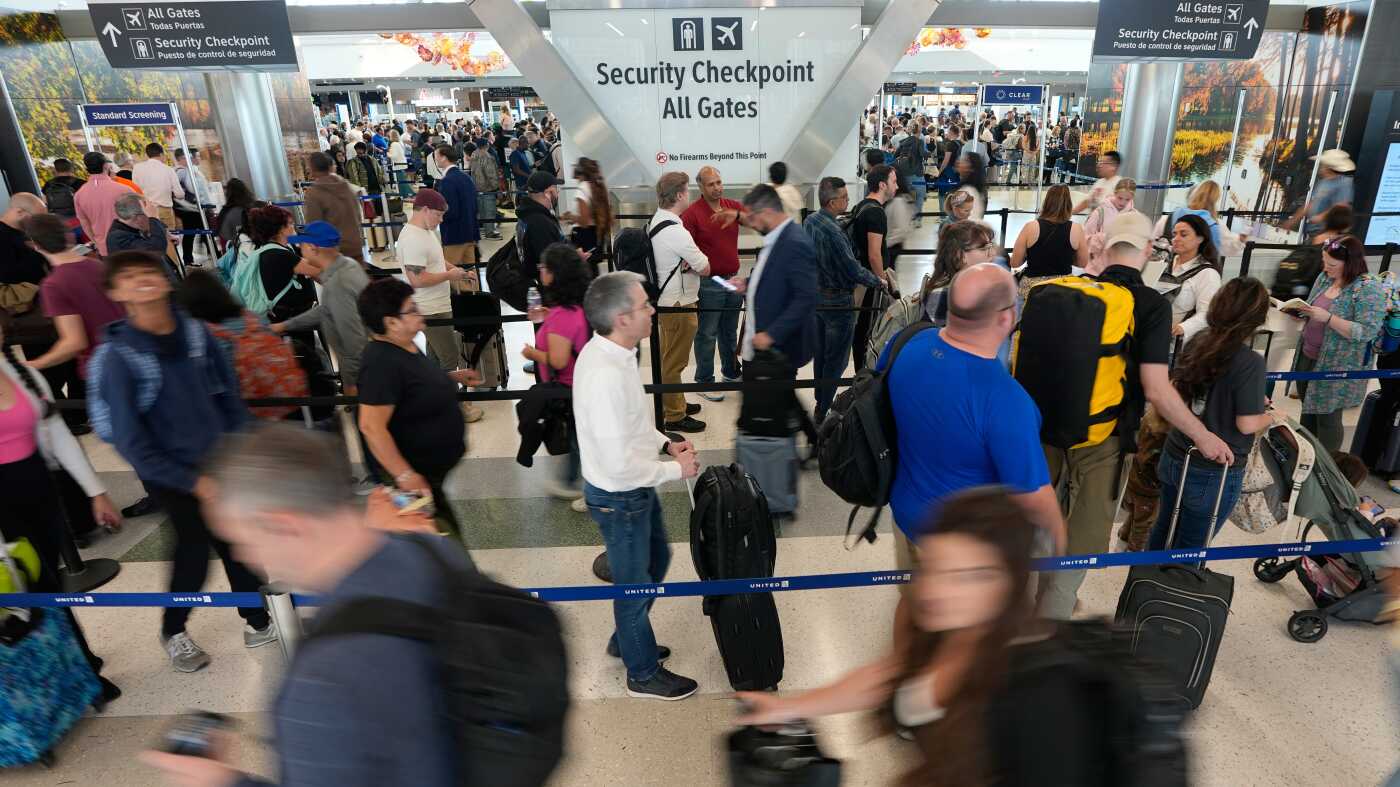
ICE officers could remain at airports after TSA workers are paid

Wolverines make Frozen Four

Bay Area residents hold rally in SF as war with Iran enters 2nd month

Dallas Jenkins says he is the ‘evangelical mascot of the LDS church’ and talks Easter celebrations

New video shows aftermath of police shooting in Downtown Miami

Florida High School Football Rankings: Top 25 teams – Oct. 21

How old is Bo Nix? What to know about Oregon quarterback ahead of 2024 NFL Draft

Cleary's 21 help Le Moyne down Central Connecticut State 69-64 in OT

99th annual Pony Swim held in Virginia

Indiana Members Credit Union announced as new anchor tenant at Bottleworks District
ICE officers could remain at airports after TSA workers are paid

Scathing report claims nation’s oldest labor union ‘betrayed’ MAGA members through ‘shocking’ spending

Republican US lawmaker demands Congress vote on any Iran troop deployment

So you went to a No Kings protest. Now what?

JD Vance says he was ‘obsessed’ with UFOs, believes aliens are actually ‘demons’
-

 Sports1 week ago
IOC addresses execution of 19-year-old Iranian wrestler Saleh Mohammadi
-

 New Mexico1 week ago
Clovis shooting leaves one dead, four injured
-

 Miami, FL4 days ago
Jannik Sinner’s Girlfriend Laila Hasanovic Stuns in Ab-Revealing Post Amid Miami Open
-

 Tennessee6 days ago
Tennessee Police Investigating Alleged Assault Involving ‘Reacher’ Star Alan Ritchson
-

 Minneapolis, MN4 days ago
Boy who shielded classmate during school shooting receives Medal of Honor
-

 Politics1 week ago
Schumer gambit fails as DHS shutdown hits 36 days and airport lines grow
-

 Science1 week ago
Record Heat Meets a Major Snow Drought Across the West
-

 Technology1 week ago
YouTube job scam text: How to spot it fast