World
Greenland leaders push back on Trump’s calls for US control of the island: ‘We don’t want to be Americans’


NEWYou can now listen to Fox News articles!
Greenland’s leadership is pushing back on President Donald Trump as he and his administration call for the U.S. to take control of the island. Several Trump administration officials have backed the president’s calls for a takeover of Greenland, with many citing national security reasons.
“We don’t want to be Americans, we don’t want to be Danes, we want to be Greenlanders,” Greenland Prime Minister Jens-Frederik Nielsen and four party leaders said in a statement Friday night, according to The Associated Press. Greenland, a self-governing Danish territory and a longtime U.S. ally, has repeatedly rejected Trump’s statements about U.S. acquiring the island.
Greenland’s party leaders reiterated that the island’s “future must be decided by the Greenlandic people.”
“As Greenlandic party leaders, we would like to emphasize once again our wish that the United States’ contempt for our country ends,” the statement said.
TRUMP SAYS US IS MAKING MOVES TO ACQUIRE GREENLAND ‘WHETHER THEY LIKE IT OR NOT’
Greenland has rejected the Trump administration’s push to take over the Danish territory. (Thomas Traasdahl/Ritzau Scanpix / AFP via Getty Images; Al Drago/Bloomberg via Getty Images)
Trump was asked about the push to acquire Greenland on Friday during a roundtable with oil executives. The president, who has maintained that Greenland is vital to U.S. security, said it was important for the country to make the move so it could beat its adversaries to the punch.
“We are going to do something on Greenland, whether they like it or not,” Trump said Friday. “Because if we don’t do it, Russia or China will take over Greenland, and we’re not going to have Russia or China as a neighbor.”
Trump hosted nearly two dozen oil executives at the White House on Friday to discuss investments in Venezuela after the historic capture of President Nicolás Maduro on Jan. 3.
“We don’t want to have Russia there,” Trump said of Venezuela on Friday when asked if the nation appears to be an ally to the U.S. “We don’t want to have China there. And, by the way, we don’t want Russia or China going to Greenland, which, if we don’t take Greenland, you can have Russia or China as your next-door neighbor. That’s not going to happen.”
Trump said the U.S. is in control of Venezuela after the capture and extradition of Maduro.
Nielsen has previously rejected comparisons between Greenland and Venezuela, saying that his island was looking to improve its relations with the U.S., according to Reuters.
A “Make America Go Away” baseball cap, distributed for free by Danish artist Jens Martin Skibsted, is arranged in Sisimiut, Greenland, on March 30, 2025. (Juliette Pavy/Bloomberg via Getty Images)
FROM CARACAS TO NUUK: MADURO RAID SPARKS FRESH TRUMP PUSH ON GREENLAND
Danish Prime Minister Mette Frederiksen said on Monday that Trump’s threats to annex Greenland could mean the end of the North Atlantic Treaty Organization (NATO).
“I also want to make it clear that if the U.S. chooses to attack another NATO country militarily, then everything stops. Including our NATO and thus the security that has been provided since the end of the Second World War,” Frederiksen told Danish broadcaster TV2.
That same day, Nielsen said in a statement posted on Facebook that Greenland was “not an object of superpower rhetoric.”
Greenland’s Prime Minister Jens-Frederik Nielsen stands next to Denmark’s Prime Minister Mette Frederiksen during a visit to the Danish Parliament in Copenhagen on April 28, 2025. (Liselotte Sabroe/Ritzau Scanpix/AFP via Getty Images)
CLICK HERE TO DOWNLOAD THE FOX NEWS APP
White House deputy chief of staff for policy Stephen Miller doubled down on Trump’s remarks, telling CNN in an interview on Monday that Greenland “should be part of the United States.”
CNN anchor Jake Tapper pressed Miller about whether the Trump administration could rule out military action against the Arctic island.
“The United States is the power of NATO. For the United States to secure the Arctic region, to protect and defend NATO and NATO interests, obviously Greenland should be part of the United States,” he said.
The Associated Press contributed to this report.



NEWYou can now listen to Fox News articles!
The U.S.-designated terrorist Houthi movement that controls northern Yemen condemned Saudi Arabia for allegedly targeting the Sanna airport with airstrikes, sparking a possible new front with Iran’s terror-proxy.
While the Houthis agreed to a 2022 truce with the Saudi-led coalition that opposes its rule, the Houthis have frequently disrupted commercial shipping in the Red Sea since they joined Hamas following its invasion of Israel on Oct. 7, 2023. The latest flare up of military strikes could lead to a resumption of war between the Kingdom of Saudi Arabia and the Houthis.
Houthi military spokesperson Yahya Saree called the attacks “blatant aggression” and said they had ended a period of de-escalation. He said Saudi Arabia would bear the consequences and that the attack would not go unanswered. The Houthis threatened to strike King Khalid Airport in Riyadh in Saudi Arabia. Iran’s Press TV reported on its X account that, “Iran condemns Saudi attack on Sana’a airport as breach of law, Yemen sovereignty.”
US CLAWS BACK KEY CONCESSION TO IRAN AFTER FRESH ATTACKS ON COMMERCIAL SHIPS IN STRAIT OF HORMUZ
Smoke rises following an airstrike at Sanaa International Airport, in Sanaa, Yemen, July 13, 2026, in this screengrab taken from a video. (Al Masirah Handout via Reuters)
The official slogan of the Houthi movement (Ansar Allah) is: “God is great, Death to America, Death to Israel, Curse upon the Jews, Victory to Islam.”
Earlier on Monday, the government’s defense ministry said the runway at Sanaa International Airport had been targeted to prevent an Iranian plane from landing. An armed forces spokesman later said the aircraft had landed at Houthi-controlled Hodeidah airport.
Salman Al-Ansari, a prominent Saudi geopolitical analyst, told Fox News Digital, “The Iranian-backed Houthi militia is now in a desperate position, attempting to demonstrate its usefulness to its Iranian masters amid the ongoing U.S.-Iran war.”
Yemen’s Iran-backed armed Houthi group has warned they will move to shutter the Bab Al-Mandeb Strait through missile-drone attacks if Gulf nations join the US-Israel war on Iran. (Mohammed Hamoud/Getty Images)
He said, “This is an action taken by Yemen’s legitimate government in response to the violation of its airspace and sovereignty. It was not carried out by Saudi Arabia or the coalition. Yemeni forces struck the runway at Sana’a International Airport after the terrorist Houthi militia defied international law by allowing unauthorized Iranian flights into Yemen, despite measures intended to prevent the smuggling of weapons and explosives.”
According to Al-Ansari, “The Houthis know that these flights can land normally if they follow the agreed-upon route through a Jordanian airport, for inspection purposes. The Houthis are currently at one of their weakest points, particularly after Yemen’s legitimate government consolidated effective authority over 80% of the country’s territory. This is a marked departure from the past, when the legitimate government was fragmented between two rival camps.”
ISRAELI AMBASSADOR WARNS IRAN’S GRIP ON LEBANON IS A ‘WARNING SIGN’ FOR MIDDLE EAST PEACE
A Houthi rebel fighter fires in the air during a gathering aimed at mobilizing more fighters for their movement, in Sanaa, Yemen, Thursday, Aug. 1, 2019. The conflict in Yemen began with the 2014 takeover of Sanaa by the Houthis, who drove out the internationally-recognized government. Months later, in March 2015, a Saudi-led coalition launched its air campaign to prevent the rebels from overrunning the country’s south. (AP Photo/Hani Mohammed)
Saudi Arabia, the UAE, Israel, Lebanon and other Sunni Gulf countries have expressed concerns about the Iranian regime’s plan to establish a so-called “Shiite crescent” that stretches from Iran to Lebanon and includes such terrorist proxies as the Houthis and Hezbollah in Lebanon.
Al-Ansari noted that “By confronting the Houthis, Yemen’s legitimate government is not only defending its own sovereignty; it is helping safeguard the region and the wider world from Iran’s network of terrorist proxies.”
Nadwa Al-Dawsari, an expert on Yemen and an associate fellow at the Middle East Institute, told Fox News Digital that, “The Houthis’ warning that the strike on Sana’a airport ‘will not go unanswered’ should be taken seriously. But the significance of the incident extends well beyond the prospect of retaliation.”
She said, “The dispute was never really about civilian aviation or simply returning a Houthi delegation from Tehran. The Yemeni government had agreed to facilitate the delegation’s return aboard a Yemenia aircraft. The issue was the Iranian aircraft itself.”
Houthi terrorists walk over British and U.S. flags at a rally in support of Palestinians in the Gaza Strip, and the recent Houthi strikes on shipping in the Red Sea and Gulf of Aden on Feb. 4, 2024, on the outskirts of Sana’a, Yemen. (Mohammed Hamoud/Getty Images)
She added that “By proceeding with the Mahan Air flight despite Yemeni objections and ensuring that it reached Houthi-controlled Yemen anyway, Iran and the Houthis were sending a political message: Tehran intends to normalize direct and public ties with Houthi-controlled Yemen and is willing to challenge the restrictions that have governed access to the country since 2015.”
The U.S. government sanctioned Mahan Air for its role in supplying weapons and technology to terrorist groups such as Hezbollah.
Al-Dawsari said, “What we are increasingly seeing is a pattern in which Iran and its proxies create facts on the ground, betting that regional and international actors have little appetite for escalation and will eventually adjust to them. We have seen the same approach in the Strait of Hormuz.”
Pro-Iran protesters brandish billboards depicting the Iranian Supreme Leader Ali Hosseini Khamenei, flags of Yemen and Iran, weapons, and chant slogans as they take part in a rally held to condemn the US-Israel aerial attacks on Iran and killing the Iranian supreme leader and several military officials on March 1, 2026, in Sana’a, Yemen. (Mohammed Hamoud/Getty Images)
She said, “The episode also highlights the Houthis’ growing importance within Iran’s regional network. While other members of the Axis of Resistance have been weakened in recent years, the Houthis have emerged as Tehran’s most capable and strategically important partners, particularly in the Red Sea and the Horn of Africa.”
According to Reuters, the Saudi government’s communication office did not immediately respond to the accusations.
Muhammad Al-Farah, a member of the Houthi Political Bureau, wrote on Telegram, according to the Middle East Media Research Institute (MEMRI), that the alleged Saudi attack will lead to the Bab al-Mandab Strait joining the Strait of Hormuz with respect to disruption and possible closure. As a result, the price of a barrel of oil will rise to $200 and the attacks give the Houthis a reason to “strike back and liberate Yemen from occupation.”
President Donald Trump welcomes Saudi Arabia’s Crown Prince Mohammed bin Salman to the White House, Tuesday, Nov. 18, 2025, in Washington. (Mark Schiefelbein/AP)
A State Department spokesperson told Fox News Digital that, “We are aware of these reports and monitoring closely. The United States and Saudi Arabia share a strategic partnership that has only grown stronger under President Trump. The United States stands firmly with Saudi Arabia against Iranian aggression, including Iranian-supported Houthi attacks, and remains committed to the Kingdom’s security and regional stability.”
The spokesperson added, “We continue to actively enforce the Trump Administration’s designation of the Houthis as a Foreign Terrorist Organization and condemn Iran’s flagrant violation of Yemen’s sovereignty in support of their Houthi proxies.
CLICK HERE TO DOWNLOAD THE FOX NEWS APP
“The Administration’s National Security Strategy states that our core interests in the region include ensuring freedom of navigation in the Red Sea and preventing the export of terrorism. It is critical to continue efforts to counter the Iran-backed Houthis and other terrorist groups in Yemen who threaten these U.S. interests.”
Reuters contributed to this report.

Hungarian parliament passes amendment that would remove President Sulyok, appointed under ex-Prime Minister Viktor Orban.
Published On 14 Jul 2026
Hungary’s parliament has approved a constitutional amendment to remove President Tamas Sulyok from his largely ceremonial position, the latest move to dismantle the power of figures associated with former Prime Minister Viktor Orban.
The measure, passed on Monday with 139 votes in favour and only six opposing, would immediately bring an end to Sulyok’s term in office and pave the way for parliament to elect a new president.
list of 3 itemsend of listRecommended Stories
Hungarians voted out the right-wing nationalist Orban in April, with new Prime Minister Peter Magyar’s Tisza Party winning in a landslide. The election result ended 16 years of power for Orban’s Fidesz party, which had come to dominate many aspects of the country.
Since Magyar’s victory, he has sought to erode that power, including by removing the current president. The constitutional amendment also introduces a series of judicial reforms, creates a body to investigate alleged financial abuses under the previous government, and imposes a 12-year term limit on lawmakers.
Sulyok now has five days to sign the constitutional amendment passed by parliament. Magyar has said that parliament will launch an impeachment procedure against Sulyok if he does not sign it.
The president and other members of Fidesz boycotted Monday’s parliamentary session.
Sweeping away the old order
The parliament elected Sulyok, a former chief of the Constitutional Court of Hungary, in February 2024. He was nominated to replace Katalin Novak, who resigned after pardoning a man convicted of covering up child sexual abuse.
But days after Magyar’s centre-right Tisza Party won a two-thirds parliamentary super-majority in April, the new prime minister declared Sulyok “unworthy to embody the unity of the Hungarian nation” and demanded that he leave office once the new government was formed.
In June, after the deadline to resign had passed, Magyar branded the president a “puppet” of Orban and promised to strip him and other holdovers from office by constitutional means. Weeks later, he unveiled a reform programme, dubbed “Operation Cleansing Fire”, which seeks to install a new constitution, purge state institutions and establish an anticorruption office.
While the presidency is a largely symbolic post, it is empowered to approve laws and can refer them to the Constitutional Court for review, raising fears that Sulyok might use his presidential powers to stymie Tisza’s ambitious reform agenda.

-
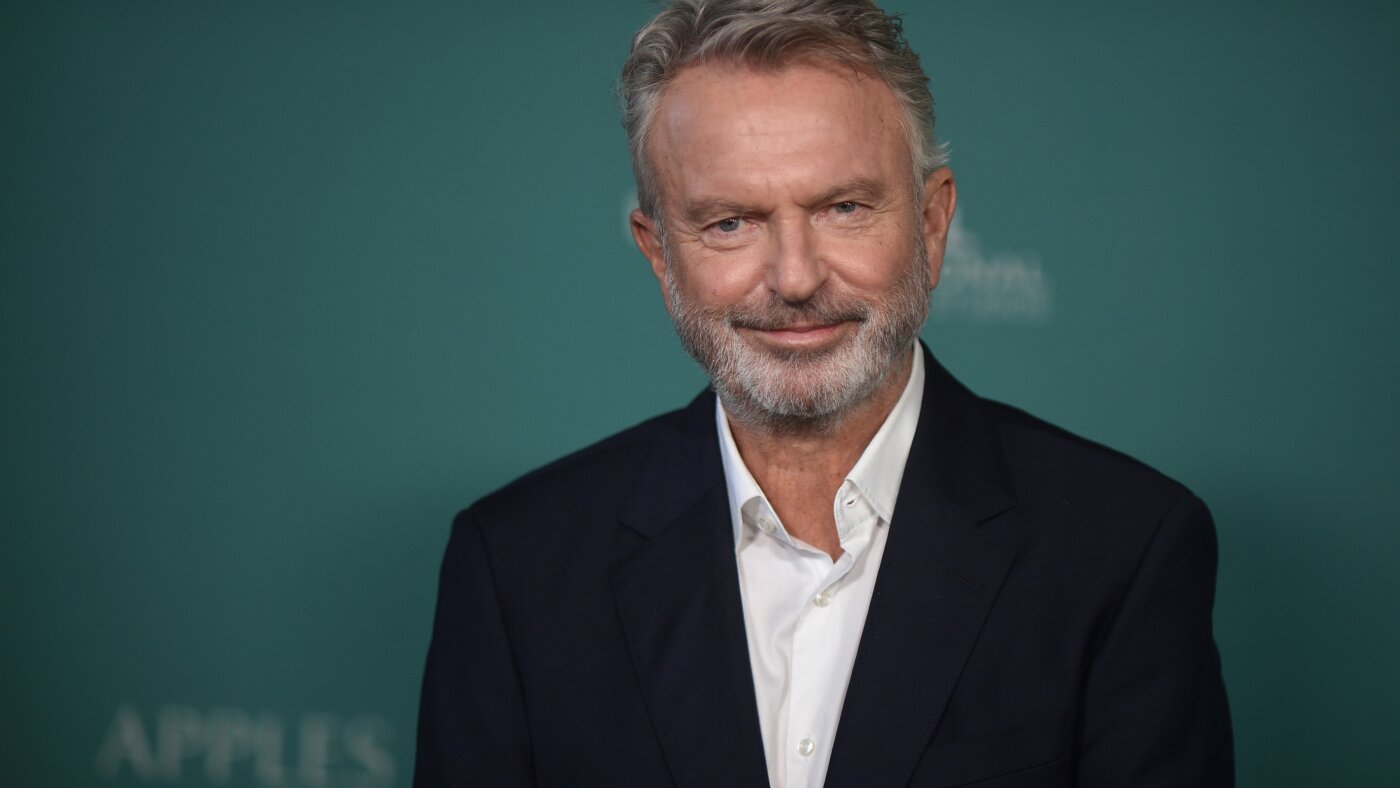 Lifestyle7 seconds ago
Sam Neill, known for ‘Jurassic Park’ and ‘The Piano,’ dies at 78, his family says
-

 Technology12 minutes ago
Microsoft tests Windows Search without all the ads and fluff
-

 World18 minutes ago
Iran-backed terror proxy Houthis threaten fresh attacks after Yemen airport strike
-

 Politics24 minutes ago
Hegseth announces joint task force with DOJ to prosecute leaks to journalists ‘with the full force of the law’
-

 Health30 minutes ago
Microwaved squishy toy explodes onto boy’s face and chest amid viral trend, causing horrific burns
-

 Sports36 minutes ago
FBI, Atlanta police target unauthorized drones flying near World Cup venues
-

 Technology42 minutes ago
Why careful people still end up on data broker sites
-
 Business48 minutes ago
Netflix to add videos from digital publishers to its homepage

