Austin, TX
Cities to watch in 2024: This Texas hub is attracting more homebuyers than Austin and Dallas with its affordability and jobs

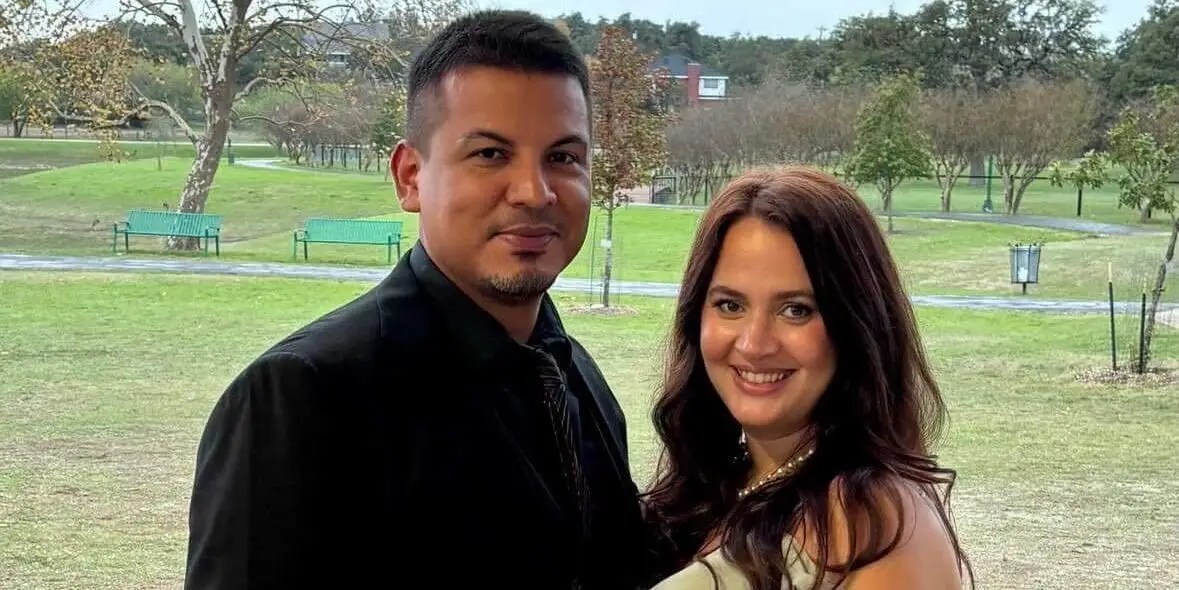
Anna Lagos, 38, moved to Texas from California in 2014 with her husband and two children, joining her parents and most of her siblings who had already relocated to the state.
Lagos, a realtor, believed that Texas would offer her family a better chance at realizing the homeownership component of the often expensive American dream.
“The opportunities were much greater for us in Texas than they were in California,” Lagos told Business Insider. “We always wanted to own a home. It was pretty evident that we’d have to work for many years before we’d be able to purchase one in California.”
During the early years after their move, Lagos and her husband lived in San Antonio and Austin. However, in 2021, driven by a desire for greater affordability and to be even closer to her parents, who had already established themselves in New Braunfels, the couple moved to the small city in Central Texas.
Courtesy of Anna Lagos
Lagos, who bought a 2,700-square-foot home for $325,000 in New Braunfels, said she fell in love with its “small-town” charm.
“I wouldn’t say that it is a small town anymore, but somehow it still manages to retain the feeling of a small town,” she said, adding it’s one of those places ” you won’t find anywhere else.”
Over the past few years, hundreds of thousands of people have moved to the Lone Star state, drawn by its affordable housing, political environment, and abundant job opportunities. According to Census Bureau data, Texas welcomed 670,000 new residents between 2021 and 2022, ranking second to Florida.
While big cities like Austin, Dallas, and San Antonio have traditionally been real estate hotspots, recent Census estimates from 2020 to mid-2022 show that smaller places, such as New Braunfels and Katy, have experienced significant population growth, while their larger counterparts have seen minimal growth — or in some cases, population declines. It’s a trend that may persist as Americans continue to reassess notions of affordability and community.
BI interviewed homebuyers and real estate agents to explore the factors contributing to New Braunfels’ rising popularity. Residents said its rich German heritage, tight-knit community, rapidly expanding business sector, and affordable real estate market have made it an ideal place to raise a family and settle down.
One of the fastest-growing cities in America
New Braunfels has emerged as one of the fastest-growing cities in the US. Census data shows that its population has surged by over 15% since 2020. As of July 2022, the city’s population has reached 104,707.
Its growth is as remarkable as its origin story: Evolving from a humble settlement founded by a German prince to a thriving and rapidly expanding city.
In 1844, Prince Carl of Soms–Braunfels, a German prince and military officer, was appointed the commissioner of the Adelsverein, a group of aristocrats united with the singular aim of creating a “new Germany” on Texan soil.
Although New Germany was never realized, the colony succeeded, and to this day, New Braunfels retains much of its German heritage.
Erich Schlegel/Getty Images
The city, which is home to the famous Schlitterbahn Waterpark, hosts the annual Wurstfest celebration — a 10-day German cultural festival dedicated to sausages and Oktoberfest. Drawing hundreds of thousands of attendees from around the world, it has become an internationally famous event.
The city’s economy and job sector are booming
New Braunfels’ economy is growing rapidly alongside its population. A 2023 report from the New Braunfels Economic Development Foundation shows that the city’s gross regional product — a measure of an area’s economy — reached $2.8 billion in 2021, nearly double the amount from a decade earlier.
The EDC also reports that since 2003 the city has created 16,434 new jobs. In 2022, New Braunfels welcomed a $110 million automotive manufacturing plant by Continental, a tech company serving major car manufacturers like Volkswagen, Ford, Toyota, Porsche, which will create more than 500 new jobs. Additionally, business outsourcing company TaskUs increased its operations in the city, adding 750 new positions.
“When I was growing up here, you worked at the mill, or you worked for local government, and there were ancillary jobs to those, but there weren’t many opportunities for employment,” Mayor Neal Linnartz, told the San Antonio Express News in July. “Nowadays, there are so many opportunities that when kids get out of school, they don’t have to leave New Braunfels to find good employment. We have good jobs here.”
According to the Texas Economic Development Corporation, key industries in New Braunfels encompass financial services, information technology, aerospace, and aviation, as well as military and tourism.
The homes are attractive to homebuyers
According to software data company Payscale, the cost of living in New Braunfels is 15% below the national average. [is this for 2022?]
Easton Smith, the founder of the Emerald Haus Group with Keller Williams, moved from Oxnard, California, to New Braunfels in 2016. He told BI that the area’s affordability is really what’s winning people over.
“What I can speak of, on behalf of our clients and ourselves, is that the affordability here is greater,” he said. “What you’ll find is people want to come here and spend less and have more freedom.”
Regan Bender/Shutterstock
Take Janelle Crossan, a 44-year-old single mother who moved to New Braunfels in 2020 for a fresh start with her son.
Having faced financial challenges as a divorcée in Mesa, California, she sought an affordable place to buy a home and a stable environment for her family. After moving to the city, she purchased her first home for $240,000.
“I paid $1,750 for rent in a crappy little apartment in California,” Crossan told BI’sErin Snodgrass earlier this year. “Now, three years later, my whole payment, including mortgage and property taxes, is $1,800 a month for my three-bedroom house.”
The city is experiencing growing pains
Crossan told BI she’s been amazed by New Braunfels’ growth since moving there in 2020 but believes that the expansion has strained the local infrastructure.
“We have construction everywhere,” she said. “I really can’t complain because I’m one of the people who are helping the area grow bigger, but there’s so much traffic.”
Doney Cowey, a realtor with Keller Williams who moved to New Braunfels 32 years ago, told BI that the city’s growth is pushing some locals out.
“At the time I moved here, the town had a population of 19,000,” Cowey said. “The dynamics have changed now that we have at least 100,000 people in the surrounding area. We get people that are moving here because it’s a small town and we also have people moving away because it’s gotten too big.”
Lagos, who now runs a Facebook group for newcomers moving to New Braunfels said there has been some tension between locals and transplants.
“A lot of people, especially those that grew up here, feel like all the people coming in have ruined the small town that they were used to and have driven up prices,” she said. “A lot of them are priced out of their homes right now, unfortunately.”
Courtesy of Janelle Crossan
Despite the tension, Crossan remains optimistic about New Braunfels, emphasizing its safe and ideal place to live.
“It still has, I hate to say, but the American dream, in a timeframe when people feel like they can’t afford to buy houses and don’t have the same privileges of older generations,” she said. “This is an affordable, fun, cute, nice place to raise kids. I didn’t think that still existed anymore.”



AUSTIN (KXAN) — “Albino” bluebonnets were spotted Friday at Inks Lake State Park in Burnet.
Inks Lake said park rangers found the unique bluebonnets beside the park’s headquarters.
Bluebonnets, or Lupinus texensis, in the U.S. are found in Texas, Louisiana, Oklahoma and Florida. The species is one of the six Lupinus species that are collectively designated the State Flower of Texas, according to the Lady Bird Johnson Wildflower Center.
-

“Albino” Bluebonnets found at Texas state park in Burnet (Inks Lake State Park photo)

“This rare variation is the result of a recessive gene that must be carried by both parent plants, so it’s pretty cool to see,” the park said.

Hemp Rules Tighten – Texas regulators have officially banned intoxicating hemp flower, a move supporters say closes a loophole but critics warn could cripple a billion‑dollar industry. Adam Schwager looks at how retailers are scrambling to adjust, what products remain legal, and why some business owners believe the change will push buyers back toward the illicit market.
State Backs Psychedelic Research – Texas is investing $50 million into clinical trials for ibogaine, a powerful psychedelic some veterans say helped them overcome PTSD and addiction. Dylan McKim examines why the research plan hit a roadblock with private partners, the state’s decision to fully fund the studies, and questions about how much more Texas may need to spend to pursue FDA approval.

Austin weather: Saturday, April 4, 2026
Storms will make their way into Central Texas Saturday afternoon. Some have the chance to turn severe with gusty winds and the chance of flooding. FOX 7 meteorologist Adaleigh Rowe has the details.
AUSTIN, Texas – A cold front moving through Central Texas is expected to bring scattered storms, gusty winds, and a sharp drop in temperatures Saturday, with conditions improving by Easter Sunday.
Austin Saturday Forecast
The primary threats include wind gusts between 40 and 60 mph and the potential for localized flooding.
The approaching cold front is expected to intensify storms as they move eastward late Saturday morning into the afternoon. Residents are advised to remain weather-aware during this period.
Temperatures, which started in the low 70s Saturday morning, are forecast to drop throughout the day, falling into the 50s and 60s by late afternoon. Strong northerly winds, with gusts up to 30 mph, will continue into Sunday.
Easter Sunday forecast
By Saturday evening, rain chances are expected to diminish, leading to a mostly dry but cloudy and breezy Easter Sunday. Morning temperatures will begin in the 50s, with afternoon highs only reaching the 60s.
Austin 7-Day forecast
The Source: Information in this article comes from FOX 7 Meteorologist Adaleigh Rowe.

2026 Valero Texas Open prize money payouts for each PGA Tour player

Alabama gymnastics, Utah in NCAA Tournament: Live second-round updates

Vermont ends cold weather hotel assistance for 160 households

Southwest, Central Virginia Weather | 6:30 p.m. – April 5, 2026

This Day in History: Booker T. Washington was born

Florida High School Football Rankings: Top 25 teams – Oct. 21

How old is Bo Nix? What to know about Oregon quarterback ahead of 2024 NFL Draft

Cleary's 21 help Le Moyne down Central Connecticut State 69-64 in OT

99th annual Pony Swim held in Virginia

Indiana Members Credit Union announced as new anchor tenant at Bottleworks District

Tax day is next week: Avoid these 5 common mistakes that can cost you money

Hamas armed wing says disarmament demands not acceptable

Trump issues fiery new threat against Iran as details of US aviator’s rescue emerge

DHS slams Democrat Sen Chris Van Hollen claim, says illegal alien caused crash while fleeing ICE

Zelenskyy warns US-Iran war could divert critical aid from Ukraine
-

 South-Carolina1 week ago
South Carolina vs TCU predictions for Elite Eight game in March Madness
-

 Atlanta, GA19 hours ago
1 teenage girl killed, another injured in shooting at Piedmont Park, police say
-

 Vermont1 week ago
Skier dies after fall at Sugarbush Resort
-

 Movie Reviews4 days ago
Vaazha 2 first half review: Hashir anchors a lively, chaos-filled teen tale
-

 Politics1 week ago
Trump’s Ballroom Design Has Barely Been Scrutinized
-

 Atlanta, GA1 week ago
Fetishist ‘No Kings’ protester in mask drags ‘Trump’ and ‘JD Vance’ behind her wheelchair
-
 Entertainment4 days ago
Inside Ye’s first comeback show at SoFi Stadium
-

 Politics1 week ago
JD Vance says he was ‘obsessed’ with UFOs, believes aliens are actually ‘demons’