Politics
Tenant rights lawyer Ysabel Jurado will face Councilmember Kevin de León in runoff


Los Angeles City Council candidate Ysabel Jurado didn’t have any big-money backers spending lavishly on her behalf.
The Highland Park resident didn’t mail out glossy campaign mailers either, opting instead for an estimated 3,000 postcards, which were less expensive and personally handwritten.
What Jurado, a tenant rights attorney, did have was a supercharged canvassing operation. According to her campaign, she sent 20 paid staffers and about 250 volunteers to 85,000 doors across the 14th District, which stretches from Boyle Heights and downtown north to Eagle Rock and El Sereno.
That strategy is paying dividends. On Tuesday, she pulled ahead of Councilmember Kevin de León, who had been leading in the eight-way race to represent his Eastside district, according to the latest election results. Now in first place and headed to a Nov. 5 runoff, Jurado is yet another example of the electoral might being wielded in local elections by the city’s political left.
Jurado, in an interview, portrayed her campaign as a lean operation, one focused on supporting renters, fighting gentrification and “uplifting the voices of those who haven’t been heard.”
“We don’t have an office. We haven’t sent mailers. We are talking to voters one-to-one,” she said. “Everything involved in building this campaign has been an uphill battle.”
By Thursday, Jurado had 24.5% of the vote, compared with 23.4% for De León — a difference of nearly 400 ballots. Assemblymember Miguel Santiago was in third place with 21.3%.
Election officials said they still had an estimated 8,200 ballots left to process countywide. Those ballots were not expected to significantly change the outcome of the City Council contests.
De León, who is seeking a second four-year term, will face some serious challenges during the second round. A former state lawmaker, he was at the center of the 2022 scandal over leaked racist remarks that spurred the resignations of former council President Nury Martinez and Ron Herrera, former head of the Los Angeles County Federation of Labor.
De León repeatedly apologized for his remarks during that conversation, and for failing to put a stop to those made by others. He resisted calls to step down from a wide array of politicians, including President Biden, showing up at meetings where he was frequently jeered at by audience members.
Less than a fourth of voters opted to keep De León in office.
With De León and Jurado in the top two, voters in the 14th District will have a clear choice on several of the city’s most contested issues.
De León voted last year for Mayor Karen Bass’ budget, which called for the hiring of 1,000 police officers. Jurado said she would have voted against the spending plan, pushing for funds to be allocated to social services instead.
De León also voted for a four-year package of police raises, which Jurado opposed. In addition, De León is a supporter of Municipal Code 41.18, which bars homeless encampments within 500 feet of schools, day-care centers and “sensitive” locations designated by the council, such as senior centers and freeway overpasses.
Jurado has called for 41.18 to be repealed, saying it has led to the criminalization of homelessness.
On Tuesday, a De León representative made clear that his campaign would highlight some of those differences.
“The voters have a clear choice in November between an experienced, results-driven elected official and someone who has promised to undo some of the progress we’ve made in housing Angelenos and cleaning up sidewalks,” said David Meraz, a De León spokesperson.
Meraz pointed out that 18 months ago, in the wake of the audio leak scandal, many political groups called for De León to step down. The results show that “the community makes the choice of the candidate, not outside organizations,” he said.
Jurado has been running to push the council to the left, expanding the size of the council’s ultra-progressive bloc if she wins. She would be the first Filipino American to serve on the council, representing a district that is 61% Latino, 16% white and nearly 15% Asian, according to a demographic breakdown posted by the city in 2021.
De León, who was born in Los Angeles, is of Mexican, Guatemalan and Chinese descent, Meraz said. During the campaign, De León highlighted his own efforts to reduce homelessness, aid renters and halt gentrification in downtown L.A. and Boyle Heights.
Brian VanRiper, a political consultant who does not have any clients in the race, said Jurado is in a strong position to prevail in the runoff. Still, he offered a word of caution for the Jurado camp, noting that the district has a “history of forgiving” incumbents with major political baggage.
District voters reelected Councilmember Jose Huizar in 2015, even after he was sued by a former staffer who alleged that he had sexually harassed her. In that contest, Huizar easily defeated former County Supervisor Gloria Molina, a political “titan” who had been in office for about three decades.
“[Huizar] doubled down on constituent services and making the case that he delivered for the district,” VanRiper said. “It seems like Kevin de León is following that playbook.”
Huizar was later charged in a sweeping federal corruption case and was sentenced to 13 years in prison. De León was elected to the seat in 2020.
In recent months, many of the groups that supported De León four years ago lined up behind other candidates. The Los Angeles County Federation of Labor, Western States Regional Council of Carpenters and other groups spent a combined $687,000 on efforts to elect Santiago, the state lawmaker who was in third place.
A representative of the Santiago campaign declined to comment.
Jurado, for her part, secured endorsements from an array of politicians and community groups, many of them at the left end of the political spectrum.
Councilmember Eunisses Hernandez, City Controller Kenneth Mejia and former mayoral candidate Gina Viola all backed Jurado. Volunteers from the Democratic Socialists of America-Los Angeles, Ground Game LA and Boyle Heights Vota — formerly known as Boyle Heights for Bernie — have knocked on doors for her.
Caleb Elguezabal, who lives in Eagle Rock and is a member of the Democratic Socialists, said the district has not “had the best representation” over the last decade.
Elguezabal, who volunteered on Jurado’s campaign, said he expects her to bring change to City Hall with a new approach to homelessness, fighting for a tax on vacant residential units and helping renters purchase their apartment buildings.
“Having someone with integrity would be a massive sea change,” he said.
Times staff writer Angie Orellana Hernandez contributed to this report.


Democrat Xavier Becerra holds a commanding lead in the California governor’s race in a new poll, which also shows broad voter support for a ballot proposition to reform the state’s landmark environmental law to speed up housing and infrastructure.
The survey by the Public Policy Institute of California, released Wednesday night, focused primarily on questions related to climate change and environmental policies.
The results show Californians have a strong distaste for building data centers for artificial intelligence technology, and largely favor the state’s efforts to protect the environment and cut emissions — with some exceptions.
The survey showed Becerra with a big lead over Republican Steve Hilton in the race to replace term-limited Gov. Gavin Newsom. Becerra, a longtime Democratic officeholder, received support from 61% of likely voters, compared with 36% for Hilton, a populist conservative who once advised a British prime minister.
Gubernatorial candidate Steve Hilton speaks at the National Assn. of Latino Elected and Appointed Officials conference in L.A. on Wednesday.
(Myung J. Chun / Los Angeles Times)
The results are not surprising in a state where Democratic voters significantly outnumber Republicans. The GOP has not won a statewide election since 2008.
Just 2% of likely voters said they were unsure which candidate to support in the November election. The poll results skewed heavily partisan, with more than 9 in 10 Democratic and Republican voters picking their party’s respective candidate. Most independent voters leaned toward Becerra, 60%, over Hilton, 34%.
The results are similar to data from a poll conducted just before the June 2 primary election that asked voters to pick between the two candidates. In that survey, 52% said they supported Becerra and 31% were for Hilton.
In a statement Wednesday, Hilton characterized the race as “wide open,” contending that Becerra’s support was weaker than the poll’s headline figures would indicate.
“Instead of a 36-year career politician, we need a positive, energetic problem-solver with business experience and plans to make our state ‘Califordable’ — that’s me,” Hilton said.
Becerra spokesman Jonathan Underland said in a statement that “Californians got to know Xavier Becerra during the primary, and they’re ready to make him their next governor. We’re keeping our eyes on the prize — hitting the trail every day ’til November to turn that support into votes.”
Support for CEQA reform
A ballot measure aimed at reforming the California Environmental Quality Act to speed up construction notched a strong showing in the poll.
Nearly three-quarters of likely voters, including majorities of Democrats, Republicans and independents, said that they would vote for Proposition 45. The measure would shorten windows for environmental review, public comment and legal challenges for certain housing, transportation, water infrastructure and other projects.
“At this early stage in the campaign, California voters are feeling more aligned with Democratic candidates on the environment, and it shows in the polling,” said PPIC survey director Mark Baldassare. “But strong support for Proposition 45 reveals their desire to balance environmental priorities with housing and infrastructure needs.”
Strong data center opposition
The poll found large majorities of Californians do not want new data centers to support the AI boom built in their area; 44% of adults say they “strongly oppose” such projects, and 29% “somewhat oppose” them.
The majority opposition holds across political parties, geographic regions, gender, race and income. It’s especially pronounced in the Inland Empire, where plans for a 950,000-square-foot data center came to a halt after fierce resident pushback. Three-quarters of people surveyed in that region said they oppose building new data centers.
“Every day, we are hearing about how local communities across the nation are responding to plans for data centers,” Baldassare said. “Californians have weighed in and they share this growing concern.”
Support for environmental policies — except if they cost more
The poll also shows strong, if somewhat qualified, support for California’s efforts to reduce climate-warming greenhouse gas emissions and protect the environment.
Three-quarters of adults said policies to reduce greenhouse gas emissions have been a good thing overall, and 65% said they support California leaders’ efforts to make their own environmental policies separate from the federal government.
While most respondents — 62% — said they favor a law requiring 100% of the state’s electricity to come from renewable energy sources within the next two decades, just 38% said they were willing to pay more for electricity sourced from renewables.
“With energy prices spiking and affordability a growing concern, Californians are just not willing to pay more for renewable energy,” Baldassare said. A near-unanimous majority, 96%, said the cost of energy — including gasoline, natural gas and electricity — is a problem.
Newsom’s move to ban the sale of new gas-powered vehicles in the state by 2035 also appears to have fallen out of favor. Two-thirds of Californians oppose the policy, a significant slip in approval from 2021, when a PPIC survey showed 49% supported the move.
Still, majorities of likely voters — 53% and 51%, respectively — said they approve of Newsom’s and the state Legislature’s handling of environmental issues.
At 28%, President Trump’s approval rating on the environment was much lower. In his second term, Trump has moved to slash environmental regulations, including easing pollution regulations on coal-fired power plants and pushing for oil drilling off California’s coast.
“Given this ratings gap, it’s not surprising that Californians want to see the state take the lead on climate change policy,” Baldassare said.
The survey polled 1,578 California adults, 1,003 of whom were likely voters, in English and Spanish from June 29 to July 6 and had a margin of error of 3.8 percentage points in either direction.

James Gagliano on anti-ICE protests and threats against agents
Retired FBI Special Agent James Gagliano discusses anti-ICE protests and threats against agents in Newark, New Jersey. A new curfew has curbed chaos after violent clashes, with one Brooklyn man arrested for threatening to kill an ICE agent. DHS Secretary Markwayne Mullin vows ‘zero tolerance’ for attacks, while Sen. Cory Booker, D- N.J., calls ICE ‘out-of-control.’ Gagliano warns against allowing these protests to continue.
NEWYou can now listen to Fox News articles!
A Canadian national accused of slapping a teen wearing political clothing at the Jersey Shore has been turned over to Immigration and Customs Enforcement, a representative for the local jail told Fox News Digital on Wednesday.
Over the Fourth of July weekend, Kaitlyn Tracey, 33, was reportedly seen on surveillance video confronting a group of teens in Point Pleasant Beach, some of whom were wearing pants with the words “Trump” and “ICE” on them, local media reported.
Tracey, a Canadian national who entered the U.S. on a passport in 2024, then allegedly struck one of the girls and recorded the confrontation, according to court documents reported by NJ.com.
An official who picked up the phone at the Ocean County Jail in Toms River confirmed to Fox News Digital that Tracey had been released into ICE custody as of Monday.
ICE CLASHES WITH AGITATORS INTENSIFY OUTSIDE DELANEY HALL
She was reportedly taken to Delaney Hall in Newark – the site of months-long clashes between left-wing agitators and ICE.
NEW JERSEY GOVERNOR, DEMOCRATIC SENATOR SPEND MEMORIAL DAY PROTESTING ICE FACILITY
Billboard at Trump rally in Wildwood declaring historical blue New Jersey is “Trump Country.” (The Image Direct for Fox News Digital)
Tracey’s criminal charges include endangering the welfare of a child and simple assault, according to reports.
The alleged victim was reportedly uninjured.
NJ TAXPAYERS ON THE HOOK FOR $12M MORE AS DEM GOVERNOR PROTECTS ILLEGAL ALIENS BATTLING DEPORTATION
CLICK HERE TO DOWNLOAD THE FOX NEWS APP
While New Jersey at a state level has adopted sanctuary-type policies, Ocean County is known as one of the few Republican strongholds remaining, and retains the state’s longest-serving lawmaker of any party: Rep. Chris Smith, R-N.J., in office since 1981.
People enjoy the Jersey Shore in Seaside Heights, N.J., as businesses prepare for the holiday weekend on May 23, 2025. (Asbury Park Press via IMAGN)
SIGN UP TO GET THE POLITICS NEWSLETTER
It was not immediately clear on what immigration basis ICE initiated proceedings against Tracey. Fox News Digital reached out to DHS for clarification and comment.
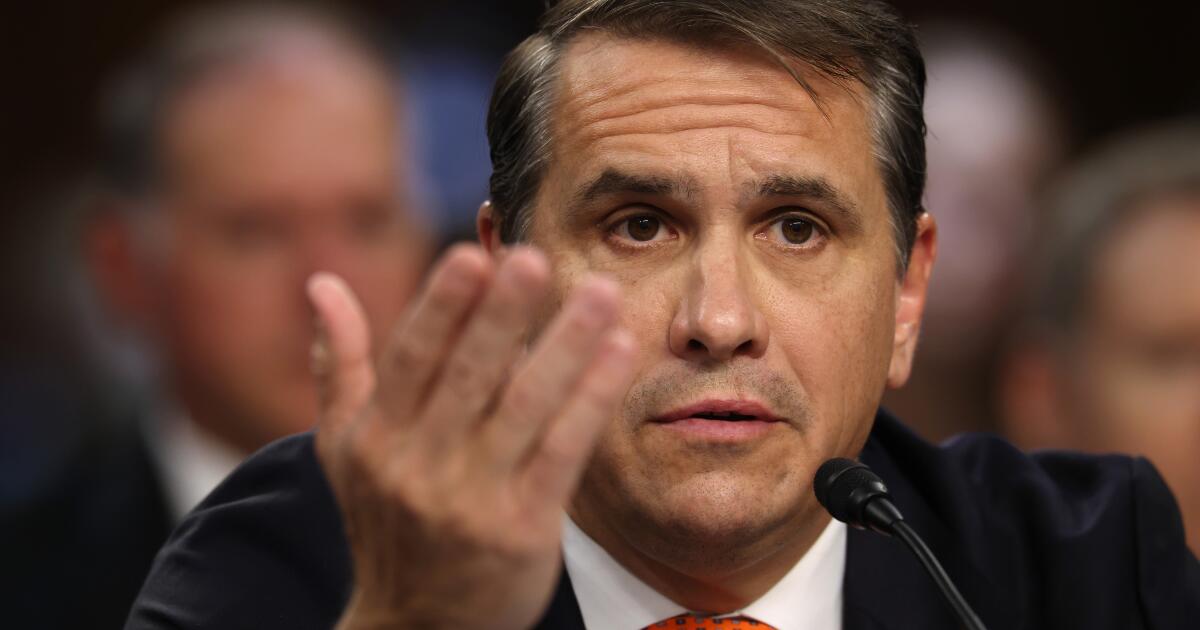
WASHINGTON — The Senate confirmation hearing Wednesday for Todd Blanche, President Trump’s pick for attorney general, will be a referendum on far more than his individual merits.
Blanche, the acting attorney general, served as Trump’s defense attorney before taking office and has been closely linked to many of the most consequential — and controversial — issues that have dominated the first two years of Trump’s second term.
Blanche is set to appear before the Senate Judiciary Committee, which will decide whether to approve his nomination and send it to the full Senate for a confirmation vote. The committee hearing will continue Thursday.
“I would expect committee Democrats to treat Mr. Blanche’s hearing as an opportunity to conduct oversight of the Department of Justice,” said Phil Brest, president of the American Constitution Society, a progressive legal nonprofit and a former top Democratic staffer on the committee. “It’s a test of the Senate’s willingness to probe the department’s operations and to actually serve as a check on the department and the administration more broadly.”
Democrats on the committee are expected to push Blanche on a host of topics, including the $1.8-billion “anti-weaponization fund” that critics derided as a slush fund for the president’s allies, the Justice Department’s rollout of the so-called Epstein files, and the department’s prosecution of several perceived enemies of Trump, notably former FBI Director James Comey.
“While deploying the Justice Department as a shield for the president and his cronies, Blanche has also used our top law-enforcement agency as a sword against Trump’s political opponents,” said Sen. Dick Durbin (D-Ill.), the ranking Democrat on the committee last month. “The independence of DOJ has been decimated under Blanche’s authority.”
Blanche was confirmed by the Senate as deputy attorney general in March, 2025, and was elevated to his current role after Atty. Gen. Pam Bondi was fired in April.
More critical to the success of Blanche’s nomination will be whether he can win the support of two lame-duck Republican senators, Thom Tillis of North Carolina and John Cornyn of Texas, who expressed some reservations about Blanche soon after his nomination was announced.
Cornyn raised concern about Blanche’s independence from Trump, while Tillis said Blanche’s stance on protesters who violently stormed the U.S. Capitol on Jan. 6, 2021, would be critical to his consideration.
Some of those Jan. 6 protesters were expected to be the beneficiaries of the $1.8-billion fund announced as part of a settlement to a lawsuit Trump and his sons and business brought against the IRS.
In a scathing ruling this week, the federal judge wrote that the lawsuit was improper and recommended sanctions against two Justice Department attorneys who worked on the case, though not Blanche himself.
Cornyn told Semafor on Tuesday that the ruling raised a number of issues, including “the potentially collusive nature of the lawsuit.”
He has said previously that he will hold off on making a decision about whether to approve Blanche until after the hearing.
Tillis, meanwhile, told CNN’s Manu Raju on Tuesday that the weaponization fund would need to be completely off the table for him to support Blanche’s nomination.
Trump touted Blanche’s record ahead of the hearing.
“Todd Blanche is doing a PHENOMENAL job as Acting Attorney General of the United States,” the president wrote on Truth Social. “He is a great lawyer, always very fair, and every Republican Senator should vote to CONFIRM Todd Blanche, ASAP!”
Sen. Lindsey Graham’s death means that Republicans currently only enjoy a one-seat majority, but a replacement for Graham on the committee could be in place before it votes on whether to move his nomination to the Senate floor, which will likely come two weeks after the hearing.
Blanche, 51, spent 12 years working for the U.S. attorney’s office for the Southern District of New York, working largely on drug and violent crime cases, and rose to the level of co-chief of the district’s White Plains division.
He left the office in 2014 for private practice and joined the prominent law firm Cadwalader, Wickersham & Taft in 2017 as a partner. He left the firm in 2023 and went independent after other partners expressed concern when he took Trump on as a client.
Blanche went on to represent Trump in several criminal matters, including the New York case about hush money payments to porn star Stormy Daniels, and cases brought by Special Counsel Jack Smith about Trump’s alleged efforts to block the transfer of power after the 2020 presidential election and his alleged retention of classified documents.
He listed all three as among the 10 most significant cases of his career in the questionnaire he completed ahead of the hearing, along with his work at the Justice Department on a lawsuit challenging the construction of a new White House ballroom.
A group of more than 1,200 former Justice Department attorneys wrote a letter opposing Blanche’s nomination, asserting that his leadership has resulted in mass departures of career staff. That has “meant that much of the department’s vital work isn’t being done, or isn’t being done as well – leaving communities less safe, Americans’ rights less protected, and our national security more vulnerable,” the lawyers wrote.
Former Justice Department pardon attorney Liz Oyer is scheduled to testify as a witness for Democrats on Thursday. She has said she was fired for refusing to recommend the restoration of actor Mel Gibson’s gun rights.
Oyer will be joined Thursday by Dani Bensky, one of many victims of the deceased sex abuser Jeffrey Epstein who has criticized Blanche’s handling of the release of the so-called Epstein files — millions of pages of records detailing the Justice Department’s investigations into Epstein’s crimes.
Numerous victims have said that their names and other sensitive information were not properly redacted in the files and criticized Blanche and the department for failing to investigate Epstein’s potential co-conspirators.
Blanche has also come under criticism from survivors of Epstein’s abuse for the interview he conducted in July, 2025, with Epstein accomplice Ghislaine Maxwell, who is serving a 20-year prison sentence for her role in facilitating and participating in Epstein’s abuse.
Days after their interview, Maxwell was moved from her prison in Florida to a minimum-security prison in Texas.
-

 Health1 minute ago
Is lettuce still safe to eat amid Taco Bell illness probe? Doctors answer
-

 Sports8 minutes ago
Marcello Hernández roasts Jake Paul, Tiger Woods and Bill Belichick in ESPYS monologue
-

 Technology14 minutes ago
You paid for it. So why is your device showing ads?
-
 Business20 minutes ago
Paramount shareholder lawsuit accuses Ellisons of corruption
-
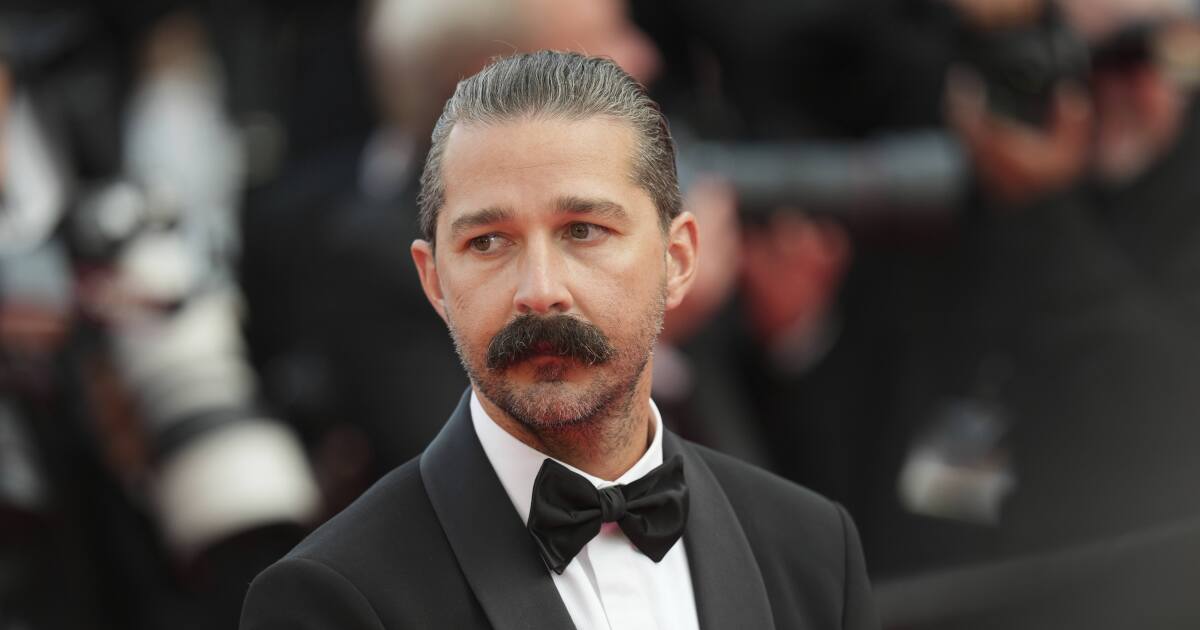 Entertainment26 minutes ago
‘You’re scaring my people.’ Shia LaBeouf’s alleged stalker arrested after posting viral video
-
Politics38 minutes ago
Californians back Becerra and reject AI data centers by big margins, poll finds
-
 Science44 minutes ago
How to eat safely amid outbreak of diarrhea-causing cyclosporiasis
-
 Sports50 minutes ago
Magical Lionel Messi leads Argentina past England for trip back to World Cup final

