Northeast
The squad is put on notice after Bowman is trounced, Missouri member's nomination is up next

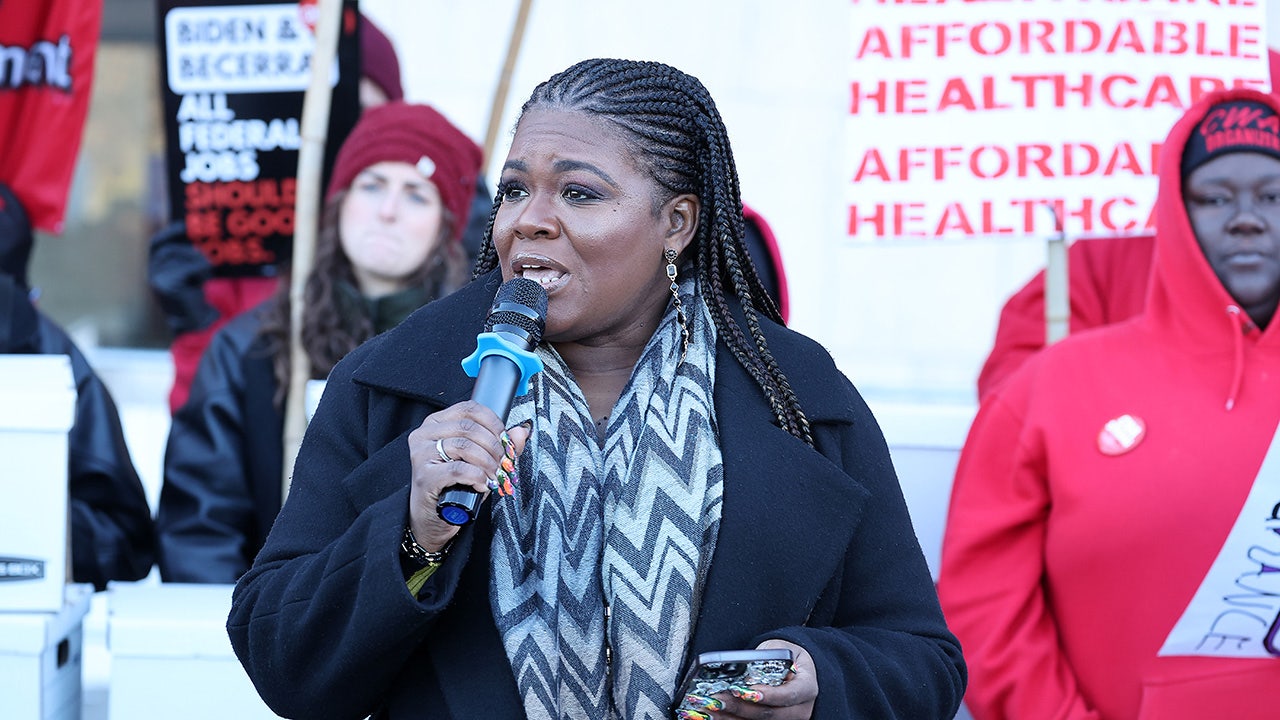
Rep. Cori Bush of Missouri is in the campaign spotlight, after the first member of the group of progressive and diverse House Democrats went down to defeat in a Democratic Party congressional primary.
Rep. Jamaal Bowman of New York was soundly defeated by Westchester County executive George Latimer on Tuesday in a high-profile and divisive Democratic Party primary in New York’s 16th Congressional District.
Bowman has the dubious honor of becoming the first House member of either party to be defeated by a primary challenger so far in the 2024 election cycle.
And Bowman also became the first member of the Squad to be ousted from Congress.
THIS HOUSE DEMOCRAT BECOMES THE FIRST SQUAD MEMBER DEFEATED IN A PRIMARY
U.S. Representative Jamaal Bowman (D-NY) speaks to the crowd while he campaigns in the Bronx borough of New York City, on June 22, 2024. REUTERS/Joy Malone (REUTERS/Joy Malone)
The contentious battle between a member of the Squad and his more moderate challenger spotlighted the Democrats’ deep divisions over the war between Israel and Hamas in Gaza.
Bowman – who has been outspoken about his support for Palestinians amid the war in Gaza and has charged that Israel has committed genocide – was targeted by roughly $14 million in spending by a group affiliated with the American Israel Public Affairs Committee, the deep-pocketed pro-Israel group that supported Latimer.
AOC EASILY WINS DEMOCRATIC PRIMARY
That spending – part of an overall $25 million shelled out by all sides in the primary to run ads -helped the race earn a page in the record books as the most expensive congressional primary in the nation’s history.
The spotlight may now shift to Missouri’s First Congressional District, a deep blue seat which includes the city of St. Louis and its northern suburbs.
Rep. Cori Bush faces a tough Democratic primary challenge in Missouri’s August 6 primaries. (Paul Morigi/Getty Images for Communications Workers of America (CWA))
That’s where the second-term Bush is facing a primary challenge from St. Louis County prosecutor Wesley Bell, who is being supported by AIPAC.
The scant polling in the race suggests Bush faces a tough challenge as she seeks renomination in the August 6 primary.
CLICK HERE TO GET FOX NEWS APP
Ahead of Bowman’s double-digit defeat to Latimer, Bush took to social media on Tuesday afternoon to apparently take aim at AIPAC.
“Let me be clear: #WeDecide our future. Not far-right megadonors who want to meddle in our Democratic elections.” she emphasized.
The big question going forward in the Bush-Bell primary is whether DMFI and United Democracy Project, the AIPAC-affiliated group that shelled out big bucks to help topple Bowman, will also spend big in the Missouri primary to target Bush, who has also been critical of Israel.
Squad members mostly represent deep blue seats with high concentrations of minority voters.
Rep. Jamaal Bowman (D-NY) greets Senator Bernie Sanders (I-VT) and Rep. Alexandria Ocasio-Cortez while he campaigns in the Bronx borough of New York City, U.S., June 22, 2024. REUTERS/Joy Malone (REUTERS/Joy Malone)
But while New York’s 16th Congressional District, which Bowman represents, includes parts of the New York City borough of the Bronx, most of it lies in the southern half of suburban Westchester County.
While Bowman went down to defeat, Rep. Alexandria Ocasio-Cortez – a founding member of the Squad – on Tuesday easily won renomination in New York’s 14th Congressional District, which includes portions of the Bronx and Queens.
Get the latest updates from the 2024 campaign trail, exclusive interviews and more at our Fox News Digital election hub.
Read the full article from Here

Pittsburg, PA
Pittsburghers have mixed feelings on the area’s historic stone, brick and wooden roads

David Cohen grew up playing on a wooden field.
“You had to be sure-footed,” he recalls about pickup games on Shadyside’s Roslyn Place, one of the nation’s few surviving wooden streets.
Cohen often talks up Roslyn while chauffeuring movie actors around town. “Inevitably,” he says, “they want to come see the street.” It also draws many walkers, bicyclists, bachelor and bachelorette parties, photographers, artists and people who make rubbings of its oak blocks.
Many other Greater Pittsburgh streets are paved with bricks or stones of various shapes and shades. These old-time toppings seem to be popular but problematic.
They’re considered handsome reminders of Pittsburgh’s past. They’re expensive but durable. They sprout weeds but seldom potholes. Some may reduce runoff and heat.
But they’re bouncy and clattery. They can be slippery when wet or icy. Though many have concrete bases, they tend to develop ruts over time.
Officials often wonder whether to maintain historic pavers or consign them to history. Jacob Russell, Verona’s borough manager, says, “It’s always an ongoing debate.”
Here and there
According to a list of Pittsburgh’s nearly 20,000 official street segments, 623 have bricks, 295 quarried stones (often incorrectly called cobblestones, which are long out of use), and 840 concrete, while the rest are asphalt or “unknown.” But be warned: Some entries on the list are outdated, and one’s been wrong all along. It calls Roslyn asphalt.
Then again, Knoxville’s Brick Way is listed correctly. It’s plain asphalt, at least today. Brian Kell, a chronicler of Pittsburgh’s streets, can find no record of previous surfaces on this tiny street, first known from an 1887 plan.

Some streets with brick or stone sections are big and bustling, like downtown’s Grant Street. More seem to be small and quiet, like the Hill District’s Hollace Street. Some are fairly level, like Homewood’s Laxton Street. Others are dizzying, like Oakland’s Joncaire Street and Beechview’s Canton Avenue.
Older pavers seem most common in older neighborhoods, such as Hazelwood, but are rather randomly scattered in them. Squirrel Hill’s Murdoch Road has stone, brick and asphalt segments on different blocks. Middle Street on the North Side has a stone one and a brick one on the same block.

These pavers are also common in older suburbs, such as McKees Rocks, Oakmont and Sewickley. McKeesport once had a Brick Alley, named for its surface, though better known as a red-light district.
Allegheny County also has 26 miles of dirt or gravel roads, historic, but hardly beloved.
Streets through the years
According to several sources, including Robin B. Williams of historicpavement.com, the world’s first roads were unpaved, prone to dust, mud and washouts. American settlers topped “plank roads” with boards and “corduroy roads” with logs. Cobblestones proved tough on wheels. A mix of crushed stones was dubbed macadam for Scottish inventor John McAdam. Tar was added and one of the mixes dubbed tarmac.
Wooden blocks became popular, including an 1850s kind called Nicolson or Nicholson blocks, chunks preserved with creosote. So did granite, limestone or sandstone blocks, variously called sets, setts, blockstones or Belgian blocks. The 1870s brought bricks and asphalt. The 1890s brought concrete.

According to Joel Tarr in “City at the Point,” 19th-century Pittsburgh was quickest to pave the busiest or wealthiest streets, sometimes charging the property owners. Many other streets remained unpaved into the 20th century.
By the mid-1910s, wooden streets were already quaint, the look Roslyn’s developer apparently wanted for this cozy dead end, lined mostly with brick homes. It helped that his son owned a lumberyard, which supplied about 26,000 blocks.
Over the years, the city has replaced many of those blocks with newer ones. To spare them all, it blows and sweeps snow there instead of plowing it.
Williams says that the nation has just a few other wooden streets left, including Cleveland’s Hessler Court, part of Philadelphia’s South Camac Street, and Chicago’s aptly named Wooden Alley.
Beautiful and bumpy
Most locals praise vintage pavers.
“They’re the coolest things,” Kathy Lutz says of Bridgeville’s several brick streets. “They make me feel nestled in here.” They also remind her of a famous Beatles album cover. “We have Abbey Road in the middle of Bridgeville.”

A stone stretch of Bloomfield’s Lima Way is smooth enough for Kelly DiTullio to carry a heaping carton of strawberries home from the neighborhood’s farmers market without spilling any. “It’s charming,” she says, “especially when the greenery starts to grow in between.”
A woman identifying herself just as Kelissa says that her dog, Princess, likes Lima’s stones for relieving herself.
Locals see benefits even in these pavers’ bounces. Drivers slow down, and bystanders hear them coming.
In Mt. Lebanon Magazine last year, Abigail Schade Gary wrote about that suburb’s many brick pavers, “The charm! The distinction that signifies Mt. Lebanon!” Not quite as enthusiastically, she recalled sliding backward down them in her family’s station wagon. She liked them for sledding but not roller-skating. “Even if you could manage to stay on your feet over the bumpy surface, the unevenness made your teeth chatter.”
A few locals would update some retro roads. “Most of them are in such a state that they need to be paved over,” says Mt. Lebanon’s Greg Carvlin.

Cara Zlatos recently hit the bricks of Aspinwall’s Delafield Avenue after an appendectomy at UPMC St. Margaret. She says, “Every bump seemed to find its way straight to my sore abdomen.”
Melissa Lang O’Malley, Aspinwall’s borough manager, says that Delafield’s much-needed repairs will resume this summer.
Bicycles bounce too. According to Julie Walsh, spokeswoman for BikePGH, most riders prefer modern pavement for routine rides, but some choose brick or stone at times for fun, especially in challenging events like the Pittsburgh Roubaix and the Pittsburgh Dirty Dozen.
Bicyclist Henry Snyder of Squirrel Hill says that historic pavers “give you a little chance to experience what the Tour de France guys do in Paris. You don’t want to do it too long because it sends vibrations down your arm. For a block or two, it’s great.”

Saving surfaces
A 2018 Pittsburgh ordinance calls for preserving historic pavement where safe, unless 75 percent of the street’s property owners petition for asphalt. Eric Setzler, chief engineer of the Department of Mobility and Infrastructure, says that it costs $30 per square yard to resurface asphalt, versus $170 for brick or $200 for stone. But brick and stone can last for decades, especially on streets with light traffic.
“There are streets that are probably over 100 years old that have had minimal maintenance,” he says. “They will have some dips and bumps, but they are still in service. … The cost can even out a little.”
Aspinwall’s Lang O’Malley says that recent brick repairs cost about $12 per square foot versus barely $2 for asphalt, but might prove better investments over 30 to 50 years. Besides, “While modern infrastructure needs sometimes require difficult decisions, preserving that historic character where possible remains an important part of maintaining Aspinwall’s identity.”
In a 2016 study of Mt. Lebanon’s brick streets, the Pennsylvania Department of Transportation said, “Though costly to install, these streets maintain a good structural condition for decades and add beauty and history to the area.”
In 2020, a Carnegie Mellon University team estimated that Mt. Lebanon would save about $200,000 over 50 years by maintaining a stretch of brick 700 feet long instead of asphalting it. Ninety-six percent of residents surveyed said the bricks added character, and 82 percent would pay to restore them.
Safety matters, though. A steep brick stretch of that suburb’s Spruceton Avenue was asphalted after an official did a 360 on ice there.
Verona, on the other hand, simply closes a steep stone section of South Avenue during wintry weather.

PennDOT maintains just 0.2 miles of bricks or stones on state roads in Allegheny County: stretches of Chestnut Street in Coraopolis, Broadway in Stowe Township and Linden Avenue in East Pittsburgh. “Generally,” says PennDOT Press Secretary Alexis Campbell, “we end up paving them with asphalt.”
Old pavers are often buried under asphalt but reappear in potholes. Others are removed and sometimes relocated. A few are part of the landscape of the Children’s Museum of Pittsburgh. Some that PennDOT removed from Castle Shannon Boulevard in Mt. Lebanon are parts of that suburb’s other streets.
Magic and texture
In the 2010s, resident Ned Schano led a campaign that won city landmark designations for Roslyn and specifically its wood. “Every day,” says Schano, “I make sure to step on the wood when I go outside. It has some magical powers.”
Cohen feels like Roslyn’s wood is ingrained in him. “It’s been a great texture for my whole life. To see it’s still here when so many other things have gone away, it’s amazing.”

Maine
How a tragedy changed the timeline — and the politics — of Maine’s Senate race – The Boston Globe

And while this is the role that many Democratic leaders would be expected to play in this situation, this crop of candidates has an added challenge.
Because this also means there are no meaningful distinctions among the candidates to help guide the eventual 601 delegates who will decide who should run in one of the most closely watched Senate contests in the country.
Indeed, the practical political impact of the tragic situation in Biddeford on the Maine Senate contest is this: What was expected to be an intense two-week primary campaign has effectively been reduced to one week. And the week currently being overtaken by the shock and anger is likely the most crucial.
That’s because 5 p.m. Wednesday is the deadline for supporters to sign up to become delegate candidates for the July 25 statewide convention in Bangor.
Those delegate candidates will then be elected at caucuses held in each of the state’s 16 counties over this coming weekend. From that process will come the 601 delegates who will decide which Democrat will challenge five-term Republican incumbent Susan Collins this fall.
In fact, the best organized campaigns will likely know by Sunday who has already won the contest because they can simply add up how many of their own supporters became delegates.
In other words, the contest could be effectively over before most Mainers even begin to really pay attention.
Further, unlike some major news developments that provide a moment of political clarity, this tragic situation in Biddeford resolves nothing. Instead, it raises the stakes for Democrats to make the right choice.
What that means in the context of choosing between a more progressive populist candidate in the mold of Platner or a more traditional Democrat in the mold of this year’s Democratic nominee for governor, Hannah Pingree, remains an open question.
There is simply less time now to discuss it.
Now, none of the above is meant to take away from the discussion about a husband and father who was killed by the government and whatever circumstances led to that tragedy.
To be sure, the moment a Democratic nominee is selected, the role of ICE will immediately become the first real dividing-line issue in the Senate race. After all, Collins oversees ICE’s budget as chair of the Senate Appropriations Committee and has been actively involved in conversations with the administration about enforcement in Maine.
But as to who should face her, the clarity and contrasts that campaigns tend to reveal are not currently there among Democrats at a time when they would be most helpful. As it stands, all of the candidates oppose the Trump administration’s overall agenda, oppose the Iran war, promote some version of an affordability message, and, above all, oppose Collins.
Nor is there an obvious choice if Maine Democratic delegates decide electability should be their highest priority.
Campaigns rarely unfold on the timetable candidates expect. Outside events intervene, reshaping what voters hear, what campaigns can talk about, and, ultimately, what party insiders have to evaluate.
In this case, Democrats face the unusual challenge of selecting a Senate nominee while the issue dominating the public conversation is one on which nearly all of the candidates already agree. That may produce unity after a bruising week, but it also leaves delegates with fewer opportunities to distinguish between the people asking for their votes before making one of the biggest political decisions in Maine this year.
James Pindell is a Globe political reporter who reports and analyzes American politics, especially in New England.
-
Denver, CO2 minutes ago
Five Points affordable housing building honors Dr. Justina Ford | Rocky Mountain PBS
-

 Seattle, WA8 minutes ago
Seattle weather: Hot and sunny day Wednesday, highs in the 80s
-

 San Diego, CA14 minutes ago
Gibraltar ushers in a new era as British territory’s border fence with Spain is removed
-

 Milwaukee, WI20 minutes ago
City funding awarded for redevelopment at 2618 N. Milwaukee
-

 Atlanta, GA26 minutes ago
Atlanta hosts its final FIFA World Cup match as tournament’s impact continues to grow
-

 Minneapolis, MN32 minutes ago
Walking All the Streets of Western Northeast Park
-

 Indianapolis, IN38 minutes ago
Teen shot, injured on Indy’s north side near Monon Trail
-
Pittsburg, PA44 minutes ago
Pittsburghers have mixed feelings on the area’s historic stone, brick and wooden roads


