Rhode Island
Judge takes state’s side in budget battle over Providence schools • Rhode Island Current


A Rhode Island Superior Court judge on Friday ruled in favor of the state education department, which has withheld $8.5 million in aid from Providence for failing to meet funding obligations for city schools, widening the rift between city leaders and state education officials.
Rhode Island Superior Court Associate Justice Jeffrey A. Lanphear issued two rulings in favor of the Rhode Island Department of Education (RIDE), backing the state-run Providence Public School Department (PPSD)declaring that the city is not paying its fair share to the school department.
“This court, in everything that it does, somehow always seems to apply principles of fairness,” Lanphear said at an afternoon bench motion that followed the release of written decisions Friday morning. “But frankly, balancing the equities is simply not an element of this motion…Here, the only issue is whether or not the city can pay its obligation to the state department. Otherwise, the state can freeze the money.”
Providence School Board makeover is halfway there after Tuesday’s election
The first ruling partially denied the city’s appeal to stop RIDE from withholding over $7 million in state aid from the Distressed Communities Relief Fund in fiscal year 2024. The judge’s decision underscored the state’s authority over municipalities when they fall short of fulfilling the Crowley Act — the statute that authorized the 2019 state takeover of Providence schools and also prescribes how much funding a state-controlled district must receive from local sources.
Lanphear’s second ruling concerned an October request from RIDE Commissioner Angélica Infante-Green to state Treasurer James Diossa to withhold $8.5 million in car tax payments, claiming Providence owed nearly $30 million to the district overall. The city then filed a legal complaint. The disputed funds remain in escrow — which is where they’ll stay for the time being, as just how much the city will owe is still unclear.
Lanphear scheduled a hearing for Wednesday, Nov. 13, at 9:30 a.m. to help complete what he called “a simple mathematical calculation” that will determine the city’s debt to its schools. Lanphear said he didn’t trust his own mathematics and would be leaving that to experts at next week’s hearing.
I am disappointed that the wasteful, irresponsible spending of the Providence Public School District and the historical lack of sufficient State funding for our highest need students has led us to this point today.
– Providence Mayor Brett Smiley
While the judge didn’t trust his math, he was more confident in his reading of the Crowley Act. The state could probably fund the entirety of the budget shortfall on its own, Lanphear thought, but the Crowley Act compels the city to increase financial support for the school district each year, regardless of the state’s financial health. RIDE and the city’s wildly different interpretations of the act have formed the terra firma of the ongoing legal contest.
Lanphear rejected the foundation of the city’s argument: That the act requires municipal aid to state-run school districts to mirror the increase in state aid to that particular district.
“Since the statewide total school aid increased, the City must increase the amount of funding to the PPSD with an equal percentage increase,” Lanphear wrote in his first decision. “The increase in aid to the particular district is not a factor in this calculation.”
Infante-Green’s request to withhold funds followed Providence Mayor Brett Smiley’s public feud with Providence Superintendent Javier Montañez. Montañez called Smiley ahead of a school board subcommittee meeting on Oct. 9, and requested nearly $10.9 million in emergency funding. Without the money, there could be cuts to winter and spring sports, student bus passes and numerous other areas, the superintendent warned.
Smiley responded with a $1 million offer the following day, promising to use money from not-yet-finalized payment in lieu of taxes agreements recently struck with nonprofits in the city. The City Council promised an additional $1.5 million from the final reserves of pandemic relief money. Both mayor and council agreed that the school district would be subject to a third-party audit before they could get any funds. The school department has yet to take any action on the offers, and the City Council earlier this week canceled a meeting that would have authorized the funds, due to the court battle.
Consequences may be very costly
A “deeply disappointed” Smiley issued a statement Friday, arguing that the decision could have expensive consequences for residents across the capital city, including students and their families.
“This decision puts the City’s finances at risk and in the days ahead, we will need to make difficult decisions that we had hoped to avoid, including the potential to increase taxes, cut programs and stop future borrowings, the largest of which is for the future development of new school buildings for our students,” Smiley wrote.
The mayor then echoed his previous skepticism about the district’s budgeting skills: “I am disappointed that the wasteful, irresponsible spending of the Providence Public School District and the historical lack of sufficient State funding for our highest need students has led us to this point today,” Smiley added.
Providence City Council President Rachel Miller issued a statement Friday lamenting the judge’s “striking decision,” saying it may endanger the city’s financial health. RIDE, Miller argued, sacrificed collaboration and transparency to pursue “an adversarial route” that ignores city needs beyond the school department.
“While RIDE does not have to consider the impacts of cuts to critical city services or tax increases on a struggling community, we do, and the families of PPSD students do as well,” Miller wrote. “Why should Providence taxpayers be forced to bankroll an opaque and irresponsible budgeting process that treats students and families as collateral damage?”
On the greener side of the grass were the victorious Infante-Green and Montañez, who celebrated the ruling in a joint statement.
“Today’s Court ruling is a win for our kids,” they wrote. “Our priority throughout this legal dispute has been clear: making sure Providence students, teachers, and school communities have the proper resources they need and deserve.”
Jennifer Wood, executive director of Rhode Island Center for Justice, said after the bench motion that she would be meeting with Providence students and parents to consult further about the new developments.“Even from preliminary conversations I know that they are tremendously relieved that further immediate cuts to their schools may be avoided based on the two rulings today,” Wood said.
Wood also highlighted Lanphear’s argument focusing on “the harm to students and their families” without a “‘great’ school system.”
“There are so many small decisions that can make a difference in what a student learns and how they develop and become adults,” Lanphear said at the bench motion.
GET THE MORNING HEADLINES.



Rhode Island court tosses Justin Chandler conviction
Rhode Island Supreme Court overturns Justin Chandler’s murder conviction due to prejudicial texts, orders new trial.
The trucking industry will have to pay its own legal bills for the unsuccessful eight-year-old lawsuit it brought to stop Rhode Island’s truck toll system, a federal judge ruled Friday, March 27.
The American Trucking Associations was seeking $21 million in attorneys fees and other costs from the state, but a decision from U.S. District Judge John McConnell Jr. says the truckers lost the case and will have to pick up the tab.
The state had previously filed a counterclaim for reimbursement of $9 million in legal bills, but an earlier recommendation from U.S. Magistrate Judge Patricia Sullivan had already thrown cold water on that possibility.
McConnell ordered American Trucking Associations to pay Rhode Island $199,281, a tiny fraction of the amount the state spent defending the network of tolls on tractor trailers.
Settling the lawyer tab may finally bring an end to a court fight that bounced back and forth through the federal judiciary since the toll system launched and the truckers brought suit in 2018.
As it stands, the state’s truck toll network has been mothballed since 2022 when a since-overturned judge’s ruling temporarily ruled it unconstitutional.
The Rhode Island Department of Transportation said it hopes to relaunch the tolls around March 2027.
The court costs fight hinged on which side could claim legal “prevailing party” status as the winner of the lawsuit.
The trucking industry claimed that it had won because the First Circuit Court of Appeals ruled an in-state trucker discount mechanism, known as caps, in the original truck toll system was unconstitutional.
But Rhode Island argued that it is the winner because the appeals court had ruled that the larger system and broad concept of truck tolls is constitutional and can relaunch with the discounts stripped out.
“The Court determines that ATA has vastly overstated the benefit, if any, that they have received from the ultimate resolution of their challenge to the RhodeWorks program,” McConnell wrote.
The truckers “failed to obtain any practical benefit from the First Circuit’s severance of the [in-state toll] caps,” he went on. “Specifically, the evidence from this dispute confirmed that the lack of daily caps will result in ATA paying a higher amount in daily tolls and that it does not receive any tangible financial benefit from their elimination.”
In her December analysis of the legal fees question, Sullivan had concluded that the Trucking Associations’ outside counsel had overbilled and overstaffed the case.
But she had recommended that the industry be reimbursed $2.7 million for its bills, while McConnell’s ruling gives it nothing.

Here are five ways how you can save some money when food shopping.
Here are five ways how you can save some money when food shopping.
Your household can earn more than $160,000 a year and still be considered part of the “middle class” in Rhode Island, according to a recent study by SmartAsset.
Rhode Island is the state with the 17th-highest income range for households to be considered middle class, based on SmartAsset’s analysis using 2024 income data from the U.S. Census Bureau. The Pew Research Center defines the middle class as households earning roughly two-thirds to twice the national median household income.
According to a 2022 Gallup survey, about half of U.S. adults consider themselves middle class, with 38% identifying as “middle class” and 14% as “upper-middle class.” Higher-income Americans and college graduates were most likely to identify with the “middle class” or “upper-middle class,” while lower-income Americans and those without a college education generally identified as “working class” or “lower class.”
Here’s how much money your household would need to bring in annually to be considered middle class in Rhode Island.
How much money would you need to make to be considered middle class in RI?
In Rhode Island, households would need to earn between $55,669 and $167,008 annually to be considered middle class, according to SmartAsset. The Ocean State has the 17th-highest income range in the country for middle-class households.
The state’s median household income is $83,504.
How do other New England states compare?
Rhode Island has the fourth-highest income range for middle-class households in New England. Here’s what households would have to earn in neighboring states:
- Massachusetts (#1 nationally) – $69,885 to $209,656 annually; median household income of $104,828
- New Hampshire (#6 nationally) – $66,521 to $199,564 annually; median household income of $99,782
- Connecticut (#10 nationally) – $64,033 to $192,098 annually; median household income of $96,049
- Rhode Island (#17 nationally) – $55,669 to $167,008 annually; median household income of $83,504
- Vermont (#19 nationally) – $55,153 to $165,460 annually; median household income of $82,730
- Maine (#30 nationally) – $50,961 to $152,884 annually; median household income of $76,442
Which state has the highest middle-class income range?
Massachusetts ranks as the state with the highest income range to be considered middle class, according to SmartAsset. Households there would need to earn between $69,900 and $209,656 annually. The state’s median household income is $104,828.
Which state has the lowest middle-class income range?
Mississippi ranks last for the income range needed to be considered middle class, according to SmartAsset. Households there would need to earn between $39,418 and $118,254 annually. The state’s median household income is $59,127.

“Nationally there are 59 million Americans who are providing care for a loved one and that is 49.5 billion hours of care annually. It’s valued at a trillion dollars,” said Catherine Taylor, the director of AARP Rhode Island; AARP, the nation’s largest non- profit, dedicated to empowering people 50 and older.
In Rhode Island, the report shows 155,000 people serve as caregivers, providing 111 million hours of care.
Barbara Morse reports on unpaid caregivers. (WJAR)
“The total impact is $2.8 billion a year,” said Taylor.
It’s not just babysitting a loved one.
Catherine Taylor, the director of AARP Rhode Island, spoke with NBC 10’s Barbara Morse about the value of caregiving. (WJAR)
“People are doing a lot more nursing tasks, you know–wound care, injections and things like that and they’re doing a lot more intensive daily care, like bathing, and dressing and feeding than we used to,” she said.
Its latest report–“Valuing the Invaluable.”
“The whole point of this report is to draw attention to how many family care givers there are and what the magnitude of what the need is for their support,” said Taylor.
That includes financial support and respite care.
AARP wants you to know this:
An older man using equipment in a gym. (FILE)
In Rhode Island, temporary caregiver insurance or TCI is available to folks who qualify, for up to eight weeks.
There are federal tax credits you may qualify for. There is help.
BE THE FIRST TO COMMENT
“All you have to do is call 211 and say you’re a family caregiver and they will connect you to all of AARP’S trusted information, including a Rhode Island specific guide on resources for caregivers,” she said.

Trump’s Ballroom Design Has Barely Been Scrutinized

‘The Comeback’ is back. That’s something to Cherish

The best deals we’ve found from Amazon’s Big Spring Sale (so far)

Zelenskyy offers cutting-edge drone defense to Gulf allies as Ukraine seeks missile support

JD Vance says he was ‘obsessed’ with UFOs, believes aliens are actually ‘demons’

Florida High School Football Rankings: Top 25 teams – Oct. 21

How old is Bo Nix? What to know about Oregon quarterback ahead of 2024 NFL Draft

Cleary's 21 help Le Moyne down Central Connecticut State 69-64 in OT

99th annual Pony Swim held in Virginia

Indiana Members Credit Union announced as new anchor tenant at Bottleworks District
JD Vance says he was ‘obsessed’ with UFOs, believes aliens are actually ‘demons’
The EU's recipe for trade deals : easy on beef, tough on wine
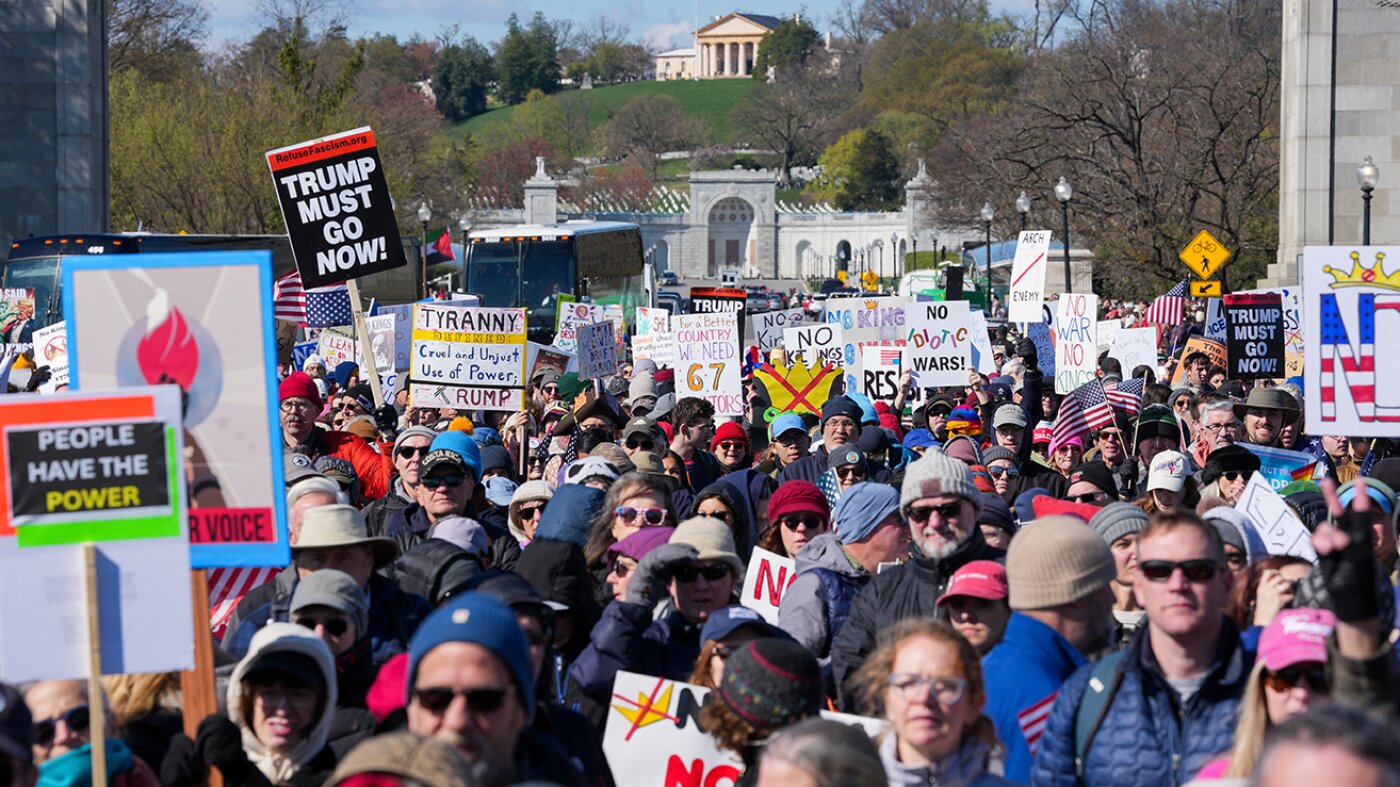
Photos: ‘No Kings’ protests across the country

Jeffries declines to break with indicted Democrat after ethics panel’s guilty verdict

Hundreds of thousands march through London in stand against the far right
-

 Sports1 week ago
IOC addresses execution of 19-year-old Iranian wrestler Saleh Mohammadi
-

 New Mexico6 days ago
Clovis shooting leaves one dead, four injured
-

 Tennessee5 days ago
Tennessee Police Investigating Alleged Assault Involving ‘Reacher’ Star Alan Ritchson
-

 Technology7 days ago
YouTube job scam text: How to spot it fast
-

 Minneapolis, MN3 days ago
Boy who shielded classmate during school shooting receives Medal of Honor
-

 Texas1 week ago
How to buy Houston vs. Texas A&M 2026 March Madness tickets
-

 Science1 week ago
Record Heat Meets a Major Snow Drought Across the West
-

 Politics1 week ago
Schumer gambit fails as DHS shutdown hits 36 days and airport lines grow