Lifestyle
10 books to help you understand America as its 250th birthday approaches


With the nation’s big 2-5-0 coming up next year, NPR staff and critics recommended a lot of U.S.-focused titles for Books We Love, our annual year-end reading guide. Below you’ll find 10 favorites — perfect for the history buff on your gift list, or anyone looking to learn more about how the U.S got to where it is today. Read on, or check out our full 2025 list here.

American Grammar: Race, Education, and the Building of a Nation, by Jarvis R. Givens
In this deeply researched book, Harvard University professor of education and African American studies Jarvis R. Givens locates 1819 as a “crossroads” in the history of education in the United States. That year, Congress passed the Civilization Fund Act, providing funding for assimilative boarding schools for Native American children, and the governor of Virginia signed an anti-literacy law that made it a crime to teach enslaved people to read and write in schools. Amid the Trump administration’s effort to dismantle the Department of Education, Givens’ clear-eyed assessment of American education offers an opportunity to reflect on the long-standing relationships among race, power and schooling in the U.S. — Kristen Martin, book critic and author of The Sun Won’t Come Out Tomorrow: The Dark History of American Orphanhood

The Fate of the Day: The War for America, Fort Ticonderoga to Charleston, 1777-1780, by Rick Atkinson
I’ve been eagerly waiting years for this book! This is the second volume of Rick Atkinson’s trilogy on the American Revolution. Atkinson makes good use of letters and diaries. You feel like you’re in the middle of a battle, with all the sights, sounds and tragedy. Harrowing tales of hand-to-hand fighting, scalping and desperate evacuations. Fine detail: the waxed mustaches of the Hessian forces, the number of rum barrels distributed to weary and ill-clad troops, the dull thud of cannonballs smacking into ships. The stench of makeshift hospitals, with piles of limbs stacked outside. He carefully lays out how the battles began, and the successes, mistakes and missed opportunities – on both sides. — Tom Bowman, Pentagon reporter

History Matters, by David McCullough, Dorie McCullough Lawson (contributor), and Michael Hill (contributor)
If history can be a comfort read, this is it. David McCullough’s daughter Dorie McCullough Lawson and his longtime researcher, Michael Hill, assembled this posthumous collection over two years. Some of the historian’s old manuscripts and files were kept in a New England barn, so the occasional acorn and nest turned up along with the historian’s glorious observations about Americans and their history. The essay subjects are diverse – painter Thomas Eakins, Harriet Beecher Stowe in Paris, “A Book on Every Bed” (it will melt your heart). One theme emerges that you might find reassuring in its own way: There was no “simpler time.” — Shannon Rhoades, supervising senior editor, Weekend Edition

Last Seen: The Enduring Search by Formerly Enslaved People to Find Their Lost Families, by Judith Giesberg
In 2017, historian Judith Giesberg and her team of graduate student researchers launched a website called the “Last Seen” project. It now contains over 5,000 ads placed in newspapers by formerly enslaved people hoping to find family members separated by slavery. The ads span the 1830s to the 1920s and serve as portals “into the lived experience of slavery.” In Last Seen, her book drawn from that monumental website, Giesberg closely reads 10 of those ads placed in search of lost children, mothers, wives, siblings and comrades who served in the United States Colored Troops during the Civil War. — Maureen Corrigan, book critic, Fresh Air

Medicine River: A Story of Survival and the Legacy of Indian Boarding Schools, by Mary Annette Pember
Mary Annette Pember, a citizen of the Red Cliff Band of Wisconsin Ojibwe and a national correspondent at ICT News, grew up in the 1950s and 1960s as her mother’s “secret confessor,” listening to fairy-tale-like stories of the horrors she endured at an assimilative boarding school. In Medicine River, Pember traces the repercussions of her mother’s maltreatment, situating her family’s story within the United States’ systemic use of education to eradicate Native cultures. Through an approach that is “part journalistic research, part spiritual pilgrimage,” Pember provides a cuttingly personal account of the history of federally funded Indian boarding schools and a moving look at how Indigenous traditions and rituals can light the path for healing. — Kristen Martin, book critic and author of The Sun Won’t Come Out Tomorrow: The Dark History of American Orphanhood

Mother Emanuel: Two Centuries of Race, Resistance, and Forgiveness in One Charleston Church, by Kevin Sack
There was great symbolism when a white supremacist targeted Charleston’s Mother Emanuel African Methodist Episcopal Church, killing nine Black worshippers as a means to ignite a race war. As we learn in this deeply researched history, the congregation has been involved in the struggle for racial justice ever since it was founded in an “act of bold subversion” by enslaved and free African Americans in the 1800s. I am struck by the stories of clergy and members who fought against seemingly insurmountable odds at nearly every turn of history, truly living out their faith and believing in a better America. — Debbie Elliott, correspondent, National Desk

There Is No Place for Us: Working and Homeless in America, by Brian Goldstone
In this paradigm-shifting, immersive book, journalist and anthropologist Brian Goldstone follows five families in Atlanta who, despite working full time, struggle to stay housed amid gentrification, a lack of tenants’ rights and low wages. These families, all Black, fall into a “shadow realm” – they are not considered officially homeless by the federal government, but lack a fixed living place as they double up with friends and family, sleep in their cars, or pay exorbitant rates at extended-stay hotels. Woven throughout their stories is a trenchant exploration of how America’s disinvestment in public housing and relentless pursuit of free-market growth have fueled housing insecurity for poor working families. — Kristen Martin, book critic and author of The Sun Won’t Come Out Tomorrow: The Dark History of American Orphanhood

The War of Art: A History of Artists’ Protest In America, by Lauren O’Neill-Butler
This book is about the creative – if often short-lived and not always successful – ways in which artists have fought for social change in the U.S. since the 1960s. Personal favorite: a chapter on how the scrappy video collective, Top Value Television (TVTV), changed the public’s view of political conventions. With artist-led protests once again becoming a thing – from the thousands of actors and filmmakers who recently pledged to boycott the Israeli movie industry in response to the humanitarian crisis in Gaza, to the presence of a 12-foot statue depicting President Trump and the late sex offender Jeffrey Epstein frolicking on the National Mall, this book about the past provides a powerful frame for thinking about artist-led actions today. — Chloe Veltman, correspondent, Culture Desk

We the People: A History of the U.S. Constitution, by Jill Lepore
As the U.S. approaches the 250th anniversary of its founding, it feels like an appropriate time to reflect on where we’re at as a country and how we got here. We the People, by Jill Lepore, a history and law professor at Harvard University, helps satisfy that impulse. It tells the story of the U.S. Constitution, which is among the world’s oldest constitutions. Lepore focuses on battles over amendments, which were fought not just by politicians but by ordinary Americans. The founders designed the Constitution to be amended, but it has become much more difficult to do so over the years. As the Constitution becomes harder to amend, Lepore writes, the risk of political violence becomes greater. — Milton Guevara, producer, Morning Edition and Up First

Who Is Government?: The Untold Story of Public Service, by Michael Lewis (editor)
Thousands of unsung heroes in the government are making life better for Americans. But because of bureaucracies being made up of bureaucrats, we rarely hear those stories. This book showcases them. Like a coal-mining safety official who helped the U.S. reach zero mine-collapse deaths. Or the man who has led the National Cemetery Administration to the top of the American Customer Satisfaction Index. As the federal government is in its biggest shake-up in a generation, it’s worth learning about where the bright spots are. — Darian Woods, host, The Indicator from Planet Money
This is just a fraction of the 380+ titles we included in Books We Love this year. Click here to check out this year’s titles, or browse nearly 4,000 books from the last 13 years.



Can you say no to a friend’s wedding?
Getty Images/Getty images
hide caption
toggle caption
Getty Images/Getty images
Are we spending too much on other people’s weddings?
Going to a friend’s weddings can be so fun and meaningful… but it can also really hurt your wallet. A survey by LendingTree found that 31% of people who had been to a wedding in the past five years had accrued debt to attend. So what’s driving up the cost of weddings for guests? And what makes it so hard to say no to these expenses?
Brittany breaks it down with Allyson Rees, senior analyst at trend forecasting firm WGSN, and Annie Joy Williams, assistant editor at The Atlantic.
This episode was produced by Liam McBain, with additional support from Corey Antonio Rose. It was edited by Neena Pathak. Our Supervising Producer is Cher Vincent. Our Executive Producer is Barton Girdwood. Our VP of Programming is Yolanda Sangweni.
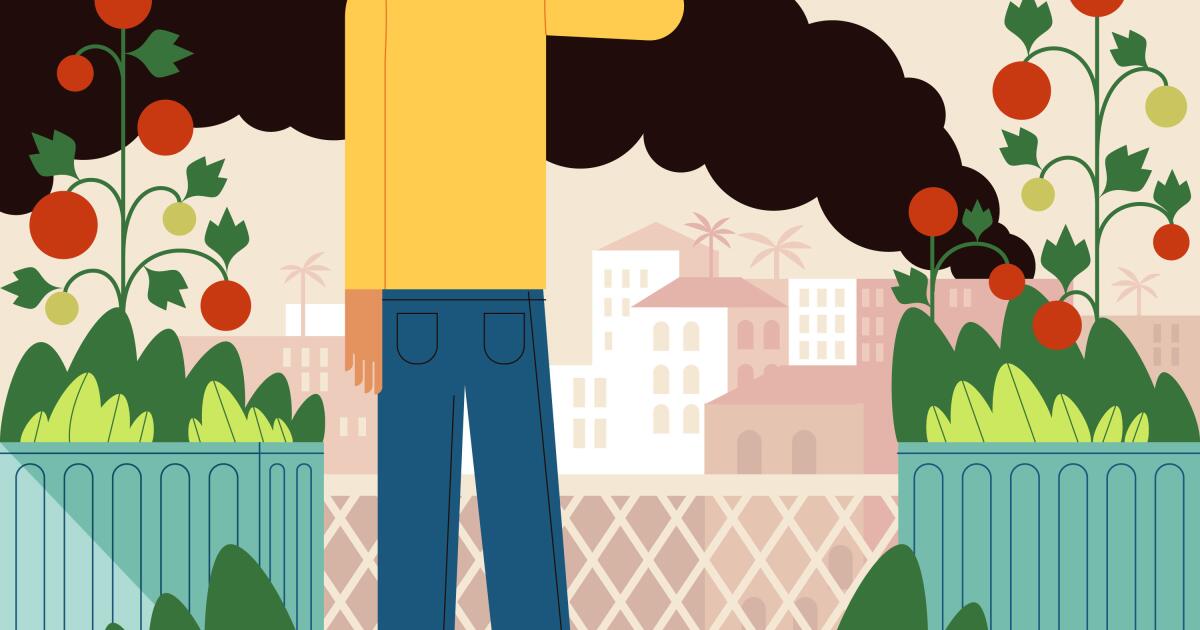
After the eight-day-long fire in a 500,000-square-foot Boyle Heights warehouse, eastern Los Angeles residents are contending with putrid smells, soot and potentially hazardous airborne chemicals after heavy plumes of smoke spread throughout the city. But those who grow food in nearby neighborhoods may also be wondering: How will the fires affect the plants and produce in my garden?
The Boyle Heights warehouse, owned by Lineage — a global temperature-controlled storage facility operator — housed 85 million pounds of frozen food and other products. In the days since the fire, local emergency visits for smoke inhalation and throat pain spiked while agencies still scramble to measure the amount of PM 2.5 — harmful fine particles — and heavy metals, like lead and arsenic, in the air.
According to researchers, any toxic airborne chemicals would likely stem from the charred foam insulation, metal exterior, burned solar panels and any lithium batteries that might have been present inside the warehouse.
After a fire, heavy metal particles can spread through ash and smoke over gardens and inhibit growth, said Olukayode Jegede, an agricultural toxicologist and assistant professor at UC Davis. Since the warehouse fire is so recent and cleanup has just begun, Jegede said the precise impact on gardens can’t be measured until comprehensive soil tests are conducted in the area.
While the L.A. city government hasn’t announced plans for soil testing, the Contaminant Level Evaluation and Analysis for Neighborhoods project at USC is offering free contaminant testing for Boyle Heights and East L.A. residents. Residents can collect soil samples and deliver them to Boyle Heights City Hall and other locations for an evaluation of lead, arsenic, chromium and mercury levels.
The good news is produce, plants and roots can still be preserved. According to Jegede, many of the soil tests conducted last year in the Altadena area after the Eaton fire showed that gardens and poultry were not as contaminated as one might expect.
“Quite a number of the soils we tested [in Altadena] were not really contaminated,” Jegede said. “We weren’t seeing many soils with concerning elevated levels of metal, so gardeners should not be too alarmed when these things happen.”
Nevertheless, there are several measures that gardeners can take to keep themselves, their children, plants and produce safe from potentially harmful contaminants stemming from the fire. Researchers, gardening experts and horticulturists offered some guidance on the handling, recultivation and cleanup that can keep you and your garden in good health.
How do I remove ash and contaminants from my garden?
Altadena horticulturist Leigh Adams said Boyle Heights plants and produce already live in a difficult environment, surrounded by industrial warehouses that spread contaminants daily.
“That area has been used industrially for 100 years, and the soil is impacted by many, many, many things,” Adams said. “Low-income neighborhoods and gardens usually don’t have a lot of resistance against dominant manufacturing.”
This means that the contamination of gardens in eastern L.A. won’t be as catastrophic as compared with those in Altadena, a more suburban environment, Adams said. But fallen ash still poses major health risks if ingested or inhaled.
An advisory from University of California Agricultural and Natural Resources last year recommended suiting up in an N95/KN95 mask, long sleeves, pants, close-toed shoes and gloves before attempting to deal with ash in the garden to limit exposure to potentially toxic contaminants. The advisory added that individuals should make sure all of this gear is cleaned thoroughly before bringing it back inside.
Once in the proper gear, Adams recommends removing the top two inches of topsoil from gardens, where the highest concentration of contaminants will settle after a fire. Using a plastic bag to collect the soil and disposing of it in the garbage — not green yard waste bins — will help to reduce the spread of airborne chemicals.
Gardeners with raised beds are advised to remove approximately six inches of soil, because excess ash can raise the pH level and prevent nutrients from soaking into the soil bed.
After this, watering the garden gently but plentifully will help to promote soil health and get rid of most of the ash present on plant leaves and stems. Adams said replacing the top two inches of soil with store-bought mulch or straw will help to contain any remaining ash and prevent it from spreading any further.
Experts say to avoid using leaf blowers if ash is present in the garden because they can send particles airborne. Doing so will increase the likelihood of heavy metal particles, which can carry lung irritants and carcinogens, being spread and inhaled.
A Boyle Heights resident keep a watchful eye on the fire at the 5,000-square-foot commercial building, which stores 85 million pounds of frozen food.
(Genaro Molina / Los Angeles Times)
Is it safe for me to eat produce from my garden?
Several studies, including one from the UC Cooperative Extension of Sonoma County, have shown that consuming produce in a fire-affected area poses minimal health risks.
Jegede said most root vegetables like potatoes and carrots, along with any fruit that has an outer layer, can be washed to remove potential contaminants, even if they were covered in ash. Peeling the outer layer of your produce can also help to reduce potential risks, he said.
Lettuce and other leafy foods with multiple layers pose a higher risk of contamination, but with a vigorous wash and peeling the outer layers, even the greens can be saved. The County of Los Angeles Department of Public Health recommends soaking leafy produce and fuzzy fruits like peaches in a 10% white vinegar and 90% water mixture.
Jegede said if the leaves or fruit are too delicate to wash or ash is still visible, it would be best to dispose of the produce.
How can I tell if my soil is contaminated?
After ridding your garden of visible ash, you might wonder how to tell if your plants will still thrive in the soil.
At-home soil tests that measure for alkaline, fertility and pH levels are widely available and can be purchased for $15 to $100 (for more detailed results) online. But Jegede said these tests can’t tell the full story of soil health.
Comprehensive soil testing is “something you can’t do properly at home,” Jegede said. “In labs, we are testing for metals like lithium and zinc, stuff that an at-home test will not show … If it comes to the point that you’re worried about your soil, I would just send it out to a lab.”
Wallace Laboratories in El Segundo, Babcock Laboratories in Riverside, Waypoint Analytical in Anaheim and other labs offer more detailed soil tests that measure heavy metal particles in addition to other fertility factors. Prices at Wallace Laboratories can range from $115 to $295 for a complete compost test.
The soil below two inches should be unharmed, Adams said, so long as new compost is set and plants are watered plentifully, which will promote natural biological cycles.
“What you’re doing is capping the soil, so that moisture stays in there, and instead of being dirt, it’s a living system called soil,” Adams said. “The more carbon we can get into our soil, the better.”
What can I do to help my soil recover?
For the last 12 years, Adams has been working with Metabolic Studio, a Los Angeles-based art and research hub focused on environmentalism, on methods for bioremediation, the practice of using additional fungi, plants and compost to decontaminate ash and break down contaminants.
Adams said straw, mushrooms, corn, rye and sunflowers are great bioremediators that can help to repair damage to soils. She said certain samples she’s worked on with Metabolic Studio have gone from testing at high heavy metal levels to nearly contaminant-free.
But for a more immediate fix, wash your produce, water your plants and have a little patience during ash cleanups. Your garden should look better in no time, Adams and Jegede said.

Inde Navarrette and Michael Johnston in Obsession.
Focus Features
hide caption
toggle caption
Focus Features
Two big horror films, Obsession and Backrooms, just smashed all box office expectations. So much of their success has been driven by Gen Z, which is now the biggest moviegoing demographic. But what makes a movie a Gen Z movie? Today we’re bringing you an episode of NPR’s It’s Been a Minute. Host Brittany Luse talks about this trend with Sam Adams and Reanna Cruz.
If you want to hear more about these movies, check out these episodes:
In ‘Obsession,’ love hurts. It really, really, really hurts.
‘Backrooms’ brings YouTube horror to the big screen
Zendaya brings ‘The Drama,’ we bring the spoilers
Connect with Pop Culture Happy Hour:
Letterboxd / Facebook
Our weekly newsletter
Support Pop Culture Happy Hour+
-

 Tennessee7 minutes ago
In-N-Out’s fifth Tennessee location is opening soon. Here’s how many stores are planned
-

 Texas10 minutes ago
Triple-digit heat returns to North Texas before weekend storms bring relief
-

 Utah15 minutes ago
Planned 60-foot long Liberty Arch in Utah sparks patriotism, but also concerns
-

 Vermont22 minutes ago
Vermont offers money to replace diesel vehicles with electric
-

 Virginia25 minutes ago
Virginia reports 10 cases of cyclosporiasis
-

 Washington30 minutes ago
Washington law says to alert the public when doctors are accused of misconduct. It can take months
-

 Wisconsin37 minutes ago
Former Wisconsin judge to be sentenced after conviction in obstructing arrest of Mexican immigrant
-

 West Virginia40 minutes ago
West Virginia town’s entire police force fired after ex-sergeant claims evidence room was broken into

