Rhode Island
For survivors, Rhode Island clergy abuse report brings vindication and renewed demands


PROVIDENCE, R.I. — The sound of the school nurse’s office door opening. Light reflecting off a stained-glass window. Tearful outbursts and fear of getting on the school bus.
For many survivors of clergy abuse, memories like these linger for decades.
A report released this week by the Rhode Island attorney general detailed decades of abuse inside the state’s Catholic Diocese of Providence, identifying 75 clergy members who sexually abused more than 300 children since 1950. The investigation drew on thousands of church records and years of interviews with victims and witnesses. Officials said the true number of victims is likely much higher.
But survivors say the numbers capture only part of the story. Behind each case, they say, are childhood fragments that resurface years later — along with the long struggle to understand what happened.
Many survivors spent decades searching for answers and pressing authorities to investigate. Now some are speaking publicly about what they endured and what they hope will come next: broader support for survivors, help from the church to pay for therapy and counseling, and accountability from Catholic leaders.
From survivor to advocate
“I can still hear the click of the hardware in that metal door opening to this very day,” said Dr. Herbert “Hub” Brennan, an internal medicine doctor who lives and works in his hometown of East Greenwich, Rhode Island, where he grew up in a devoutly Catholic family.
Brennan was sexually abused in elementary school by the Rev. Brendan Smyth, an Irish priest who arrived in the community in the 1960s. Brennan was an altar server at Our Lady of Mercy Parish when the abuse began in the church sacristy.
Dr. Herbert “Hub” Brennan, a clergy abuse survivor, displays a 1995 newspaper showing a headline that reads “Diocese has no complaints about jailed priest” at his internal medicine office in East Greenwich, R.I., Thursday, March 5, 2026. Credit: AP/Leah Willingham
Brennan says a nun would pull him from class and send him to wait in the principal’s office until Smyth arrived and led him into the nurse’s room.
“They say that rape is one of the few crimes where the victim feels the shame,” Brennan said. “But the shame is enormous. And then the secrecy that follows to hide that shame gets in the way of healing.”
Brennan confronted it years later when a newspaper arrived on his doorstep in 1995. The headline about Smyth’s arrest in Ireland read: “Diocese has no complaints against jailed priest.”
Smyth was later convicted of assaulting children at least 100 times over four decades.
Dr. Herbert “Hub” Brennan, a clergy abuse survivor, shows at a 1995 newspaper article about the arrest of the Rev. Brendan Smyth while at his internal medicine office in East Greenwich, R.I., Thursday, March 5, 2026. Credit: AP/Leah Willingham

When Brennan later tried to discuss the abuse with a parish priest, he said he was assured there had been no complaints, only to learn later the priest had been Smyth’s roommate.
The revelation pushed Brennan to seek accountability. He later worked with attorney Mitchell Garabedian and settled in Massachusetts Superior Court.
“I needed to make sure that others knew exactly what was going on in this diocese — if it happened to others, who was responsible and how they were hiding it,” Brennan said.
The report released this week felt like a culmination of that effort, he said: “That allowed me to switch from survivor-victim to advocate.”
Breaking the ‘wall of secrecy’
For Claude Leboeuf, amber light streaming through stained-glass windows still triggers painful memories.
Leboeuf, who was abused by a priest as a child in neighboring Massachusetts and now advocates for victims in Rhode Island, called the report an important step toward dismantling what he calls the church’s “wall of secrecy.”
Leboeuf said his memories resurfaced only a few years ago, prompting him to pursue legal action and speak publicly about what happened to him.
“There’s a need to do something for these people — something real: money, tuition, therapy,” he said. “The effects are real; they last a long, long time.”
In a video statement, Bishop of Providence Bruce Lewandowski said the report describes a “tragic history” of abuse that caused lasting harm to victims and their families. He said he felt “extreme sadness” and “intense shame” while reading it and apologized to survivors for church leaders’ past failures to protect children. Lewandowski said the diocese has since implemented safeguards aimed at responding quickly to allegations and preventing abuse.
Leboeuf rejects that framing.
“It’s not old history. It’s justice denied for more than 60 years for some people,” he said. “These are people who brought their complaints to the diocese as kids in the 1960s, and they were ignored, ridiculed, even punished.”
Fighting to be believed
Ann Hagan Webb remembers the dread she felt before the school bus arrived each morning. Webb was only a kindergartner when her parish priest began sexually abusing her at school in Rhode Island.
The abuse took place between 1957 and 1965, during which Webb — who was abused from the age of 5 to 12 — remembers tearful outbursts before school, sometimes needing to be pulled onto the bus.
It wasn’t until decades later, at 40, that Webb turned to therapy to help process the memories. But when she was ready to report the abuse, Webb was met with hostility.
Initially, she asked only for compensation to cover her therapy bills. Still, she was met with skepticism, with leaders at the Diocese of Providence demanding her medical records and questioning the veracity of her claims.
Webb turned to advocacy, becoming known as a force for survivors of clergy abuse. In 2019, she helped convince the Rhode Island Legislature to enact legislation dubbed “Annie’s Law,” which allows child sexual abusers to be held civilly accountable to victims.
The advocacy has been exhausting, Webb said, and she still faces stigma when speaking publicly. Her abuse is often overlooked, she says, because many assume clergy abuse affected only boys.
“For 32 years, the diocese has called me not credible. I can’t tell you what that feels like,” Webb said.
The release of the attorney general’s investigation has renewed her hope that change and justice are still on the horizon.
“It feels like vindication,” she said.
“I hope the public demands their church be different,” she added.
A long-coming reckoning
The Rhode Island investigation comes at a time when examining possible clergy abuse is no longer unusual.
The shift is a far cry from 2002, when The Boston Globe exposed the Boston Archdiocese’s practice of moving abusive priests between parishes without warning parents or police, prompting investigations around the world.
That reckoning took decades longer in Rhode Island. With one of the highest Catholic populations per capita in the country — nearly 40% — the Diocese of Providence maintained secrecy around clergy abuse even as accusations and lawsuits surfaced over the years.
Attorney Tim Conlon, who has long represented sex abuse victims in Rhode Island, said that when he first filed suits against the Diocese of Providence, many people were unwilling to believe such allegations could be true in their own parishes. At one point in the late 1990s, he said, even his mother questioned whether he was doing the right thing.
State law has also made it difficult for victims to seek justice, Conlon said, citing strict limits on civil suits against institutions like the Catholic Church and narrow statutes of limitations for second-degree sexual assault.
“Clearly there’s a call for reform,” Conlon said. “The magnitude of the need is well documented.”



WATCH: Jake Bauer wins the Rhode Island Amateur over Tyler Cooke
WATCH: Jake Bauer wins the Rhode Island Amateur over Tyler Cooke on Friday, July 10, at Ledgemont Country Club.
SEEKONK, MA – If given a choice, Jake Bauer would have traveled a different road.
Friday felt like nothing but potholes and lane closures until the afternoon conclusion at Ledgemont Country Club. It was far from an uneventful ride.
The destination was something he’s chased for nearly a decade – a second crown at the 121st Amateur Championship – one that came thanks to a sensational rally past Tyler Cooke.
Bauer’s three straight birdies to start what proved to be his final five holes of the week allowed him to catch and pass Cooke. A sizeable morning deficit was gone in the 36-hole match play title round, and Bauer was suddenly on his way to a 2 and 1 triumph.
“For any golfers out there – cash games, junior golfers – don’t do it,” Bauer said. “It’s not fun. But if you do pull through, it’s a really, really cool story to say you did it.”
Cooke was 6 up after the opening morning nine and looked at times like he would cruise to his first championship. Bauer started applying pressure with an immaculate second nine holes and continued to push until finally breaking through. His curling uphill birdie putt at the par-3 15th – the 33rd hole of the match – found the cup to give Bauer a lead he never relinquished.
“I don’t even know what just happened on the last six or seven holes,” Bauer said. “You sort of just black out. I’m speechless.”
Bauer added a par at the 16th to go 2 up and only needed to halve either of the remaining two holes with Cooke to get the job done. Each made bogey at the uphill par-4 17th, with Bauer lagging his par putt to within inches. Cooke conceded the final stroke, and Bauer was able to take a deep breath while hugging his father and caddie, Jim.
“My dad was really good,” Bauer said. “He doesn’t really get too technical with me. He’s a very calm soul to have on the bag.”
Bauer needed every bit of that even temperament to survive the early stages. Cooke collected seven birdies through his first 23 holes, the last coming at the par-4 fifth. That gave him a 3-up lead, and he was able to remain in front until Bauer buried clutch putts at the par-4 13th, the par-4 14th and the 187-yard downhill tester.
“[The birdie putt] definitely had some speed,” Bauer said. “I think if that didn’t go in we would have probably been on 18 or in extra holes.”
Bauer carded five bogeys on his opening nine before a solid birdie at the par-4 10th gave him a first taste of momentum. He racked up seven pars and another birdie at the par-4 18th before entering the lunch break just 2 down. It was a similar charge to the one Bauer made in the quarterfinals, as he won five of the last six holes to edge Jason Kalin, 1 up.
“I performed really well this whole week in stroke play and other matches,” Bauer said. “I said if I just stick to that same game plan I will end up on top.”
Cooke battled his way into the match play bracket after an opening 76 in Monday’s steady rain. He rebounded with a 73 under more precipitation Tuesday and immediately produced an upset by knocking out No. 4 seed Sam Powell. Cooke has been a steady winner since an All-State career at Toll Gate and college tenure at Connecticut, including a record five titles at the Four-Ball Championship with brother-in-law Bobby Leopold.
Bauer had just graduated from Johnson & Wales when he won for the first time here, an impressive victory over Matt Broome. He fell in last year’s final to Mike Calef, surrendering a late lead in a 1 up loss at Rhode Island Country Club in Barrington. Bauer wasted no time booking a third appearance in the title match and did so with some extra support – his wife, McKenna, was in the gallery less than a month after they exchanged vows in June.
“We didn’t even know each other back in 2018,” Bauer said. “For her to experience this – I don’t even know what emotions she was going through. I’m really happy to share it with her.”
bkoch@providencejournal.com
On X: @BillKoch25
Rhode Island
Our Favorite Write-Ins From the 2026 Best of Rhode Island Readers’ Poll – Rhode Island Monthly

If you haven’t heard, our upcoming Best of Rhode Island party has many exciting additions and surprises this year, and we at Rhode Island Monthly cannot wait to celebrate with all of you at the WaterFire Arts Center on July 23 (get your tickets here if you haven’t already!). But to tide us all over in the meantime, we decided to continue the tradition of sharing some of the silliest write-in entries we came across while tallying the Best of Rhode Island Readers’ Poll.
But first, let me provide a quick refresher of the process. As many know, the ballot is made up entirely of write-in entries, meaning you can submit whatever you like for Best Restaurant, Best Influencer, Best Wedding Venue, etc. And believe me when I tell you that people do truly submit whatever they like. This year we had the task of combing through more than 100,000 (!) votes and once again (see examples from 2022, 2023, 2024, and 2025) found ourselves chuckling at quite a few along the way. Below you’ll find a roundup of some of our favorites, as well as what was going through my mind as I noted and compiled them. (And as always, I’d like to throw in the disclaimer that I am just as much a victim of my own typing skills, so these are all in good fun!). Enjoy!
FOUND UNDER STATEWIDE RESTAURANT
“Daddychill” and “Daddychillllll”
— If I had a nickel for every time someone said this, I’d have two nickels — which isn’t a lot, but it’s weird that it happened twice.
“Blinked to Beauty”
via GIPHY
“Christina Erne” and “TJ Delsanto”
— Christina and TJ are meteorologists, not meat.
“All Four Paws” and “Mind Your Dog”
— “Hello, is this PETA?”
“Altered images tattoo” and “Massage envy”
— I think you’ll satisfy different kinds of cravings and needs here.
“Boozy book club”
— Yo Reilley, you got snacks?
“Buns and bites”
— Sorry to have to disappoint, but Laura serves looks and recs, not meals.
“Comedy bus”
— It’s taking everything in me not to recycle my (terrible) joke from last year.
“Same day content Reel Candid”
— I guess the camera always eats first.
“Vampire (hallie)”
— Are you trying to be the main course?
FOUND UNDER STATEWIDE NEW RESTAURANT
“Applebees”
via GIPHY
“Timmtuffknuckles”
— How are his knuckle sandwiches?
FOUND UNDER STATEWIDE LATIN RESTAURANT
“Lklk”
— Not me trying to see if this is a latin root.
FOUND UNDER STATEWIDE ASIAN RESTAURANT
“Quads n. Attleboro”
— Geography class really isn’t what it used to be, huh.
(My clearly grumpy, not-so-gentle reminder that we’re looking for the best of Rhode Island).
FOUND UNDER STATEWIDE INDIAN RESTAURANT
“Ho HoHOHO”
— Why did I read this like Santa tried a spicy curry for the first time and had a rough go of it.
FOUND UNDER STATEWIDE BREAKFAST SANDWICHES
“Duncan donuts” and “Dunking donts”
— I don’t know what I’m judging more: the voting for a national chain or the misspelling of said very, very popular chain.
“Bacon egg and cheese on a croissant.”
“Women & Infants Hospital – No, I’m not kidding! IYKYK”
— Well, now we know. Still hope I don’t have reason to find out for myself any time soon 😅
FOUND UNDER STATEWIDE BRUNCH
“Cry cafe”
— You know, after a few mimosas, sometimes brunch is the best time to have a good cry. Not that I’m speaking from experience.
*Typo translation: Cru Cafe
“Karies (used to be jiggers south)”
— We found a real Rhode Islander, folks.
FOUND UNDER STATEWIDE CHEAP EATS
“They don’t exist in ri”
Not in this economy.
FOUND UNDER STATEWIDE COCKTAIL BAR
“Jefferson speakeasy??”
— Wanna think about it for a sec?
“Bar Lizzo”
— I mean, she is 100% that b*tch.
*Typo Translation: Bar’Lino
“Justine’s RIP”
— Yeah, this one hurts. Pour one out for the homie.
FOUND UNDER STATEWIDE WINERY
“Kingdom of the hawk”
— Sick name. Wrong state.
FOUND UNDER STATEWIDE DIVE BAR
“Oooogie’s”
via GIPHY
“(Against my better judgement) scurvy dog”
— Woof.
“BRADLEY CAFFEEEEEEEE”
— Love the enthusiasm.
“Irish Spring Soap”
— Alright smartass. There’s only room for one us here.
“O’roughs”
— Looks like someone had one too many at O’Rourke‘s the night prior.
FOUND UNDER STATEWIDE OYSTER BAR
You’d think after all the fire and the new location headlines, people would remember how to spell Matunuck. Alas, we still got:
“Matonk,” “Matoonik,” “Mahtunuck,” “Mattunuack,” “Mettunic,” “Matunickk,” “Metacunack” and many, many, many more.
*Typo Translation: Matunuck Oyster Bar
“THE OYSTER BAR”
— THANKS JANET BUT WHICH ONE?
FOUND UNDER STATEWIDE BARBER SHOP
“City hall”
— Is that what they do there?
FOUND UNDER STATEWIDE INDEPENDENT BOOKSTORE
“Barnes and Noble”
— You and I have different definitions of independent.
FOUND UNDER STATEWIDE TV METEOROLOGIST FEMALE
“Dylan Drier, SORRY she’s the BEST”
— SORRY but not in RHODE ISLAND.
“Kathy bates”
— Yes, and I’m the one in Misery.
*Typo translation: Kelly Bates
FOUND UNDER STATEWIDE SPORTSCASTER
“[redacted], new and upcoming”
— When I Googled this name I could only find criminal court cases (and no Rhode Island sportscasters) so, yea, I’m gonna go ahead and agree that this person has a lot more coming up to do.
“Channel 10 reporter”
— You can Google too, ya know.
FOUND UNDER STATEWIDE TELEVISION NEWS REPORTER
“Jamie coelho”
— She is always ready for her closeup!
“jean value cent”
— I really thought I had seen all the spellings at this point, but someone always proves me wrong.
*Typo translation: Gene Valicenti
FOUND UNDER STATEWIDE MORNING SHOW
“Drew Barrymore”
via GIPHY
“Road show”
— C’mon. Have some respect for the pun.
*Typo translation: The Rhode Show
FOUND UNDER STATEWIDE LOCAL NEWS SHOWS
“r/Providence (Providence reddit page)”
— I’d be lying if I said I hadn’t also gotten my news from this thread some days…
FOUND UNDER STATEWIDE LOCAL MUSICIAN/BAND
“No exit 5”
— You’re right, there is none.
*Typo translation: No Exit 4
“Dropkick Murphy’s”
— Does owning Yellow Door make them local? I’ll take it.
“Taylor Swift”
— Well, maybe if she had tied the knot here… (No we aren’t bitter).
“I am a god!!!!!!!!!!!!!!!!!!”
— I know this is an actual band name, but this was still a jump scare.
FOUND UNDER STATEWIDE LOCAL FASHION DESIGNER
“DADDDDDDDDYYYYYYYYYYYY I want you badddddd”
— Okay someone’s gotta be effing with me.
FOUND UNDER STATEWIDE LOCAL ARTISAN
“Fankiemademedoit”
— I don’t think that will hold up in court.
FOUND UNDER STATEWIDE FOODIE INFLUENCER
“Jamie Coelho”
— No arguments here.
FOUND UNDER STATEWIDE DATE NIGHT
“catching rats with butterfly nets in kennedy plaza.”
— Jotting that one down.
“Eating out and a movie”
via GIPHY
FOUND UNDER STATEWIDE CANNABIS DISPENSARY
“All suck tbh”
— Daddy chill. (This might be my new favorite term).
“Northeastern”
— You know you don’t have to buy from your college roommate any more, right?
*Typo translation: Northeast Alternatives in Fall River and Seekonk 😮💨
FOUND UNDER PROVIDENCE RESTAURANT
“Ed the barber”
— I see the Sweeney Todd fan has returned.
“Permission.”
Granted, you may proceed.
*Typo translation: Persimmon
“Seeking tailor”
— Did you think we were ChatGPT?
FOUND UNDER PROVIDENCE VEGAN/VEGETARIAN RESTAURANT
“Pianta pianta pianta!”
— Is this how the kids play Bloody Mary nowadays? Does a Veggie Tales character show up? (Honestly that would terrify me more.)
FOUND UNDER PROVIDENCE OUTDOOR DINING
“Federal hill”
via GIPHY
FOUND UNDER PROVIDENCE DINER
“1st one I wrote is actually in Blackstone valley”
— Thank you for your candor.
“Haven’t bros”
— I think they have.
*Typo translation: Haven Brothers
FOUND UNDER PROVIDENCE SANDWICH SHOP
“Wise guys in Cumberland”
— Not very wise of you.
FOUND UNDER PROVIDENCE INDEPENDENT BOOKSTORE
“Heartless”
— I think Penny would beg to differ!
*Typo translation: Heartleaf Books
FOUND UNDER PROVIDENCE LOCALLY OWNED CLOTHING BOUTIQUE
“Locally owned clothing boutique”
via GIPHY
FOUND UNDER PROVIDENCE CONSIGNMENT SHOP
“The one on brook near wickenden”
via GIPHY
FOUND UNDER PROVIDENCE MUSIC VENUE
“Lupo’s heartbreak hotel”
— Who knew they’d still be breaking hearts all these years later.
FOUND UNDER PROVIDENCE LOCAL EVENT
“Best of RI”
— Eeeyyyyy
“BEYBLADE X TOURNAMENTS”
— I didn’t know this was a thing and now I am intrigued.
“TJ Delsanto Facebook Photos of RI and stories of beaches in RI”
— TJ is that you?
FOUND UNDER SOUTH COUNTY NEIGHBORHOOD BAR
“Cheers!”
— I’ll be sure to call up Sam and Diane.
FOUND UNDER SOUTH COUNTY INDEPENDENT BOOKSTORE
“Waldens in Wakefield”
— What a throwback.
FOUND UNDER NEWPORT COUNTY ANIMAL SHELTER
“Bahaha Cat Cafe”
via GIPHY
*Typo translation: Bajah’s Cat Cafe
FOUND UNDER NEWPORT COUNTY DELI
“Garlic Clove”
— So close.
*Typo translation: The Roasted Clove
FOUND UNDER EAST BAY RESTAURANT
“Chello is great family restaurant to take your family the waitress and waiter are great”
— Shout out to that waitress and waiter.
FOUND UNDER EAST BAY ITALIAN RESTAURANT
“Olive Garden, south Attleboro”
via GIPHY
FOUND UNDER EAST BAY BREAKFAST
“Green eggs and ham”
— Okay sam I am.
*Typo translation: Green Eggs
FOUND UNDER EAST BAY BURGER
“Chimp”
— … Has anyone checked in on Punch lately?
Typo translation: Chomp Kitchen and Drinks
FOUND UNDER EAST BAY SPECIALTY FOOD STORE
“Johnson’s Toadside Market”
— That’s sure is a specialty food.
*Typo translation: Johnson’s Roadside Farm Market in Swansea 😮💨😮💨😮💨
FOUND UNDER EAST BAY LOCAL MUSIC VENUE
“Bring back Bold Point!”
— I’d sign this petition.
FOUND UNDER EAST BAY LOCAL EVENT
“Oops”
— I am concerned.
FOUND UNDER WEST BAY BREAKFAST
“Dante’s inferno”
— That would certainly wake me up.
*Typo translation: Dante’s Kitchen
FOUND UNDER WEST BAY BURGER
“Vegan. Don’t Eat.”
— PETA thanks you for your service.
FOUND UNDER BLACKSTONE VALLEY RESTAURANT
“Hotel for Homeless Dogs.”
— …But really do I need to call PETA?
For those who made it this far, I hope you enjoyed the ride! Don’t forget if you want to learn who the actual winners are before the rest of the state (and party with them) you can still pick up tickets to the event here.

“Temporary water use advisories will be posted where applicable and nearby residents and visitors should keep pets from drinking from these waters for at least three days,” the release said
The herbicide treatments target specific invasive aquatic plants, including variable water milfoil, fanwort, water chestnut, sacred lotus, and various algae species, according to the release.
-
Crypto3 minutes ago
Trump’s crypto grift spins into its own industry
-

 Finance15 minutes ago
New changes to financial aid will be minor for UND students, bigger for loan borrowers in repayment
-

 Fitness18 minutes ago
The NHS has reignited the hybrid working debate – but WFH isn’t the health risk, this is
-

 Movie Reviews30 minutes ago
‘Only Beautiful Things to Look At’ Review: A Handsome but Muffled Portrait of State-Sanctioned Cruelty
-

 World38 minutes ago
Colombia Adds Massive Soundstage as Bogotá Audiovisual Market Attendance Soars and ‘Narcos’ Star-Led ‘Rookies’ Cleans Up in Project Prizes
-
News45 minutes ago
How a Beer Hall Keeps Up With a World Cup Crowd
-
 Lifestyle1 hour ago
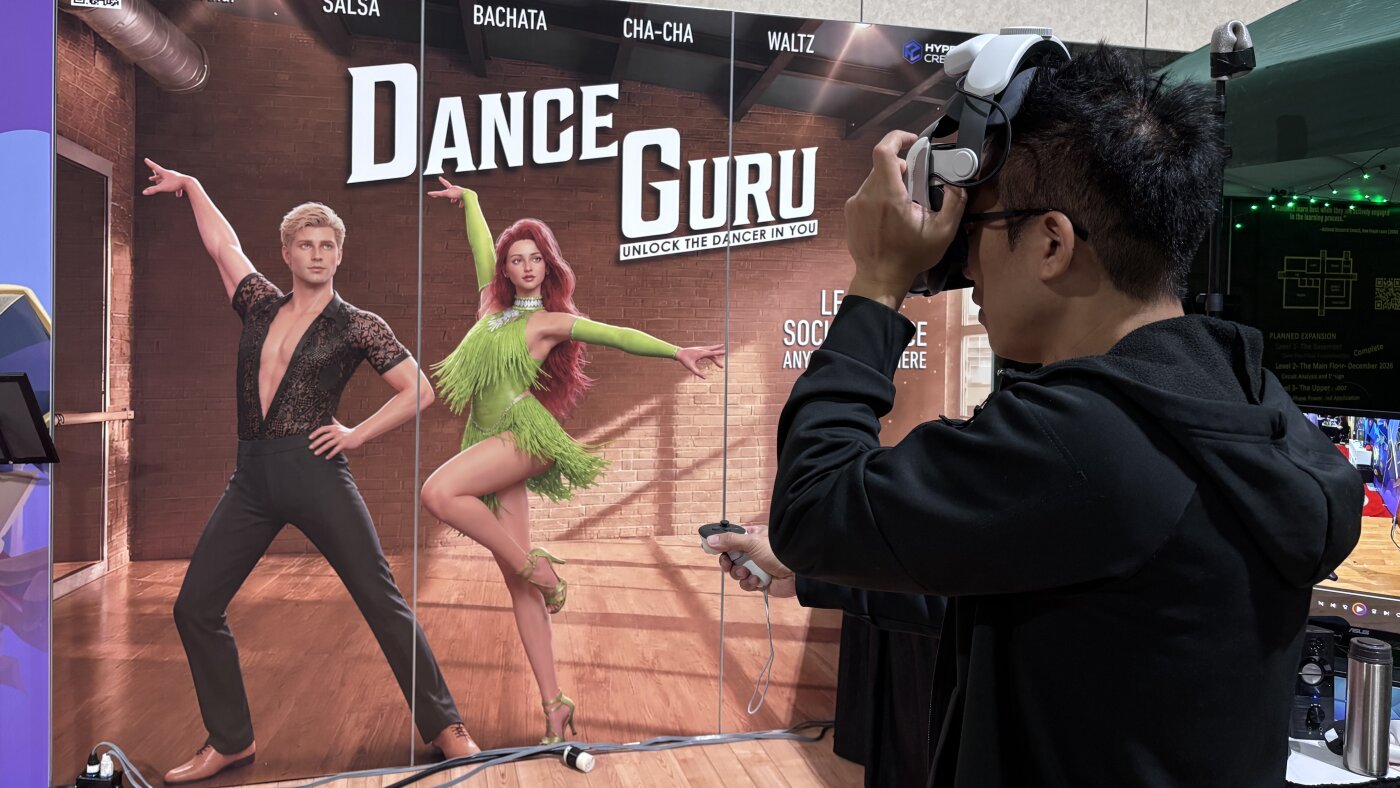
Shy on the dance floor? Virtual reality ‘partners’ aim to help you find your groove
-

 Technology1 hour ago
Are you filthy enough for a $700 portable shower?


