Pennsylvania
How Courts Are Impacting 2024 Election: Pennsylvania Supreme Court Shuts Down RNC Effort To Disqualify Voters


Topline
The Pennsylvania Supreme Court ruled Wednesday that voters whose mail-in ballots are rejected can still cast provisional ballots, after the Republican National Committee sued to stop the practice, as courts across the country are issuing a flurry of last-minute rulings on ballots and how elections are run in the month before Election Day as parties seek to expand or limit voter access.
A polling station in Hawthorne, California, on March 5.
Timeline
The Pennsylvania Supreme Court ruled voters whose mail-in ballots were rejected because of defects—like issues with their signature or the date—can cast provisional ballots to make sure they can vote, after the RNC defended a county’s decision to stop those voters from casting ballots if their mail votes were rejected.
The Georgia Supreme Court upheld a lower court’s ruling blocking new voting rules from taking effect—like a requirement to hand-count ballots and other provisions that Democrats warned could delay the election results from being certified—which means that while litigation will continue, the rules will not be in effect during the general election.
A federal judge dismissed a Republican National Committee-led lawsuit in Michigan that took issue with voter rolls in the state, alleging the number of voters was “impossibly high” and the state wasn’t removing voters from their rolls as required by law, with the judge ruling the plaintiffs didn’t provide enough evidence there was any wrongdoing.
Judges in Michigan and North Carolina rejected lawsuits brought by the RNC challenging overseas voters casting a ballot in those states even if they’ve never actually lived there—for instance, if their parents or spouse lived there—with the Michigan judge calling it an “11th hour attempt to disenfranchise” those voters.
A federal judge in Nevada dismissed an RNC lawsuit challenging the state’s voter rolls—claiming, like in Michigan, that the number of voters was “impossibly high”—throwing out the lawsuit for a second time and ruling the plaintiffs hadn’t provided any “concrete specifics” of wrongdoing.
A Trump-appointed judge in North Carolina struck down a Republican lawsuit aiming to remove 225,000 voters from the state’s voter rolls, alleging fraud, with the judge ruling that removing those voters would move the state “away from a democratic form of government.”
The Nebraska Supreme Court ruled convicted felons can vote in the state after they’ve completed their sentence, striking down an effort by the state to prevent them from voting as Nebraska could become pivotal to determining which presidential candidate wins the Electoral College.
A federal judge blocked a program in Alabama that purged voters from the voter rolls—claiming doing so would help prevent noncitizens from voting—after the Justice Department sued to stop the program because it was too close to the election.
A lower Georgia state judge blocked the new election rules in Georgia that could have potentially delayed the vote certification, after Democrats argued the state election board’s new rules could cause “chaos” in November.
The Ohio Supreme Court upheld restrictions on ballot drop boxes, after the state enacted new limitations saying people dropping off ballots for voters with disabilities have to go into an election office rather than leaving the ballot in a drop box.
A Georgia state judge issued a judgment saying state election workers must certify their county’s election results—regardless of whether they think any ballots were fraudulent—after an official who had refused to certify results in the past asked for clarification and more than a dozen local officials have voted against certifying in recent years.
A federal judge rejected an effort by conservatives to require Arizona to confirm voters’ citizenship ahead of the election.
The Pennsylvania Supreme Court declined to take up two voting cases after Democrats challenged counties throwing out ballots with incorrect or missing dates, and Republicans opposed some county officials letting voters correct issues with their mail-in ballots, which should not be allowed under state law.
What To Watch For
There are many outstanding cases that still have to be decided by Election Day, with Marc Elias, a voting rights attorney aligned with the Democratic Party, reporting Sunday that 191 cases are pending in 39 states. The Justice Department has sued Virginia for challenging voters’ eligibility too close to the election, for instance, and Georgia Republicans are appealing the ruling against the state election board’s new rules. The RNC has filed lawsuits taking aim at voting practices, including alleging Fulton County, Georgia, did not hire enough Republican poll workers. More lawsuits are also likely to be filed and rapidly decided in the two weeks before Election Day.
What We Don’t Know
What will happen after Election Day. Close election results in any battleground state could prompt a slew of lawsuits over how ballots are counted and the election results, as happened in 2020 when the Trump campaign launched a wide-ranging legal campaign challenging the vote count. Battleground states are already preparing for an anticipated onslaught of post-election lawsuits, Reuters reports, with Arizona’s court system ordering judges to prioritize election lawsuits so that certification doesn’t get delayed. Republican and Democratic campaigns are also gearing up for a busy legal landscape: An RNC official told ABC News the party has 5,000 volunteer attorneys ready to be deployed on Election Day, and ABC cited an internal memo from Vice President Kamala Harris’ campaign that claims it is “the most prepared campaign in history for what we face” in terms of litigation.
Chief Critic
Democrats have heavily criticized Republicans for the rash of lawsuits they’ve brought ahead of Election Day and are likely to continue filing, arguing the GOP is trying to sow doubt in the election results even before they’ve come in. “We’re seeing a record number of lawsuits filed before the election—nearly every day—in a seemingly coordinated push to use the legitimacy of the courts to lay the groundwork for discrediting an unfavorable result,” Wendy Weiser, director of the Brennan Center for Justice’s Democracy Program, told ABC News. “The lawsuits are not about getting legal relief, but about spreading conspiracy theories.” Many of the GOP lawsuits that have been brought are based on concerns about election irregularities or fraud, such as noncitizen voting or mail-in ballots, even though evidence has shown election fraud is exceedingly rare and there is no evidence of any widespread fraud in the 2020 election.
Key Background
Republicans have ramped up legal challenges and tightened voting rules since the 2020 election. Trump and his allies filed at least 60 lawsuits challenging the vote count in 2020 as the then-president made baseless allegations of fraud, and Republicans have used Trump’s fraud allegations as an underpinning for their litigation challenging voting rules. GOP-led states have also pointed to Trump’s baseless claims to justify enacting their own tighter restrictions on voting ahead of the 2024 election, which Democrats have then challenged in court. The RNC announced in April it intended to make its litigation efforts a key part of its strategy in the general election, launching an extensive “election integrity” effort with 100,000 staffers and volunteers. Chief Counsel Charlie Spies said in a statement the “RNC legal team will be working tirelessly to ensure that elections officials follow the rules” and “will aggressively take them to court if they don’t.”
Further Reading
Judge Thwarts GOP Georgia Election Officials—Says Board Must Certify Vote Counts (Forbes)
Georgia Judge Blocks Hand-Counting Ballot Rule In Blow To State’s GOP Election Officials (Forbes)
More Than 165 Lawsuits Are Already Shaping the 2024 US Presidential Election (Bloomberg)
‘The litigation election’: Trump and Harris teams head to court in flurry of pre-election lawsuits (ABC News)



Pennsylvania was recognized as one of the top state pavilions at America’s 250th birthday celebration, receiving one of the event’s “Best in Show” honors during the closing ceremony at the Great American State Fair on the National Mall.
The recognition comes just weeks after Senators Dave McCormick (R-PA) and John Fetterman (D-PA) partnered with U.S. Secretary of Agriculture Brooke Rollins and a coalition of 55 Pennsylvania organizations, businesses, and industry partners to ensure the Commonwealth had a pavilion at the Great American State Fair. The bipartisan effort was made possible entirely through private partnerships without the use of a single taxpayer dollar.
Joining Senators McCormick and Fetterman in this effort were the Pennsylvania Chamber of Business and Industry, PennAg Industries Association, and the Pennsylvania Manufacturers’ Association (PMA), alongside more than 50 additional Pennsylvania organizations, businesses, and industry partners whose support helped bring the Commonwealth’s exhibit to life.
“Pennsylvania’s story is America’s story, and this recognition is a tribute to everyone who helped bring that story to life,” said Senator McCormick. “From Independence Hall and Valley Forge to our farms, factories, and innovators, the Commonwealth has shaped our nation for 250 years. I’m grateful to Senator Fetterman, Secretary Rollins, and our outstanding Pennsylvania partners for ensuring Pennsylvania had a presence worthy of our history.”
“I’m incredibly proud of all the Pennsylvanians that showed up to make sure our Commonwealth had the spotlight it deserved right there on the National Mall during America’s 250th birthday. It earned this recognition,” said Senator Fetterman. “What makes Pennsylvania truly awesome are the men, women, and children who call it home. Our farmers, steelworkers, small business owners, and so many more. Those who visited the pavilion got to see a glimpse of some of the very best of us and our history, and I’m grateful to Senator McCormick, Secretary Rollins, and all who made this a massive success.”
The Pennsylvania pavilion highlights the Commonwealth’s central role in America’s story — from the signing of the Declaration of Independence and the sacrifices at Valley Forge to Gettysburg, the Arsenal of Democracy, and the Commonwealth’s continued leadership in agriculture, manufacturing, energy, innovation, and small business. Visitors also explored exhibits featuring many of Pennsylvania’s iconic companies and products, spotlighting the industries and communities driving the Commonwealth’s economy today.
During the closing ceremony, Freedom 250 recognized several outstanding state pavilions from across the country. Pennsylvania received one of the event’s “Best in Show” honors, recognizing the Commonwealth’s exhibit as one of the premier state pavilions at the Great American State Fair.
Representatives from Senator McCormick’s office accepted the Best in Show award during a recognition ceremony on the Freedom Stage Friday afternoon at the Great American State Fair.

MIFFLIN COUNTY, Pa. (WHP) — Thousands of people gathered to watch one of the world’s largest operating steam locomotive make several stops in Pennsylvania.
Union Pacific’s “Big Boy” No. 4014 made stops in Lebanon, Lewistown, Pittston, Rockville, among other locations.
CBS 21 Meteorologist and Chief Drone Pilot Ed Russo captured video during its stops in central Pennsylvania.
MORE | Big Boy steam locomotive draws massive crowd in Lebanon
Pennsylvania
Here’s how to see Big Boy, the world’s largest steam locomotive, in western Pennsylvania

The historic Big Boy No. 4014, the world’s largest operating steam locomotive, is rolling through western Pennsylvania on Saturday, ending with a stop in Leetsdale.
Called the “Elvis Presley” of steam locomotives, the legendary Union Pacific Big Boy No. 4014 has been crossing the country to celebrate America’s 250th birthday. It celebrated the Fourth of July in Philadelphia, and now it’s coming back through the Pittsburgh area before making its way back home west.
Where will Big Boy stop in Western Pennsylvania?
Big Boy will stop in Leetsdale on Saturday at 6:15 p.m. Before then, it will roll through multiple other communities.
According to both Union Pacific and train experts KDKA consulted with, the tentative Saturday, July 11, schedule is as follows:
- 9 a.m. – Leaves Altoona
- 9:30 a.m.-10 a.m. – Stop at Horseshoe Curve National Historic Site
- 10:45 a.m.-11:15 a.m. – Stop in Cresson, Pennsylvania
- About 1:30 p.m. – Roll through Derry, Pennsylvania
- About 1:35 p.m. – Roll through Bradenville, Pennsylvania
- About 1:45 p.m. – Roll through Latrobe, Pennsylvania
- About 2:15 p.m. – Roll through Greensburg, Pennsylvania
- About 2:35 p.m. – Roll through Jeannette, Pennsylvania
- Time TBD – Roll through South Side Flats/Station Square along the Monongahela River. Big Boy will cross the Ohio River on the bridge over Brunot Island.
- 6:15 p.m.-6:45 p.m. – Stop in Leetsdale, Pennsylvania. From the Borough of Leetsdale: the viewing location for Big Boy will be at Ferry Street Railroad Crossing near the Subway.
Other times and locations for roll-throughs have not been determined yet.
And while Union Pacific wants everyone to come out and see the Big Boy, they want everyone to be safe. They’re reminding people to stay 25 feet off the tracks and never cross or put anything on the tracks, especially when the Big Boy is rolling through.
What is Big Boy No. 4014?
Built in 1941 to haul massive military and freight loads over the Wasatch Mountains during World War II, the Big Boy was one of just 25 locomotives ever built.
“It is just an astounding piece of machinery,” Ian Luconti from Friendship, Pennsylvania, said while seeing Big Boy in Altoona. “I don’t know how somebody could wake up one day and say, ‘I’m going to build a steam engine.’ I just wanted to come and see it. It’s historic, there’s only a couple of them in the world that I know of.”
Today, only eight others survive on display across the country. But after a years-long restoration led by engineer Ed Dickens and his crew, Big Boy No. 4014 is the only one still under steam and operating on America’s rails.
“It brings people together,” Dickens said. “It brings communities together, it brings everyone together, and it’s brought our companies together in a way that is necessary to do this and it is a lot to pull off.”
And just how big is the Big Boy? It carries about 25,000 gallons of water, weighs roughly 1.2 million pounds, and stretches 133 feet from end to end — nearly 60 feet longer than a typical diesel locomotive, making it the largest operating steam locomotive in the world.
As part of America’s 250th anniversary, Big Boy No. 4014 has been on a coast-to-coast tour, crossing the Mississippi River and into the Ohio Valley for the first time since it was built in New York in 1941. Thousands of people gathered to watch it in Erie County when it came to Pennsylvania for the first time.
“I think I can speak for all of us: it’s a trip of a lifetime,” said Dickens. “And we are people that are accustomed to seeing large crowds turning out for the Big Boy. The crowds turning out for this locomotive are in the millions. And it’s just mile after mile of this heartwarming emotion that is just beautiful to see.”
-

 Politics5 minutes ago
Trump-aligned House holdouts accused of holding ‘life-saving’ veterans bill ‘hostage’ over SAVE America Act
-

 Health12 minutes ago
Simple sitting change linked to lower risk of cancer death, study finds
-

 Sports14 minutes ago
Golf star records lowest round in LPGA major history with astounding performance at Evian Championship
-

 Technology20 minutes ago
Meta Verified scam threatens Facebook deletion
-
 Business27 minutes ago
Meta discontinues Instagram feature on new AI image generation tool after Hollywood backlash
-
 Entertainment30 minutes ago
Huey Lewis details how he ‘can’t enjoy music’ anymore because he is ‘basically deaf’
-
 Lifestyle35 minutes ago
Twice the stink! Two rare corpse flowers at the Huntington are set to bloom
-
 Politics42 minutes ago
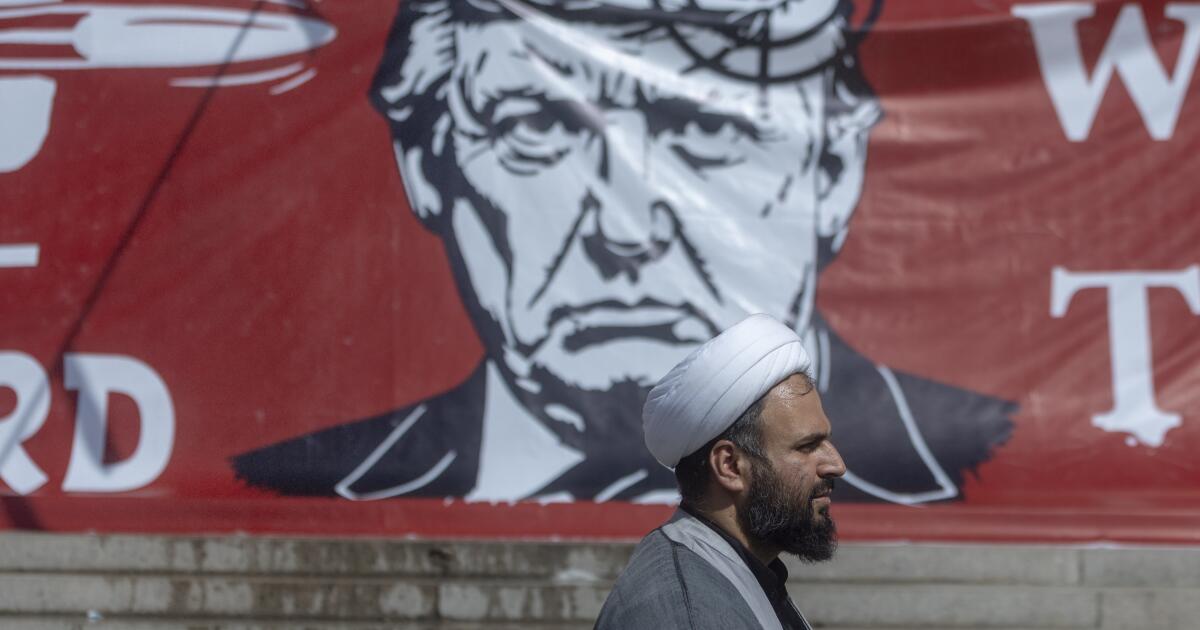
Assassinations unleashed under Trump haunt Iran war endgame

