

Connect with us

Pennsylvania

California Joins North Carolina, Pennsylvania, Maryland, Iowa, Alabama, Missouri and Other US States Boosting American Tourism Economy Along with Jobs, Supercharging Revenue and Massive Investment for Infrastructure, New Update – Travel And Tour World

Published

on

California Joins North Carolina, Pennsylvania, Maryland, Iowa, Alabama, Missouri and Other US States Boosting American Tourism Economy Along with Jobs, Supercharging Revenue and Massive Investment for Infrastructure, New Update – Travel And Tour World


Published on
December 1, 2025

By: Tuhin Sarkar

California, North Carolina, Pennsylvania, Maryland, Iowa, Alabama, Missouri, and several other U.S. states are playing a pivotal role in supercharging the American tourism economy. These states are not only driving massive tourism growth but also creating thousands of new jobs and generating extraordinary revenue.

The tourism industry across these states is thriving, and it’s clear that their efforts are paying off. With the surge in visitor numbers, these states are seeing an influx of investment, especially in infrastructure, to meet the growing demand.

Advertisement

The powerful combination of job creation, boosted revenue, and strategic investments is transforming these regions. As California, North Carolina, Pennsylvania, Maryland, Iowa, Alabama, Missouri, and others lead the charge, the American tourism economy is experiencing a boom like never before. Read on to discover how these states are transforming the tourism landscape and contributing to an economic revolution!

California: The Unstoppable Tourism Titan

California is the undisputed leader in the U.S. tourism economy, with $157.3 billion in visitor spending in 2024. This record-breaking figure comes from a combination of world-renowned attractions, from Hollywood to Napa Valley, making California a top global destination. In addition to this, tourism has supported over 1.17 million jobs and generated $12.6 billion in state and local tax revenue.

The Golden State’s tourism economy continues to show resilience, even in the face of global challenges. The sheer scale of its tourism infrastructure, supported by massive investments in hospitality, entertainment, and transportation, makes California a cornerstone of the U.S. tourism industry. Visitors flock from all over the world, injecting billions of dollars into the local economy. From San Francisco to San Diego, tourism remains California’s biggest economic driver.

California joins north carolina, pennsylvania, maryland, iowa, alabama, missouri

North Carolina: Booming Visitor Economy

In 2024, North Carolina set a new record for tourism spending, reaching an impressive $36.7 billion. The state’s beautiful beaches, Appalachian Mountains, and charming cities like Charlotte and Raleigh have made it a top tourist destination. North Carolina’s tourism industry has become an economic powerhouse, supporting nearly 200,000 jobs and generating millions in tax revenue.

What makes North Carolina’s tourism sector stand out is its diverse offerings, from mountain retreats to coastal getaways. The $36.7 billion in total travel spending underscores the state’s ability to attract both domestic and international visitors. As tourism grows, it continues to fuel local businesses, create jobs, and support communities across the state. 2024 is a banner year for North Carolina, and the tourism boom is far from over.

Pennsylvania: Tourism Drives Economic Growth

Pennsylvania’s tourism economy has surged, reaching nearly $84 billion in 2024, up from $76 billion the year before. The state’s rich history, Chester County, and the Poconos have become significant attractions, drawing millions of visitors each year. 30,000 new jobs have been created, showcasing the extent to which tourism is benefiting the state.

Pennsylvania’s historical significance, coupled with its scenic beauty, makes it a must-visit state for tourists from across the U.S. and abroad. Whether it’s a trip to Philadelphia’s Liberty Bell, hiking in the Allegheny Mountains, or exploring its quaint small towns, the tourism boom has made Pennsylvania one of the nation’s top economic performers in the visitor economy.

Advertisement

Maryland: An Economic Powerhouse on the East Coast

Maryland has made a significant impact with its $21.2 billion in visitor spending in 2024. The state’s proximity to major metropolitan areas like Washington, D.C. makes it an essential part of the East Coast tourism circuit. Visitors flock to Baltimore, the Chesapeake Bay, and Assateague Island, contributing significantly to the state’s economy.

The tourism sector in Maryland also supports 193,845 jobs and generates $2.5 billion in state and local tax revenue. The state’s diverse tourism offerings—ranging from beach vacations to cultural experiences—continue to drive economic growth. Maryland’s tourism economy is a testament to how smaller states can punch above their weight in the U.S. tourism market.

Iowa: A Growing Tourism Destination

Despite its relatively small size, Iowa has seen its tourism economy soar, with $7.5 billion in direct visitor spending in 2024. The state’s picturesque rolling hills, state parks, and rich agricultural heritage have attracted visitors seeking a rural getaway. The total economic impact of tourism in Iowa now stands at $11.2 billion, supporting over 71,000 jobs.

The visitor economy has become a key contributor to the state’s prosperity. Iowa continues to draw tourists for its state fairs, local festivals, and charming small towns. The $1.2 billion in tax revenue generated by tourism helps fund essential public services, making Iowa’s tourism sector a critical part of its economy.

Alabama: Surging Tourism Industry

Alabama’s tourism economy is on fire, with a total impact of $7.9 billion in 2024. Known for its southern hospitality and historical sites, Alabama has become a popular destination for both domestic and international tourists. The state’s beaches, civil rights history, and outdoor recreation attract millions every year.

Tourism in Alabama has created 248,590 jobs, contributing heavily to its local economy. The $4.4 billion in direct hospitality earnings demonstrates the state’s growing tourism infrastructure. The impact of the tourism sector extends beyond just jobs and spending; Alabama’s tourism tax revenues are being reinvested into the community, fueling growth and development throughout the state.

Missouri: A Hidden Gem in the Heartland

Missouri may not be a traditional tourist hotspot, but its tourism economy is thriving. The state has generated $1.6 billion in state and local tax revenue from tourism in 2024. Visitors are drawn to Missouri’s vibrant cities like St. Louis and Kansas City, as well as its beautiful landscapes and national parks.

Tourism supports hundreds of thousands of jobs in Missouri, with tourists spending money on everything from local dining to outdoor adventures. The $1.6 billion in tax revenue is a significant contributor to public services, helping to fund infrastructure and development projects across the state. Missouri’s tourism industry is a key economic driver in the Midwest.

Advertisement

Wyoming: A State Seeing Huge Tourism Booms

Wyoming, known for its natural beauty and Yellowstone National Park, is experiencing a tourism boom in 2024. The state’s $4.9 billion in visitor spending highlights the growing popularity of its outdoor destinations. Wyoming’s tourism economy has been boosted by an influx of international visitors, who have increased by 60% year-over-year.

While Wyoming may not be a heavily populated state, its tourism economy is significant, especially given the large number of jobs it supports. The state has capitalised on its vast, pristine landscapes and iconic landmarks, making it a must-visit destination for those seeking adventure tourism and outdoor experiences.

New York: The Empire State’s Tourism Resurgence

New York has long been a leader in the tourism sector, and in 2024, it’s seeing a steady 8% growth in tourism activity compared to the previous year. While New York City remains a global magnet for international visitors, the state as a whole has seen increased interest in its natural attractions and historic landmarks.

The tourism sector in New York continues to generate billions in spending and supports hundreds of thousands of jobs across the state. The Empire State’s cultural significance, combined with its diverse attractions, makes it a top contender in the U.S. tourism economy.

Other States Contributing to the U.S. Tourism Economy

While these states are at the forefront of the tourism boom in 2024, other regions like California, Florida, Texas, Nevada, and Hawaii continue to contribute heavily to the U.S. tourism industry. Even states with less traditional tourist offerings, such as Ohio, Oklahoma, and South Dakota, are seeing significant growth in their tourism sectors, supporting jobs, and boosting local economies.

Advertisement

The diversity of tourism across the U.S. – from mountains to beaches, cities to small towns – makes it clear that every state plays a role in the nation’s growing visitor economy.

Conclusion: Tourism is America’s Economic Powerhouse

From California’s beaches to Iowa’s heartland, tourism is driving economic growth across the United States. As shown in 2024, the visitor economy is booming, with billions in spending, thousands of jobs, and record tax revenue benefiting communities from coast to coast. The diversity of U.S. tourism is its strength, and every state contributes to this growing economic powerhouse. Whether you’re in a major destination or a small town, the power of tourism is undeniable, and its role in America’s economic future is more crucial than ever.


Source link

Pennsylvania

Here’s what’s in — and not in — Pennsylvania’s $50.8 billion state budget

Published

on

Here’s what’s in — and not in — Pennsylvania’s .8 billion state budget


HARRISBURG — Pennsylvania’s new $50.8 billion state budget was sprawled across more than 600 pages of legislation and signed into law on Sunday. New data center regulations, new education funding, and more were approved in the wide-ranging spending package.

But some of the most pressing issues facing the General Assembly were noticeably absent from the final deal, as Gov. Josh Shapiro and lawmakers in the split legislature were unable to reach a compromise — or didn’t want to touch the contentious issues until after they are up for election in November, sidelining some of Shapiro’s top budget priorities.

Here’s a look at what’s in — and what was left out — of the 2026-27 Pennsylvania state budget.

» READ MORE: Pa. lawmakers and Gov. Josh Shapiro have approved a $50.8 billion state budget, delaying action on key issues

Advertisement

Pennsylvania took another jump toward filling a multibillion-dollar funding gap between wealthy and poor school districts, after a court found that the state’s old system of funding education was unconstitutional. Since 2024, when the state first implemented new adequacy and tax equity formulas in efforts to fill the state’s $4.5 billion “adequacy gap,” lawmakers have put nearly $1.9 billion toward funding lower-income districts, with plans to fill it by 2032.

“It keeps our promise to our school districts,” said State Rep. Jordan Harris (D., Philadelphia), who serves on the powerful appropriations committee responsible for allocating state dollars, in remarks on the House floor Sunday.

The latest installment of adequacy and tax equity payments — $565 million — will largely go to low-income districts that already have high property taxes. The School District of Philadelphia, Pennsylvania’s largest school district and the only one in the state that is unable to raise its own revenue, will get $136 million of that funding increase.

Shapiro proposed generating new revenue streams to help the state fix its multibillion-dollar structural deficit in his last four budget addresses. But the ways he wants to raise that cash have been met with resistance by Senate Republicans, who argue they aren’t policies that will improve the state’s economic standing — or can’t reach agreement within their caucus on how to address the issues.

Shapiro this year didn’t get the hefty minimum wage increase he asked for, raising the hourly minimum from $7.25 to $15 — and counting on the higher wage for $80 million in higher income tax revenues. Nor was he able to get the split General Assembly, where Democrats control the House and Republicans lead the Senate, to approve adult-use cannabis, which his office estimated would bring in $729.4 million in its first year, largely through licensing. (House Democrats have approved plans for a minimum wage increase and recreational marijuana legalization, but the Senate has not voted on the bills.)

Advertisement

» READ MORE: Could recreational marijuana really bring $1.3 billion in revenue to Pa. over five years? Here’s how other states are faring.

Screen shows skill games and cannabis regulation and reform as Gov. Josh Shapiro makes his annual budget proposal in the state House chamber in Harrisburg Tuesday, Feb. 3, 2026.Read moreTom Gralish / Staff Photographer

Shapiro, in his February budget proposal, also called on the General Assembly to regulate and tax skill games at the same rate as casinos, a move which he has estimated could generate nearly $800 million in revenue in its first year. But any regulation of skill games — slot-machine lookalikes that the state Supreme Court ruled last month are a form of gambling — was left out of the budget.

Lawmakers still have until October to decide whether skill games will be taxed and regulated, part of a grace period in the high court’s ruling. Otherwise, they will become illegal gambling machines found in many corner stores, gas stations, and bars. The issue has been the target of more than $8 million in lobbying and $9 million in campaign spending in Harrisburg, mostly funded by one company.

» READ MORE: How ‘skill games’ exploded across Pennsylvania — and sparked a multimillion-dollar political fight
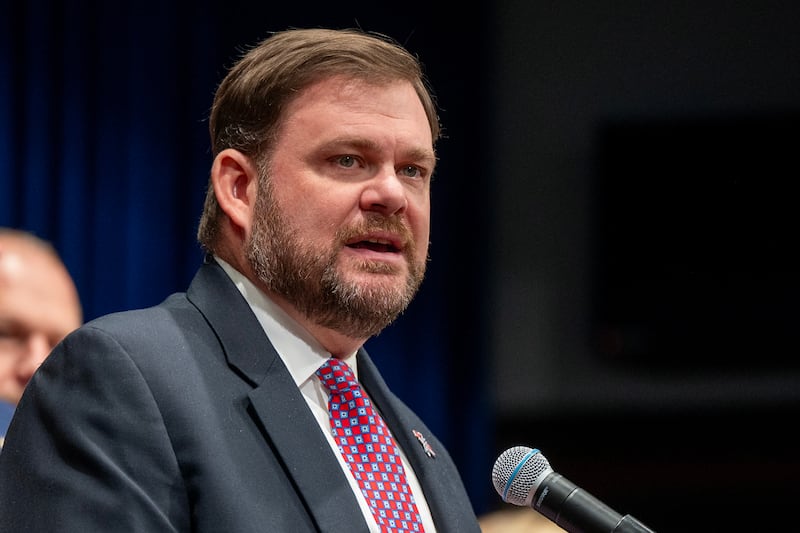
State Senate Majority Leader Joe Pittman (R., Indiana) during a press conference at the Capitol in Harrisburg Feb. 3, 2026.
State Senate Majority Leader Joe Pittman (R., Indiana) during a press conference at the Capitol in Harrisburg Feb. 3, 2026.Read moreTom Gralish / Staff Photographer

“We can act within the 120 days, we can act after the 120 days,” Senate Majority Leader Joe Pittman (R., Indiana) said on Sunday. “But the choice is now quite simple. These machines are illegal, and in less than 120 days, they will be leaving the marketplace.”

Data centers — which are seeing a boom in Pennsylvania as artificial intelligence usage increases and communities are pushing back on where they are being built — will be required to submit information about their energy and water usage.

Advertisement

Beginning next summer, data centers in the state with a peak energy demand greater than 10 megawatts will be required to submit information annually to the Department of Environmental Protection.

Outlined as part of this year’s fiscal code, those reports will be publicly-accessible. Data centers that do not submit information about their resource usage will be fined $10,000 a day.
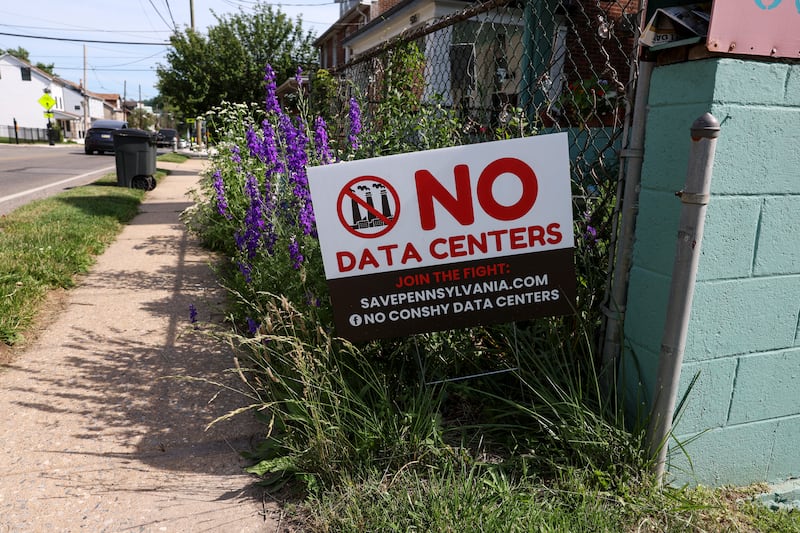
A yard sign protests the proposed data center on New Elm Street near the Closed Cleveland-Cliffs steel mill photographed on Thursday, June 4, 2026 in Conshohocken, Pa.
A yard sign protests the proposed data center on New Elm Street near the Closed Cleveland-Cliffs steel mill photographed on Thursday, June 4, 2026 in Conshohocken, Pa.Read moreMonica Herndon / Staff Photographer

A data center regulation bill, which would have limited state benefits for data center developers and was championed by Shapiro, was not included in the final budget deal. The governor called for limiting a sales and use tax exemption and expediting permitting to projects that comply with a set of transparency and environmental standards.

And several other data center regulation efforts that have received bipartisan support in recent weeks were also absent from the final spending package.

That included efforts to repeal the existing sales tax exemption afforded to data center developers and attempts to enact a local or statewide moratorium on new data center development.

Both chambers passed language repealing the tax exemption and advanced differing bills to freeze development. One Democratic-sponsored bill would have given municipalities the option to implement a 180-day moratorium on new centers. The other, a Republican-sponsored measure, would allow for local moratoriums up to 18 months.

Advertisement

“Compromise” was the word of the day around the Pennsylvania Capitol on Sunday, when the legislature swiftly passed the more than 600-page budget deal hashed out behind closed doors between Shapiro, Pittman, and House Majority Leader Matt Bradford (D., Montgomery) and passed with bipartisan support in both chambers.

The legislative leaders and Shapiro emphasized that they didn’t get exactly what they wanted in the budget, as a symptom of dealing with divided government. And leaders were proud to have reached the deal less than two weeks after their July 1 deadline, rather than the nearly five months that it took to hash out an agreement last year.
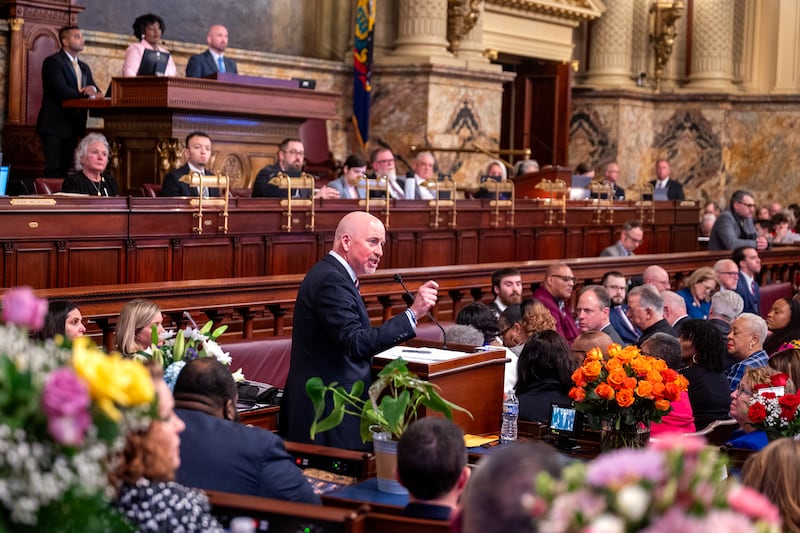
House Majority Leader Matt Bradford (D., Montgomery) speaks on Tuesday, Jan. 7, 2025.
House Majority Leader Matt Bradford (D., Montgomery) speaks on Tuesday, Jan. 7, 2025.Read moreTom Gralish / Staff Photographer

Lawmakers also agreed to work over the weekend to hurriedly approve the budget deal, with members of the Senate coming in on Saturday night to begin advancing parts of the budget deal and the House joining them Sunday afternoon. By 6:15 p.m. on Sunday, Shapiro had signed it.

Among the inspirations for the weekend of productivity: Making it to the MLB All-Star Game in Philadelphia, Bradford said, for which he has tickets.

Leaders returned to some old accounting maneuvers to address the state’s multibillion-dollar structural deficit and avoid pulling from the state’s emergency savings account.

They spent down unused and underused dedicated funds, and rolled some of the state’s Medicaid payments totaling $1.3 billion to the next fiscal year, a move lawmakers typically resorted to before the state saw an influx of federal dollars during the COVID pandemic.

Advertisement

Without those delayed payments, the state budget would total closer to $52.1 billion, and several GOP members criticized the total as being disingenuous.

More than 80,000 retired public-sector employees will receive a cost-of-living adjustment to their pensions, something advocates have sought for years.

» READ MORE: More than 80,000 Pa. retired teachers, police officers, and firefighters will get a pension bump — some for the first time in decades

Public school teachers and other state employees who retired before July 1, 2002 will receive a tiered monthly payment based on the date of their retirement. Similarly, police officers and firefighters who retired more than five years ago will receive monthly payments ranging from $50 to $300 dollars, depending on how long they have been retired.

Lawmakers from both parties had called for the cost-of-living increase.

Advertisement

Legislators also agreed to close a loophole that allowed online sellers to avoid paying Philadelphia’s local 2% sales tax on purchases made in the city.

Mayor Cherelle L. Parker had asked the General Assembly to close it as part of her own city budget pitch in a move estimated to bring an additional $1.5 million to Philadelphia.
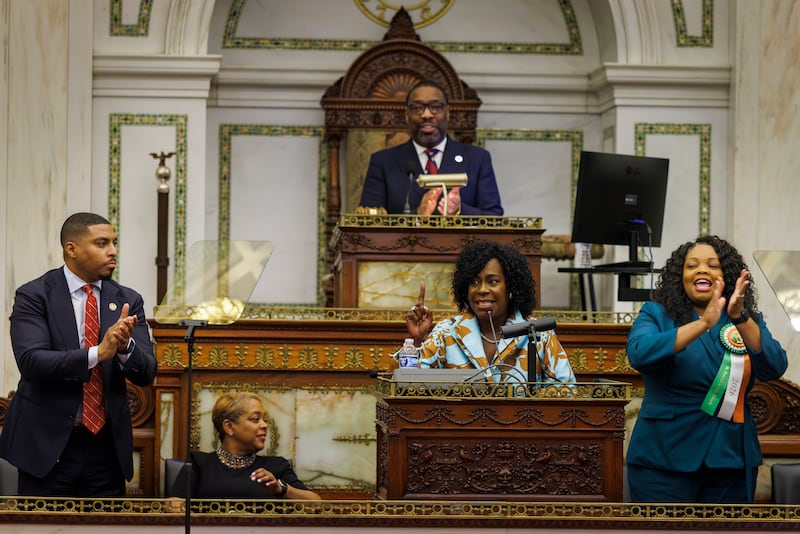
Philadelphia Mayor Cherelle L. Parker is cheered by members of Philadelphia City Council at conclusion of her budget address, Thursday, March 12, 2026.
Philadelphia Mayor Cherelle L. Parker is cheered by members of Philadelphia City Council at conclusion of her budget address, Thursday, March 12, 2026.Read moreAlejandro A. Alvarez / Staff Photographer

Twenty-nine states have bell-to-bell cell phone bans. This year, Pennsylvania will not join them, despite the passage of two separate phone ban bills — one in each chamber of the legislature.

In: Mandatory recess for students K-5

Recess is now law in Pennsylvania.

Another education policy change championed by Shapiro, a mandatory, 30-minute recess for students in grades kindergarten through fifth was established in this year’s budget as a way to improve learning outcomes.

Advertisement

Several Pennsylvania funding issues that have gone years without being addressed were left out of the latest budget, some with more pressing deadlines than others.

Lawmakers did not address a need for mass transit funding — which led to last year’s bitter budget stalemate among legislators — but are expected to identify a long-term funding stream for the transit agencies next year when a two-year fail-safe runs out.

» READ MORE: Public transit is in trouble all across Pennsylvania, including in GOP districts
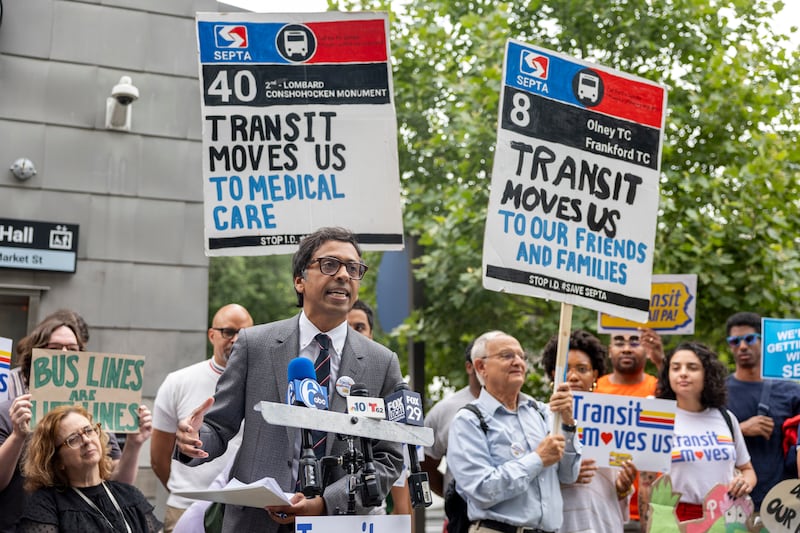
Senator Nikil Saval, speaks at a press conference calling for more SEPTA funding from the state at Independence Hall in Philadelphia, Pa., on Friday, June 26, 2026.
Senator Nikil Saval, speaks at a press conference calling for more SEPTA funding from the state at Independence Hall in Philadelphia, Pa., on Friday, June 26, 2026.Read moreTyger Williams / Staff Photographer

Other local governments and service providers said their needs are more urgent.

The County Commissioners Association of Pennsylvania released an urgent plea after the state budget was signed that counties still have not received the critical mental health funding they need, or a surcharge increase used to fund 911 call systems. Home-health service providers also continued their calls for increased state funding they say is needed, as the industry faces serious staffing issues due to low state reimbursement rates.

» READ MORE: Pennsylvania’s home care industry is in crisis, with low pay and unfilled shifts driving it toward collapse

Advertisement

Rape crisis centers got a much-needed funding increase, doubling how much the centers receive from $12 million to just over $24 million.

Philadelphia’s only rape crisis center had to lay off its employees and rely on volunteer work during last year’s monthslong state budget impasse.

Republican and Democratic lawmakers championed the organizations in this budget, making the largest single-year increase for the critical services in state history, according to the Pennsylvania Coalition to Advance Respect.

“Today marks a turning point for survivors and rape crisis centers across Pennsylvania,” said Joyce Lukima, the organization’s coalition director, in a news release.

Ethan Young is an intern with the Pennsylvania Legislative Correspondents’ Association.

Advertisement


Source link

Continue Reading

Pennsylvania

Governor Josh Shapiro signs overdue Pennsylvania state budget with bipartisan support

Published

on

Governor Josh Shapiro signs overdue Pennsylvania state budget with bipartisan support


HARRISBURG, Pa. (WPVI) — Pennsylvania Governor Josh Shapiro signed the state’s overdue 2026-2027 budget on Sunday.

The $50.8 billion spending plan was passed by state lawmakers with bipartisan support.

It is smaller than Shapiro’s initial $53 billion plan proposed back in February.

“We managed, as the math indicates, to find compromise without compromising our core values,” said Shapiro. “If you go back and look at the goals we all set together way back in 2023 – funding our schools, making our communities safer, growing our economy….four years later, this budget reflects those continued priorities.”

Advertisement

Lawmakers say this spending plan expands workforce development initiatives, devotes significant new funding for basic education, and increases funding for special education and early intervention services.

Copyright © 2026 WPVI-TV. All Rights Reserved.


Source link

Continue Reading

Pennsylvania

Gov. Shapiro signs $50.8B Pa. budget with focus on education, public safety

Published

on

Gov. Shapiro signs .8B Pa. budget with focus on education, public safety


PENNSYLVANIA (WFMZ-TV) — Governor Josh Shapiro signed Pennsylvania’s $50.8 billion budget into law Sunday.

The largest part– $11.8 billion funding education. It also funds four more State Police classes. The budget comes with an additional $10 million for career and technical education.

“If you go back and look at the goals we all set together way back in 2023– funding our schools, making our communities safer, growing our economy, and four years later this budget reflects those continued priorities,” said Governor Shapiro.

Advertisement

Republican State Senator Jarrett Coleman said he voted against the budget.

“The issue with the budget is that this wasn’t a really honest budget. This was pretty deceptive,” said Senator Coleman.

One thing in particular he said he is against– delays in $2.6 billion in Medicaid payments to managed care providers to the next fiscal year.

“So, that’s disappointing and I don’t really care to play that game. I think Pennsylvanians deserve to have an honest conversation and make no mistake; tax payers will ultimately pay the price for this charade,” said Senator Coleman.

Democratic State Rep. Mike Schlossberg said he is happy with this budget.

Advertisement

“I think by and large it was an extremely solid product,” said Representative Schlossberg.

This marks the fifth year in a row the budget was not passed by the June 30th deadline. The signing of this one comes months ahead of when last year’s budget was approved.

“I think some lessons were learned. I think everybody realized we cannot do last year, we cannot do again what we did last year and also candidly election coming up in a few months, nobody wants to leave it hanging out there,” said Representative Schlossberg.


Source link

Advertisement
Continue Reading
Advertisement

Trending
