Massachusetts
With few competitive races on the ballot, Massachusetts donors turn outward in 2024 – The Boston Globe


“The key for me was to focus on the tight races outside of Massachusetts,” he said. “That was a strategic decision.”
Guernsey’s calculation is one shared by other deep-pocketed donors in wealthy Massachusetts, which this year, as in most past cycles, has few competitive races of its own. A Globe analysis of the top 500 contributions from Massachusetts residents in 2024 showed a steady stream of money toward mostly Democratic and nonpartisan super PACs across the country, but also a number of such Republican political groups benefiting from the largesse of Massachusetts donors.
The trend is one analysts say springs both from the deep political division in the US and the lingering effects of a 2010 Supreme Court decision that allows for unlimited donations to super PACs, which are also allowed to spend unlimited amounts of money on political activity but cannot, for the most part, coordinate with candidates.
“You have two parties that are polarized and they are on the knife’s edge of who is going to control government,” said Ray La Raja, a professor of political science at the University of Massachusetts Amherst. “That is a recipe for pouring money into contests.”
The dynamic is especially true in Massachusetts, La Raja said, where politicians from all over the country swing through to raise money from the state’s well-heeled donor class. High-dollar fund-raisers attract Democrat and Republican candidates from elsewhere up and down the ticket, and serial donors work closely with the parties to direct their donations, La Raja said.
This cycle, Republican vice presidential candidate JD Vance attended a luncheon in Gloucester, Vice President Kamala Harris raised money in Pittsfield and Provincetown. In tony Martha’s Vineyard, buzzy names in Democratic politics, from Maryland Governor Wes Moore to New York Attorney General Letitia James, have spent the summer taking turns tapping into the donor base.
Massachusetts has among the highest median household incomes in the US and is home to some of the wealthiest people in the country. And according to campaign finance data compiled by watchdog group Open Secrets, it ranked ninth in political giving this cycle despite being the sixteenth-most populous state.
“Major donors who give repeatedly are partisans. They are true believers. They want the policies of their parties implemented,” La Raja said. “So they are willing to send money to Wisconsin so their party controls Congress.”
Because there are few competitive states, donors in the wealthiest pockets of the country tend to funnel large amounts of money to the few dozen tight congressional races or to the presidential election.
While Democrats dominate Massachusetts politics, political giving by wealthy Massachusetts benefactors spans the political spectrum.
Republican donors, including New Balance chief Jim Davis, have poured money into causes working to support Republican women, elect Donald Trump to a second term or, alternately, back a conservative-run group opposed to Trump’s reelection. Many in Massachusetts funded a committee backing former US ambassador to the United Nations Nikki Haley to be the Republican party’s presidential nominee.
The Republican donors whom the Globe contacted for comment declined to do so or did not respond.
Democratic donors such as Cambridge music scholar and donor Jay Scheide and Suffolk Construction CEO John Fish have funneled millions into committees working to elevate Vice President Kamala Harris to the White House, elect pro-choice Democrats into office, and support Democrats in swing states.
Members of both parties have poured tens of millions into a super PAC promoting pro-Israel candidates, while others sent large donations to a cause working to get voters to blank their ballots in protest of the Israel–Hamas war as part of the national “uncommitted movement.”
“Money has just become more and more important. I think it’s a phenomenon across the donor universe,” said Maurice Cunningham, a University of Massachusetts Boston professor who regularly writes about state campaign finance law. “I see a lot of billionaire donors casting their influence in different states.”
In Western Massachusetts, Guernsey’s team sent 600,000 postcards supporting Democrats in states such as Pennsylvania, New York, and Ohio, and put up billboards and digital ads supporting President Biden before he ended his campaign.
As an individual, Guernsey has given nearly $1 million of his own money to similar Democratic causes this year.
“The most important need this year is to protect our country. The only way we can do that is protecting outside, where there is much more risk of losing to a demagogue,” Guernsey said of Trump. “There is a total understanding of the donors here in Massachusetts that unless you have a local race that demands your attention … most people are making large donations outside the state.”
The flow of money out of state is a relatively new phenomenon, said Ian Vandewalker, senior counsel and manager for the Brennan Center’s Elections and Government Program.
In 1998, candidates for the US House overall raised more than 80 percent of their campaign money from their home states; in 2022, that percentage was down to just over 60 percent, according to research conducted by the Brennan Center.
The concept of sending money out of state goes beyond mega-donors, too. According to a recent UMass Amherst/WCVB poll, 49 percent of 700 likely voters in the state have either attended a rally, sent money to out-of-state candidates or groups, or posted to social media about an election in a more electorally competitive state.
Vandewalker said that the polarization of today’s Congress has led to a scenario where control can change nearly every election cycle, meaning a person’s vote is no longer enough to help one party gain control in Washington. Sending money to districts with competitive races, however, can.
“It used to be the case that candidates for Congress raised most of their money from residents of their district,” Vandewalker said. “Now that has flipped.”
Samantha J. Gross can be reached at samantha.gross@globe.com. Follow her @samanthajgross.



AG Andrea Campbell called Diana DiZoglio’s personal cell phone a day after an SJC justice moved the legislative audit legal case to the full court, a call that the auditor alleges violates the state’s professional conduct rules.
DiZoglio’s fight with Campbell is steaming ahead, even as the attorney general claims that there’s a “path forward” for the voter-approved audit of the state Legislature, over 15 months after 72% of the state signed off on the ballot measure.
DiZoglio’s office argues that Campbell’s attempt to call the auditor on her personal cell phone violates Rule 4.2 of the Massachusetts Rules of Professional Conduct, which prohibits lawyers from communicating directly about a case with an individual represented by another attorney without consent.
“The Attorney General is our state’s top law enforcement officer and should follow the Rules of Professional Conduct,” DiZoglio said in a statement on Wednesday. “I will not participate in dark, shadow conversations with the AG about this lawsuit.”
“That she is trying to get me to speak with her alone, via private cell phone, without my legal counsel present, is unacceptable,” the auditor added.
Campbell’s office is firing back at DiZoglio’s claim, which it says is a “false and baseless accusation.”
“If the Auditor is interested in a solution,” the office said in a statement shared with the Herald, “the AG is available to speak with her or the Auditor’s staff can speak with our office – but as it stands, her office refuses to engage with us directly on a path forward.”
DiZoglio and Campbell have been locked in a legal tug-of-war since voters approved the audit in November 2024.
Siding with legislative leadership, Campbell has claimed that DiZoglio has not answered basic questions on the scope of the legislative audit. The AG argues that the auditor’s review may also violate the state Constitution.
In February, DiZoglio sued House Speaker Ron Mariano and Senate President Karen Spilka for refusing to comply with the audit. The auditor is asking the SJC to allow her to appoint an outside attorney, as Campbell is representing the top Beacon Hill Democrats.
DiZoglio spotlighted Campbell’s attempt to talk with her on her personal cell phone after the AG appeared on GBH’s Boston Public Radio on Wednesday. The auditor also released emails between the two offices regarding the call.
In her radio segment, Campbell admitted to calling the auditor after seeing her at a recent event in Worcester and that she had yet to hear back from DiZoglio. The AG said the message that she is trying to convey to the auditor is that “there’s a pathway forward.”
Speaking at an event on March 16, DiZoglio said, “I have only asked for financial receipts and state contracts. There is nothing unconstitutional about … getting access to that information.”
Campbell argues DiZoglio has “changed” her stance on the audit’s scope.
Deputy Auditor Michael Leung-Tat expressed his concerns about Campbell’s call to DiZoglio in an email on Monday to Assistant Attorney General Anne Sterman and First Assistant Attorney General Pat Moore.
Leung-Tat emphasized that the last time DiZoglio and Campbell spoke via phone was allegedly in November 2023, when the AG informed the auditor of her support of the legislative audit.
“They don’t have a relationship beyond our office’s official communications,” Leung-Tat wrote, “and, as you know, official business between our offices is conducted at the staff level. … it appears that the Attorney General was calling the Auditor about the pending litigation before the SJC.”
“As you are aware,” the deputy auditor added, “we have been engaged with your office seeking assistance in our efforts to audit the Legislature since 2023, so it is curious that the Attorney General only just now decided to call.
In an email reply, Moore said there was “nothing unethical” about Campbell’s call and that the AGO was “surprised to see” the auditor’s “unfounded assertion.”
“The Auditor has also used her time in those forums make false allegations against the Attorney General and officers of every other branch of state government, recently including judges,” Moore wrote. “Having now heard multiple variations of these comments, the Attorney General felt it appropriate to reach to talk with the Auditor.”
After multiple exchanges back and forth, Moore refuted Leung-Tat’s claims that DiZoglio has answered Campbell’s questions to help the legislative audit proceed. The first assistant AG added that the office “takes pride in our professionalism.”
“We do not, just to pick one example,” Moore wrote, “claim that every state agency funded by legislative appropriation is corrupt; nor that the courts adjudicating our cases are.”
“Nor do we take exception to conferring with those against whom we are litigating,” he added. “We do that every day.”

(WJAR) — Massachusetts will get a taste of World Cup action in Foxboro on Thursday.
There is a friendly match between Brazil and France at Gillette Stadium.
It’s being considered a test ahead of World Cup matches in June.
Massachusetts governor Maura Healey says dozens of agencies are involved in making sure the 7 World Cup matches are safe and secure.
Thursday is a test for transportation for the World Cup.
The MBTA will have 4 trains going from South Station to Foxboro.
MassDOT expects heavy traffic to begin later this morning with new traffic patterns near Gillette for the match.
As for the teams, NBC 10 caught up with Team France at their practice.
Team France says it is excited to face off against one of the best teams in the world.
France is ranked 3rd worldwide while Brazil is ranked 5th.
Parking opens at noon while the game’s kickoff is at 4:00 p.m.

Gov. Maura Healey spoke Wednesday about the public health and safety preparations it is making ahead of this summer’s World Cup matches in Massachusetts.
Gillette Stadium — to be called Boston Stadium — will be the site of seven matches between June 13 and July 9.
The state is carrying out planning and training with local, state and federal agencies on everything from transportation and crowd management to cybersecurity, public health, and emergency response.
“Residents and visitors alike can be confident that we are prepared to host a safe, secure and successful World Cup,” Healey said.
Healey said the state secured about $76 million in federal funding to pay for security and preparedness.
The state has more information about the World Cup at Match-Ready Massachusetts.
BE THE FIRST TO COMMENT
Gillette will host a friendly Thursday between France and Brazil as a warm up to the World Cup.
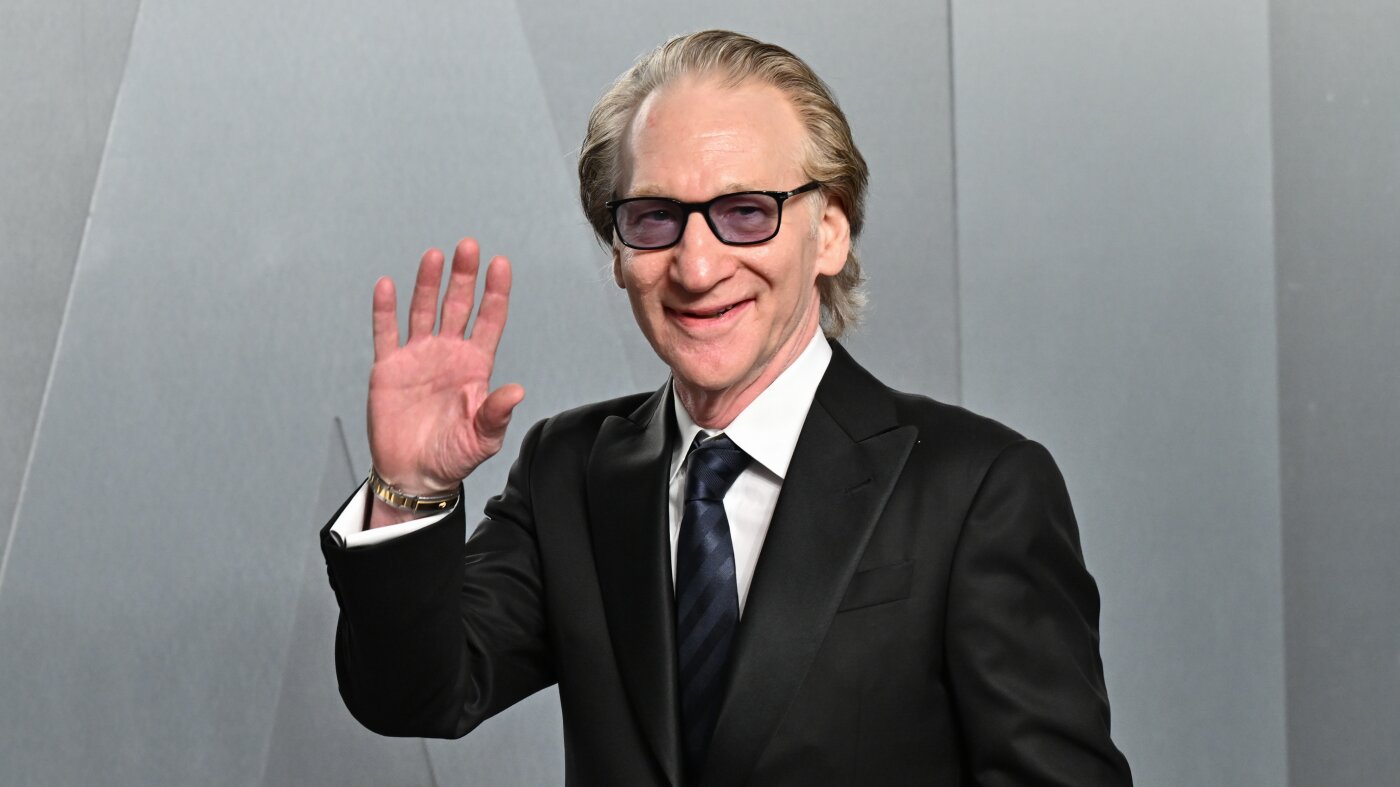
Bill Maher is getting the Mark Twain Prize after all

Judge sides with Anthropic to temporarily block the Pentagon’s ban

Rubio meets G7 ministers in France as US leads on Iran — allies under fire for tepid response

DHS shutdown breakthrough comes at cost for Republicans as funding fights nears end

Dementia risk signals could lie in simple blood pressure readings, researchers say

Florida High School Football Rankings: Top 25 teams – Oct. 21

How old is Bo Nix? What to know about Oregon quarterback ahead of 2024 NFL Draft

Cleary's 21 help Le Moyne down Central Connecticut State 69-64 in OT

99th annual Pony Swim held in Virginia

Indiana Members Credit Union announced as new anchor tenant at Bottleworks District
DHS shutdown breakthrough comes at cost for Republicans as funding fights nears end

Rubio joins crucial G7 talks as Iran war set to dominate second day

A surprise resignation could open the door for an independent to win a Montana Senate seat

Video: Savannah Guthrie Says She Believes Her Mother Was Taken for Ransom

Stefanik grills University of Michigan leader on lack of audit after string of Chinese national arrests
-

 Detroit, MI1 week ago
Drummer Brian Pastoria, longtime Detroit music advocate, dies at 68
-

 Science1 week ago
How a Melting Glacier in Antarctica Could Affect Tens of Millions Around the Globe
-

 Movie Reviews1 week ago
‘Youth’ Twitter review: Ken Karunaas impresses audiences; Suraj Venjaramoodu adds charm; music wins praise | – The Times of India
-
 Science1 week ago
I had to man up and get a mammogram
-

 Sports6 days ago
IOC addresses execution of 19-year-old Iranian wrestler Saleh Mohammadi
-

 New Mexico4 days ago
Clovis shooting leaves one dead, four injured
-

 Texas7 days ago
How to buy Houston vs. Texas A&M 2026 March Madness tickets
-

 Tennessee3 days ago
Tennessee Police Investigating Alleged Assault Involving ‘Reacher’ Star Alan Ritchson