Massachusetts
UMass Lowell seeks solutions to housing crisis through Massachusetts TechHubs Program


LOWELL — UMass Lowell, in partnership with local government, developers and community organizations, is looking to tackle one of Massachusetts’ biggest challenges: housing availability.
The Healey-Driscoll administration and the Innovation Institute at the Massachusetts Technology Collaborative announced Nov. 6 that Greater Lowell has been designated a Housing Innovation TechHub through the Massachusetts TechHubs Program, an initiative intended to strengthen regional innovation ecosystems across the state. The designation is part of the program’s first cohort of 14 TechHubs recognized statewide.
“These TechHubs reflect the best of what happens when local leaders, institutions and businesses work together to build on their region’s unique strengths,” said Lt. Gov. Kim Driscoll. “Our administration believes that innovation doesn’t just happen in one ZIP code, it happens in every community when we provide the tools and investment to help it thrive.”
Led by UMass Lowell and funded by a $100,000 Strategy Development Grant, the Housing Innovation TechHub aims to address the commonwealth’s housing crisis through innovation in design and sustainability, zoning and policy, and manufacturing and construction. The TechHub will serve as a living laboratory for testing and scaling new approaches to affordable and sustainable housing.
“The TechHubs program represents a long-term commitment to building the next generation of innovation ecosystems in Massachusetts,” said Innovation Institute Director Pat Larkin.
“By leveraging the experiences of the different regional initiatives, we’re laying the foundation for sustained regional transformation and economic competitiveness,” Larkin added.
According to the Healey-Driscoll administration’s “A Home for Everyone: A Comprehensive Housing Plan for Massachusetts,” Massachusetts needs to increase its year-round housing supply by at least 222,000 homes over the next decade to meet demand and lower costs, the report found. The MassInc Policy Center has found the housing need is pronounced in Gateway Cities such as Lowell, which will need 83,000 new units over the next decade.
To address this challenge, the team behind the Housing Innovation TechHub, including officials from UMass Lowell, the city of Lowell, the Cambridge Innovation Center, Massachusetts Competitive Partnership and Bequall, will develop a strategic plan that delivers scalable housing solutions through the integration of cutting-edge technology, transformative policy frameworks and community-driven approaches.
“The Strategy Development Grant allows us to convene the right partners and create an actionable roadmap for housing innovation,” said Kim Holloway, associate vice chancellor for research and innovation acceleration at UMass Lowell. “Our goal is to turn research and ideas into real projects that can transform how housing is built and financed across Massachusetts.”
Centered in Greater Lowell, the TechHub will test and refine new approaches that can be replicated statewide, positioning the area as a proving ground for housing innovation across Massachusetts.
“Lowell has always been a city that leads through innovation,” said Lowell City Manager Tom Golden. “This effort builds on that legacy and makes Lowell the launchpad for the future of housing across the state, creating solutions that are affordable, sustainable and scalable for communities everywhere.”
The Housing Innovation TechHub builds on the momentum of the Lowell Innovation Network Corridor, a partnership between the university, industry and government focused on a 1.2-million-square-foot mixed-use development that will include offices, research labs, housing, retail businesses and entertainment destinations. Together, the TechHub and LINC will make the Greater Lowell region a national model for housing innovation and economic opportunity.
“The Housing Innovation TechHub represents exactly the kind of forward-looking collaboration that defines UMass Lowell,” said Chancellor Julie Chen. “Along with transformational projects like LINC, the TechHub reflects how we’re bringing research and partnerships to life to strengthen communities and expand opportunities across the region.”



A man was shot and killed in Cambridge, Massachusetts, on Saturday, July 4th.
It happened around 4:30 a.m. near Broadway Street and Norfolk Street, according to the Middlesex District Attorney Marian Ryan. A pedestrian found the man shot in the area around 5:30 a.m. and called 911.
First responders arrived to find that the man had died. He was identified as 32-year-old Xavier Bautista from Cambridge. The City of Cambridge said that Bautista worked in the Public Works Department and was off-duty at the time of the shooting. They described him as a “valued colleague” who was “beloved” by friends and family.
“We extend our deepest condolences to those who knew and loved him. This is a tremendous loss, and our entire City grieves alongside his family, friends, and coworkers,” the city said in a statement. “Gun violence has absolutely no place in our community. We are unwavering in our commitment to keeping Cambridge safe, and we will do everything in our power to support the investigation and ensure accountability.”
No arrests have been made. Cambridge Police, the Middlesex DA’s Office, and Massachusetts State Police are investigating.
“The City will continue to deploy every necessary resource and will fully support our law enforcement partners as they work to determine the circumstances associated with the shooting and to bring justice to those affected,” Cambridge said.
Anyone with information is asked to call Cambridge Police at 617-349-3300 or submit an anonymous tip.

Cambridge Police are investigating a fatal shooting near the intersection of Broadway and Norfolk Street early Saturday morning.
Around 5:30 a.m., Cambridge Emergency Communications received a call for a person laying on the ground near the intersection of Broadway and Norfolk Street. Officers were dispatched to the area, and Paramedics from the Cambridge Fire department declared the person dead on scene. The victim had an apparent gunshot wound, according to Cambridge police.
There were not many details initially released, but an active investigation is underway by the Cambridge police, Middlesex District Attorney’s office and Massachusetts State Police detectives assigned to the Middlesex District Attorney’s office.
Additional information will be shared when it becomes available.
Police are asking anyone with information surrounding this incident to contact the Cambridge police department at (617) 349-3300.

One day before the Fourth of July, police in Yarmouth, Massachusetts say American flags were “ripped down” from a highway overpass that’s named after a two-time Purple Heart recipient.
Yarmouth police said an officer noticed the vandalism Friday on the Lance Corporal William Joseph Donovan Jr. Memorial Bridge over Route 6.
“The officer found American flags forcefully ripped from the fencing,” police said. “Their grommets had been torn out, and flags were ripped apart at the seams left hanging.”
Lance Cpl. William Joseph Donovan Jr., a Dennis-Yarmouth Regional High School graduate, was awarded the Purple Heart twice for injuries sustained in Operation Enduring Freedom. After returning home, he died in a motorcycle crash at 27 years old.
Yarmouth police are investigating the incident and urge anyone with information to contact them.
This isn’t the first time that flags on the bridge were damaged. Last summer, they were similarly torn down before being replaced in a rededication ceremony.
The community has already stepped up to restore the patriotic display that was vandalized on Friday.
State Rep. Steve Xiarhos of Barnstable, who lost his son Marine Cpl. Nick Xiarhos to a roadside bomb in Afghanistan, said “Cape Cod sent a message tonight.”
“You can tear down flags, but you cannot tear down the spirit of this community. If anything, you made people stronger,” Xiarhos posted to Facebook. “You brought people together from all over Cape Cod, united by love of country and respect for those who have served.”
-
 News4 minutes ago
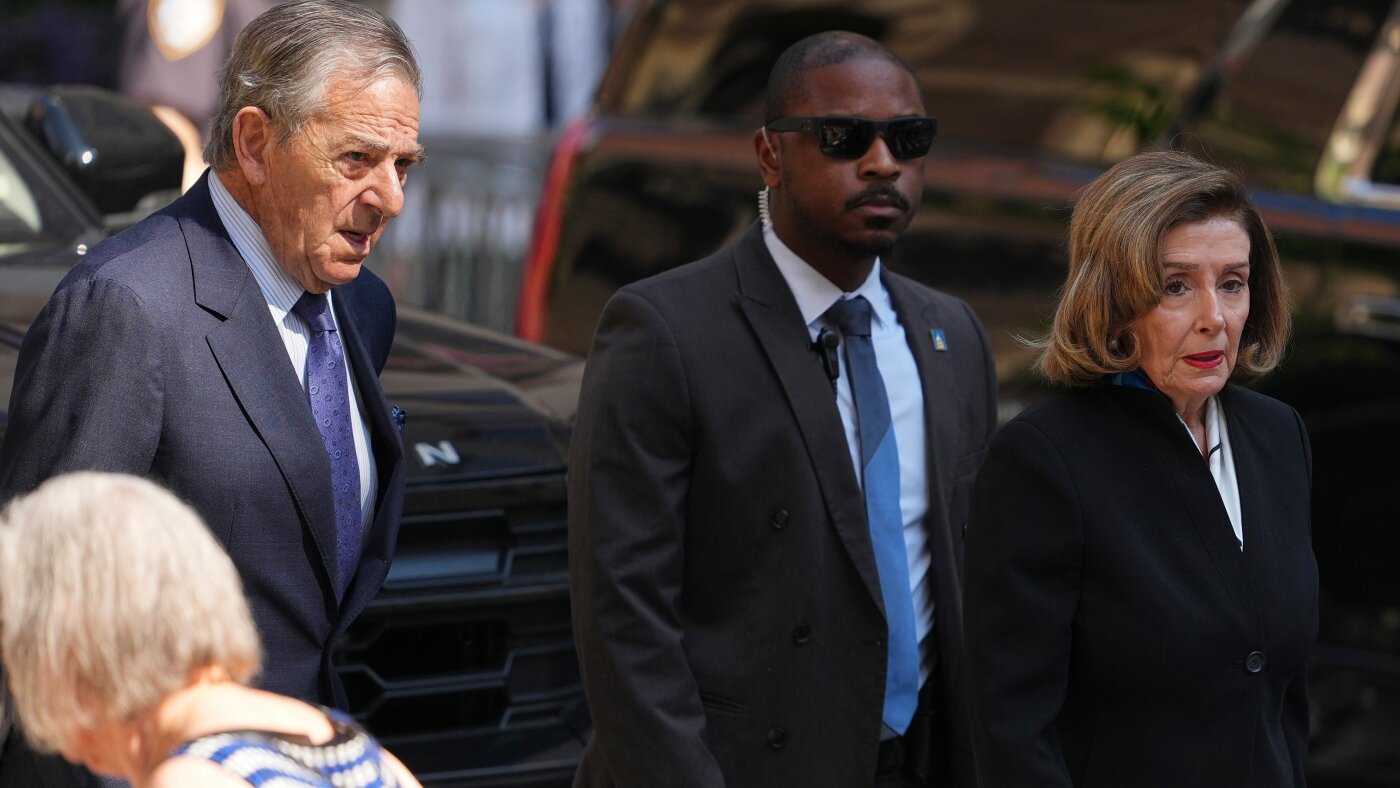
Paul Pelosi in hit-and-run in California, car left with major damage, authorities say
-

 Los Angeles, Ca1 hour ago
Firefighters battle Fourth of July blazes around Los Angeles
-

 Detroit, MI2 hours ago
Storm chances linger into the start of the week across Metro Detroit
-

 San Francisco, CA2 hours ago
Relay for America runs flag from San Francisco to D.C. in message of unity
-

 Dallas, TX2 hours ago
Cowboys newcomer already looks like a waste of money in Dallas
-

 Miami, FL2 hours ago
Police search for suspect after man is shot while on a boat near hotel in Fort Lauderdale on 4th of July
-

 Boston, MA2 hours ago
Sonny Gray shines again, and the Red Sox make it two straight wins at the Angels to start grinding road trip – The Boston Globe
-

 Denver, CO2 hours ago
Aldi expanding into Colorado, applies for permits at two Denver locations

