


Get the latest Boston sports news
Receive updates on your favorite Boston teams, straight from our newsroom to your inbox.

NEWYou can now listen to Fox News articles!
Even as City Hall describes parts of its spending plan as “actions of last resort,” Mayor Zohran Mamdani is steering millions into an expanding “racial equity” bureaucracy and six-figure diversity positions.
To finance the $127 billion agenda, the plan carries steep trade-offs — higher taxes on wealthy residents and corporations, a potential 9.5% property tax increase if state lawmakers decline to act and a 5,000-officer reduction in the New York City Police Department’s ranks.
Mamdani’s budget is far from inconsequential. In a city of nearly 9 million people that represents the center of global finance, his sweeping progressive agenda isn’t just a local policy shift. It’s a high-stakes experiment that could reshape the nation’s largest economy.
FROM FREE BUSES TO CITY-OWNED GROCERY STORES, HERE ARE MAMDANI’S KEY ECONOMIC PROMISES
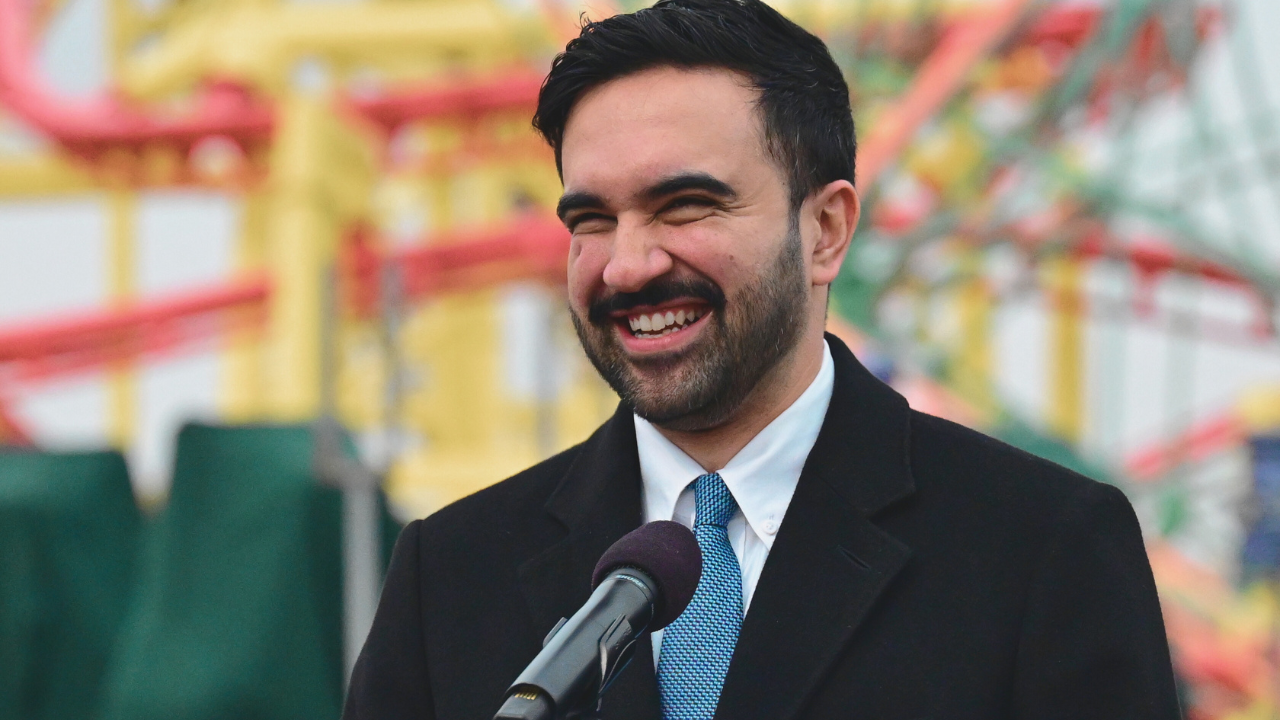
New York City Mayor Zohran Mamdani placed affordability at the center of his campaign to run America’s largest city. (Adam Gray/Bloomberg/Getty Images)
Under Mamdani’s plan, the city’s Office of Racial Equity would receive $5.6 million annually, while the Commission on Racial Equity would be allocated $4.6 million, a combined total of $10.2 million. The new figure represents roughly a $3 million increase — or about a 42% jump — from the approximately $7.2 million allocated last year.
Together, the allocations support a growing racial equity apparatus within City Hall. The Office of Racial Equity, which employs a staff of 38, serves as the administration’s operational arm, coordinating and implementing racial equity policies across agencies.
The Commission on Racial Equity, made up of 16 paid roles, functions as a separate advisory and analytical body, conducting research, developing recommendations and providing oversight related to racial equity policy.
Beyond the $10.2 million allocated to the Office and Commission on Racial Equity, the budget also funds several high-level diversity positions across city agencies.
MAMDANI PROPOSES RAISING NYC PROPERTY TAXES IF STATE DOESN’T APPROVE TAX HIKE ON WEALTHY
In front of a painting of Alexander Hamilton, Mayor Zohran Mamdani speaks to reporters about the city’s finances during a news conference in New York Tuesday, Feb. 17, 2026. (Seth Wenig/AP Photo)
The Department of Education budgets more than $260,000 for a chief diversity officer. Meanwhile, at the fire department, three civilian chief diversity inclusion officer positions are funded at just over $301,000 in combined salaries, along with nearly $230,000 in associated overtime, bringing the civilian unit’s total to about $531,000.
The FDNY also funds a separate uniformed chief diversity inclusion officer position at just over $118,000, pushing the department’s total diversity leadership allocation to roughly $649,000.
CLICK HERE TO DOWNLOAD THE FOX NEWS APP
Under Mamdani’s budget plan, the city will cut 5,000 police officer roles. (Michael Nagle/Bloomberg via Getty Images)
Additionally, the city will funnel more than $835,000 for the Commission on Gender Equity, an advisory body solely dedicated to analyzing legislation and developing public positions on gender-based equality.
Mamdani’s office did not immediately respond to Fox News Digital’s request for comment.
Read the full article from Here


Boston Red Sox
No games have been played, but the Red Sox’s series against the New York Mets is already off to a rocky start.
That’s thanks to a series of travel issues that caused a 17-hour delay from the time Boston was supposed to depart Chicago to the time it actually took off. The Red Sox should have left Illinois at 9:45 p.m. Eastern Time Thursday night, landing in New York around midnight.
Instead, the team took off at approximately 3 p.m. ET on Friday. They’ll land around 5 p.m., making it to New York just barely in time for their 7:15 p.m. game against the Mets.
The Boston Globe‘s Tim Healey and Alex Speier reported the delay, and their sources didn’t give any specific reason for the issues, just that Boston “encountered multiple plane issues in trying to continue to New York.”
As of 4 p.m. ET, the Red Sox-Mets game will continue as scheduled at 7:15 p.m. Friday. Sonny Gray is set to take the bump for Boston, which enters Friday an undefeated 6-0 on its recent road trip.
Receive updates on your favorite Boston teams, straight from our newsroom to your inbox.

The concept behind Street Fries is simple: everyone loves fries. Owner Eric Williams has yet to meet anyone who doesn’t light up at the idea of fried potatoes, especially when they’re fresh-cut and piled with toppings.
“From kids to grandma to anyone between, people can’t wait to have fries every day,” he said.
After launching a Pittsburgh-based food truck in 2021 — “gourmet fries that hit the streets,” as Williams described it — the business is expanding with a South Side storefront. Soft-opened on Wednesday, the new Street Fries location plans to serve both a day and late-night crowd, with a grand opening celebration planned for July 18.
A full menu of loaded fries ($10 to $24) includes the truck’s original offerings, top sellers and newer additions, along with a build-your-own fries option ($5 to $10) with a choice of meats, cheeses and sauces.
Everything on the menu has a story, Williams said. The North Sider, or hibachi fries ($20 to $24), topped with steak, shrimp and melted cheddar, came together on the fly after a customer requested the combination during an Allegheny City Brewing pop-up. Cubby’s Favorite ($14 to $16), spicy garlic Parmesan fries, was inspired by a wings-and-fries shop Williams frequented as a college student at Florida State University.
An original or “big fry” bag ($10 to $15) remains the most popular choice, offering seasoned fresh-cut fries and a choice of one sauce.
Inside the restaurant, a neon-lit mural features the truck’s mascot, Mr. Street Fries, by Pittsburgh artist Camerin “Camo” Nesbit, who also painted the Street Fries food truck.
The anime-inspired, sneaker-wearing mascot “is kind of a resemblance of myself,” Williams said. But over time, he’s come to think of Mr. Street Fries as the one guiding the business, with Williams serving as his right-hand man.
Street Fries began taking shape eight years ago while Williams, 38, served as a Peace Corps volunteer in Albania.
“I’ve always wanted to do something bigger than myself,” he said.
As a homesick volunteer making a modest monthly allowance, he started buying 50-pound bags of potatoes for $10. In the largely agricultural country, locals grew potatoes in their backyards, but had never tried deep-fried, crunchy American-style fries or American seasoning.
“I would just serve fries and season them up differently to try to give them and me something new,” Williams remembered. One day, he made a spice blend of curries, salt and pepper and tossed it on fries. An instant hit, the seasoned fries — which still resemble the “original” on Street Fries’ menu — endeared him to both his hosts and fellow expats and Peace Corps volunteers. Later, as part of his community development work, Williams cooked up chili cheese fries for a Halloween fundraiser, selling out after serving 600 teenagers.
“And I was like, ‘You know what? This should be a business,’” he said. “That’s when I really started to learn — I had a knack for engagement and marketing. I can listen to people and give them what they want.”
Shortly before his 30th birthday, Williams sketched the entire Street Fries concept in chalk across a 20-foot wall — an image he still thinks back on today.
After returning stateside, Williams felt that same guiding force again. A native Pittsburgher who graduated from Woodland Hills High School, Williams went to work for the Pittsburgh Mayor’s Office of Community Affairs. For a couple of years, he did double-duty holding Street Fries pop-ups on off-days and weekends while helping launch the City in the Streets block party program in 2023.
During the truck’s first three years, Williams worked 300 events across the region, including Pittsburgh’s Juneteenth celebration, Harambee Ujima Black Arts and Culture Festival in Homewood, and Bloomfield Little Italy Days. The idea of blending festivals, a food business and community development began to percolate.
Williams said he felt called to keep cooking.
“They loved the fries too much,” he laughed. “And I’m like, ‘How can I let this moment go?’… It felt good trying to build something.”
Though the idea of a permanent storefront was in the works eight months ago, Williams found his biggest stage yet when Street Fries became a food vendor during April’s NFL Draft — one of only 13 locals selected out of hundreds of applications.
Street Fries’ busiest single-day events served about 300 people, but during the Draft, a staff of 20 fed roughly 6,000 on opening day alone, ultimately using 5,000 pounds of potatoes.
“The Draft was the most monumental, huge, frightening thing ever, which you only can say after the fact,” Williams said. “But it was such a great opportunity that (I thought), let’s use this to catapult us even more.”
With the new brick-and-mortar restaurant on the South Side, Williams hopes to continue serving the community and plant even deeper roots. Street Fries is also involved with the new South Side Street Fest and is developing a nonprofit tentatively called Hello Neighbor.
The full name of the business, Williams points out, is Street Fries 4Ever.
“And the idea is to keep it forever,” he said. “I want to make the pot bigger, so more people can eat off the plate.”

A woman was arrested and charged with murdering a man whose body was found behind a condominium complex in Farmington in March, police said on Friday.
Cynthia Martinez, 27, was charged with murder, unlawful discharge of a firearm, tampering with evidence, and criminal use of a firearm in connection with the death of 29-year-old Derick William Mercado-Labonte of Bridgeport.
On March 19, officers responded to Talcott Forest Road around 10 a.m. for the report of an untimely death.
They found the body of Mercado-Labonte along the wood line behind a condominium complex. He appeared to have sustained multiple areas of trauma, according to police.
The Office of the Chief Medical Examiner ruled Mercado-Labonte’s death a homicide.
Martinez is being held on a $3,000,000 bond and is scheduled to be arraigned at the Torrington Superior Court on Friday.
Police said no further information will be released at this time, as this remains an active and ongoing investigation.


Knee irritation forces Shohei Ohtani out of Friday start, All‑Star game


Detroit Evening Report: Waymo cars blocking first responders – WDET 101.9 FM


San Francisco Mayor Daniel Lurie Blocks Vacant Grocery Store Tax Proposal | KQED


Oregon Battling Miami, Mario Cristobal for Four-Star EDGE Recruit


FC Dallas Forward Logan Farrington Inks Contract Extension


Red Sox face lengthy travel issues ahead of series vs. Mets


What’s going on with the Nuggets? Unpacking an NBA offseason on hold


Seattle Kraken Sign Goaltender Victor Östman and Defenseman Ville Ottavainen to One-Year Deals | Seattle Kraken

