Business
Disney’s ABC challenges FCC, escalating fight over free speech

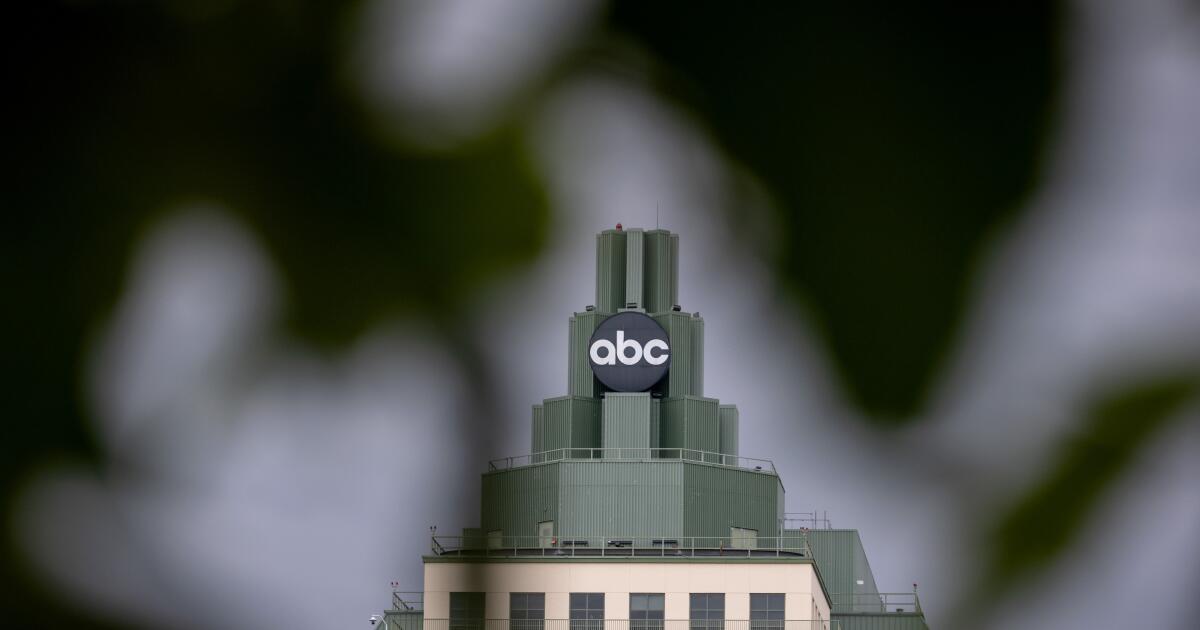
Walt Disney Co.’s ABC is forcefully resisting Federal Communications Commission efforts to soften the network’s programming, accusing the federal agency of an overreach that violates 1st Amendment freedoms.
Last week, the FCC took the unusual step of calling in the licenses of eight Disney-owned television stations for early review. The move — widely interpreted as an effort to chill the network’s speech — came a day after President Trump demanded that ABC fire late-night host Jimmy Kimmel over a joke about First Lady Melania Trump.
The FCC separately has taken aim at ABC’s daytime discussion show, “The View,” which delves deeply into politics.
The FCC has questioned whether the show, which prominently features Trump critics Whoopi Goldberg and Joy Behar, could continue toclaim an exemption to rules that require broadcasters to provide equal time for opponents of political candidates.
In its response this week to the FCC, Disney’s Houston television station raised the stakes in “The View” dispute, calling the commission’s actions “unprecedented” and “beyond the Commission’s authority.” The ABC station’s petition for a declaratory ruling said “The View,” has long qualified as a “bona fide” news interview program with freedom to conduct interviews of legally qualified political candidates.
“The Commission’s actions threaten to upend decades of settled law and practice and chill critical protected speech, both with respect to The View and more broadly,” the Houston station KTRK-TV said in the filing.
The network’s firm stance sets up a clash with the Trump administration, including the president’s hand-picked FCC Chairman Brendan Carr, who has made no secret of his disdain for Kimmel and other ABC programming. Earlier this year, Carr announced that decades-old exemptions from the so-called “equal time rule,” for some programs, including “The View,” were no longer valid.
In a statement, the FCC said it would “review Disney’s assertion that ‘The View’ is a ‘bona fide news program’ and thus exempt from the political equal time rules,” according to a spokesperson.
“Decades ago, Congress passed a law that generally prohibits broadcast television programs from putting a thumb on the scale in favor of one political candidate over another,” the spokesperson said. “The equal time law encourages more speech and empowers voters to decide the outcome of elections.”
ABC’s strenuous arguments mark a turning point for the Disney-owned outlet.
In December 2024, a month after Trump was elected to a second term, the network quickly settled a lawsuit over statements made by news anchor George Stephanopoulos that Trump found offensive. ABC agreed to pay Trump $15 million to end his legal fight — sparking an outcry among free speech advocates, who accused the network of caving on a case it may have won.
But, over the past year, the network has weathered several storms, including a threat by Carr in September to punish ABC if it didn’t muzzle Kimmel for comments he made in the wake of conservative activist Charlie Kirk’s death. ABC briefly benched Kimmel to allow tensions to cool but, during the week his show was off the air, protesters loudly bashed Disney, demanding the legendary company stand up for free speech.
Thousands of consumers canceled their Disney+ and Hulu subscriptions in protest.
Protesters swarmed Hollywood Boulevard, protesting ABC’s move to bench Jimmy Kimmel in September over comments he made about the shooting of right-wing influencer Charlie Kirk.
(Genaro Molina/Los Angeles Times)
Some conservatives, including Sen. Ted Cruz (R-Texas) and commentator Ben Shapiro also criticized Carr’s handling of 1st Amendment issues.
“The days of the FCC as a paper tiger are numbered,” the FCC’s lone Democrat, Anna M. Gomez, said Friday in a statement. “What the public will remember is who complied in advance and who fought back. I’m glad Disney is choosing courage over capitulation.”
The high-profile dispute presents an early challenge for Disney Chief Executive Josh D’Amaro, who succeeded longtime chief Bob Iger in March.
ABC has asked for the full commission — a three member panel of Carr, Gomez and Commissioner Olivia Trusty, a Republican — to rule on the equal time exemption for “The View.” ABC said that, in 2002, it received a ruling from the FCC that granted the exemption, and the show’s format has not changed. “The View” is produced by ABC News.
“Some may dislike certain — or even most — of the viewpoints expressed on The View or similar shows,” the station said in its filing. “Such dislike, however, cannot justify using regulatory processes to restrict those views.”
ABC described a logistical nightmare of providing equal time for political opponents by pointing to California’s crowded primary field of gubernatorial candidates. “Affording equal time would mean accommodating over 60 legally qualified candidates, regardless of their perceived newsworthiness,” the station wrote.
The network said it makes show bookings based on newsworthiness, not partisan politics. It also noted it has invited politicians from both sides of the aisle to appear on “The View,” but some, including Vice President J.D. Vance, Health Secretary Robert F. Kennedy, Jr., Secretary of State Marco Rubio and entrepreneur Elon Musk, have declined the invitation.
The station also noted that, while the FCC has questioned the exemption for “The View,” the agency hasn’t shown interest in regulating programs on other networks, “including the many voices — conservative and liberal — on broadcast radio.” The FCC also oversees radio station licenses.
“The danger is that the government will simply decide which perspectives to regulate and which to leave undisturbed,” ABC said.
On April 28, Carr called for a review of Disney’s broadcast licenses, including for the Houston station and KABC-TV in Los Angeles, two years before any of them were set to expire. The FCC said the review was part of the agency’s year-old inquiry into Disney’s diversity, equity and inclusion policies and whether they violated federal anti-discrimination rules.
In its Thursday petition, ABC said it had fully complied with the FCC’s request for documents related to its diversity and hiring.
The company has produced more than 11,000 pages of documents to comply with the request, Disney said.
The same week that Disney sent documents to the FCC, Kimmel made a joke on his show about Melania Trump, comparing her glow to that of “an expectant widow.” On April 25, a gunman tried to breach security at the Washington Hilton, where the first couple were on stage for the White House Correspondents’ Assn. Dinner. Shots were fired outside the ballroom.
Three days later, the FCC announced it was requiring early license renewal applications for the Disney-owned stations.

Business
January 2025 wildfire victims seek tougher penalties against State Farm over claims handling

A fire survivors’ group announced Thursday it was seeking tougher penalties against State Farm over its handling of January 2025 wildfire claims.
The Every Fire Survivor’s Network said it was petitioning to join a state enforcement action announced this year against the company to make sure the case results in meaningful changes at California’s largest home insurer.
“We’re seeking a systematic review of all their claims and penalties calibrated to the actual scale of the harm — and we’re seeking the payouts that families are owed,” said Joy Chen, executive director of the group, at a Pacific Palisades news conference joined by victims of the fires.
The Department of Insurance in May filed an administrative action against State Farm General — the subsidiary of the giant Bloomington, Ill., insurer that handles California home insurance — after completing a “market conduct” exam.
The Jan. 7, 2025, fire damaged or destroyed more than 18,000 structures and killed 31 people.
State Farm has received more January 2025 claims than any other insurer — more than 13,700 auto and homeowners claims as of May 4, with payouts totaling $5.7 billion, according to the company.
The market conduct exam looked at 220 sample claims filed by the victims and found 398 violations of state law in about half of them.
Among other alleged violations, it found that the company failed in numerous cases to pursue a “thorough, fair and objective investigation” into claims, failed to come to “prompt, fair, and equitable settlements” and made settlement offers that were “unreasonably low.”
In announcing the action, Insurance Commissioner Ricardo Lara called the company’s claims handling “unacceptable” and said his department was taking “decisive action to hold them accountable.”
The state is seeking a “cease and desist” order to stop the insurer from engaging in unfair or deceptive practices.
It also has threatened to suspend State Farm’s license over the alleged violations, which each carry a penalty of up to $5,000 — or twice that figure if found to be willful. That could amount to a penalty of $2 million or more.
The threat to actually suspend State Farm’s license and its authority to write policies has been viewed skeptically by some, given its roughly 20% market share of the state’s home insurance market.
The company, which had an opportunity to include its responses in the exam report, denied fault in some cases and admitted fault in others. It often blamed problems on individual adjusters and denied systemic issues with its claims handling.
The petition filed by the wildfire survivor’s group criticizes the sample size of the market conduct exam as too small to capture all the alleged deficiencies in State Farm’s claims handling, which it claims are a “general business practice” of the company.
The group is seeking to conduct discovery, cross examine witnesses, present testimony from fire victims and bring more that 1,600 firsthand policyholder statements regarding State Farm’s practices into evidence, according to the petition.
It also wants State Farm to reopen cases in which claimants were paid too little, and it is seeking to participate in settlement discussions in order to increase any penalty State Farm would pay.
It calculated that a $2-million penalty would amount to a minute fraction of the assets of the State Farm Group.
“I submit to you that doesn’t defer bad conduct, it just allows you to continue to do it,” said Michelle Meyers, an attorney for Every Fire Survivor’s Network, at the news conference.
Consumer Watchdog, which has been a harsh critic of State Farm, also is providing legal support for victims’ effort.
Sevag Sarkissian, a spokesperson for State Farm, said the company was aware of the petition.
“We recognize that many wildfire survivors, including those that are State Farm General policyholders, continue to face difficult recovery challenges,” he said. “Our focus remains on helping customers recover.”
Michael Soller, a spokesperson for Lara, said the department is “acting with urgency to assist wildfire survivors in their ongoing recovery by investigating formal complaints filed by survivors and conducting the expedited market conduct exam that led to this enforcement action.”
He added that the department’s position is the state’s Administrative Procedure Act does not contemplate the commissioner or department staff authorizing intervention requests in the case.
He said that would be a hearing officer’s or administrative law judge’s decision when one is assigned to the case.
Meyers acknowledged the request was novel but said her reading of the law is that Lara can make the decision because no judge is yet assigned.
In response to the criticism, State Farm pledged earlier this year to improve its claims handling, including by providing single points of contact and improved communication so there are “fewer handoffs, fewer repeated explanations, and seamless support.”
It also named a new vice president of customer relations for State Farm General.

The state’s trial attorneys and Uber say they have reached a last-minute deal to scrap their dueling ballot measures and avert what was gearing up to be one of most expensive battles of the November election.
The deal, which comes a day after both measures qualified for the November ballot, has Uber agreeing to bulk up safety measures, while the trial attorneys will limit how much they can claim for lien-based medical treatment of victims who get in Uber or Lyft accidents, according to spokespeople for both sides of the campaign.
“Both sides agree: Californians deserve a system that’s safe, fair, and accountable,” read a joint statement from Uber and the Consumer Attorneys of California, a powerful attorney trade group. “This agreement protects patients from unnecessary treatment or getting overcharged, ensures access to medical care and legal representation, and strengthens safety measures.”
The agreement, finalized Thursday, means the ride-share giant will kill its ballot measure to cap how much attorneys can earn in vehicle collision cases and limit medical damages to rates based on insurance. Uber has argued that the costs for medical treatment done on a lien, which allows doctors to get paid from a cut of the plaintiff’s payout, far exceed what it would cost if the victim had used their own insurance.
In return, the Consumer Attorneys of California will cancel its competing ballot measure that sought to increase legal liability for ride-share companies if a passenger is sexually assaulted by a driver. The measure followed an investigation by the New York Times into sexual assault by drivers.
Both sides had poured tens of millions into the campaigns, plastering billboards across Los Angeles.
Lawyers claimed the fight had turned existential with the measure threatening to decimate the profit margin of many personal injury cases and leave drivers with small or thorny cases unable to find an attorney willing to take their case.
Spokespeople say the deal is predicated on their agreement being codified into a bill within the next week. Otherwise, they said, each side will move forward with its ballot measure.
Business
Commentary: A porn firm that a judge called a ‘copyright troll’ now has Meta in its sights — and it could win

This porn company made millions by shaming the little guys who downloaded its films. But now it’s going after Meta for copyright infringement.
It isn’t often that a lawsuit can make me smile, much less laugh out loud. The latest exception is Strike 3 Holdings vs. Meta Platforms, which is currently unfolding in San Jose federal court.
Two things are amusing about the case. One is that Meta, the giant social media company, is accused of copyright infringement for allegedly downloading 2,400 of the plaintiff’s movies to train its AI bots. If Meta loses, that would be a serious (and in my opinion, deserved) blow against AI companies that have used copyrighted materials without permission.
The second part of the joke is the identity of the plaintiff. Strike 3 Holdings, you see, makes porn. Moreover, for years it has pursued a plainly unscrupulous business model in which it sues individuals for allegedly downloading its movies without permission, and shames them into settling for a few thousand dollars at a pop.
While it is possible one or more Meta employees downloaded Plaintiffs’ videos, it is just as possible…that a ‘guest, or freeloader,’ or contractor, or vendor, or repair person—or any combination of such persons—was responsible for that activity.
— Meta points the finger at others for a porn scandal
Whether or not Strike 3 has a legitimate claim for copyright infringement, it doesn’t deserve your sympathy. The firm was flayed in 2018 by federal Judge Royce C. Lamberth of Washington, D.C., for engaging in what he labeled a “high-tech shakedown … smacking of extortion.” Lamberth called Strike 3 a “copyright troll” and threw out its lawsuit against an unidentified internet user for having treated his court “not as a citadel of justice, but as an ATM.”
When I wrote about this scheme in 2023, I counted more than 12,440 lawsuits that the Los Angeles-based firm had filed in federal courts coast-to-coast. The latest count, according to a Lexis search a defense lawyer ran for me, is more than 21,000. The vast majority were settled and closed within a few months of their filing, an indication that they were never meant to go to trial.
Now Strike 3 appears to have hooked a big fish. In the first significant ruling in its lawsuit against Meta, the firm scored a surprise win: On June 11, federal Judge Eumi K. Lee of San Jose denied Meta’s motion to dismiss the case. Meta’s defense, she wrote, “strains credulity.”
More about that in a moment. First, a few words about the litigants. Meta needs no introduction: Formerly known as Facebook and based in Menlo Park, Calif., Meta recorded a profit of $60.5 billion last year on $201 billion in revenue.
Strike 3 portrays itself as an avatar of “Hollywood style and quality” in its adult films, which it distributes through its streaming websites such as Blacked, Tushy, Vixen and Wifey. It has described Greg Landry, its former owner and house auteur, as the porn industry’s “answer to Steven Spielberg.”
Neither Meta nor Strike 3 responded to my request for comment beyond the claims and defenses in court filings.
As I reported in 2023, Strike 3 has flooded federal courts with cookie-cutter lawsuits alleging that defendants infringed its copyrights by downloading its movies via BitTorrent, an online service on which unauthorized content can be accessed by almost anyone with an internet connection. Its targets generally have been individuals with plenty to lose from being publicly outed as porn viewers.
“Given the nature of the films at issue,” a federal judge in Connecticut observed last year, “defendants may feel coerced to settle these suits merely to prevent public disclosure of their identifying information, even if they believe they have been misidentified.”
Strike 3’s letters to its target defendants have warned that the statutory penalty for willful copyright infringement is $150,000, but offer to make the case go quietly away for a few thousand bucks, which would be a fraction of the cost of hiring a defense lawyer, not to mention the downside of exposing oneself as a porn fiend.
J. Curtis Edmondson, a Portland, Ore., lawyer who won a case against Strike 3, estimated in 2023 that Strike 3 “pulls in about $15 million to $20 million a year from its lawsuits.” But financial data that could validate his estimate hasn’t surfaced in court records.
There’s nothing new about content owners’ aggressive pursuit of copyright infringers. The practice was pioneered by the Recording Industry Assn. of America, when the industry feared that unauthorized downloading of music through programs such as Napster threatened its very existence. From 2003 through 2008, the association sued some 35,000 alleged song pirates.
But it abandoned the strategy because its legal dragnet swept up sympathetic targets such as single mothers and teenage girls, creating a public relations disaster.
There followed the appearance of outright trolls such as Prenda Law Group, which posted porn films online as bait to attract downloaders, whom it then sued in what judges ultimately found to be sham lawsuits. Prenda principal John L. Steele even bragged publicly that Prenda had made nearly $15 million with its lawsuits. U.S. Judge Otis Wright II of Los Angeles put the kibosh to its practice by slapping the Prenda lawyers with stiff sanctions for contempt.
That brings us to Strike 3’s case against Meta, which it filed in July. Strike 3 hasn’t been accused of a Prenda-style fraud, since it does own the films at issue and its right to sue copyright infringers isn’t disputed. But its allegation that Meta downloaded its films to train its AI bots, rather than just for personal enjoyment, is a new wrinkle for an old issue.
Strike 3 says its lawsuit grew out of a separate case in which a witness testified that Meta had downloaded thousands of pirated books to train its LLaMA AI bots — that is, feeding the content into LLaMA for it to use to generate answers to user questions. (Numerous lawsuits have been filed against AI firms alleging similar infringement.)
Strike 3 says that case prompted it to look into whether Meta had downloaded any of its content. It says it discovered that 47 IP addresses owned by Meta — that is, digital identifiers of internet accounts — had downloaded its movies without permission.
In all, Strike 3 alleges, those Meta addresses downloaded at least 2,396 of its movies — almost its entire catalog — more than 6,000 times via BitTorrent. What’s more, Strike 3 says Meta then posted some of that content back onto BitTorrent to take advantage of BitTorrent’s “tit-for-tat” mechanism through which users can obtain faster download speeds by uploading content to the platform.
If Strike 3 were to prevail on all its claims for illicit downloading, it would be entitled to about $360 million in damages, observes Eric Fruits, an Oregon economist who has testified for the defense in some Strike 3 lawsuits.
One might ask why Meta might be downloading porn for any reason, bot-training or otherwise. Meta, in its defense filings, says Strike 3 has offered no proof that Meta, as a corporation, was responsible for the downloading. If it happened, Meta says, it would have been inadvertent.
“Tens of thousands of employees and innumerable contractors, visitors, and third parties access the internet at Meta every day,” it wrote in its motion to dismiss the case. “While it is possible one or more Meta employees downloaded Plaintiffs’ videos, it is just as possible … that a ‘guest, or freeloader,’ or contractor, or vendor, or repair person — or any combination of such persons — was responsible for that activity.” The “sporadic downloads,” Meta says, “exhibit the hallmarks of personal use,” not corporate strategy.
This defense has borne fruit in other Strike 3 cases, in which defendants successfully argued simply having an IP address that was used to infringe wasn’t enough to prove they committed the infringements.
Strike 3 says it can show that the downloads weren’t the work of random users. Some downloads, it says, were coordinated among several Meta IP addresses, all based on the same algorithmic keywords and occurring simultaneously, suggesting that the infringements “took place within Meta’s walls.”
On Dec. 15, 2022, for instance, downloads apparently based on the keyword “teen” involved not only the movies “Teenage Mutant Ninja Turtles” and “Teen Titans Go to the Movies,” but also “Teen Sex Sessions 2” and “Teens love Tats XXX,” according to Lee’s ruling. Other simultaneous downloads swept up episodes of “The Big Bang Theory” and “Ted Lasso” out of order, though a putative human user would probably have downloaded them sequentially.
“It strains credulity,” Lee ruled, “to suggest that these correlations are mere coincidence and the product of individual human selections.” Rather, the use of an algorithm would account for “why pornography was downloaded alongside children’s cartoons and sitcoms. … The odds that multiple people using the Corporate IP addresses … coincidentally torrented the same show, rather than simply streaming it, on the exact same day strains belief.”
The case is still at an early stage. For Strike 3, the lawsuit offers the potential of a big score. But Meta has signaled that it’s not inclined to roll over like a family man caught downloading skin flicks and worrying about his reputation at home and around town.
This time, Strike 3 may have a fight on its hands with a defendant that has money to burn.
-
 Politics4 minutes ago
Drug users don’t lose their gun rights, Supreme Court rules
-
 Science6 minutes ago
This plant extract can make a lethal drug cocktail. Can it also treat opioid addiction?
-
 Sports11 minutes ago
Commentary: Why MLB’s Pride Night cap condemnation isn’t the anti-Christian crackdown conservatives claim
-

 World22 minutes ago
‘Not our Europe’: Macron and Sánchez slam return hubs for migrants
-
 News49 minutes ago
Algae clouded Trump’s vision for the Reflecting Pool. But scientists aren’t surprised
-

 New York2 hours ago
Video: The Democracy of The Dive Bar
-

 Los Angeles, Ca2 hours ago
Sweltering heat wave to grip Southern California next week
-

 Detroit, MI2 hours ago
Top 10 ‘Hour Detroit’ Covers, As Voted By Readers

