Northeast
Democratic strategist sounds warning for Biden after poll shows single-digit lead over Trump in New York

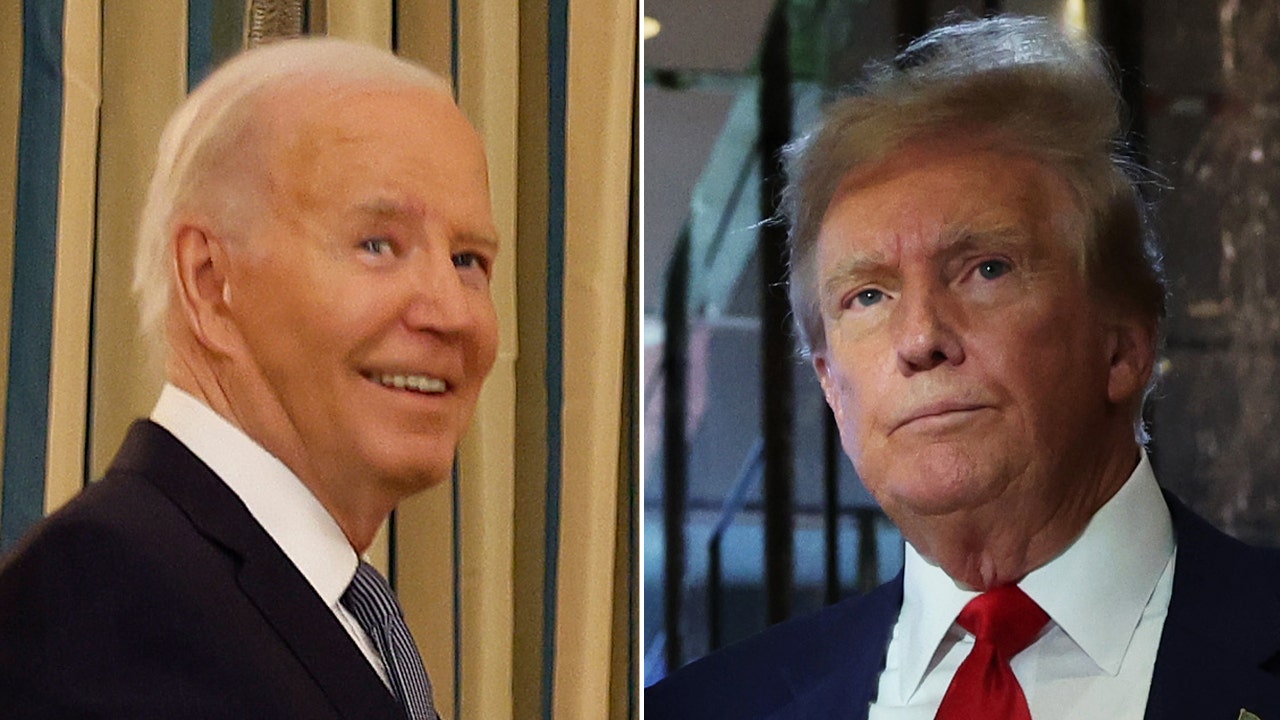
A new poll that shows former President Trump down by only single digits to President Biden in deep blue New York should set off alarm bells, according to longtime Democratic strategist Hank Sheinkopf.
“What it tells you is that people are generally dissatisfied,” Sheinkopf told Fox News Digital in an interview Friday. “We’re now under five months away from the election. They’re not happy about taxes. They’re not happy about crime. They’re not happy about the state of disorder. And generally, when there is disorder, the out party tends to benefit, whether it be Republicans or Democrats.”
Sheinkopf, who has worked on more than 700 political campaigns, said the results from the recent Siena College poll that showed an eight percentage-point spread between Biden and Trump in New York, 47%-39%, point to how a significant number of voters dislike both candidates.
“People are not worried about the former president’s convictions,” he said of Trump, who was found guilty of 34 felony counts of falsifying business records last month in New York court.
TRUMP PULLS WITHIN SINGLE DIGITS IN DEEP BLUE STATE BIDEN WON BY 23 POINTS IN 2020
A Siena College statewide poll of New York found President Biden, left, with just an eight percentage-point lead over former President Trump. (Getty Images)
“What they’re worried about is the present set of circumstances. They’re not happy about Trump. Frankly, if you look at the ‘hating them both’ kind of grouping, which appears in polls all the time, they’re not happy about Biden. They don’t know what to do, so they’re not making a decision. That’s why they’re locked in the center in so many places, and they’re locked in close numbers when they shouldn’t be in states that Biden should be winning handily.”
If the election results in November are anywhere close to the snapshot in the Siena College poll, it would be a historic showing for a GOP presidential candidate in New York and a sign of deep trouble for Biden, who won the state by 23 points in 2020.
“While Biden maintains the support of three-quarters of Democrats, Trump has support from 85% of Republicans and leads Biden 45%-28% with independents,” Siena College pollster Steven Greenberg said in a statement.
“A gender gap has reopened as men support Trump 46%-42% and women favor Biden 51%-33%. White voters are evenly divided. And while Biden has a commanding lead with non-White voters, Trump garners support from 29% of Black and 26% of Latino voters,” he added.
WHAT THE LAST FOX NEWS NATIONAL POLL SHOWS IN THE 2024 BIDEN-TRUMP REMATCH
People gather for an election rally for former President Trump at Crotona Park in the South Bronx in New York City on May 23. The Bronx borough, home to a large Latino community, has been a Democratic base for generations of voters, and the rally comes as Trump looks to attract more non-White voters. (Spencer Platt/Getty Images)
The survey of registered voters in New York showed Biden’s job approval rating at 45% approve to 53% disapprove, and his favorability underwater at 42% favorable to 53% unfavorable, his lowest numbers yet recorded by Siena College.
While the numbers aren’t good for Biden, they’re even lower for Trump, a native New Yorker. The former president stands at 37% favorable and 59% unfavorable, according to the survey.
Even so, the closer-than-expected gap between a Democratic incumbent and Republican challenger echoes the surprisingly strong showing by New York Republicans in 2022’s gubernatorial contest, when Democratic Gov. Kathy Hochul defeated former GOP Rep. Lee Zeldin by just 6.4 percentage points, the closest margin since 1994.
Zeldin told Fox News Digital that the Siena College poll is consistent with other recent polls that show Biden trending down in the Empire State. An Emerson College/The Hill/PIX11 poll last month showed Biden with just a seven percentage-point lead over Trump, 48%-41%.
“If New York is polling this close, that bodes well for polling in other states that have a much closer party registration between Republicans and Democrats,” Zeldin said.
TRUMP HOLDS LARGE LEAD OVER BIDEN IN STATE OBAMA WON TWICE
Former President Trump holds a rally in the historically Democratic South Bronx in New York City on May 23. (Spencer Platt/Getty Images)
He said issues that New Yorkers care about, including immigration and the economy, have trended to the right since he ran for governor.
“The border crisis was in the top three issues for many New Yorkers who now have that issue as their number one issue. [New York City Mayor] Eric Adams’ numbers are worse. Kathy Hochul’s numbers are worse. Joe Biden’s numbers are worse. So as far as the Democratic brand and profile of Democratic elected officials, that is also very helpful for the Trump campaign,” said Zeldin.
But could New York really be in play for Trump? The presumptive Republican nominee has insisted he will win the state, but Sheinkopf remains skeptical.
“Trump has to somehow convince people that he’s not reckless. And Biden has to somehow convince people that he steered the ship well, that the economy isn’t as bad as people might think. In fact, it’s really not. Inflation is down, jobs are up, but people feel insecure,” he said.
Biden and Trump will each have the opportunity to make their respective cases at the CNN Presidential Debate in Atlanta on Thursday. Sheinkopf said that for Biden to perform well, he will need to speak clearly and appear strong.
“Every word that he says will be parsed. He is the President of the United States, the most powerful man on the planet, versus Trump, who was the most powerful man on the planet, who somehow continues to function, raising lots of money and being credible even though he’s a convicted felon.
“We’ve never had anything like this before. [If] the president can’t show strength, it won’t matter whether Trump’s been a convicted felon or not. That is what’s so extraordinary.”
Fox News Digital’s Paul Steinhauser contributed to this report.
Get the latest updates from the 2024 campaign trail, exclusive interviews and more at our Fox News Digital election hub.
Read the full article from Here

Boston, MA
‘More than just a cyclist’: Hundreds mourn Boston transit planner killed while biking – The Boston Globe

“She’s more than just a cyclist and an advocate,” Rose Frank, 36, who became friends with Gag in seventh grade, said. “Those were parts of her identity, but she’s such an amazing person in so many other ways, and we want to celebrate all of those ways.”
Gag, who grew up in Roslindale just minutes from the park, was a joyful and energetic child, said Mark Smith, 66, a neighbor who spoke at the event.
“She was the sweetest little girl with a big wide smile,” Smith said. “Whenever you were in her presence, you felt somehow special.”
Smith said Gag’s passion for giving back to her community likely came from her parents, Steve Gag and Laura Gang, longtime Roslindale residents who contributed greatly to developing the neighborhood. Steve Gag helped bring a farmers market to Adams Park, while Laura Gang was involved in the public library.
Gag’s loved ones said she grew up to become a generous person who cared deeply about her family and friends.
“Louisa showed up for people,” Molly Goodkind, 36, a childhood friend of Gag’s said during Sunday’s event. “We’ll never understand how she had time to be everyone’s go-to person.”
Gag, she said, would eagerly volunteer to cat-sit, even though she didn’t like cats. Another friend said she kept a spreadsheet of the birthdays of all the babies she knew.
“She was the person outside of my biological family who, if I needed something, she would be there in an instant,” Goodkind, who has known Gag since they were 2-years-old, said.
Gag’s friends said she was curious and remained open-minded, even though she held firm beliefs.
“Who do you know that was a vegetarian except for when it inconvenienced others? And of course, except for hot dogs, because according to Louisa, you can’t not have a hot dog at a barbecue,” Gag’s friend Danielle Shaked said, drawing laughs from the crowd, including Laura Gang, who dabbed at her eyes with a crumpled tissue.
Gag also found time for many hobbies, and was always trying new ones, her friends said. Beyond loving outdoor activities such as biking and hiking, she was passionate about sustainability and shopped secondhand or sewed her own clothes. She dabbled in photography, painting, and cooking.

Urban planning was one of Gag’s enduring passions, Goodkind said.
“In college, she created her own major,” she said. “I don’t remember exactly what she called it, but it was something like city and people.”
Gag attended college at the University of Rochester and later earned a master’s degree in urban and environmental planning and policy from Tufts University, according to her LinkedIn.
Before joining the city in 2022, Gag worked for LivableStreets Alliance, a Boston-based nonprofit that advocates for increased safety, equity, and affordability. She also interned for Mayor Michelle Wu when Wu was a city councilor.
Wu attended Sunday’s event, but did not speak. Like many other attendees, she held a yellow sunflower, one of Gag’s favorites, as she tearfully listened to the tributes.
While Gag didn’t like being the center of attention, her friends said she would have been grateful for Sunday’s event.
“She would be completely honored to know that she has impacted so many people,” Frank said, her gaze drifting over the people gathered in the park.
Under a small tent nearby, attendees crowded around a folding table, filling out remembrance cards. Dozens of bikes leaned against the park’s fences while more lay scattered in the grass.
Allyson Chiu can be reached at allyson.chiu@globe.com. Follow her on X @_allysonchiu.
Pittsburg, PA
Pittsburgh Pirates Select Incoming Tennessee Baseball Transfer Outfielder In MLB Draft | Rocky Top Insider

The Pittsburgh Pirates selected Tennessee baseball transfer commit Andrew Duncan with the 558th pick (19th round) in the 2026 MLB Draft on Sunday afternoon. A Wright State outfielder, Duncan committed to Tennessee out of the transfer portal last month.
Duncan is coming off a breakout junior season at Wright State where he slashed .367/.436/.577 with six home runs, 11 doubles, eight triples and 36 RBIs. As the eight triples indicate, speed is a key part of Duncan’s game with the outfielder stealing 19 bases on just 22 attempts.
The Dunedin, Florida native spent his freshman season at Florida State where he played in just 13 games before transferring to Wright State for his sophomore season. Duncan transferred to Tallahassee State College for his sophomore season before moving back up to the division one level at Wright State last season.
More From RTI: Elite Tennessee Baseball Catcher Signee Withdraws From MLB Draft, Will Play for Vols
Duncan played centerfield for the Raiders last season and will likely slide into that same spot at Tennessee next season if he does not sign with Pittsburgh. Outfield was a major point of emphasis for the Vols this offseason after losing Reese Chapman to graduation, Garrett Wright to the MLB Draft and both Jay Abernathy and Nate Eisfelder to the transfer portal.
Losing Duncan would be a real blow because of Tennessee’s need in centerfield for next season. A number of other Vols including Levi Clark, Blake Grimmer and Mercer transfer Braydon Kersey are capable of playing in the outfield but likely could not play centerfield at a high level defensively.
Duncan is one of 11 transfers to commit to Tennessee this offseason along with Air Force infielder Wyatt Hanoian, Cal Baptist shortstop Chris Ramirez, Baylor infielder Travis Sanders, FIU infielder Mario Trivella, Clemson right-handed pitcher Hayden Simmerson, Louisville right-handed pitcher Parker Detmers, South Carolina left-handed pitcher Jake McCoy, Northwestern State left-handed pitcher Brody Trosclair, UC Irvine left-handed pitcher Ricky Ojeda and Mercer two-way Braydon Kersey.

ROCKY HILL, Conn. (WFSB) – People like Dena Pizzoferrato are changing what they put in their grocery carts after hearing about a cyclosporiasis outbreak.
“I’m kind of a little nervous so I’m looking to see what I buy right now,” Pizzoferrato said. “Today I didn’t buy any lettuce. I said I’m OK for now.”
Doctors say the illness is spread through parasites that make their way onto fresh produce. There have been 23 reported cases in Connecticut since May, but the CDC says the number is likely higher. Across the country, more than 840 cases and 86 hospitalizations have been reported in 31 states.
Symptoms include diarrhea and nausea that can last days to weeks. Doctors have not identified a source for the outbreak.
Dr. Ulysses Wu, chief epidemiologist at Hartford HealthCare, said a range of produce could be contaminated.
“Typical things you would think are vegetables or fruits. In the past, it’s been raspberries, basil, cilantro. You may find it in lettuces, bagged salads. So it’s a variety of things that can be contaminated, but they have not found it at this time,” said Wu.
Wu said residents should take precautions with their produce. “Take precautions with your fruit and your produce. We give the same advice when people go overseas that you should always peel something. You should always boil something,” he said.
Doctors also recommend washing produce thoroughly if boiling is not an option, and washing hands regularly.
Copyright 2026 WFSB. All rights reserved.
-

 Crypto5 minutes ago
The Tech Billionaire Takeover review – a surprisingly fun look at the crypto bros threatening democracy
-

 Finance11 minutes ago
Wedding budget: How to decide what to spend on your big day
-
Fitness17 minutes ago
Are Stamina and Endurance the Same Thing?
-

 Movie Reviews29 minutes ago
Zoe Kavanagh’s ‘DEMON HUNTER: TIME 2 KILL’ (2026) – Movie Review – PopHorror
-

 World41 minutes ago
Anurag Kashyap, Vikramaditya Motwane Present Ravi Muppa’s ‘Incognito’ as New YouTube Shorts Channel Launches (EXCLUSIVE)
-
 Lifestyle1 hour ago
‘House of the Dragon,’ Season 3, Episode 4: “Now we begin?” It’s Season 3!
-

 Technology2 hours ago
Lorde says Ray-Ban Meta AI glasses are ‘not sexy’
-

 World2 hours ago
Four Americans caught in horrific Mexico highway pileup that killed at least 10


